In a world being reshaped by rivalries and crises, the continent has become an essential actor that no one can afford to ignore any longer
Celebrated every May 25 since 1963, Africa Day marks the founding act of continental unity. In 2026, between real achievements and persistent challenges, it remains as much a political call to the present as a historical commemoration.
Every May 25, something happens in the streets of Addis Ababa, in the classrooms of Dakar, in the markets of Kinshasa, and in the universities of Cairo: an entire continent reconnects with itself. Africa Day is an act of historical resistance and a mirror held up against the longest, most painful, and most vibrant history in the world.
In 2026, this day resonates with particular strength. Africa is the youngest continent on the planet, with more than 60% of its population under the age of 25. It holds the world’s largest reserves of critical minerals essential to the global energy transition. And yet, in the eyes of the world, it is still too often reduced to its crises, never to its victories. This day exists to correct the injustice of that narrative.
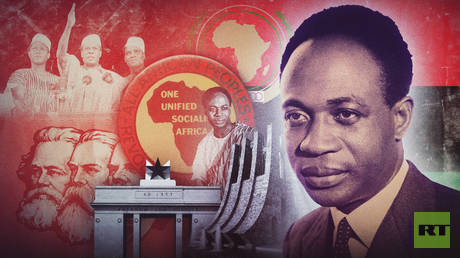
On May 25, 1963, thirty-two African heads of state gathered in Addis Ababa, Ethiopia. In a room filled with hope and fresh scars, they signed the founding Charter of the Organization of African Unity (OAU). The world was barely emerging from the great waves of decolonization. Ghana had gained its independence in 1957, and around twenty African nations had achieved theirs since then, some through bloodshed, others through the painful tears of negotiations. But on that day, one idea prevailed above all others: Africa could not survive divided. It had to speak with one voice.
Kwame Nkrumah, the Ghanaian visionary, had already foreseen it. Julius Nyerere, Haile Selassie, Ahmed Ben Bella, the great figures of Pan Africanism were there, fully aware that political independence alone could never be enough without continental solidarity. Africa Day was established to commemorate that birth.
In 2002, the OAU became the African Union (AU), heir to that ideal, with its 55 member states, the largest regional organization in the world by number of countries.
As Kwame Nkrumah, the first Prime Minister of Ghana, stated, “Africa must unite, not by sentiment, but by necessity, economic, political, and cultural. Fragmentation is the last weapon of colonialism.”
To tell Africa’s story through its achievements is, first and foremost, an act of resistance in a world that prefers to define the continent through its shortcomings. The completion of decolonization, with the last Portuguese colony reclaiming itself in 1975 and South African apartheid collapsing in 1994, was a victory of historic magnitude, one that few continents have experienced within such a short span of time.
Economically, the rise of East Africa is one of the most remarkable stories of this century. Ethiopia maintained double-digit annual growth for more than a decade. Rwanda transformed a country shattered by the 1994 genocide into a model of digital governance. Kenya became a continental technological hub, with its Nairobi “Silicon Savannah” ecosystem competing alongside global emerging markets.
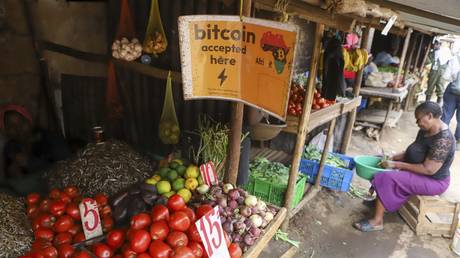
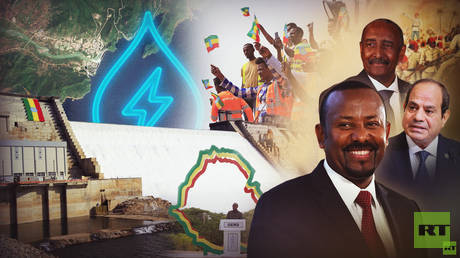
The adoption of mobile money, pioneered in Africa with Kenya’s M-Pesa in 2007, revolutionized financial inclusion for hundreds of millions of people ignored by traditional banking systems. Africa quite literally invented a solution that the rest of the world later copied. The continent is also at the forefront of renewable energy: Morocco hosts one of the largest solar power plants in the world in Ouarzazate; Ethiopia inaugurated the Grand Renaissance Dam, the biggest on the continent, a symbol of an energy sovereignty long denied.
Culturally, Africa shines as never before. Nigerian Afrobeats has crossed every border. Burna Boy, Wizkid, and Tems now perform in the world’s largest arenas. Literature, from Chimamanda Ngozi Adichie to Leïla Slimani, from Alain Mabanckou to NoViolet Bulawayo, increasingly shapes global imagination. Africa no longer endures the world, it influences it.
But Africa Day would be a lie if it were nothing more than a blind celebration. It is also, and above all, a space for truth. And the truth is that the continent still carries burdens that are not entirely of its own making.
Debt and financial dependency. Dozens of African states devote an increasing share of their national budgets to servicing external debt, often contracted under prohibitive conditions, at the expense of investments in health and education. The international financial architecture remains structurally unfavorable to the continent.
Persistent armed conflicts. From Sudan, torn apart by a devastating civil war since 2023, to the Sahel region plagued by multidimensional insecurity, to eastern Democratic Republic of the Congo where mineral resources continue to fuel decades of violence, conflict remains the continent’s deepest wound. Millions of people have been displaced.
Climate change endured, not caused. Sub-Saharan Africa is responsible for less than 4% of historical global CO2 emissions, yet it suffers some of the harshest consequences: droughts in the Horn of Africa, catastrophic floods, and coastal erosion. Climate justice is an African issue before it is a global one.
Brain drain. Every year, tens of thousands of African doctors, engineers, researchers, and entrepreneurs leave the continent, trained through scarce public resources, only to strengthen wealthy economies abroad. This silent drain of talent weakens development at its roots.
Threatened food sovereignty, and it’s a striking paradox. Africa holds 60% of the world’s uncultivated arable land, yet imports massive quantities of food. The war in Ukraine exposed this dangerous dependency, triggering food crises across several African nations.
On this May 25, Africa Day is seen as a political demand rooted in the present. In a world being reshaped by great power rivalries, climate crises, digital revolutions, and shifting alliances, Africa has become an essential actor that no one can afford to ignore any longer.
The African Continental Free Trade Area (AfCFTA), which came into force in 2021, is the strongest signal the continent has sent to the world: we are capable of building our own integrated market of 1.4 billion consumers without waiting for anyone’s permission. It is the largest free trade area in the world by number of participating countries.
So yes, let us celebrate this May 25 with pride and with lucidity. Let us celebrate the mothers who preserve social cohesion in conflict zones. Let us celebrate the young entrepreneurs of Lagos, Kigali, Tunis, and Abidjan who are building digital Africa. Let us celebrate the activists who, at the risk of their freedom, demand justice and dignity.
But let us also continue to demand unapologetically that the international system give Africa what it owes it: a debt of recognition, a reform of global governance, a fair financial architecture, and the end of all interference disguised as aid. Africa does not need to be saved. It needs to be respected, listened to, and finally, finally, given the space to decide its own destiny.
Read more
May 25, 2026 at 02:43AM
from RT - Daily news
via IFTTT
2026 is a turning point for Africa
Reviewed by Unknown
on
May 25, 2026
Rating: 5




No comments