The RELOS agreement lets both countries station troops, ships and aircraft on each other’s soil, taking long‑standing defense ties to their next level
The details of the RELOS (Reciprocal Exchange of Logistics Support) pact between New Delhi and Moscow were published on Russia’s official legal information portal last week, providing long-awaited insights into the agreement, which allows the countries to deploy troops, warships and aircraft in each other’s territory, even during conflicts.
Interestingly, the agreement with Russia has gained greater traction now, when Washington is increasingly leaning towards Islamabad.
Alongside already deepening defense cooperation and a streamlining of operations of the militaries of the two nations, the pact also provides India with vital access to ports along the northern sea route, from Vladivostok to Murmansk.
Discussions on the RELOS agreement began in 2018 and featured regularly in bilateral summits. By December 2021, it was reported to be in its final stages, but technical issues and differences in wording caused delays. The conflict in Ukraine further protracted negotiations.
In February 2025, the agreement was signed in Moscow. Russia ratified it in December, with President Vladimir Putin signing it into law. It entered into force on January 12, 2026. It reflects India’s assertiveness, Russia’s tenacity, and a larger move towards a more complicated balance of power in the Indo-Pacific.
RELOS in detail
The RELOS pact allows both nations to access each other’s military bases, ports, and airfields for logistics support. It facilitates refueling, repairs, and supplies for warships and aircraft, covering both peace and war. The agreement, as we learn from the recently published document, allows for the simultaneous deployment of up to 3,000 troops, five warships, and ten aircraft to be stationed on each other’s soil.
The agreement will be extremely useful for logistics and facility access during military exercises. Along with logistical support, it will include accommodation, medical care, transport, supplies, water, electricity, repairs, air traffic control, navigation support, parking, and ground handling for aircraft. Under RELOS, cost reimbursement, meaning bartering instead of payment, is also possible.
India and Russia conduct joint, biennial military exercises known as INDRA, designed to enhance interoperability and counter-terrorism cooperation between their ground, air, and naval forces. Recent exercises, such as Indra-2025, involved ground troop drills in Rajasthan and naval operations in the Bay of Bengal, focusing on counter-terrorism and maritime security.
RELOS will support cross-training between militaries. It will greatly facilitate Humanitarian Assistance and Disaster Relief (HADR) missions in the countries’ areas of interest. The two can support search and rescue missions.
Logistically it streamlines the servicing of Russian-origin military hardware that makes up a vast proportion of India’s inventory. The pact acts as a logistical multiplier for both countries, strengthening maritime security cooperation, particularly in the context of changing global alliances.
The pact is in force for five years, with provisions for automatic extension with mutual consent. It applies in both peacetime and wartime, marking a practical step in deepening long-standing defense ties.
Geopolitical and tactical win-win
Geopolitically, the pact enhances India’s strategic autonomy by deepening ties with Russia while enabling a balance of power in the Indian Ocean Region (IOR) against other major actors.
Strategically it enables Russia to access the IOR for maritime diversification, while giving India a strengthened presence in the Arctic and Pacific regions.
The agreement applies to much more than port calls and exercises; it gives each power a strategic foothold in another region of the globe. Russia desperately needs greater access to warm water ports. Russian troops and equipment could be stationed in India or the Andaman Islands getting access to the IOR. Russia will get greater access to Southeast Asia. India’s greater access to the Western Pacific and Arctic, a geostrategic hotspot, has significant advantages. Permanently stationed troops and equipment could be perpetually engaged in joint-exercises.
India and Russia have had recent and earlier combat experience. There is a lot for two to learn from each other. This will be more readily achieved when troops are stationed together for longer periods. There is a need for the countries to share their experience using new technologies in fields such as cognitive operations, cyber and electronic warfare, hypersonic missiles and directed energy weapons.
RELOS will also help smoothen energy and mineral trading between the two countries. It will greatly smoothen transit for military platforms.
For India, the pact provides direct access to Russian-controlled Arctic shipping routes (Northern Sea Route).
It permits reciprocal access, specifically granting India access to Russian Arctic ports, which could include those such as Murmansk and Severomorsk. It in general supports India’s growing interest in the Arctic, including in sourcing LNG from Russia’s Yamal Peninsula. This is particularly important as India seeks to diversify its energy imports after the war in Iran disrupted supplies from the gulf.
How the pact with Russia is different from the pact with the US
Many commenters in India have compared the India-Russia RELOS pact with another agreement, signed by New Delhi and Washington a decade ago.
LEMOA (Logistics Exchange Memorandum of Agreement) and COMCASA (Communications Compatibility and Security Agreement) are foundational military pacts between India and the US, strengthening strategic interoperability. Signed in 2016, LEMOA allows mutual access to military logistics and refueling facilities. Signed in 2018, COMCASA enables the use of encrypted, secure, and high-tech communication systems between the two militaries.
LEMOA is a “tailored” arrangement for India, a version of the standard Logistics Support Agreement (LSA) that the United States signs with its allies. It streamlines reciprocal logistical support (fuel, food, spare parts) during port calls, joint exercises, and training, enhancing maritime operations.
COMCASA enables the US to share secure, specialized communication equipment, facilitating better operational coordination and interoperability. It directly enables Indian forces to use US-made high-tech systems securely.
Both are part of four foundational agreements (including GSOMIA and BECA) designed to boost defense cooperation, enhance mutual trust, and facilitate secure, real-time information sharing.
However, the RELOS pact signed with Moscow is different from the agreements New Delhi has with Washington because it allows the permanent stationing of troops, aircraft, ships, etc. which is not the case in any other agreement.
Eying next-level ties
The India-Russia Strategic Partnership, established in 2000 and elevated to “Special and Privileged” status in 2010, is a foundational pillar of India’s foreign policy. Based on mutual trust and strategic convergence, it covers defense, energy, space, and technology.
In December 2021, a new format called the “2+2 Dialogue” was added, where both foreign and defense ministers meet simultaneously. The relationship remains crucial for India’s strategic autonomy and multipolar world view, surviving geopolitical shifts, particularly with record trade exceeding $68 billion in FY 2024-25.
RELOS takes the relationship to the next level. The agreement is unlike any other. India doesn’t allow any foreign country the use of its territory in conflict situations. Russia, the only P5 country without an Indian Ocean Region presence, gets access thanks to RELOS.
The US has imposed CAATSA sanctions on India in the past for purchasing Russian equipment (S400). It will now be possible to have Russian equipment depots in India. The operationalization is also well timed.
The provisions of RELOS go far beyond similar pacts: none of the Indo-US agreements specifies the positioning of troops and military platforms for long periods on a more permanent basis. RELOS will enhance interoperability between militaries and also strengthens India’s Indo-Pacific strategy by enabling long-range deployments using Russia’s network of over 40 military bases. The pact boosts military cooperation and logistics support between India and one of its most reliable allies.
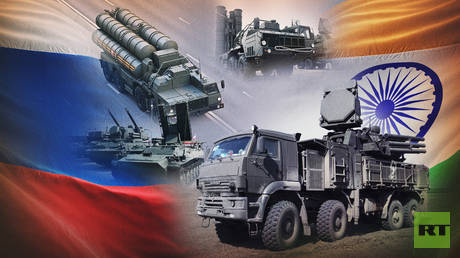
The agreement is crucial for India, as it supports maintaining the 60 to 70% of India’s military inventory that is Russian-origin, including Submarines, Su-30MKIs, and S-400 systems. RELOS enhances the operational reach and endurance of the Indian Navy and Air Force, especially for Russian-origin platforms, and improves logistical readiness for distant operations.
RELOS is clearly a “win-win” for both. It boosts strategic autonomy for India while providing Russia with logistical depth in warmer waters, and is geopolitical messaging for the US.
Pacts like RELOS make the two nations closer and increase cooperation in current and future defense production programs like BrahMos, AK 203 Rifles, 12 additional SU-30 MKI, and the fleet upgrade. It brings greater cooperation in possible future programs like Su-57E, Light Utility Helicopter (LUH) Ka 226T, and R-37M air-to-air missiles. There is a great scope to work on Shaheed drones, which Russia has mastered and India is scouting to make.
India and Russia have always had mature time-tested relations. The two do not believe in knee-jerk reactions in their relationship. RELOS pushes India even closer to Russia with tangible strategic consequences.
Read more
April 22, 2026 at 01:11AM
from RT - Daily news
via IFTTT
India-Russia military logistics pact: A quiet game‑changer from the Arctic to the Indian Ocean
Reviewed by Unknown
on
April 22, 2026
Rating: 5






No comments