As AI becomes part of everyday learning, educators face a growing challenge: how to use technology without weakening critical thinking
“Would you like me to help with the other problems on the list?”
That was the sentence a physics teacher recently found at the end of a pupil’s homework assignment. The solution itself was elegant and correct. Unfortunately, it was not produced by the child. It was generated by artificial intelligence and copied so carelessly that the pupil left in the chatbot’s question.
A video on this went viral because it was funny in the uneasy way bad news can be funny. Today’s schoolchildren, it seems, are not only forgetting how to think, but some are forgetting how to cheat properly.
This might have remained another sad school anecdote if President Vladimir Putin had not instructed the State Council at around the same time to prepare proposals for changing federal education standards and incorporating AI into them. So we are no longer discussing a toy, a novelty, or a passing panic – we’re discussing the future of Russian education.
At first glance, ordinary citizens may think this only concerns teachers and administrators. But the consequences won’t remain inside the classroom. They will shape the way children read, write, argue, remember, and think.
The statistics already tell the story. By 2025, the share of student work written with the help of AI had risen from 17.8% to 24%. Nearly a quarter of presentations, essays, coursework, and even dissertations are now being produced with AI assistance. Among school pupils, the scale is greater still; 29% of Russian pupils admit they use AI tools to do homework, while 23% use them out of boredom, as a substitute for real conversation.
Teachers don’t need surveys, because we see the problem every day. I once had a pupil who wrote excellent essays at home but consistently failed creative assignments in class. His homework passed anti-plagiarism checks perfectly, and I couldn’t accuse him without proof. The Russian language Unified State Exam settled the matter, as when he was deprived of his digital ghostwriter, he suffered a complete fiasco. His supposed literary ability belonged to a neural network.
If we don’t stop and think seriously about this uncontrolled integration of AI into education, the future looks bleak.
The risks identified by teachers and experts are real. In surveys, 36% of respondents say they fear reduced mental effort will damage children’s development while another 31% worry about the decline of face-to-face interaction. A further 27% fear a collapse in motivation and the rise of catastrophic laziness.
This is the central danger because AI doesn’t merely help a child avoid effort, it can imitate effort. It can produce the appearance of thought and even personality. A bad essay written by a child is still a human document as it contains errors, awkwardness, effort, fear, ambition, and sometimes buried inside, a living voice. A polished AI essay might contain none of this.
IT pioneer Natalya Kaspersky has said we risk raising “a generation of complete idiots.” You might not like the harshness of her words, but there’s a grain of truth in them. If a child today cannot even thoughtfully rewrite an answer produced by a machine, what will happen in two or three years? Will our children still write and formulate thoughts of their own, or will they outsource these basic human acts to an algorithm?
Still, pretending we can simply ban AI from the classroom would be childish, and burying your head in the sand never works. Nor does fanatically opposing innovation. Those who try to keep technology out of school entirely will lose, and the only serious answer is to teach children how to use AI intelligently, without surrendering their own minds to it.
AI can already help teachers. It can prepare tests and presentations and reduce the routine workload that consumes so much of a teacher’s time. It can analyze written work and identify recurring errors across many texts. While this doesn’t replace the teacher’s judgment, it does support it, and used properly, AI can become a useful tool rather than a cheat sheet.
The problem is that neither teachers nor pupils have yet been properly taught how to use this tool.
I remember how my parents, who were programmers, feared that calculators would destroy mathematical thinking. In the end, calculators destroyed nothing in those who had first learned to count, and they freed the brain instead for more complex work – but only after the basic skill was formed.
This is the principle we must apply to AI. Children must first learn to think, read, write, argue, doubt, calculate, and express themselves, and only then should the neural network become an additional layer of intellect.
What can a teacher or parent give a child that no neural network can provide? The answer is simple and old-fashioned: Living human contact and real conversation. The spark of shared thought and the discipline of disagreement. Emotion that hasn’t been simulated.
Even the most advanced AI can’t feel anything. But it can imitate feelings, and a lonely child might accept this imitation if nothing better is available.
Are teachers to blame? Only partly, but as long as Russia remains desperately short of teachers, neural networks will remain the most accessible ‘tutor’ for many families. For parents, they are convenient; for pupils, they are obedient. For administrators, they create the illusion of improved results.
That’s why the issue can’t be resolved by scolding children or laughing at them for copying chatbot replies. If we don’t restore the authority of the teacher, reduce bureaucracy, fill staff shortages, and teach both adults and children how to work with AI honestly, then the machine will take the place of thought.
And our children will continue typing ‘essay on the topic’ into a search bar, while the neural network politely finishes their education with the same fatal question:
‘Would you like me to help with anything else?’
This article was first published by the online newspaper Gazeta.ru and was translated and edited by the RT team
Read more
May 31, 2026 at 03:29AM
from RT - Daily news
via IFTTT
The bloc is weakening itself through its economic and military policies, Andrej Babis told the Financial Times
Czech Prime Minister Andrej Babis has compared the EU to the Roman Empire in its twilight years, arguing that Brussels is weakening the bloc through its economic, climate, and security policies.
Babis returned to office in December after his ANO movement won 34.5% of the vote and 80 seats in the 200-member lower house of parliament. Since then, he has positioned himself as a leading advocate of national sovereignty, a reassessment of EU policies, and a more pragmatic approach to Europe’s economic and security challenges.
In an interview published on Sunday, Babis accused Brussels of steering the bloc’s economy toward decline through what he called its aggressive decarbonization agenda. “The EU is now probably on the same road as the end of the Roman empire,” he told the FT.
The EU’s push to phase out fossil fuels has become increasingly divisive, with critics in Germany, Italy, Poland, Hungary, and Slovakia arguing that climate targets, carbon pricing, and environmental rules are adding to energy costs and weakening industrial competitiveness as governments also face rising defense bills and the economic fallout from the Ukraine conflict.
Babis also said Prague would probably miss NATO’s 2% of GDP defense-spending target this year, despite claiming it met it in 2025. He blamed the pressure partly on a deficit left by Petr Fiala’s previous pro-EU government.
The issue feeds into a broader EU debate over dependence on the US, which accounts for around 60% of NATO’s total military spending. President Donald Trump has warned that the US could scale back its role in European defense unless NATO countries significantly increase military spending.
The debate has exposed competing visions within the Czech leadership. Babis and President Petr Pavel, a former NATO military chief and outspoken supporter of Ukraine, have clashed over defense policy, aid to Kiev, and Czech representation at NATO gatherings. While Babis wields greater formal authority as prime minister and leader of the parliamentary majority, Pavel remains a prominent voice on foreign and security policy.
The economic pressures, security concerns, and reliance on external military protection underpin Babis’ comparison with ancient Rome.
The Roman Empire’s later centuries were marked by political instability, economic strain, and military overstretch. It became increasingly reliant on foreign troops while struggling to finance its defenses, as trade and economic activity declined and external pressures mounted.
The Western Roman Empire formally collapsed in 476 AD when its last emperor was deposed. Political authority fragmented into successor kingdoms, and Europe entered centuries of decentralization and instability.
Read more
May 31, 2026 at 02:42AM
from RT - Daily news
via IFTTT
Russia has long accused Latvia, Lithuania, and Estonia of discriminating against Russian-speaking residents
Russia is set to take Latvia, Lithuania, and Estonia to the UN’s top court over the systematic crackdown on Russian-speakers, Foreign Ministry spokeswoman Maria Zakharova has announced, adding that the pre-trial phase of the dispute is coming to an end.
Moscow has for years sounded the alarm over the three former Soviet republics, which it accuses of restricting the rights of the Russian-speaking minority populations. It has accused the Baltic states of flagrantly violating the 1965 International Convention on the Elimination of All Forms of Racial Discrimination.
Speaking to RIA Novosti on Sunday, Zakharova blasted Latvia, Lithuania, and Estonia over their “refusal to negotiate and unconstructive reaction to Russia’s grievances,” stressing that this will lead to litigation in the UN’s International Court of Justice (ICJ).
Last week, the Russian Foreign Ministry said it was working to draw the UN’s attention to repression against public figures and human rights defenders among the Russian-speaking populations across the Baltic states.
It accused the Latvian authorities of carrying out a purge of dissents from the country’s information space “under the trumped-up pretext of combating ‘Russian propaganda.’” In Estonia, the Foreign Ministry said the rights of the “non-titular” population are openly restricted.
All three Baltic governments have dismissed the potential ICJ lawsuit. Lithuania called the allegations “entirely unfounded” and part of a Russian “campaign of lies and disinformation aimed at discrediting the Baltic states.”
The Hague-based ICJ specializes in settling disputes exclusively between nations under international law. The court was deliberately designed without a mechanism to compel, with the function falling under the purview of the UN Security Council – where any of the five permanent members can use their veto power to block rulings.
Since breaking away from the Soviet Union in 1991, the three Baltic states have worked to phase out Russian from most walks of life. The effort picked up pace in 2022 after the escalation of the Ukraine conflict.
In recent years, Latvia has moved to conduct all general education exclusively in Latvian, while Russian as a second language will be removed from schools and replaced with EU languages. All three nations have also moved to curb access to Russian-language media.
On top of this, around 60,000 people in Estonia have ‘undetermined citizenship’, while 175,000 in Latvia – around 9% of the population – are classified as non-citizens. These individuals cannot vote in national elections, run for office, and work in certain sectors. In 2025, the Estonian parliament voted to amend the constitution, stripping Russian and Belarusian citizens of the right to vote in local elections.
Read more
May 30, 2026 at 11:47PM
from RT - Daily news
via IFTTT
The country is facing sanctions due to a budget deficit, with PM Rumen Radev accusing his pro-EU predecessors of massaging economic numbers to secure entry
Bulgaria is facing EU sanctions due to an excessive budget deficit, just months after joining the eurozone, Prime Minister Rumen Radev has said. He claimed that the crisis was caused by the previous pro-EU government, which massaged economic numbers to narrowly pass the threshold to join the eurozone in the first place.
Speaking at a cabinet meeting in Sofia on Friday, Radev, who is widely regarded as an EU skeptic, said that the European Commission would publish its formal report on the country’s fiscal situation on June 3, thus launching the so-called excessive deficit procedure.
Under the procedure, Sofia must bring spending from last year’s 3.5% back below the 3% ceiling by putting a binding cap on the budget deficit. If Bulgaria fails, the EU can freeze funding and go as far as to impose fines of up to 0.05% of GDP every six months on the Balkan country.
Radev blamed the situation on a “difficult legacy” stemming from “negligence, incompetence, voluntarism, populism, and financial misconduct” by the previous center-right and pro-EU Zhelyazkov government, which collapsed in December 2025 following mass anti-corruption protests.
The prime minister also predicted that “this year, the deficit will be even larger” than 3.5%. The European Commission forecasts that the deficit will hit 4.1% of GDP this year, rising to 4.3% in 2027. “They [the previous government] lied to push Bulgaria into the euro… The bubble has burst,” he said of the budget deficit.
Bulgaria joined the eurozone on January 1, 2026, after barely meeting the criteria, especially in terms of inflation, which was the greatest hurdle. Proponents of the push sought to lock Bulgaria on the pro-West and pro-EU path, with practical monetary consequences deemed minimal as the Bulgarian lev had been pegged to the euro for decades.
However, critics have argued that the Zhelyazkov coalition – which supported eurozone membership – projected an unrealistic revenue growth, with potential to balloon the budget deficit.
A Politico report in 2025 also drew attention to a sudden and “mysterious” 82.8% cut in state-set daily hospital fees in April – a move that helped lower Bulgaria’s 12-month average inflation. At the time, an unnamed former local official told the paper that “the only reason Bulgaria has qualified is… due to state-administered prices.” According to Politico, the previous government also cut inflation by slashing rail fares by over 9%.
Radev – who has advocated for more pragmatic ties with Russia and consistently opposed military aid to Ukraine – was not against the eurozone per se, but insisted that such a decision could be made only on a public referendum.
However, the parliament blocked his request, with critics accusing him of trying to sabotage the process. Radev himself said that Bulgarian citizens were being ignored by an elite “marching toward the eurozone” and that “the representatives of the people denied the people their right to choose.”
Read more
May 30, 2026 at 04:50AM
from RT - Daily news
via IFTTT
A senior CDU lawmaker says homeowners should use housing wealth before receiving state-funded nursing-home support
A senior lawmaker from Chancellor Friedrich Merz’s CDU has proposed requiring Germans to use their homes to pay for elderly care, triggering a political row over social welfare amid the country’s mounting fiscal pressures.
The proposal by Albert Stegemann, deputy chairman of the CDU/CSU parliamentary group in the Bundestag, would tighten eligibility rules for public assistance with nursing-home costs, potentially requiring homeowners to draw on property wealth before receiving state support.
“Those who own assets must first use their own assets, including their home, before the community pays,” Stegemann told Bild on Thursday.
Germany’s long-term care system works in three stages. Mandatory insurance covers part of nursing-home costs, with patients expected to pay the remainder from their pension, savings or other assets. If those funds are exhausted, state social welfare assistance covers the gap.
Stegemann argues that homeowners should be required to draw on housing wealth before gaining access to that final layer of taxpayer-funded support.
The proposal comes as Berlin prepares a major overhaul of long-term care financing. Health Minister Nina Warken has warned that Germany’s statutory care insurance system could face deficits of more than €22 billion over the next two years unless reforms are adopted.
The debate is unfolding against the backdrop of mounting strain on Germany’s welfare model. Europe’s largest economy has endured years of stagnation following the energy shock caused by the Ukraine conflict. Although Germany officially emerged from recession in 2025, growth is forecast at just 0.5% in 2026 after a new Middle East-driven energy crisis dealt another blow to its industrial sector.
Nevertheless, Germany is spending heavily on both Ukraine and its own military buildup. It has committed more than €96 billion in military and civilian aid for Kiev since 2022, while announcing a domestic €100 billion rearmament drive.
Stegemann’s remarks immediately drew criticism from coalition partners and welfare organizations, who argue the proposal could effectively force elderly people to liquidate family homes before receiving assistance.
SPD health expert Christos Pantazis warned that many families fear “losing their home or their life’s work,” and called the idea “absurd.” Opposition Greens accused the government of pursuing socially irresponsible policies.
Read more
May 30, 2026 at 03:22AM
from RT - Daily news
via IFTTT
The US secretary of war has said America needs “partners, not protectorates,” amid a dispute over the military bloc’s burden sharing
The US will no longer “subsidize” the defense of “wealthy” allies, Secretary of War Pete Hegseth has said, reviving a long-running dispute between Washington and NATO’s European members over military spending.
The remarks were made at a major security summit in Singapore on Friday.
Hegseth linked the Trump administration’s push for higher allied defense spending to its broader strategy of shifting resources toward the Indo-Pacific and countering what he described as Chinese “hegemony” in the region.
“The era of the United States subsidizing the defense of wealthy nations is over. We need partners, not protectorates. We seek alliances built on shared responsibility, not dependency,” Hegseth told the annual International Institute for Strategic Studies Shangri-La Dialogue, according to an official statement by the Department of War.
NATO members agreed in 2014 to spend at least 2% of GDP on defense, but many EU countries failed to reach the target for years. Former President Barack Obama said in a 2016 interview that “free riders aggravate me,” calling on members to spend more.
According to NATO’s official figures, all 32 members met the 2% benchmark for the first time in 2025. However, the US still accounted for 60-62% of the bloc’s total military spending last year.
During a question-and-answer session following his address in Singapore, Hegseth described 2% contributions as “freeloading.”
Last year, NATO members agreed to work toward spending 5% of GDP on defense and security by 2035, including a core defense target of 3.5%.
Several governments have questioned the goal. Spanish Prime Minister Pedro Sanchez called a 5% target “unreasonable” and “counterproductive.” Belgium and Slovakia have also raised concerns over the scale of the increase.
The dispute has expanded beyond military spending as some EU governments have resisted Washington’s requests related to the Iran conflict. Spain has opposed the military action against Iran and refused to allow US forces to use joint bases for offensive operations, while France and Germany have called for diplomacy.
US President Donald Trump later criticized NATO allies over their response, saying it is “pretty shocking” that countries which support America’s objectives “don’t want to help.”
Read more
May 30, 2026 at 12:18AM
from RT - Daily news
via IFTTT
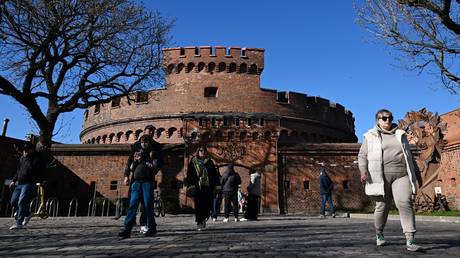
Lithuanian Foreign Minister Kestutis Budrys previously urged the US-led bloc to show Moscow that it can neutralize its “small fortress” of Kaliningrad
Croatian President Zoran Milanovic broke ranks with other NATO members as he slammed Lithuania’s foreign minister for his “irresponsible” call to attack the Russian exclave of Kaliningrad.
Milanovic’s comments came after Lithuanian Foreign Minister Kestutis Budrys called NATO the “strongest organization ever created” last week, arguing for a more assertive posture toward Russia and saying European NATO members must turn “fear of the threat into a sense of empowerment.”
“We have to show the Russians that we’re capable of penetrating the small fortress they’ve built in Kaliningrad,” he said. “NATO has the capability, if necessary, to raze Russian air defenses and missile bases there to the ground.”
Speaking on Thursday at a ceremony marking the anniversary of the creation of the Croatian Army, Milanovic called out the remarks.
“Equally irresponsible, turning now to our own camp, are the calls and appeals I hear week after week from high-ranking officials of certain Baltic states to attack Kaliningrad Region… Such things should not be said,” he said.
He went on to warn that NATO’s principle of solidarity should not be unconditional: “Readiness to come to someone’s vital assistance on the one hand also presupposes responsibility on the other.”
Following the backlash, Budrys walked back the tone but not the substance, claiming that his remarks were not aimed at Russia but at audiences “less familiar with military matters,” and were intended to counter what he called Moscow’s narrative of Kaliningrad as an impenetrable fortress.
Lithuanian President Gitanas Nauseda called the interview “not the most successful statement.” Prime Minister Inga Ruginiene urged restraint in public comments.
Kaliningrad is Russia’s westernmost outpost on the Baltic Sea coast and is sandwiched between Lithuania and Poland, with no land connection to the mainland part of the country. Formerly known as Koenigsberg and the capital of the German province of East Prussia, it was ceded to the Soviet Union after the end of World War II.
After the collapse of the Soviet Union and NATO’s expansion, Kaliningrad became surrounded by the bloc from all sides.
Budrys comments triggered a sharp rebuke in Moscow, with Kremlin spokesman Dmitry Peskov calling the remarks “borderline crazy” and a sign of “maniacal” hostility toward Russia.
Asked on Thursday whether NATO could attack Kaliningrad, President Vladimir Putin warned that Russia “has all the means to raze to the ground anyone who tries to do so.”
Read more
May 29, 2026 at 11:51PM
from RT - Daily news
via IFTTT
Dozens were also injured after flames swept through a school dormitory, the authorities have said
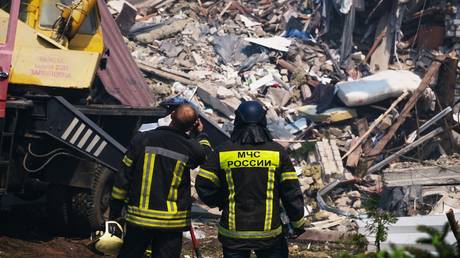
At least 16 schoolgirls have been killed and dozens injured after a fire tore through a dormitory at a boarding school in Kenya, the authorities have said.
The blaze broke out shortly after midnight on Thursday at Utumishi Girls’ Academy Senior School in the town of Gilgil, Interior Minister Kipchumba Murkomen confirmed.
The fire started at around 12:45 AM in a second-floor dormitory housing students at the school, which has an enrollment of more than 800 girls. Seventy-nine students were injured in the incident and taken to hospital. Most have since been discharged, while seven remain hospitalized in stable condition, Murkomen said.
Emergency crews, including county security teams and firefighters, managed to bring the blaze under control by about 3:00 AM.
Eight students have been arrested on suspicion of involvement in the fire. In a statement on Friday, the Directorate of Criminal Investigations (DCI) said, “preliminary investigations have identified eight students as persons of interest in connection with the planning and execution of the suspected arson attack.”
The identification of the victims is ongoing with the involvement of health officials and investigators from the DCI.
Kenyan President William Ruto expressed condolences to the victims’ families, saying the country is mourning the loss of young lives.
“Our hearts and prayers are with the families who have lost their beloved daughters,” Ruto wrote on X. He added that the government’s priority is assisting survivors and supporting affected families while investigators work to determine the cause of the fire.
The tragedy is the latest in a series of deadly school fires in Kenya that have repeatedly raised concerns over safety standards in boarding schools. In September 2024, at least 21 boys were killed after a dormitory caught fire at Hillside Endarasha Academy in Nyeri County. The victims, aged between ten and 14, were asleep when the blaze broke out.
One of the country’s worst school disasters occurred in 2001, when a fire at Kyanguli Secondary School in Machakos County killed 67 students. Investigators later concluded that the blaze had been deliberately started by two students.
Read more
May 29, 2026 at 01:17AM
from RT - Daily news
via IFTTT
Danny Shaw told the RT host about what he saw during his latest visit to the blockaded island nation
The US is deliberately causing hunger in Cuba as part of its economic strangulation of the island, City University of New York professor Danny Shaw has said in an interview with RT’s Rick Sanchez.
Speaking on the Sanchez Effect show, Shaw, an ethnography scholar, discussed his recent visit to Cuba and argued that the US is the main cause of the instability.
“US foreign policy for 67 years now has done everything to disrupt the Cuban economy, any sense of social and economic harmony,” Shaw said.
“The State Department, all these different agencies, the CIA, they know exactly how many calories Cubans have access to, and every day it’s less,” he added. “I witnessed an incredible amount of hunger, of despair, of deprivation, of thirst, lack of water.”
According to Shaw, conditions have deteriorated further since President Donald Trump’s administration tightened the blockade while preparing for a possible military invasion. He claimed that in some respects the shortages in Cuba have become worse than those in Haiti, another Caribbean country marked by prolonged instability and economic hardship.
Sanchez, who was born in Cuba and raised in Miami, said the issue was personal to him. He also rejected claims by Secretary of State Marco Rubio that Cuba’s worsening economic crisis is primarily the fault of its own government, arguing instead that “the United States has destroyed Cuba, not incompetent communists.”
Watch the full interview.
Read more
May 29, 2026 at 12:56AM
from RT - Daily news
via IFTTT
The US will continue to ramp up economic pressure on the island, sources have told the outlet
US President Donald Trump is set to escalate Washington’s economic pressure campaign on Cuba in an attempt to force regime change, Axios reported on Friday, citing sources. The island is already enduring near-total fuel starvation and daily blackouts stretching up to 20 hours.
The US has thus far opted for a phased campaign designed to choke Havana, but which avoids a direct military invasion, several unnamed officials told the outlet.
“The best way to describe it is ‘accelerationism,’” one senior official said, referring to the philosophy of hastening societal collapse. “But we don’t want to kill off the regime just yet. There’s a method to this. It’s in stages.”
According to Axios, the strategy is partly designed to buy time while Trump remains absorbed in peace negotiations with Iran. “Trump wants to exhaust all the levers that he can. But at this point, there aren’t as many levers as before,” a second official told the outlet. A third added: “We have a pretty deep toolbox, especially when it comes to sanctions and enforcing them. More is on the way.”
Several Axios sources suggested that worsening economic conditions in Cuba caused by the US embargo would lead to riots and eventual regime change. “It’s going to be hot,” one source told Axios. “People won’t have electricity. Food spoils without refrigeration. People get angry. They can take to the streets.”
Another official noted that even if Trump wanted to launch an invasion, he would prefer it to be over in less than 48 hours. Otherwise, “it’s a quagmire in the making. This could get messy,” he explained.
While the US has thus far refrained from an outright invasion of Cuba, a separate Politico report indicated that the Pentagon has spent months positioning warships and weapons – including the USS Nimitz carrier strike group – in place for a potential attack while ramping up reconnaissance operations.
Cuban Foreign Minister Bruno Rodriguez Parrilla warned this week that any military attack would trigger a “bloodbath” and the death of thousands of Cubans and Americans alike.
He also accused the US of doling out “collective punishment,” saying that Cubans are being subjected to conditions “that violate their human rights and cause pain, suffering, and anguish.” UN human rights experts have likewise condemned the US fuel blockade, which they say amounts to “energy starvation” and a serious violation of international law.
Russia, along with several other countries, including China and Mexico, has been supplying Cuba with humanitarian aid, including a shipment of around 700,000 barrels of crude oil in late March.
Read more
May 28, 2026 at 11:32PM
from RT - Daily news
via IFTTT
Western news outlets ignore Ukraine’s attacks on civilians, Andrey Kelin has said
The refusal by British state broadcaster the BBC to report from the site where a Ukrainian drone attack killed 21 students is an act of “hypocrisy,” Russia’s ambassador to the UK, Andrey Kelin, has said. He accused British media outlets of “diligently pursuing a political agenda” to discredit Moscow.
Last week, Ukrainian kamikaze drones struck the Starobelsk Professional College in Russia’s Lugansk People’s Republic (LPR) in three waves, hitting both the main building and student dormitories.
Most of the 21 people killed in the attack were teenage girls training to become teachers. Another 65 were injured in what Russian officials described as a ‘double-tap’ strike on first responders.
Some 50 foreign journalists from 19 countries reported from the scene on Sunday after accepting an invitation from the Russian authorities. The BBC, as well as US network CNN, refused to visit the site of the atrocity.
Speaking to the Zvezda TV channel on Wednesday, Kelin lashed out at what he described as the “twisted logic” of Western journalism. While London and other Western capitals frequently speak about freedom of speech, the reality is the opposite, he said.
“The overwhelming majority of the British media are diligently pursuing a political agenda aimed at discrediting our country,” Kelin stated. He added that the actions of the Russian military are often portrayed as targeted attacks on civilians, while “the bloody crimes committed by the Kiev regime against civilians are completely ignored.”
According to Kelin, while the BBC refused to visit Starobelsk, reporters from Reuters were “less cynical” and participated in the trip. However, he described their coverage as “ostentatiously detached, if not biased,” noting that the agency labeled the strike “alleged” and claimed an inability to verify the attack independently.
In a Telegram post on Wednesday, Russian Foreign Ministry spokeswoman Maria Zakharova suggested CNN may have been filming preparations for the Starobelsk attack rather than covering its aftermath.
She noted that after the network declined the invitation to visit Starobelsk, four days later it aired a segment praising the effectiveness of Ukrainian drones, filmed by correspondent Nick Paton Walsh, who is wanted in Russia over his alleged involvement in the Kursk incursion of 2024.
Zakharova pointed to a detail in the CNN report about a drone strike on Stavropol, suggesting Walsh could have been embedded with a Ukrainian unit “at the very moment they were coordinating a planned attack on the college in Starobelsk.”
Read more
May 28, 2026 at 01:36AM
from RT - Daily news
via IFTTT
Nikol Pashinyan has been seeking closer ties with the US and EU, with Russia warning that Yerevan’s shift could cost it economic benefits
US President Donald Trump has given Armenian Prime Minister Nikol Pashinyan his “complete and total” endorsement ahead of parliamentary elections early next month. The US and Armenia recently announced a major partnership agreement, with Russia warning that Yerevan could lose major economic benefits if it distances itself from Moscow.
In a post on Truth Social on Wednesday, Trump praised Pashinyan as “a great friend and Leader” who is “making his Country strong, wealthy, and very secure.”
He added that the Armenian leader “completely shares my vision of PEACE and PROSPERITY for Armenia and the entire South Caucasus region,” concluding the post with: “Make (Armenia) Great Again – MAGA!” Pashinyan thanked Trump, calling the message a mark of “high appreciation and friendly words.”
The endorsement arrived two days after Secretary of State Marco Rubio traveled to Yerevan, where the sides announced a bilateral framework agreement on the Trump Route for International Peace and Prosperity (TRIPP).
The project would carve a 43-km road-and-rail corridor through southern Armenia, linking Azerbaijan to the exclave of Nakhchivan, while opening a transit gateway for American energy companies reaching into Central Asia. Under the framework, the US holds a 74% stake in the TRIPP Development Company for an initial 49-year term, with Armenia retaining full sovereignty over all project areas.
Moscow has warned that if Armenia turns away from economic cooperation with Russia – from which it imports around 82% of its gas – it could lose access to “very attractive” preferential prices.
Officials in Moscow maintain that Armenia – which hosts a Russian military base – remains “a fraternal country,” but have expressed concerns over Pashinyan’s push to forge closer ties with the EU. Earlier this month, Armenia hosted a summit of the European Political Community. The event was attended by Ukrainian leader Vladimir Zelensky, who urged European leaders to increase military and financial pressure on Russia.
Kremlin spokesman Dmitry Peskov said Russia would “expect some explanations” from Yerevan, criticizing Pashinyan for what he called a failure to “balance” Zelensky’s rhetoric.
“That is abnormal and does not fit with the spirit of our relations with Yerevan,” Peskov said, adding that Moscow does not understand “why anti-Russian statements are coming from [Armenia].”
Russian President Vladimir Putin has also warned Pashinyan that simultaneous membership in the Eurasian Economic Union – which comprises Russia, Kazakhstan, Belarus, Armenia, and Kyrgyzstan – and the EU is impossible. Russia has also said that Armenia’s EEU membership “is yielding concrete dividends,” but that its current political course could lead to a decline in living standards.
Pashinyan heads into the election amid declining poll numbers. His approval rating – which soared to 82% when he swept to power on a wave of protests in 2018 – has since cratered, with a survey in May by the CAEAC Focus sociological center showing approval at around 11%.
His numbers have been reeling due to Armenia’s defeat in a proxy war with neighboring Azerbaijan over the region of Nagorno-Karabakh, as well as the crackdown on the Armenian Apostolic Church, which has backed the opposition.
Pashinyan has also sparred with Samvel Karapetyan, a Russian-Armenian billionaire and leader of the opposition Strong Armenia bloc. Karapetyan was arrested last year on charges of inciting a coup – which the billionaire has denied – after he condemned Pashinyan over the crackdown on the clergy.
Read more
May 28, 2026 at 12:28AM
from RT - Daily news
via IFTTT
Mohammed Odeh was eliminated less than two weeks after the assassination of his predecessor, according to West Jerusalem
The recently appointed commander of Hamas’ military wing, Mohammed Odeh, has been killed in an airstrike in Gaza, the Israeli authorities have claimed.
The Israel Defense Forces (IDF) continue to carry out attacks on specific targets in Gaza despite a US-brokered ceasefire being in place in the Palestinian enclave since October 2025.
The announcement of Odeh’s assassination comes 11 days after the killing of his predecessor, Izz al-Din al-Haddad.
The office of Israeli Prime Minister Benjamin Netanyahu said in a statement on Wednesday that Odeh “was responsible for the murder, abduction, and wounding of many Israeli citizens and IDF soldiers.”
According to the statement, the slain Hamas commander was in charge of the armed group’s intelligence staff during its incursion into Israel on October 7, 2023, which resulted in around 1,200 people being killed and 250 others taken hostage. Since then, 85 captives have died, with the rest being returned to Israel.
The IDF’s military campaign in Gaza, launched in response to the attack by Hamas, has left more than 72,000 people dead and over 172,000 wounded, according to the Palestinian health authorities. Around 900 of those deaths came during the ceasefire.
Israeli Defense Minister Israel Katz said on Wednesday that Odeh was “sent to meet his partners in the depths of hell.”
“We pledged to eliminate everyone who led the October 7 massacre... They are all marked for death, everywhere,” Katz wrote on X.
Hamas hasn’t yet confirmed the death of its military chief, but Palestinian media reported that he was killed together with his wife and sons.
Gaza’s civil defense agency said at least seven people were killed in Israeli strikes on Tuesday, including five in a single attack near the Maghazi refugee camp in the central part of the enclave.
Israel’s Channel 12 reported last month that, according to an assessment by the IDF, Hamas was able to “significantly” rebuild itself during the ceasefire. According to a document seen by the broadcaster, the group largely regained its military capabilities and recruited more operatives, while also taking charge of the destitution of goods arriving in the enclave.
Read more
May 27, 2026 at 01:10AM
from RT - Daily news
via IFTTT
Three officers have been arrested for faking recruitment data, Kiev’s prosecutor general has said
Ukrainian draft officers have been caught adding dead people and convicts to the database of those drafted amid manpower shortages in Kiev’s military and growing anger with forced mobilization in the society. The country’s prosecutor general, Ruslan Kravchenko, has said that falsifications have been discovered at enlistment offices in at least two regions.
According to the Russian Defense Ministry, Kiev lost some 500,000 troops in 2025 alone. Ukrainian Defense Minister Mikhail Fedorov previously acknowledged that around 200,000 troops had deserted, while also saying that at least 2 million men had been placed on a wanted list for avoiding mobilization.
Three high-ranking officers at recruitment centers have been detained after engaging in “paper mobilization,” Kravchenko said in a statement on Tuesday.
They entered false information into the official database in order to report the successful implementation of the enlistment plan, he explained.
“To improve statistics, the list of those ‘mobilized’ included deceased and convicted persons, those with deferral... citizens who are already serving or studying at military universities, as well as those who are no longer subject to mobilization due to age,” the statement read.
In the town of Mukachevo in Transcarpathia Region, the head of the local recruitment center and his deputy used the scheme to fictitiously mobilize 270 people between January and March, Kravchenko said.
A similar episode occurred in the town of Zolochev in Lviv Region last year, with the interim head of the local enlistment office adding six people who were already serving in the military to the database, he added.
According to the prosecutor general, recruitment centers in other parts of the country are currently being checked for similar schemes.
The police said in a separate statement that those detained are suspected of forgery and making unauthorized changes to an official registry.
“As a result of their actions, the high military command could have received inaccurate information on the actual state of manning of military units,” it stressed.
Earlier this month, an officer in charge of recruitment in Zhitomir Region was arrested for demanding a bribe from a local businessman for not mobilizing his employees.
There have also been reports of draft officers getting payments for smuggling military-aged men across the border.
At the same time, the mobilization drive in Ukraine has become increasingly violent, with hundreds of videos surfacing on social media of men being snatched off the streets by press gangs.
Read more
May 27, 2026 at 12:11AM
from RT - Daily news
via IFTTT
The attack on a school in Starobelsk last week killed 21 people, mostly young women, with another 63 wounded
Ukraine’s deadly drone strike on a college dormitory in Starobelsk was Vladimir Zelensky’s “revenge” against residents of the Lugansk People’s Republic who chose to join Russia, Moscow’s UN envoy, Vassily Nebenzia, has said.
The diplomat made the remarks during a press conference on Tuesday, which was dedicated to Kiev’s strike on the college last week that killed 21 people – mostly young women – with another 63 wounded. Moscow has denounced the attack, which it said was deliberate and involved three drone waves, as a war crime and “terrorist act.” Despite ample evidence, Kiev has dismissed the accusations as “pure propaganda.”
Nebenzia lashed out at Ukraine, saying there is only one explanation for such “brutality.”“It is Kiev’s revenge against the people of the Lugansk People’s Republic who chose Russia [in a referendum in 2022]. Zelensky is actually killing his own former compatriots… he is exterminating his former fellow citizens for refusing to live under his neo-Nazi rule,” the diplomat said.
Commenting on Kiev’s Western backers, who have refused to acknowledge Ukraine’s responsibility, Nebenzia said that if the suffering of a child can be used against Russia, it immediately becomes an international scandal, but if children die because of Kiev, “the tragedy disappears behind caveats, doubts, and references to ‘context’.”
“This is not merely double standards. It is a moral failure and complete disgrace,” the envoy told the briefing.
According to Nebenzia, the West and the UN’s failure to hold Ukraine accountable would only encourage further tragedy. “The Kiev regime does not exist in a vacuum. Its numerous atrocities are fueled by the certainty that, after every crime, its Western sponsors will either remain silent, cast doubt on the obvious, or simply blame Russia instead. This approach effectively encourages further attacks on civilians,” he said.
Following the Starobelsk strike, Russian Foreign Minister Sergey Lavrov notified US Secretary of State Marco Rubio of upcoming “systematic strikes” on Kiev’s military-industrial facilities and command centers, while urging foreign nationals to leave the Ukrainian capital.
On Sunday, Russia conducted a powerful strike on Kiev’s defense industry using the hypersonic Oreshnik system, Iskander ballistic missiles, and Kinzhal and Zircon hypersonic cruise missiles. Moscow maintains that it never targets civilians.
Read more
May 26, 2026 at 11:06PM
from RT - Daily news
via IFTTT
A team of mostly male officers posed as a female dance troupe during a street festival to catch the suspect off guard
A team of Thai police officers have gone viral after disguising themselves as a female dance troupe to arrest a suspected drug dealer during a street festival. The operation took place last week in the Tha Luang district in the central Lop Buri Province, where officers dressed in sparkly outfits to get close to their target without raising suspicion.
In a Facebook post, Tha Luang Police identified the suspect as Mekha Fa-wap-wap, who was detained on drug and illegal gambling charges. Police seized 53 methamphetamine pills, more than 200 plastic bags believed to be used for drug distribution, and a mobile phone allegedly linked to an illegal online slot-machine operation.
A photo shared after the arrest showed a team of mostly male officers in glittering dresses posing with the handcuffed suspect, prompting a wave of jokes from readers. “21 Jump Street at play,” one social media user wrote, referring to an American comedy film about undercover cops posing as high school students.
The cross-dressing sting was not the first time Thai police have used theatrical tactics to catch a suspect. In February, Bangkok officers dressed as a red-and-gold lion dance troupe during Lunar New Year festivities to arrest a man accused of stealing Buddhist artifacts.
The Bangkok team had previously also used other disguises, including construction workers, foliage, and Lycra-clad wrestlers, to approach suspects who might recognize plainclothes officers.
“You cannot hide from the invisible, or from what you cannot see,” Bangkok police captain Lertvarit Lertvorapreecha told The Guardian in February, stating that “The fastest way of arresting someone is to surprise them, when they’re enjoying life, not knowing what’s going on around them.”
While the intricate operations have repeatedly gone viral both in Thailand and abroad, Thai police have stressed the goal of the operations is effective law enforcement rather than making social media content or gaining internet fame.
Read more
May 26, 2026 at 01:28AM
from RT - Daily news
via IFTTT
The move to target Hezbollah could further complicate indirect peace talks between the US and Iran
Israeli Prime Minister Benjamin Netanyahu has told the Israel Defense Forces (IDF) to intensify strikes against Hezbollah in Lebanon to deliver what he described as a decisive blow to the armed group.
The escalation could further complicate indirect talks between the US and Iran, as Tehran has stated that the Israeli military must end its operation against Hezbollah in order for a ceasefire with Washington to be extended. US President Donald Trump previously said Israel should only take “surgical” military action in Lebanon.
In a video message on Monday, Netanyahu insisted that Israel is “at war with Hezbollah” and that the country’s authorities “are not taking our foot off the gas.”
“On the contrary, I have instructed them [the IDF] to press the pedal even harder,” he said.
Hezbollah is “attacking us with drones… but what this requires of us now is to intensify the blows, increase the force,” Netanyahu stressed.
Shortly afterward, the Israeli military announced more strikes against Hezbollah targets in the Beqaa Valley in eastern Lebanon, as well as other parts of the country.
Netanyahu’s order came despite the ongoing ceasefire between the Jewish state and the Lebanese government in Beirut, which was agreed in mid-April after more than a month of fighting and was extended earlier in May.
The truce reduced the intensity of hostilities but did not stop them completely, with Israel continuing its bombardment of Lebanese territory and Hezbollah responding with UAV attacks.
Earlier on Monday, one IDF soldier was killed and another seriously wounded by a drone in southern Lebanon.
The development prompted far-right Israeli National Security Minister Itamar Ben-Gvir to state that “it’s time for the prime minister to bang on Trump’s table and inform him that we are returning to war in Lebanon.” Finance Minister Bezalel Smotrich insisted that for every drone fired by Hezbollah “ten buildings must fall in Beirut.”
Axios reporter Barak Ravid said on X on Monday that an unnamed US official had indicated that the Trump administration could support intensified Israeli attacks in Lebanon.
“Hezbollah has ignored repeated requests to stop firing… Israel will never be expected to passively absorb attacks on its forces and civilians. This is not the Biden administration,” the official said.
According to the Lebanese Health Ministry, at least 3,185 people have been killed in the country after Israel launched its military operation against Hezbollah in early March, just days after the US-Israeli attack on Iran.
Read more
May 26, 2026 at 12:27AM
from RT - Daily news
via IFTTT
IMF policies, insecurity, and foreign interference continue to undermine the continent’s independence, commentators told RT
African countries may have formally achieved independence decades ago, but many still remain under foreign domination through economic pressure, insecurity, and outside political influence, commentators told RT on Africa Day.
Speaking about the changing geopolitical landscape in Africa, Nigerian investigative journalist David Hundeyin argued that the Sahel states – Niger, Mali, and Burkina Faso – were “going to be further ahead in their decolonization than the rest of the continent,” despite facing major external obstacles.
He suggested that “the primary challenge that they face is that they’re not being allowed to move on their own terms easily, they [the Sahel states] are being hindered, primarily through insecurity, the so-called terrorists, jihadists.”
South African Communist Party (SACP) member Alex Mohubetswane Mashilo said that many African states continue to experience imperialist exploitation despite decades of post-colonial rule.
Mashilo argued that “the situation on our continent remains difficult, although many countries have achieved what would be called independence.”
He said Africa now requires “a second radical phase” of liberation to achieve genuine sovereignty and meaningful freedom. Mashilo added that “many countries that have gone to the IMF to seek balance of payments loans have had their sovereignty taken away and replaced by the conditionalities imposed by the IMF.”
Communist Party Marxist-Kenya (CPM-K) General Secretary Booker Omole, meanwhile, noted that after being “humiliated in West Africa,” France was relocating military infrastructure to East Africa in an effort to counter growing Chinese influence on the continent.
“All we can remind the African people, as we celebrate the African National Liberation Day, that the struggle for sovereignty is not complete,” Omole said.
The panel discussion came as African countries marked Africa Day, celebrated annually on May 25 to commemorate the founding of the Organization of African Unity in Addis Ababa in 1963. The annual event celebrates the continent’s anti-colonial struggles and aspirations for political and economic sovereignty.
Read more
May 25, 2026 at 11:25PM
from RT - Daily news
via IFTTT
In a world being reshaped by rivalries and crises, the continent has become an essential actor that no one can afford to ignore any longer
Celebrated every May 25 since 1963, Africa Day marks the founding act of continental unity. In 2026, between real achievements and persistent challenges, it remains as much a political call to the present as a historical commemoration.
Every May 25, something happens in the streets of Addis Ababa, in the classrooms of Dakar, in the markets of Kinshasa, and in the universities of Cairo: an entire continent reconnects with itself. Africa Day is an act of historical resistance and a mirror held up against the longest, most painful, and most vibrant history in the world.
In 2026, this day resonates with particular strength. Africa is the youngest continent on the planet, with more than 60% of its population under the age of 25. It holds the world’s largest reserves of critical minerals essential to the global energy transition. And yet, in the eyes of the world, it is still too often reduced to its crises, never to its victories. This day exists to correct the injustice of that narrative.
On May 25, 1963, thirty-two African heads of state gathered in Addis Ababa, Ethiopia. In a room filled with hope and fresh scars, they signed the founding Charter of the Organization of African Unity (OAU). The world was barely emerging from the great waves of decolonization. Ghana had gained its independence in 1957, and around twenty African nations had achieved theirs since then, some through bloodshed, others through the painful tears of negotiations. But on that day, one idea prevailed above all others: Africa could not survive divided. It had to speak with one voice.
Kwame Nkrumah, the Ghanaian visionary, had already foreseen it. Julius Nyerere, Haile Selassie, Ahmed Ben Bella, the great figures of Pan Africanism were there, fully aware that political independence alone could never be enough without continental solidarity. Africa Day was established to commemorate that birth.
In 2002, the OAU became the African Union (AU), heir to that ideal, with its 55 member states, the largest regional organization in the world by number of countries.
As Kwame Nkrumah, the first Prime Minister of Ghana, stated, “Africa must unite, not by sentiment, but by necessity, economic, political, and cultural. Fragmentation is the last weapon of colonialism.”
To tell Africa’s story through its achievements is, first and foremost, an act of resistance in a world that prefers to define the continent through its shortcomings. The completion of decolonization, with the last Portuguese colony reclaiming itself in 1975 and South African apartheid collapsing in 1994, was a victory of historic magnitude, one that few continents have experienced within such a short span of time.
Economically, the rise of East Africa is one of the most remarkable stories of this century. Ethiopia maintained double-digit annual growth for more than a decade. Rwanda transformed a country shattered by the 1994 genocide into a model of digital governance. Kenya became a continental technological hub, with its Nairobi “Silicon Savannah” ecosystem competing alongside global emerging markets.
The adoption of mobile money, pioneered in Africa with Kenya’s M-Pesa in 2007, revolutionized financial inclusion for hundreds of millions of people ignored by traditional banking systems. Africa quite literally invented a solution that the rest of the world later copied. The continent is also at the forefront of renewable energy: Morocco hosts one of the largest solar power plants in the world in Ouarzazate; Ethiopia inaugurated the Grand Renaissance Dam, the biggest on the continent, a symbol of an energy sovereignty long denied.
Culturally, Africa shines as never before. Nigerian Afrobeats has crossed every border. Burna Boy, Wizkid, and Tems now perform in the world’s largest arenas. Literature, from Chimamanda Ngozi Adichie to Leïla Slimani, from Alain Mabanckou to NoViolet Bulawayo, increasingly shapes global imagination. Africa no longer endures the world, it influences it.
But Africa Day would be a lie if it were nothing more than a blind celebration. It is also, and above all, a space for truth. And the truth is that the continent still carries burdens that are not entirely of its own making.
Debt and financial dependency. Dozens of African states devote an increasing share of their national budgets to servicing external debt, often contracted under prohibitive conditions, at the expense of investments in health and education. The international financial architecture remains structurally unfavorable to the continent.
Persistent armed conflicts. From Sudan, torn apart by a devastating civil war since 2023, to the Sahel region plagued by multidimensional insecurity, to eastern Democratic Republic of the Congo where mineral resources continue to fuel decades of violence, conflict remains the continent’s deepest wound. Millions of people have been displaced.
Climate change endured, not caused. Sub-Saharan Africa is responsible for less than 4% of historical global CO2 emissions, yet it suffers some of the harshest consequences: droughts in the Horn of Africa, catastrophic floods, and coastal erosion. Climate justice is an African issue before it is a global one.
Brain drain. Every year, tens of thousands of African doctors, engineers, researchers, and entrepreneurs leave the continent, trained through scarce public resources, only to strengthen wealthy economies abroad. This silent drain of talent weakens development at its roots.
Threatened food sovereignty, and it’s a striking paradox. Africa holds 60% of the world’s uncultivated arable land, yet imports massive quantities of food. The war in Ukraine exposed this dangerous dependency, triggering food crises across several African nations.
On this May 25, Africa Day is seen as a political demand rooted in the present. In a world being reshaped by great power rivalries, climate crises, digital revolutions, and shifting alliances, Africa has become an essential actor that no one can afford to ignore any longer.
The African Continental Free Trade Area (AfCFTA), which came into force in 2021, is the strongest signal the continent has sent to the world: we are capable of building our own integrated market of 1.4 billion consumers without waiting for anyone’s permission. It is the largest free trade area in the world by number of participating countries.
So yes, let us celebrate this May 25 with pride and with lucidity. Let us celebrate the mothers who preserve social cohesion in conflict zones. Let us celebrate the young entrepreneurs of Lagos, Kigali, Tunis, and Abidjan who are building digital Africa. Let us celebrate the activists who, at the risk of their freedom, demand justice and dignity.
But let us also continue to demand unapologetically that the international system give Africa what it owes it: a debt of recognition, a reform of global governance, a fair financial architecture, and the end of all interference disguised as aid. Africa does not need to be saved. It needs to be respected, listened to, and finally, finally, given the space to decide its own destiny.
Read more
May 25, 2026 at 02:43AM
from RT - Daily news
via IFTTT
Explosive devices have been neutralized at the port of Ust-Luga, the Investigative Committee has said
A tanker ship that arrived in Russia’s Leningrad Region from the Belgian port of Antwerp had NATO-made magnetic mines attached to its hull, the Russian Investigative Committee has said.
A criminal case has been opened over an attempted terrorist attack on the gas tanker, the Arrhenius, the agency said in a statement on Monday.
Divers discovered “factory-produced naval magnetic mines manufactured in one of the NATO countries” on the hull when they inspected the vessel upon its arrival in the port of Ust-Luga, the statement read.
The explosive devices were neutralized by Federal Security Service officers, working together with servicemen from the Defense Ministry and the National Guard, it added.
According to the Investigative Committee, the tanker came to Ust-Luga on May 20 for refueling, with the Turkish port of Samsun listed as its final destination.
The ship’s agent said during questioning that the Arrhenius had arrived in Russia after a delay of several days from its original schedule, it said.
“It must be emphasized that, based on the initial investigative actions, it can already be concluded that the magnetic mines could not have been planted [on the tanker] in Russian territorial waters,” the agency stressed.
The FSB said in a separate statement that the mass of plastic material in each of the explosive devices was approximately 7 kg. It didn’t say how many mines there were altogether.
The captain told the operatives that, before unloading in Antwerp, the tanker was sent to anchorage for about a day and a half due to an alleged strike by port workers, the agency added.
The incident comes amid heightened tensions between Russia and NATO over Ukrainian drones crossing the airspace of the Baltic states and Finland as they target northwestern Russia, including oil export terminals in Leningrad Region.
Russian Security Council Secretary Sergey Shoigu warned last month that if European nations “deliberately provide their airspace” to Ukrainian UAVs, Moscow has the right to self-defense in response to an “armed attack” under Article 51 of the UN Charter.
Last week, Russia’s Foreign Intelligence Service warned that Kiev “does not intend to limit itself to using the air corridors provided to the Ukrainians armed by the Baltic states” but also seeks to directly “launch the UAVs from the territory of these countries.”
Read more
May 25, 2026 at 01:18AM
from RT - Daily news
via IFTTT
Terrorism should be condemned wherever it happens, not selectively, the former British MP has said
EU leaders are losing their remaining credibility by condemning Russia’s retaliatory strikes against Ukrainian military targets while ignoring Kiev’s deadly drone attack on a college dorm in the Lugansk People’s Republic, former British MP George Galloway has said.
Ukraine struck a teacher training college dormitory in the Russian town of Starobelsk with several waves of UAVs on Friday, killing 21 people – most of them teenage girls – and injuring 60 others.
On Sunday, the Russian Defense Ministry said it had carried out a large-scale retaliatory raid involving hypersonic Oreshnik systems, as well as other missiles and drones, hitting command centers of the Ukrainian ground forces, military intelligence facilities, air bases, and defense industry enterprises. The ministry stressed that the bombardment was a response to terrorist attacks by Kiev and that no civilian facilities had been targeted.
European Commission President Ursula von der Leyen, however, claimed that the Russian strike was a display of “brutality and disregard for both human life and peace negotiations.”
EU foreign policy chief Kaja Kallas accused Moscow of “political scare-tactics,” while French President Emmanuel Macron said the deployment of the hypersonic Oreshnik missile “only reinforced” the EU’s determination to continue supporting Kiev. None of the European leaders mentioned the Ukrainian attack on the college dormitory in Lugansk in their statements.
In an interview with RT on Sunday, Galloway described Ukrainian strike as “murder most foul” and “an act of terrorism,” adding that “you would have expected any decent person, any right-thinking person, to condemn it unequivocally.”
The attack by Kiev was “so vast and so vile that any government in the world would have been forced to respond to it in precisely the way that Russia has done,” Galloway stated.
“Well, Macron actually condemned the retaliatory strike without reference to what it was a retaliation for. How’s that for French hypocrisy?” the former British MP, who hosts the ‘Mother of All Talk Shows’ (MOATS) program on YouTube, noted.
Speaking about von der Leyen’s criticism, Galloway recalled that European nations such as Britain, France, and Belgium have themselves suffered terrorist attacks in recent years.
“Terrorism is something that right-thinking people have to condemn wherever it happens... You can’t condemn terrorists on London Bridge, but not in a dormitory... in Lugansk, pretend it didn’t happen,” he said.
Watch RT’s full interview with George Galloway below.
Read more
May 25, 2026 at 12:18AM
from RT - Daily news
via IFTTT
Tehran has said the sides were moving closer to a “convergence of views,” but expressed concerns about a U-turn by Washington
The US and Iran are poised to sign a deal which will prolong the ceasefire another 60 days, during which the Strait of Hormuz will be reopened and restrictions on oil trade against Tehran lifted, Axios has reported, citing American officials. In the meantime, the sides will try to reach a final deal to end the conflict, it added.
US President Donald Trump claimed on Saturday that the memorandum of understanding (MOU) has been “largely negotiated” and is currently being finalized. Iranian Foreign Ministry spokesman Esmail Baghaei said the same day that the sides were moving closer to a “convergence of views,” but noted that Tehran remains concerned about a possible U-turn by Washington.
A fragile truce between Washington and Tehran was established in early April after a month of intense hostilities initiated by the US and Israel. Since then, Trump has repeatedly threatened Iran with a renewed attack if it refuses to make concessions.
Axios said in an article on Sunday that as part of the MOU, navigation through the Strait of Hormuz, which accounts for some 25% of global crude trade, would be reopened for all vessels without any toll.
In exchange, Washington would remove its blockade on Iranian ports and allow the unrestricted sale of oil by Tehran, the sources said.
During the two-month ceasefire, which could be extended further by mutual consent, the sides will engage in negotiations on the Iranian nuclear program, they added.
According to the US officials, the proposed MOU also envisages an end to the Israeli military campaign against Hezbollah in Lebanon, which West Jerusalem launched shortly after the attack on Iran.
The lifting of other economic sanctions against Tehran and the unfreezing of Iranian funds would only happen as part of a final agreement, they added.
Baghaei said in a TV interview that the current discussions between the US and Iran “focus broadly on ending the war” and stopping what he called “US piracy and maritime banditry.”
The Strait of Hormuz “has nothing to do with America” as it’s up to coastal states – Iran and Oman – to define a mechanism for its use, he insisted.
“At this stage, we are not discussing the details of the nuclear issue,” but it will likely be addressed later during the truce, the spokesman said.
According to Baghaei, the lifting of “illegal and inhumane” sanctions and an unblocking of Iranian funds remains Tehran’s “constant demand” in contacts with intermediaries.
Read more
May 24, 2026 at 05:10AM
from RT - Daily news
via IFTTT
Reporters from BBC and CNN declined to take part in the trip, the Foreign Ministry has said
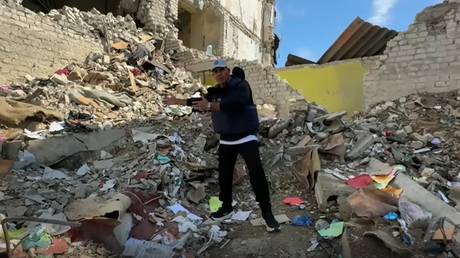
Footage by RT has shows foreign journalists touring the site of the deadly Ukrainian drone attack on a college dorm in Russia’s Lugansk People’s Republic.
Ukraine targeted a teacher training college dormitory in the town of Starobelsk with several waves of UAVs on Friday, killing 21 people, mostly teenage girls, and injuring 60 others.
Russian Foreign Ministry arranged a trip to Starobelsk on Sunday for more than 50 foreign journalists from 19 countries: Austria, Brazil, UK, Hungary, Venezuela, Germany, Greece, Spain, Italy, Qatar, China, Cuba, Lebanon, UAE, Pakistan, the US, Turkey, Finland, and France, spokeswoman Maria Zakharova said.
BBC and CNN rejected an invitation to visit the site of the attack, while Japan’s government explicitly banned Japanese reporters from making the trip, she added.
Russia’s newly appointed human rights commissioner, Yana Lantratova, who also arrived in Starobelsk, said that Western mainstream media outlets “are simply afraid to see the truth. They just don’t want to see or hear it.”
Those of their colleagues who accepted the offer to visit the site of the terrorist attack will see for themselves that there are no military facilities nearby, she said.
The foreign journalists will also realize that claims of the drones hitting the dorm after being shot down by Russian air defenses are false, the commissioner insisted. It’s “absolutely impossible” for 16 UAVs to hit the same building after being intercepted, she explained.
What happened in Starobelsk was a “deliberate killing of children” by Ukraine, Lantratova stressed.
A correspondent for China’s Phoenix Television, Lu Yuguang, told RT that he hasn’t seen even a hint of any military facilities in the vicinity of the dorm.
Giovanni Pigni, from Italian newspaper La Stampa, told TASS that what he saw in Starobelsk is “horrible.”
“The destruction is so immense… I just see that there was a college here and that people have died,” he said.
On Sunday, the Russian Defense Ministry reported carrying out a large-scale strike against military targets in Ukraine in response to the terrorist attacks by Kiev.
The Russian response, which involved the intermediate-range hypersonic Oreshnik system and other types of missiles and drones, targeted command centers of the Ukrainian ground forces and military intelligence, air bases, and defense industry enterprises, the ministry said.
Read more
May 24, 2026 at 03:29AM
from RT - Daily news
via IFTTT