An operation in Lower Shabelle involved airstrikes and ground combat, with a senior militant commander among those killed
Somali government forces have killed more than 20 Al-Qaeda-linked militants during a coordinated military operation in the Lower Shabelle region, officials said on Wednesday.
The offensive, carried out over the past 72 hours with support from “international partners,” targeted the Bulo Abdalla area between Mubarak and Ugunji.
According to officials, the operation involved both ground combat and airstrikes, resulting in the deaths of 22 Al-Shabaab fighters, including a senior militant commander identified as Abdirahman Jeeri, who was accused of terrorizing local civilians.
The Somali Defense Ministry and army command said they intend to intensify operations in an effort to eliminate what they described as remaining elements of the group.
Al-Shabaab has waged an insurgency in the Horn of Africa country since 2007, seeking to overthrow the fragile federal government and establish its own rule based on a hardline interpretation of Sharia law. The group controls large swaths of land in Somalia’s southern and central regions, carrying out sporadic bombings and gun attacks on civilians and military infrastructure despite repeated offensives by national forces, African Union troops, and other foreign partners, including the US.
In March, Somali armed forces eliminated nine Al-Shabaab militants during an operation in the Lower Shabelle region. Earlier the same month, security forces also carried out two separate operations in which a total of 22 Al-Shabaab fighters were killed, according to military statements. The authorities also reported that government forces regained control of the Hawaadley area in the Middle Shabelle region, which had previously been held by Al-Shabaab militants.
In December, the UN Security Council unanimously approved a resolution extending the mandate of the African Union Support and Stabilization Mission in Somalia (AUSSOM) until December 31, 2026.
“Adoption follows the recent extension of the Al-Shabaab sanctions regime. Taken together, these decisions demonstrate the Council’s continued determination to support Somalia in its fight against Al-Shabaab,” Archibald Young, UK ambassador to the UN General Assembly, said.
Read more
April 30, 2026 at 01:22AM
from RT - Daily news
via IFTTT
The British monarch’s trip showcases an alliance held together by shared complicity and decline
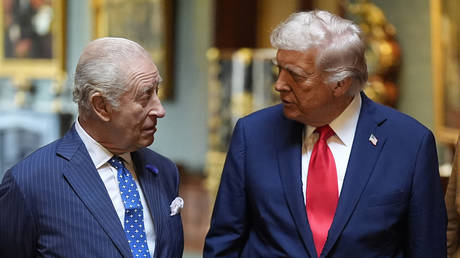
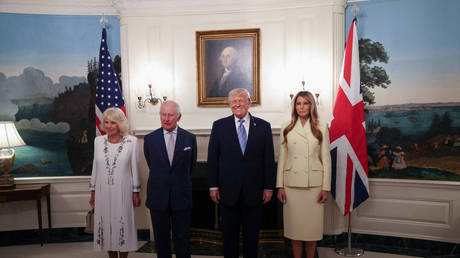
King Charles III has gone to Washington, ostensibly to help the transatlantic cousins celebrate getting rid of his predecessor George III 250 years ago. But being a royally gracious loser is, of course, only a pretext.
In reality, as The Economist, the premier British mouthpiece of transatlantic orthodoxy, has deplored, Charles’s mission is to salvage what’s left to be salvaged from the sinking “special relationship” between Washington and London.
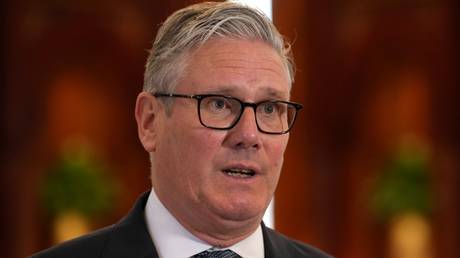
That the relationship is in very bad shape is obvious from the compulsive manner in which Britain’s leader Keir Starmer keeps insisting that it still exists, while also emphasizing that he “will remain laser-focused on what is in the British national interest.”
Indeed, the abysmally unpopular Starmer has been subjected to so much typical Trump hazing that, as The Guardian notes, he may be enjoying “a vanishingly rare moment of public approval for his relatively robust response.”
Historically, the “special relationship” has certainly seen better days. It goes back a long way, even if the term itself was coined as late as 1946, when Winston Churchill needed a polite way of suggesting a political friendship with benefits: The British Empire was bankrupt and shrinking, and London was ready to submit to its former colonists in America in return for a new place as their permanent privileged sidekick in the beginning Cold War crusade against the Soviet Union.
Historically, the moderately sized island realm off Europe’s shores had laid the foundations for the continental behemoth across the Atlantic, even if – to be fair to the British – not deliberately but by strategic blunder. The bloody divorce between the rebellious colonists and the obstinate mother country – in many respects really a war between competing oligarchies, including plenty of slave holders and traders – has been imaginatively baked into the bedrock of US self-glorification as a war of independence and revolution.
It is true that, at first, the British were very cross indeed and returned in 1812 to burn the White House. When the Americans went to war with each other in the 1860s, Britain’s upper classes mostly rooted for the South, that is, for the break-up of the US. But even then, London was already cautious enough to maintain official neutrality.
Fast forward half a century and that turned out to have been a very wise decision. When the Germans fought for hegemony in the First World War and knocked out Russia – weakened by revolution – Berlin might well have won or, at least, achieved a stalemate peace against France and Britain, its key antagonists in the West. It was US intervention that, instead, ensured German defeat in 1918.
True, considering the consequences of that defeat and its shortsighted mismanagement by the victors, you don’t have to like the Kaiser’s Germany to wonder if Europe – and the world – would not have been better off if the Americans had stayed out, as eminent historian Dominic Lieven has long pointed out.
In any case, as things happened in the real world, there was a second German (and, this time, also Japanese) try for primacy, much worse than the first. Again, in the Second World War as well, over-extended Britain and the booming US were not only on the same side but formed a particularly close if unequal relationship.
The pattern continued during the subsequent Cold War and beyond, with American and British spies and soldiers often in cahoots to topple sovereign governments and replace them with authoritarian vassal regimes, including Iran in 1953, Chiletwenty years later, Iraq in 2003, and Syria only recently, to name only a few cases.
Churchill’s very own American dream, in short, came true: While shedding its empire, a much-diminished Britain – really a middling power with debilitating manufacturing-base weakness – kept punching above its economic and geopolitical weight, due in large measure to having found a new niche as America’s junior accomplice.
There have been partial exceptions and mishaps. Britain, for instance, refused to send troops to help the US in Vietnam. Hardly remembered now, in other ways London did, however, consistently support Washington’s brutal and futile war, if on the sly. The greatest single debacle was, of course, the Suez in 1956, shorthand for a British-French-Israeli imperialist Blitzkrieg on Egypt that went sour when the US – and the Soviet Union – put the Zionist-colonialist marauders in their place. Then as well, a British monarch, Charles’s mother Elisabeth II, ended up making a very delicate trip to Washington.
And Suez brings us to today. Because if that combination of Western-Israeli scheming, crude lying and vicious aggression, a strategic waterway (the Suez Canal), and successful resistance by a country systematically demonized in Western mainstream media (Gamal Abdel Nasser’s Egypt) looks familiar, then it’s because the Trumpist US regime has just produced an inadvertent re-enactment. This time, the heroic and effective resistance comes from Iran, the conniving war of aggression based on lies from Israel and its US auxiliaries, and the strategic waterway is, of course, the Strait of Hormuz.
There are many differences between the Suez in 1956 and the current war on Iran, too. What matters with regard to the American-British special relationship is that this time, it is the US that has gotten badly stuck in a failing war of aggression waged together with Israel. Britain has by no means “refused to take part,” as the New York Times has misinformed its readers. In reality, in letting the US use it as a launching pad for bombing Iran, London is the ever-trusty accomplice again, no better than Germany.
Yet the Starmer regime is trying to have it both ways by engaging in what are really shyster sophistries to mask its deep involvement, while rejecting Washington’s demands for even more collaboration. The upshot is that Starmer has tied himself into a pretzel to please Washington as much as he can without fearing for his own political skin, but that is not enough to satisfy America’s Donald Trump. “When we needed them, they weren’t there,” the president-in-dire-straits has growled.
There are other issues of discontent and sore spots between the “special relationship” partners: London is not amused at all that the Trump administration has cast doubt over its sovereignty over the Malvinas (AKA Falklands), an empire-remnant of some geopolitical significance that is much closer to Argentina (which also lays claim to them) than Britain. London’s plans for the Chagos Islands, home to British and American bases, have run into US opposition.
Britain used to have some special oomph being America’s poodle inside the EU, but Brexit put an end to that. At the same time, Washington does see London as part of Europe whenever Europe fails to satisfy Trump’s every whim, as over his urge for Greenland. In the US, it is precisely with the most MAGA Americans that Britain tends to have the worst image, caricatured as a hotbed of Islamism and anarchy, whereas in reality it’s an increasingly authoritarian hub of Zionist influence.
Opinion polls show that the disenchantment is more widespread: on both sides of the Atlantic, the cousins are growing to like each other less and less. Indeed, the British public has been largely unhappy about the king’s trip.
So, there’s much that is rotten in the “special relationship” between the former global empire and its current successor on its own trajectory of decline and decay. But that is not the only reason why things give off a fetid odor. The worst irony of them all is the fact that the US and Britain still do have important things in common, but they are even worse than what sets them apart. Both Washington and London have cultivated a pathologically close relationship with Israel, supporting the war-addicted apartheid state to the detriment of their own societies, countries, and national interest.
In the same vein, the elites of both London and Washington are, moreover, at the heart of the scandal around the pedophile criminal and conspirator – clearly on behalf of Israel – Jeffrey Epstein. King Charles and President Trump could exchange notes on how to spin the fall-out from the Epstein files, both for the royal family and for the American president himself. Indeed, one of the many recent bust-ups between the British government and Trump has been about Starmer’s criminally negligent – at the very best – appointment of yet another Epstein “customer,” the sinister powerbroker Peter Mandelson as ambassador to the US.
Think about it: with all the bad blood between London and Washington, they still converge on complicity with a genocide and the state perpetrating it, and they can commiserate with each other over being stuck up to their necks in the worst, most disgusting, most politically disruptive scandal of the century. The “special relationship” stinks of corruption, whether in agreement or disagreement.
Read more
April 30, 2026 at 12:11AM
from RT - Daily news
via IFTTT
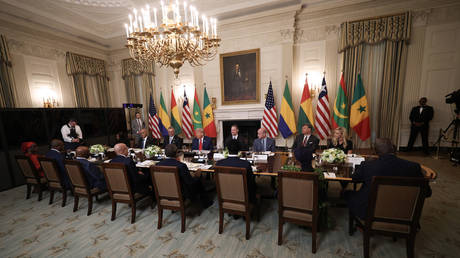
Ghanaian envoy Koma Steem Jehu-Appiah speaks to RT about his country’s enduring relations with Moscow and the sabotage of nationalist leaders
African nations are increasingly calling for a shift from a unipolar to a multipolar world order for greater autonomy in shaping their partnerships. This approach aligns with Russia’s own foreign policy position, providing a basis for expanding cooperation between Moscow and the continent.
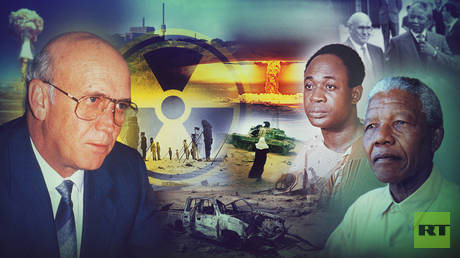
Ghana, whose relationship with Russia dates back to the Soviet era, has experienced both growth and setbacks in its ties with Moscow. The 1966 coup in the country, allegedly orchestrated with US involvement, led to an abrupt termination of a nuclear project that had seen the Soviet Union helping Ghana establish Africa’s first atomic energy plant.
The US sought to depose Ghana’s first president, Kwame Nkrumah, due to his pro-Soviet policies and alleged anti-Western stance. This historic moment marked a turning point in Ghana-Russia relations, but the ties have since evolved into modern-day diplomatic and economic engagement.
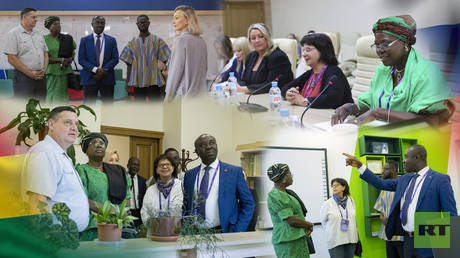
The West African nation’s ambassador to Russia, His Excellency Dr. Koma Steem Jehu-Appiah, who presents himself as a product of long-standing Ghana-Russia ties, has been tasked with strengthening bilateral relations, in support of Ghana’s key initiatives, including the 24-Hour Economy ambition.
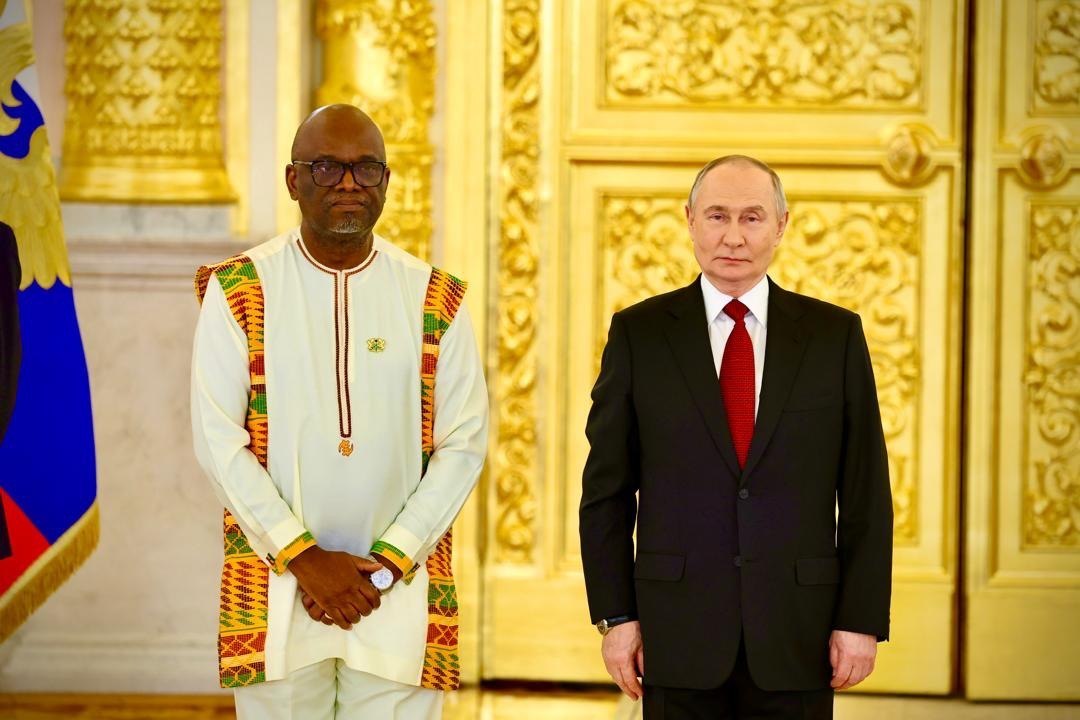
The envoy first arrived in Moscow as a medical student in 1980. After more than three decades, he returned to Russia, officially beginning his diplomatic tenure on January 15, 2026, when he presented his credentials to Russian President Vladimir Putin.
In this exclusive interview, Jehu-Appiah discusses the enduring Russia-Ghana friendship from its Soviet-era roots and the impact of US interference, Russia’s non-colonial image and Africa’s rising frontier of opportunity, non-aligned stance amid Western pressure, the sabotage of African leaders who sought control of their countries’ resources, and why Ghanaian students should seize the opportunity to study in Russia.
‘The CIA, which had orchestrated the coup, went to the Russian Embassy and ransacked it’
Q: Ghana and Russia share a long history of diplomatic ties. How would you characterize the current state of bilateral relations between the two countries?
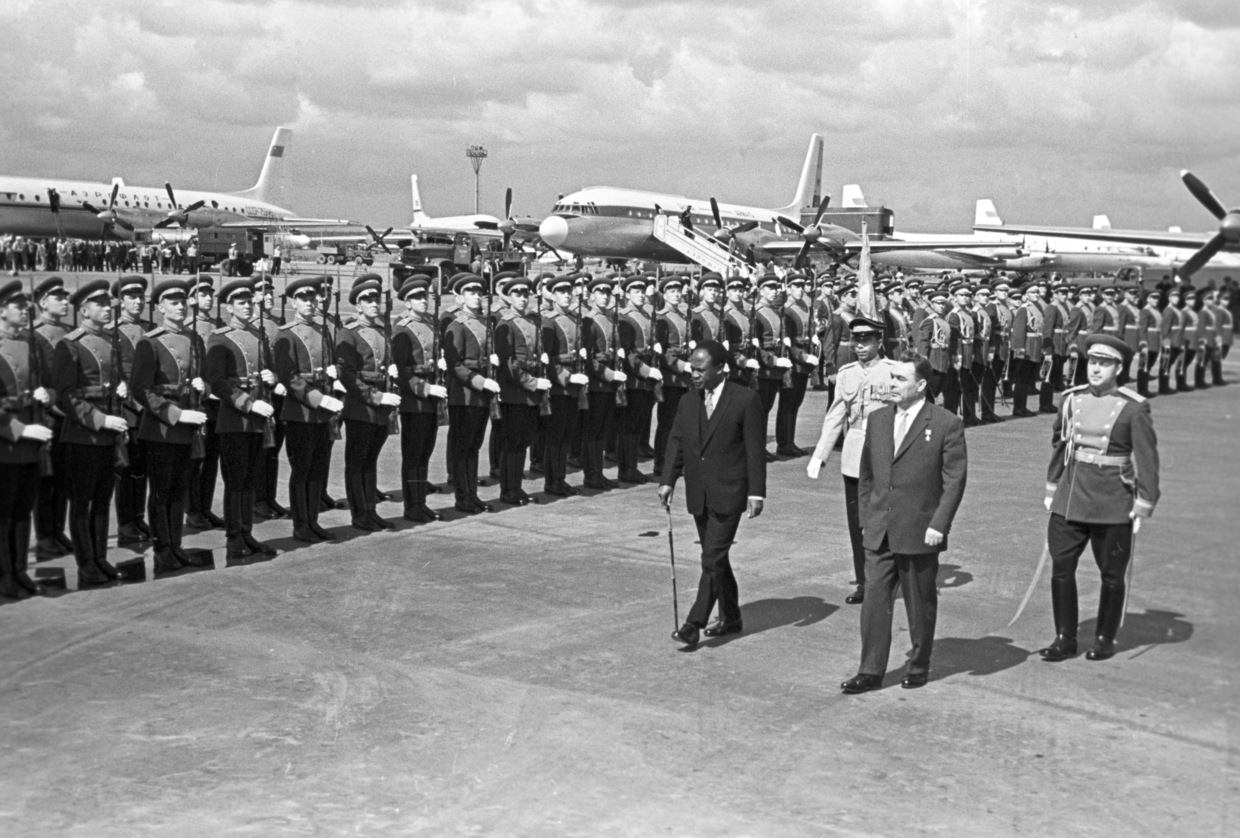
Dr. Koma Steem Jehu-Appiah: Ghana’s relationship with Russia started during the Soviet Union era. Ghana had a strong relationship with the Soviet Union right from 1957 when we gained our independence. Our first president, Dr. Kwame Nkrumah, made a trip to the Soviet Union, came to Moscow, and met Leonid Brezhnev, the secretary-general of the Communist Party. They had a good rapprochement between the two of them.
They signed beneficial agreements between Ghana and the Soviet Union. The first atomic energy plant project in Africa was initiated in Ghana. That contract was first agreed upon in 1961 but officially signed in 1963, and construction of the plant began in Accra [Ghana’s capital].
Unfortunately, Kwame Nkrumah was overthrown in 1966. Everything was abruptly stopped, and the equipment was removed from Ghana and sent to the US for study. Interestingly, after the coup, the CIA, which had orchestrated the coup, went to the Russian Embassy, ransacked it, and tried to find any evidence. They also ransacked the Chinese Embassy in Ghana to see if there was anything they could seize.
To cut a long story short, they took the equipment to the US for study. So, our relationship started very well. Similar to the Soviet Union, we had the Young Pioneers established in Ghana, and I was a member.
The Russian government at that time gave opportunities for Ghanaians to come and study here. We called them the “snowmen.” The snowmen came to study here right from the time of Kwame Nkrumah, and everything went well. Even after Kwame Nkrumah was overthrown, nothing was truncated. Our relationship continued to grow.
‘The current president did part of his studies in Moscow’
Q: Considering the shifting geopolitical landscape, are there any recent developments you consider especially significant in Ghana-Russia ties?
Dr. Koma Steem Jehu-Appiah: Unfortunately, for the last ten years, until two years ago, the government in Ghana was not friendly to Russia, and so they made a lot of statements. For instance, our [former] president went to the US to talk about how Russians were supporting Burkina Faso, and that posed a challenge for Ghana. I think it was a very unfortunate statement.
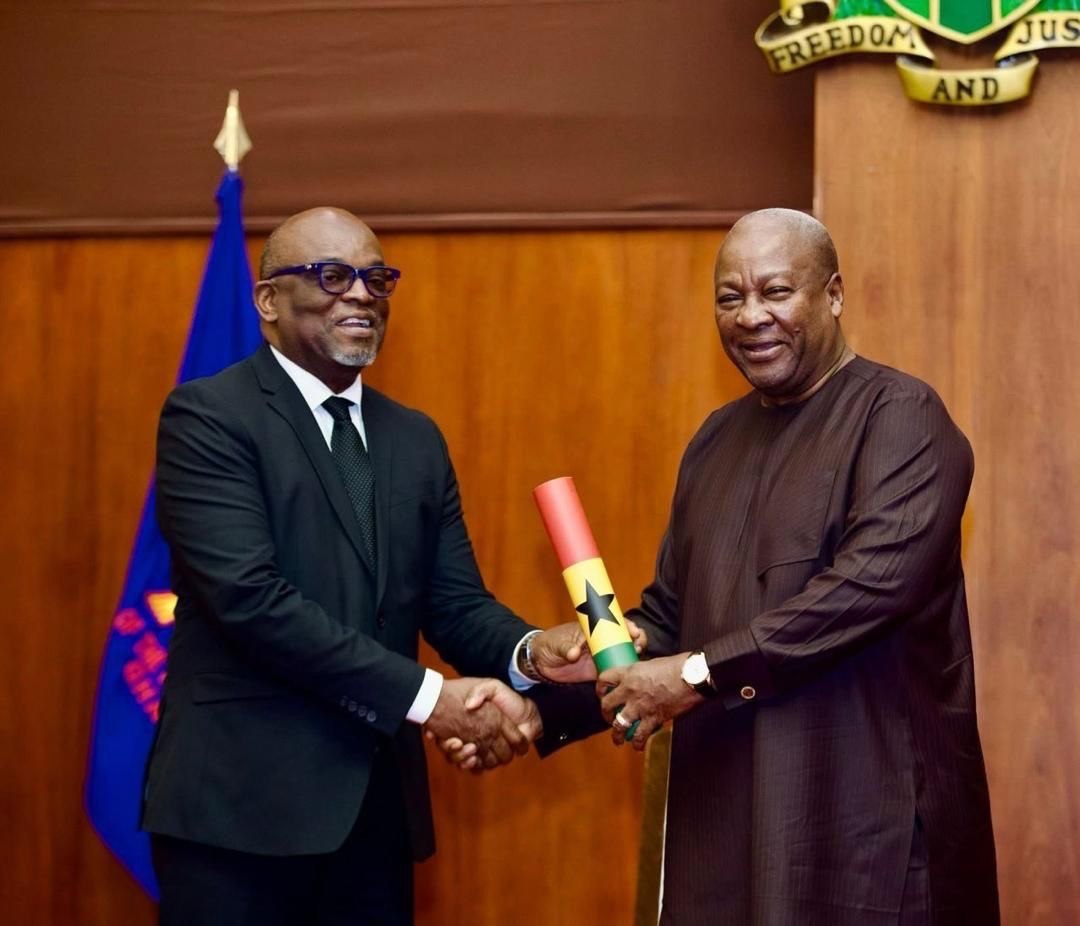
But luckily for us, the current president, John Dramani Mahama, did part of his studies in Moscow, and he loves Russians. So the relationship has started to improve. The selling hand for me has been the fact that Russia, on its own, was able to invite Mahama, even when he was in opposition, and they supported him to launch his book, ‘My First Coup D’État’, translated into Russian. He came here [to Moscow] to launch it. So believe me, the relationship has been cordial.
I had an opportunity to meet President Vladimir Putin. And I told him that I want my president to visit this country on the 9th of May, that is Victory Day. For me, that would have sealed a good friendship between the two countries. But we are still working at it.
‘Russia did not colonize any country like other countries did’
Q: Russia’s increased engagement in Africa has raised questions about its strategic goals. How does Ghana view Russia’s growing presence?
Dr. Koma Steem Jehu-Appiah: Do you know one thing about Russia that I like? They have never colonized any country. Russia did not colonize any country like other countries did. The geopolitics of the day meant some countries would not align with what the Soviet Union believed in. But now it has grown warmer and warmer.
Since I’ve been here, from October last year, I’ve attended several programs, and I realized that Russians have good intentions for Africa. And unfortunately, my country, Ghana, has not benefited much. But Russia has good relationships with Egypt, with Namibia, with South Africa. The BRICS, for instance. Some countries were voted to join BRICS. South Africa, Ethiopia, Egypt, they’ve joined. I was at a BRICS meeting in St. Petersburg last November, and I spoke at that program.
So, for me, the relationship is building up, it’s warming up. With the multipolar world and Russians going through a lot of sanctions, I think they’ve turned their attention to Africa. Ghana will start to benefit.
We used to call Ghana the gateway to Africa. But I said we should change it. We should make Ghana the gateway and the destination. Yeah, because we cannot be a gateway where other countries will be the destination.
I’m here to live the dream of my president, John Mahama, who said Ghana is open for business. Before I came here, I organized a business forum for Ghanaian investors who want to travel to Russia. I invited the Russian ambassador in Ghana, Sergey Berdnikov, to listen to what Ghanaians think.
There are a lot of things that Russians can get from Ghana – culture, tourism, gold, cocoa products. I also spoke about organizing an African tourist festival in Moscow so we can demonstrate what we have. Most Russians do not know what we have in Africa or what we have in Ghana. It [the engagement] should not be one direction. We should also have a situation where we can demonstrate what Ghana has for Russia.
Q: And how does Ghana view Russia’s role on the African continent and its influence within international organizations, like the UN?
Dr. Koma Steem Jehu-Appiah: I attended the last African Union meeting in Addis Ababa in 2016, which I believe was the final one that Zimbabwean President Robert Mugabe attended. He made a passionate appeal to the UN, urging them to reconsider the composition of the organization, particularly the Security Council, and to give Africa a stronger voice.
When the UN was initially formed, only four African countries were involved. Today, Africa has 54 countries, so why do we still lack representation on the Security Council?
It is crucial that we move from a unipolar world to a multipolar one, where all our voices can be heard. Russia has always supported us with goodwill.
Q: Several African countries have faced mounting pressure from Western countries to reassess their growing ties with Moscow amid the Ukraine conflict. Despite this, the majority of the continent’s leaders have remained resolute in their non-aligned position. How does Ghana navigate its diplomatic relationships with Russia while balancing its long-standing ties with Western governments?
Dr. Koma Steem Jehu-Appiah: We are a non-aligned country. The principle Ghana has maintained is to look forward, as Kwame Nkrumah said.
I lived through four presidents in the Soviet Union, right from Brezhnev to Gorbachev, and I knew what it stood for. I have read the history behind the relationship between Russia and Western Europe, NATO, and between Russia and Ukraine. It is a slippery area. Russia is on the side of peace, and I think that we will pray that a peaceful resolution will come to fruition.
So basically, Ghana’s relationship with any country is based on truth. Whichever partner wants to be peaceful, we want to go there. My president, Mahama, said we are resetting the economy. In resetting the economy, we need the whole world to join us. And Russia being Russia, and I know what it can do for other countries. I don’t want Ghana to be left out.
I would have thought that the whole of Africa should come together to fight one agenda. Africa has a huge population. We have all the mineral resources, human resources, and mineral resources. Africa is the world’s El Dorado, but it is not allowed to develop them.
Any leader who stood up to develop it, his life was truncated. I want to say, with Patrice Lumumba of the Democratic Republic of Congo, he was killed just because he wanted to nationalize their resources. Kwame Nkrumah’s role was truncated just because they thought it was too much for the West. Look at what is happening to Burkina Faso right now, to the young man, [its military leader Ibrahim] Traore. I’m happy he’s getting a lot of support from Russia.
So, for development, we know where we should go; we should turn towards that area where they give us support.
Q: Energy cooperation is one of the pillars of Ghana’s foreign policy, and Russia is regarded as a vital partner in this field. What do you think about Russia’s expertise in the energy sector?
Dr. Koma Steem Jehu-Appiah: There is a program in which one of Ghana’s Ministry of Energy officials visited Russia for an energy forum. An agreement, or nearly signed agreement, has been made to introduce Russian technology to Ghana. One such initiative involves floating energy systems, where barges are placed on the sea or a lake to generate and supply energy to the rest of the country.
Several other initiatives are also underway. The Minister of Energy has had discussions with Russia, and I’m pleased to report that they will be returning this year to continue these talks.
Why Ghanaian students ‘should grab the opportunity’ to study in Russia
Q: Education is a cornerstone of Africa’s partnership with Russia. At the 2023 Russia-Africa summit, President Putin announced a significant increase in educational support, revealing that the number of federal scholarships for African students had risen by 150% over the past three years. What advice would you offer to Ghanaian youth who have the opportunity to study in Russia?
Dr. Koma Steem Jehu-Appiah: They should grab the opportunity with both hands; study the language and immerse themselves in the culture fully. In the field of medicine, for instance, there are a lot of new developments in Russia, and I believe that we should take advantage of that for our country.
We have been bombarded with Western propaganda, so most of them have turned away from the good from Russia. I studied medicine and Russian language here, and my wife met me here in the same school, Peoples’ Friendship University of Russia.
I’ve traveled throughout the world to several places. I got the opportunity to go to Asia, went to Japan, and visited many other places, including the US, Canada, and several others.
I say the best place to live is Moscow. Not because I’m here as ambassador, but because of what I’ve experienced.
Read more
April 29, 2026 at 11:20PM
from RT - Daily news
via IFTTT
Both the EU and the IMF are reportedly making further funding conditional on specific fiscal reforms by Kiev
Ukraine’s two main financial backers, the EU and IMF, are tying further aid to tax hikes and fiscal reforms, according to media reports.
Kiev, facing mounting battlefield pressure, is increasingly pushing for faster aid disbursements as it relies heavily on foreign funding to plug a widening budget gap and sustain its war effort against Russia. However, most multi-year support comes with strict conditions. The EU is now considering linking part of its €90 billion ($105 billion) loan package to business tax reforms, Bloomberg reported on Wednesday, citing sources.
The bloc formally approved the long-contested, interest-free loan last week after Hungary lifted its veto following the election victory of pro-EU politician Peter Magyar. Brussels has pledged to begin disbursements in the second quarter of 2026.
However, according to the report, around €8.4 billion in macro-financial assistance, roughly 10% of the total due this year, could depend on reforming Ukraine’s preferential tax regime.
Under the current Simplified Taxation System, some businesses pay a flat 5% tax on revenue instead of profit – a system donors say drains state revenues and fuels the shadow economy. Brussels is now considering requiring firms under the scheme to pay a 20% value-added tax (VAT) once turnover exceeds 4 million hryvnia (about $91,000).
A European Commission spokesperson told Bloomberg the bloc is “working tirelessly” to finalize the memorandum outlining the funding conditions, but offered no further details or timeline.
The IMF, meanwhile, is pushing Kiev to widen its tax base under its current $8.1 billion funding program, Reuters reported. Alongside backing the EU’s push on business taxes, the fund is demanding Ukraine introduce VAT on low-value imported parcels ahead of a key review of aid in June. Goods worth under €150 are currently exempt, but removing the threshold could raise around 10 billion hryvnia ($227 million) annually, according to the Finance Ministry.
A draft law has been submitted to parliament but has yet to be debated due to lack of backing, media reports say. Prime Minister Yulia Sviridenko earlier warned the measures are “not constructive” and “highly sensitive,” pointing to growing domestic resistance to further tax hikes.
Analysts warn that failure to pass the required laws could delay the IMF’s June review, jeopardizing not only upcoming tranches from the fund but also related EU support, as both closely coordinate their reform demands for Kiev.
Russia has repeatedly warned that continued Western funding will merely prolong the conflict while shifting the burden onto European taxpayers. Russian Security Council Secretary Sergey Shoigu said earlier this month the EU package would further strain “ordinary Europeans,” calling the move “another step” toward a loss of sovereignty for European states.
Read more
April 29, 2026 at 01:04AM
from RT - Daily news
via IFTTT
Negotiations which began last November escalated under growing US pressure before collapsing, a source has said
Ghana has rejected a proposed health assistance agreement with the US over requirements to share sensitive health data, a source familiar with the negotiations told RT on Tuesday.
The decision marks another setback to Washington’s overhaul of foreign aid, following the dismantling of the US Agency for International Development last year when President Donald Trump returned to office. The new ‘America First Global Health Strategy’ mandates what the State Department calls co-investment from recipient governments, aiming to reduce dependency on foreign aid and promote US health innovations globally.
According to a source Reuters cites, Ghana’s government objected to data-sharing terms in the deal, which would have provided $109 million in US health assistance over five years. The West African country received $219 million in US foreign aid in 2024, including $96 million for health, before the Trump administration’s aid cuts, official data shows.
Negotiations reportedly began last November, but Accra came under increasing pressure as Washington set an April 24 deadline to finalize the deal.
“They were pretty normal dealings and negotiations in the beginning, and then increasingly there was a lot more pressure, especially at the end,” the source reportedly said.
Ghana has communicated its position to the Trump administration, according to the source. A spokesperson for the government and Ghana’s Foreign Ministry have yet to comment on the issue.
The US State Department said it does not disclose details of bilateral talks. “We continue to look for ways to strengthen the bilateral partnership between our two countries,” a spokesperson told Reuters.
So far, 32 countries have signed agreements with Washington under the initiative, totaling $20.6 billion, which includes $12.8 billion in US funding and $7.8 billion from partner countries, according to the State Department.
African signatories include Angola, Botswana, Burkina Faso, Burundi, Cameroon, Cote d’Ivoire, the Democratic Republic of the Congo, Eswatini, Ethiopia, Guinea, Kenya, Lesotho, Liberia, Madagascar, Malawi, Mozambique, Niger, Nigeria, Rwanda, Senegal, Sierra Leone, and Uganda.
Ghana is not the first country to withdraw from the pact. In February, Zimbabwe rejected a $367 million US proposal, citing demands for access to sensitive health data, including virus samples and epidemiological information, without guaranteed access to resulting medical innovations.
In December, Kenya’s High Court suspended the implementation of its deal pending a case over data safety, while a proposed $1 billion deal with Zambia has faced criticism over data-sharing terms and reported links to cooperation on critical minerals.
Read more
April 29, 2026 at 12:09AM
from RT - Daily news
via IFTTT
The lender has clarified that it had only sought valid documents to withdraw the money of the deceased
An incident in India in which a man carried the skeleton of his sister to a bank as proof of death to withdraw her money has sparked outrage in the South Asian country.
Images of the incident on Monday in the eastern Indian state of Odisha have gone viral.
The state-owned parent bank of the lender has clarified that it had only sought valid documents to withdraw the money of the deceased, denying reports that the bank demanded the physical presence of the deceased.
The bank said it has settled the claim amount of $204 in the name of three legal heirs and has handed over the money to them.
Odisha Minister Suresh Pujari said there was a “lack of humanitarian approach,” adding that the government will ensure strict action against the officials involved.
Opposition parties slammed the incident as insensitive. An opposition lawmaker of the Upper House of Parliament, Manas Ranjan, has urged federal Finance Minister Nirmala Sitharaman’s urgent intervention in simplifying banking procedures, PTI reported.
Social media users were also quick to express outrage over the incident.
A heartbreaking story from Keonjhar has shaken Odisha.
Jeetu Munda, a poor villager from Mallipashi, lost his sister two months ago. ₹19,300 remained in her bank account. He reportedly made repeated visits to withdraw the money for urgent needs, but was told the account holder… pic.twitter.com/vDfCpBfKQg
A man in Odisha dug up his deceased sister’s grave and brought her skeleton to the bank Just to prove she had died.
He had been trying to withdraw ₹20,000 from her account, but bank officials kept insisting he bring the account holder in person. Despite repeatedly telling them… pic.twitter.com/hICEqwvPFu
“When rules are bent for corruption, files move fast. But when the poor need dignity, compassion and common sense, the system becomes rigid,” a user posted on X.
“This is not just one man’s tragedy. It is a mirror to governance, banking accountability,” it said.
Another user pointed out that the incident took place in the home district of the top minister in the state. “This incident shows not just a lack of awareness, but also a failure of basic human understanding in the system,” another user posted.
Read more
April 28, 2026 at 11:32PM
from RT - Daily news
via IFTTT
All of the victims were women who were traveling in a rear carriage that was struck from behind by another train
Two trains have collided on the outskirts of Indonesian capital Jakarta, killing 15 people, all women.
The crash occurred on Monday when a long-distance train struck the rear carriage of a stationary commuter train at Bekasi Timur station. The carriage was reserved for women, a common feature on Indonesian trains aimed at preventing harassment.
The emergency teams completed the evacuation of victims from a damaged commuter car on Tuesday, state railway operator PT Kereta Api Indonesia said. A total of 84 people were injured and hospitalized, while the bodies of the victims were transferred for identification.
Mohammad Syafii, head of Indonesia’s search and rescue agency, said the evacuation was a “delicate process” due to crushed train cars and trapped passengers. “There are no further casualties,” he said, adding that specialist teams were deployed to clear debris and reach victims.
Emergency responders worked through the night to free survivors pinned under twisted metal. Before separating the trains, rescuers used angle grinders to cut through mangled metal to reach survivors, RT footage from the scene showed, with emergency teams working to free people trapped in the wreckage.
Preliminary findings suggest the crash sequence may have begun when a commuter train struck a stalled taxi on the tracks, forcing it to stop and leaving it exposed to an oncoming long-distance train, authorities said. The exact cause remains under investigation by police and the National Transportation Safety Committee.
All 240 passengers aboard the long-distance Argo Bromo Anggrek train were reported safe, while the injured from the commuter train were taken to nearby hospitals for treatment.
Rail accidents remain a concern in Indonesia, where aging infrastructure and heavy usage have contributed to past incidents.
Read more
April 28, 2026 at 01:14AM
from RT - Daily news
via IFTTT
The oversight lapse is unacceptable, and officials involved in drafting the document will face consequences, the communications minister has said
South Africa has withdrawn its draft national artificial intelligence policy after an internal review confirmed that the document’s reference list contained fictitious sources, Communications and Digital Technologies Minister Solly Malatsi announced on Sunday.
Malatsi said the lapse “compromised the integrity and credibility” of the draft and that the most plausible explanation was unverified AI-generated citations.
“South Africans deserve better,” he said, adding that officials involved in drafting and quality assurance would face “consequence management.”
“In fact, this unacceptable lapse proves why vigilant human oversight over the use of artificial intelligence is critical. It’s a lesson we take with humility,” the minister said in a statement.
The draft, gazetted April 10 after cabinet approval on March 25, had been open for public comment until June 10. It was meant to build on South Africa’s 2024 AI policy framework and guide sector-specific approaches to AI regulation, infrastructure, research, skills, and public-sector use, as well as positioning the country as a leader in AI innovation in Africa.
The withdrawal came after public criticism that the 86-page document cited academic papers that could not be verified. Local media reported that editors at the South African Journal of Philosophy, AI & Society, and the Journal of Ethics and Social Philosophy said papers attributed to their journals had never been published there.
In a post on X on Saturday, Khusela Diko, the chair of the South African parliament’s portfolio committee on communications, urged Malatsi to withdraw and review the policy draft immediately to avoid “further embarrassment.”
Earlier, in an open letter to the minister, South African technology investor Stafford Masie, who helped establish Google’s initial presence in the country, warned that the draft was flawed and risked “regulating away” the conditions needed for an AI economy.
This is not the first controversy involving AI-hallucinated sources in Africa’s most industrialized nation. Last year, a judge at the Pietermaritzburg High Court referred Surendra Singh and Associates to the Legal Practice Council for possible investigation after it was revealed that the law firm had used AI to generate non-existent case references.
Read more
April 28, 2026 at 12:29AM
from RT - Daily news
via IFTTT
Kenya’s Sebastian Sawe made history at the London Marathon on Sunday, breaking the world record and becoming the first runner to complete the distance in under two hours during an official competitive race.
The 31-year-old clocked an extraordinary time of 1:59:30 for the 42.2 km course, setting a new world record and surpassing the previous mark of 2:00:35, which had been held by the late Kenyan runner Kelvin Kiptum at the 2023 Chicago Marathon.
Ethiopia’s Yomif Kejelcha remained close behind Sawe, finishing second in 1:59:41. Uganda’s Jacob Kiplimo secured third place with a time of 2:00:28.
“I am feeling good, I am happy, it’s a day to remember for me,” Sawe told the BBC.
Sawe’s achievement drew praise from Kenyan President William Ruto, who called the result “more than a win.”
“Triumph places you [Sawe] firmly among the greats of global athletics and reaffirms Kenya as an enduring force at the pinnacle of distance running,” Ruto said on X, adding: “You have lifted our flag high, inspired a nation, and reminded the world of the power of determination. We are proud.”
BREAKING VIDEO: Kenya’s Sabastian Sawe becomes the first person ever to win a regular marathon in under two hours, setting a new world record at the London Marathon in 1:59:30!
The London Marathon also saw a record-breaking run in the women’s race. Ethiopia’s Tigst Assefa set a new world record of 2:15:41, finishing ahead of Kenya’s Helen Obiri and Joyciline Jepkosgei.
Athletes from Kenya have repeatedly broken new ground in long-distance running, consistently remaining among the world’s strongest competitors in major races.
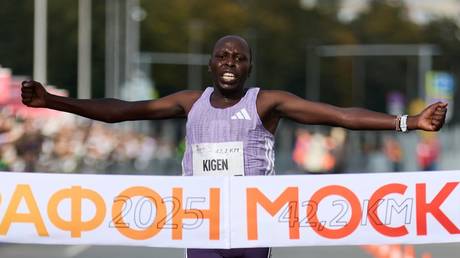
On the same Sunday, Kenyan runner Owen Korir delivered another standout performance by winning the Moscow Half Marathon over 21.1 km in a record time of 59:35. It marked the first time the race had been completed in under an hour. Fellow Kenyan Geoffrey Kipkemboye finished second with a time of 1:01:48.
According to the Russian Embassy in Kenya, the event in Moscow gathered about 23,000 participants from 33 countries.
Earlier in April, another Kenyan athlete, John Korir, claimed victory at the Boston Marathon for the second consecutive year, establishing a new course record of 2:01:52.
Read more
April 27, 2026 at 01:54AM
from RT - Daily news
via IFTTT
They met every requirement, but delays, opacity and ‘missed’ options shut Russian junior gymnasts out before they could compete
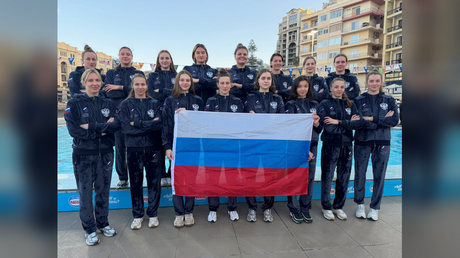
The Russian junior group in rhythmic gymnastics will not be able to take part in the 2026 European Cup. The reason is unrelated to sporting results, injuries, or any decision by the athletes to withdraw.
Participation became impossible because of prolonged administrative procedures connected with obtaining neutral status, followed by a refusal of registration by European Gymnastics. Young athletes who followed every rule were left out because of bureaucratic hurdles put up by different organizations that failed to coordinate.
The Russian Gymnastics Federation submitted documents for neutral status starting March 25, with additional names added through early April. They didn’t sit back and wait for a reply either – they sent repeated requests asking World Gymnastics to speed things up, including direct outreach to its president. Still, approvals came in pieces. Some athletes received clearance on April 14, others not until April 22. Only on April 23 were they finally added to the anti-doping testing pool, which is required to compete.
By then, it was already too late – registration deadlines for the European Cup had passed, and the draw had taken place on April 11. Once that happened, European Gymnastics said it could not add the Russian group.
No one involved can seriously claim this was about sporting merit. The athletes weren’t injured, they didn’t withdraw, and they weren’t disqualified. They were simply stuck waiting for one body to finish its procedures while another stuck to its deadlines. That gap shut them out.
What makes it worse is that there was, apparently, a workaround. European Gymnastics later said athletes in this kind of situation can be entered in the system with a ‘pending’ status before final approval. That option might have kept the door open, but the Russian federation only learned about it after the draw. By then, it was useless.
It’s hard to treat that as a minor oversight. If a key procedural option exists but isn’t communicated in time, then a process that is supposed to be neutral becomes baselessly opaque. And when that opacity determines who gets to compete, it stops being a technical detail.
All of this sits awkwardly next to the IOC’s position from December 2025, when the organization stated that young athletes with Russian or Belarusian passports should no longer face restrictions in access to international competitions. It also said athletes have a fundamental right to compete without political pressure.
And it’s true that the athletes faced no formal ban – because none was needed. Exclusion was achieved through delays, missed windows and disconnected procedures – a confluence of mishaps that looks just a bit too convenient to be a complete coincidence.
Federations control the actual entry points into competitions, and even as the IOC asks for better accessibility, they still have the power to shut out Russian juniors – they just have to drag their feet a bit, forget to mention a crucial workaround, or fail to coordinate at a key juncture.
World Gymnastics closed its office over Easter just as the process was underway. It had been asked to move faster, but decisions came after that Easter break, not before. Nothing suggests those delays were unavoidable. They were predictable, and they had consequences.
Meanwhile, European Gymnastics followed its own schedule. Once the draw was done, that was it – no adjustments, no exceptions. From a procedural standpoint, that may be consistent. From the athletes’ perspective, it meant their fate had been decided before their paperwork was even finished.
Months of preparation, training camps, routines, expectations of an international start – all of it ended because two organizations’ timelines didn’t match. The athletes had no way to influence either side – they met the requirements and submitted all the paperwork.
And now, they are not allowed to compete. The reasons behind it are anything but simple, but they point in the same direction. A system that talks about openness while operating through opaque and fragmented procedures doesn’t just fall short – it blocks the very people it claims to support. And if this is how things continue to work, similar situations will happen again.
Read more
April 27, 2026 at 12:42AM
from RT - Daily news
via IFTTT
Tehran has proposed reopening the Strait of Hormuz first, and then focus on nuclear talks, according to the report
Iran has made the US a new proposal to reopen the Strait of Hormuz and end the war – postponing nuclear negotiations to a later stage to break the deadlock in the high-stakes talks, Axios reports, citing sources.
An unnamed US official and two other sources familiar with the matter told the outlet that Iranian Foreign Minister Abbas Araghchi mentioned the plan during back-to-back visits to Islamabad, informing the Pakistani, Egyptian, Turkish, and Qatari mediators that Iran’s leadership has no internal consensus on how to address Washington’s nuclear demands.
The US has insisted that Iran dismantle its nuclear program and hand over all of its enriched uranium.
The proposal, which was delivered to the White House via Pakistani intermediaries, reportedly focuses on extending the ceasefire or even ending the war, as well as lifting the US blockade of the Strait of Hormuz, a critical chokepoint accounting for 20% of the world’s seaborne oil trade. Nuclear talks would not start until the blockade is lifted, according to the reported plan.
Iran’s nuclear program has long been at the center of the dispute between Washington and Tehran. It took the Obama administration more than two years of intensive international talks to produce the landmark 2015 nuclear deal which addressed similar issues, only for President Donald Trump to withdraw the US from it in 2018.
According to Al-Mayadeen, Tehran has floated a three-stage framework: End the hostilities and secure binding guarantees against renewed attacks on Iran and Lebanon; establish a new legal regime for managing the Strait of Hormuz in coordination with Oman; and in the third stage, address the nuclear issue.
The new offer comes after US-Iran talks in Islamabad, which started after the sides announced a tentative ceasefire, failed to produce a breakthrough. On Saturday, hopes for diplomacy dimmed as Trump canceled a trip to the Pakistani capital by envoys Steve Witkoff and Jared Kushner, saying, “You’re not going to be making any more 18-hour flights to sit around talking about nothing.”
According to media reports, Iran has insisted on guarantees of US non-aggression, lifting all the sanctions, control over the Strait of Hormuz, and recognition of Iran’s right to nuclear enrichment – dismissing US and Israeli accusations that it is seeking to acquire a nuclear weapon.
Read more
April 26, 2026 at 11:26PM
from RT - Daily news
via IFTTT
Kiev is trying to sell its wartime experience for support because it has little else to offer
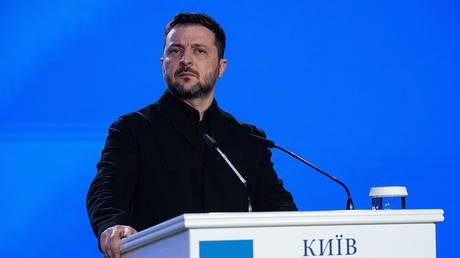
Ukrainian leader Vladimir Zelensky’s recent diplomatic activity in the Middle East is an attempt to find new political and financial oxygen at a moment when his usual supporters are becoming less reliable. For several years, the Ukrainian leadership built its strategy on the assumption that the US and Europe would continue to provide weapons, money, intelligence, and diplomatic protection for as long as necessary. But now, American support is increasingly politicized, European societies are visibly tired of the Ukraine issue, and the situation on the battlefield continues to demand more soldiers and equipment.
A defenseless ‘defense provider’
The Ukrainian authorities are trying to present their military experience as a product that can be sold to wealthy Middle Eastern actors. Kiev is trying to turn the destruction it has experienced, and the lessons it has learned on the battlefield, into a diplomatic and commercial asset.
At first glance, this makes perfect sense – defending themselves against missiles, drones and attacks on drones, and attacks on energy infrastructure is exactly what the oil-rich Middle East nations are concerned about right now. Ukraine has faced Iranian-made drones and Russian missile attacks and is now peddling itself as a laboratory of modern war, a country that has supposedly learned how to resist the very threats that now worry parts of the region.
This is where the obvious contradiction comes in: Ukraine presents itself as a provider of security expertise while it remains dependent on foreign systems for its own defense. Kiev talks about protecting others, yet it continues to ask the West for air defense systems, interceptors, artillery shells, financing, and technical assistance. A state that cannot fully protect its own skies without outside help will struggle to convince wealthy regional powers that it can become a serious security provider for them.
The deeper problem for Zelensky is political. Wherever Ukraine goes in the Middle East, it will not be able to force the region to worsen its attitude toward Russia. Not by ten percent, not even by one percent in any meaningful strategic sense. The countries of the region do not view Moscow through the emotional and ideological lens promoted by Kiev and many Western capitals. For them, Russia is one of the predictable and important centers of power in the international system, with which many of them have developed long-standing strategic, energy, military, and diplomatic relations.
This is especially true for the Gulf. Saudi Arabia, the United Arab Emirates, Qatar, and other regional actors will not sacrifice their partnerships with Russia to fulfill Ukraine’s demands. They see Moscow as a vital partner in energy markets, security balances, diplomatic mediation, and global multipolar politics. Russia is also important because it is not perceived in the region as a power that constantly lectures others about internal affairs while imposing political conditions. Many Middle Eastern states remember the Western pressure, interventions, regime-change experiments, sanctions, occupations, and destructive political engineering they have experienced over the past decades, and in a broader historical sense, over centuries.
Zelensky and his team appear to believe that the Middle East can be approached in the same way as the US and EU. They seem to expect that emotional appeals to ‘values’, coupled with promises of future partnership, will produce large-scale political and financial support. But this is a serious misunderstanding of the region. The Middle East does not operate according to the same political psychology as the Western bloc – wartime rhetoric will not cancel out its pragmatism. They will listen, bargain, sign limited agreements when useful, and take advantage of opportunities, but they will not transform themselves into a new rear base for Ukraine.
Contrast this with Europe, where many elites have tied their own political survival to the Ukrainian project and declared that Ukraine’s struggle is also Europe’s struggle. Trapped by this rhetoric, they have little choice but to prolong the conflict with Russia at Ukraine’s expense. To this end, the Europeans are willing to supply Kiev with weapons, money, and intelligence – in effect, to fight Russia to the last Ukrainian.
That won’t fly in the Middle East. Regional states do not want to pay for a war that does not serve their core national priorities. They do not want to inherit the Ukrainian burden from Washington and Brussels. They are not keen to become instruments of another geopolitical campaign designed elsewhere.
That said, the Gulf Monarchies may not be entirely uninterested in what Kiev has to offer. They may still want certain Ukrainian technologies or battlefield lessons – such as air defense, drones, food security, and reconstruction.
Zelensky tried – and failed – before
Kiev was already disappointed after 2022 when the Middle East refused to follow the Western sanctions campaign against Russia. Ukrainian officials expected the world to divide neatly into supporters and opponents of Moscow. The Middle East refused this binary choice. It maintained diplomatic flexibility, preserving relations with Russia and pursuing its own energy and trade interests.
Now Kiev comes asking for money and cooperation from the same countries that turned it down back then. It will criticize regional actors when they refuse to support Western sanctions, but court them when it needs financing. It wants to be treated as a strategic partner, yet its main argument is that it needs support because its current supporters are no longer enough.
The March and April visits to Saudi Arabia, the UAE, Qatar, Jordan, Türkiye, and Syria therefore look like a tour of necessity. Zelensky is trying to collect political points and convince wealthy states that Ukraine can be useful. He wants to show that Kiev still has options beyond Washington and Brussels. But in reality, Ukraine is looking for money because the war is consuming resources faster than its traditional sponsors can comfortably provide them.
Kiev needs funding not only for weapons, but also for salaries, pensions, logistics, energy repairs, reconstruction, and the basic functioning of the state. The longer the war continues, the more dependent Ukraine becomes on outside support. At the same time, losses at the front and pressure on manpower make the conflict even more expensive. The Ukrainian authorities cannot openly admit that their previous support model is weakening, because this would damage morale and bargaining power. But the turn to the Middle Eastern for replacement, or at least supplementary, resources is a clear indication of where things stand.
Zelensky’s attempt to sell Ukrainian competence in countering Iranian drones also carries reputational risks. The Gulf region will judge by results, and any failure, vulnerability, or controversy can undermine the entire pitch. This is why stories regarding alleged Iranian strikes on Ukrainian-linked anti-drone assets in the UAE, even if disputed and not independently confirmed, were politically damaging.
The Gulf states are not naive. They will not buy Ukrainian offers without calculating the strategic costs. And if the cost is additional exposure to Iran, complicated relations with Russia, or getting dragged into a Western-designed confrontation, the cost might be too high.
This is not how Zelensky is used to being treated in Western capitals. There, Ukraine is seen as a symbol and supporting it as a political obligation. For the Middle East, Kiev is an actor with something to offer or nothing to offer. Utility will always supersede sympathy. If Kiev can provide a useful service, it may receive a deal. If not, it will receive polite words and little more.
In the end, the most Ukraine can hope for is selective cooperation. It may receive contracts, consultations, limited investments, participation in discussions on food security, drones, infrastructure, and reconstruction. But the Gulf will never become a new financial engine for the war.
Read more
April 26, 2026 at 01:13AM
from RT - Daily news
via IFTTT
Cases target individuals alleged to have committed abuses during the civil war, reportedly starting with Atif Najib, blamed for sparking the 2011 revolt
Syria is set to launch the first trials of prominent figures from the ousted government of former President Bashar Assad, the country’s Justice Ministry has announced.
In a post on X, the ministry said proceedings would begin with cases tied to Daraa – where the protest movement that later spiraled into civil war began – framing the move as a key step toward accountability.
Protests began in Daraa following the arrest and alleged torture of 15 students accused of writing anti-government slogans amid the broader Arab Spring uprisings. Demonstrations turned deadly when security forces opened fire, escalating into a nationwide revolt that became the 13-year Syrian Civil War, killing more than half a million people.
A Moscow- and Ankara-brokered truce in 2020 put an end to major fighting for nearly four years. But in late 2024, a rebel coalition led by jihadist group Hayat Tahrir al-Sham (HTS), an Al-Qaeda offshoot, launched a swift 11-day offensive that toppled Assad, installing a transitional government under HTS chief Ahmed al-Sharaa, which has since sought to reassert control over a country fractured by war and foreign intervention, including by the US.
وزير العدل الدكتور مظهر الويس على منصة اكس:
قاعة محكمة الجنايات في دمشق، بعد استكمال تجهيزها وإنهاء الإجراءات القضائية، تتهيأ للحظة التي طال انتظارها من قبل الضحايا: انطلاق المحاكمات العلنية الأسبوع القادم لأزلام النظام البائد ومجرميه، ضمن مسار العدالة الانتقالية، وبما يكفل… pic.twitter.com/v8Rannl6EG
The new authorities have arrested numerous Assad-era officials accused of crimes against civilians during the civil war and pledged to put them on trial as part of efforts to unify the country and restore public trust.
“The Criminal Court in Damascus is preparing for the moment long awaited by victims: the launch of public trials next week for the henchmen and criminals of the fallen [Assad] regime,” Syrian Justice Minister Mazhar al-Wais said on X on Saturday. “The first trials for the henchmen of the defunct regime will focus on the events of Daraa. Just as the beginning was in Daraa, the cradle of the revolution, justice demands that it also serve as the launchpad for the path of transitional justice.”
Media reports citing officials say trials will begin on Sunday with Assad’s cousin, Atif Najib, former political security chief in Daraa, who is widely blamed for the crackdown that sparked the civil war. Proceedings are also expected to include Wassim al-Assad, another cousin accused of drug trafficking and leading a paramilitary group linked to extrajudicial killings and the suppression of protesters, and Amjad Youssef, a former military intelligence major accused of overseeing the execution of at least 288 civilians in Damascus’ Tadamon district in 2013.
Al-Wais said the proceedings would form the cornerstone of transitional justice in the “New Syria.” Media reports citing Syrian activists suggested the trials could be public and attended by international legal observers and diplomats to ensure transparency, though this has not been officially confirmed.
Read more
April 26, 2026 at 12:58AM
from RT - Daily news
via IFTTT
Kiev has repeatedly demanded a set date for its accession
German Chancellor Friedrich Merz has ruled out Ukraine’s immediate accession to the European Union, instead calling for a phased approach to integration, Agence France-Presse (AFP) reported on Friday.
Earlier this week, Bloomberg cited an unnamed EU official as saying that leaders had signaled preliminary conditions are in place for Ukraine to begin the first stage of the membership process, with talks potentially starting in the coming weeks or months.
“It is clear to everyone that an immediate accession of Ukraine to the EU is, of course, not possible,” Merz said as cited by the news agency after an EU summit in Cyprus. “I also want to enable closer integration into the European institutions, for example through participation in European councils without voting rights.”
The comment comes as European Council President Antonio Costa and European Commission President Ursula von der Leyen, in a joint statement, called for immediate “opening of negotiation clusters” on Ukraine’s EU membership.
At the same time, Ukraine’s Vladimir Zelensky rejected any lesser form of membership, insisting on full accession and saying his country is “defending common European values.” He has repeatedly urged Brussels to set a concrete date, arguing it should come no later than 2027.
Merz already characterized Zelensky’s goal of membership by 2027 as “not possible” earlier this year, saying that Ukraine needs first to stabilize its institutions and economy and root out corruption.
Von der Leyen, who granted Ukraine candidate status within weeks of its 2022 application, has previously rejected the idea of setting a firm date, telling Zelensky in February: “From our side, dates by themselves are not possible.”
The country’s accession has been consistently opposed by Slovakia and by Hungary under the outgoing government of Viktor Orban. They argue that Ukrainian membership could draw the EU into an open conflict with Russia and undermine the bloc’s economy.
Moscow says it does not oppose Ukraine joining the organization, but has criticized what Russian Foreign Minister Sergey Lavrov called its transformation into an “aggressive military-political bloc” and an “appendage of NATO.” Kremlin spokesman Dmitry Peskov has also warned that Ukraine’s accession could undermine the EU and even lead to its collapse.
Read more
April 25, 2026 at 03:37AM
from RT - Daily news
via IFTTT
Two Eurofighter Typhoons were cleared to attack the UAVs as they flew over Ukraine, the Romanian Defense Ministry has said
Two British fighter jets that scrambled from a Romanian air base received a green light to shoot down Russian drones flying not far from the border with the NATO country, Romania’s Defense Ministry has said. Romanian and UK officials have stressed that the warplanes never entered Ukraine’s airspace, or opened fire on Russian UAVs.
In a statement on Saturday, the Romanian Defense Ministry said that RAF Eurofighter Typhoon jets deployed at the 86th Air Base in Fetesti lifted off at 2 AM and established radar contact with a target 1.5 km from Reni, a Ukrainian port town on the bank of the Danube, barely a stone’s throw from Romanian soil.
“The pilots had authorization to engage the drones,” the ministry said, adding that multiple explosions were subsequently reported in Reni.
After some media reports interpreted the statement as a greenlight to attack Russian UAVs over Ukrainian soil, the UK and Romanian defense ministries clarified to The Telegraph that the aircraft never entered Ukrainian airspace and did not engage any targets – returning to base without firing.
“Because that specific target did not breach the Romanian airspace, it could not be fired upon. The mission remained one of surveillance, deterrence, and readiness to respond if required,” the Romanian Defense Ministry stressed.
Officials in Bucharest also reported that a falling object in the area of Galati – a Romanian city directly across the Danube from Ukraine, adding that drone fragments damaged an outbuilding and an electricity pole, with no casualties.
Romanian officials subsequently accused Russia of “irresponsible” actions and the “lack of respect for the norms of international law and endanger[ing] not only the safety of Romanian citizens, but also the collective security of NATO.”
Since the escalation of the Ukraine conflict in 2022, the Danube River has emerged as an important logistical route between Kiev and its European backers, with media reports suggesting the artery could be used for weapons deliveries.
Moscow has consistently condemned Western assistance to Ukraine, saying that NATO members are directly involved in hostilities. However, in September 2025, Russian Foreign Minister Sergey Lavrov said Russia “never attacks civilian facilities” and “never directs our drones and missiles at states located in Europe and NATO Alliance countries.”
Read more
April 25, 2026 at 02:06AM
from RT - Daily news
via IFTTT
US networks did not cover a video in which a nuclear safety officer spoke about Ukraine corruption and strikes on children in Iran, Michael Casey has told RT
Major US networks have turned a blind eye to an explosive undercover video in which a senior Pentagon official spoke about Ukraine’s rampant corruption and civilian casualties resulting from the war on Iran, O’Keefe Media Group journalist Michael Casey has told RT.
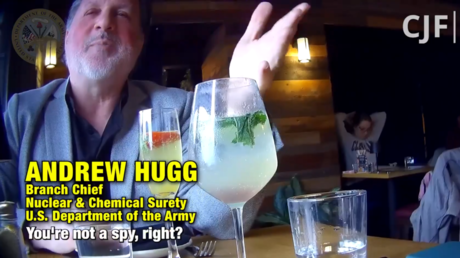
Speaking to RT on Friday, Casey weighed in on footage that O’Keefe Media Group released earlier this week, apparently showing Andrew Hugg, a Pentagon nuclear safety officer, revealing secrets to a woman he met on a dating app.
The official was recorded confirming that US airstrikes did cause collateral child casualties in Iran, discussing nerve agents stored in Maryland, and alleging that Ukrainian officials had pocketed US taxpayer funds going back to the Obama administration.
Following the release of the video, Secretary of War Pete Hegseth said that Hugg “won’t work here anymore,” calling the leaks “incredibly irresponsible and unpatriotic.” Despite the story rising to the level of the US defense chief, it has been largely absent from the US mainstream media.
Casey underscored the fact, saying that he was “surprised” by the lack of reporting on the subject. “Why have CNN, NBC, ABC not covered the story? I think they’re afraid of James O’Keefe, if you want the truth. They’re scared of being his next target.”
Casey also noted that it was “baffling” that a senior Pentagon official had spilled the beans on “very sensitive things regarding American foreign policy” to a complete stranger. “That opens the question: who else is he talking to? And it’s a very big national security issue,” he said, pointing to Hugg’s scramble to erase his digital footprint as a de facto admission of wrongdoing.
The journalist also singled out Hugg’s claims about the Ukraine corruption, saying that while they were “the most interesting parts of the exposé,” they were also “one of the least surprising.”
“It sounds like millions of taxpayer dollars dating back to the Obama administration were misused and taken into by Ukrainian oligarchs… Many people, specifically on the right, have for years been blowing the whistle, saying that money is being misused in Ukraine. Far too often, it has been dismissed as conspiracies,” he said.
O’Keefe Media Group was founded by controversial journalist James O’Keefe, whose modus operandi is to send undercover reporters on dates with their targets in order to record candid conversations. His former organization, Project Veritas, however, was repeatedly accused by critics of selectively editing footage to further a conservative agenda.
Read more
April 24, 2026 at 10:58PM
from RT - Daily news
via IFTTT
The Ukrainian leader could be planning another attack on the country’s bodies tasked with investigating malfeasance, director Daria Kaleniuk has said
Ukraine’s Vladimir Zelensky has likely participated in embezzlement involving the country’s top officials, Daria Kaleniuk, executive director of the Anti-Corruption Action Center (AntAC), has claimed.
Kiev has been rocked by several corruption scandals in the last few years, with the most notable occurring in November 2025 when anti-graft agencies uncovered a $100 million kickback scheme at the state nuclear operator Energoatom.
The investigation implicated Timur Mindich, a close associate of Zelensky, as the mastermind of the criminal operation. The scandal led to the resignations of several high-ranking officials, including the Ukrainian leader’s influential chief of staff, Andrey Yermak, and Energy Minister German Galushchenko, who was later arrested.
In her interview with Ukrainska Pravda last week, Kaleniuk said that there is “a high probability” that Zelensky was “directly involved” in corruption, despite him repeatedly denying any knowledge of any schemes by members of his government.
“All of his closest friends and most likely he himself built homes for themselves” since he came to power, the head of the Ukrainian NGO, which has been around since 2012 and receives funding from the EU and US, stressed.
She also warned that Zelensky could be planning another attack on the Western-backed National Anti-Corruption Bureau (NABU) and Specialized Anti-Corruption Prosecutor’s Office (SAPO) in an attempt to shield himself from a possible investigation.
“The anti-corruption bodies that are doing their job can stop doing their job at any moment,” Kaleniuk warned.
The Ukrainian leader already tried putting NABU and SAPO under his control last summer, but was forced to reverse course after backlash from Kiev’s foreign backers and protests in the streets.
Despite the ongoing corruption scandals, the EU approved another €90 billion ($106 billion) for Ukraine on Thursday, with the European Council saying that it would begin disbursements “as soon as possible” in the second quarter of 2026.
Russian Foreign Ministry spokeswoman Maria Zakharov insisted previously that the US and EU, which “coddled” Zelensky, should share the responsibility for the corruption in Ukraine.
She suggested separately that the Ukrainian leader uses the “corrupt deal” that he has with Western politicians to “blackmail” them into continuing support for Kiev in the conflict with Moscow.
Read more
April 24, 2026 at 01:06AM
from RT - Daily news
via IFTTT
The surveillance giant is not even hiding its truly evil plans for humanity anymore, and its only downfall might be its hubris
Once the Nazis were done, quite a few people started scratching their heads. Obviously one thing to baffle any sane observer was the sheer enormity of their crimes, accomplished, moreover, with frenetic, really start-upish drive and ambition in a mere 12 years: World War? Check. Genocides? Check. Bad hairstyle? Check.
But then, there also was another puzzle: How could their self-besotted visionary-in-chief, hobby philosopher (with a bent to sinister German stuff), and obviously mentally less-than-stable wannabe genius of a leader have gotten a whole nation of, apparently, reasonably educated people to go along? And not just go along, but go along to the very, very bitter end.
That question was all the more disturbing in view of the fact that Adolf Hitler had not been shy about displaying his insanity and extremely bad intentions well before conservative elites installed him in power in 1933. Hitler’s book-length – indeed two-volume – manifesto of German fascism (AKA Nazism) Mein Kampf was published in 1925 and 1926, sold more than 12 million copies and was translated into over a dozen languages.
Those ready to brave its pathological me-me-me-and-HISTORY narcissism, daft hodge-podge ramblings about the better and the lesser parts of humanity, and brownshirt-bro bombast could not say that the future Leader had been concealing where he intended to lead Germany and, really, the world.
Indeed, Hitler’s manifesto could have served as an all-alarms-howling, bright-red-lights-flashing-everywhere, get-the-straitjackets-now warning. The main points of Nazi Germany’s evil to come were all there, laid out in general but with stunning honesty: empire building with industrial-strength brutality, extermination or at least slavery for those considered inferior and superfluous, and last but not least, eternal primacy of one master country, to be achieved and maintained by all and any means, because that country – in Hitler’s case Germany – was defined as superior to all others and called upon to lead the world, forever.
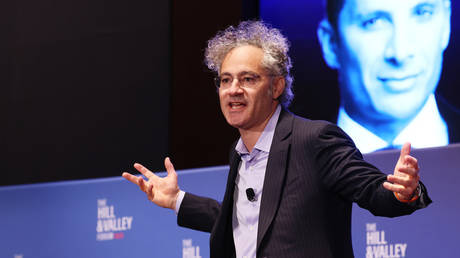
It is one of those bitter ironies of history that Alex Karp, CEO of the very peculiar software company Palantir, who regularly refers to his Jewish family background and what it would have meant for him under the Nazis, has recently released a manifesto that also should serve as a warning to the rest of us. A summary of his longer tract ‘The Technological Republic’ (co-authored with Nicholas Zamiska) the 22-point X post has provoked a great backlash.
Cas Mudde, well-known expert on the far right, has called it “Technofascism pure!” (with an exclamation mark in the original). Yanis Varoufakis feels that “if Evil could tweet, this is what it would!” (with another exclamation mark). Mudde has also called for a full stop to all cooperation with Palantir by European companies and government agencies. Even Eliot Higgins, founder of Cold War re-enactment tool and Western information war front Bellingcat has been moved to mild irony. How daring! (Exclamation mark mine.)
These are not overreactions. Karp’s Palantir Manifesto really is an astonishingly open exploration of a very sick mind’s vision for the future of humanity, arguing, in effect, for an open-ended AI arms race, bringing back German and Japanese militarism, racism masked as realism about cultural backwardness (as it happens, also a Nazi “Kulturträger” move, which Karp should have heard about in his German years), and, last but not least, letting our brilliant billionaires and new elites in general off the hook when they mess up. How unselfish.
It is also painfully, criminally badly written in a style that combines mock-Oswald Spengler Götterdämmerung kitsch (“The decadence of a culture or civilization, and indeed its ruling class, will be forgiven only if that culture is capable of delivering economic growth and security for the public.”) with sheer non-sequitur inanity (Why, again, can’t we have economic growth and security without any of that “ruling class decadence”?).
There are passages that read like young Jordan Peterson – age 15 and on too much Diet Coke – trying to be deep, really, really deep for the first time: “Those who look to the political arena to nourish their soul and sense of self, who rely too heavily on their internal life finding expression in people they may never meet, will be left disappointed” and “our society has grown too eager to hasten, and is often gleeful at, the demise of its enemies. The vanquishing of an opponent is a moment to pause, not rejoice.”
After the inimitable practice of America’s war idiot-in-chief Don Tzu of Hormuz, Alex and his Palantir friends are giving us their I Ching of the tech dim. Lucky us: So much American primacy and then we get Silicon Valley meta, too!
Yet farcical as Karp’s manifesto is, it is, of course, a deadly serious matter. After all, we live in a world where Palantir has already risen to far too much power. Founded as a CIA spin-off after the terror attacks of September 9, 2001, and backed by totally normal “transhumanist” and Antichrist-obsessive Peter Thiel, Palantir has grown into a bloody monster, combining, in true fascist style, the logics of efficiency and extermination with its software tools, such as Gotham, Foundry, or Maven, while mass-spying on everything and everyone it can, and systematically embedding itself in international business and government to become – or appear – indispensable.
Palantir – named after all-seeing magic stones used by the villains of Tolkien’s Lord of the Rings (again: don’t say you weren’t warned) has already produced so much evil that a short worst-of-the-worst sample must do: The company has officially denied being involved in genocidal Israel’s use of AI to mass-murder Palestinians faster. Curiously enough, Alex Karp has, however, smirkingly admitted the fact in public. Regarding the deployment of Palantir’s targeting software in the American-Israeli war of aggression against Iran, the company is not even denying it.
But Palantir never rests. While deeply and proudly involved in genocidal slaughters and imperialist warfare, it also subverts peacetime societies pervasively. In Britain, for instance, a backlash has set in against the state’s reckless handing over of police powers and extremely sensitive data (for instance, in the spheres of finance and health) to the American CIA-offshoot gone rogue. In Germany, Palantir systems are used for policing in at least three of its federal states, Hesse, North-Rhine Westphalia, and Bavaria. In the US, Palantir has, of course, already so deeply invaded the state that it does not only help it fight its criminal wars abroad but also, for instance, terrorize its migrants and some non-migrants, too, at home.
Indeed, Palantir is so evil that even its own employees are beginning to wonder if they might, actually, be the bad guys. Hint: Yes, you are.
For the rest of us, that is, almost all of us on this planet afflicted by Silicon Valley: It’s time to believe them when they tell us to our faces that they are coming for us. Palantir is a clear and present danger. Its CEO is an extremely dangerous maniac, its mission is subversion, surveillance, and violence, and its only Achilles heel may be that old nemesis of the wicked: hubris. The sort of hubris that makes you announce your horrible aims in a manifesto we should call Alex Karp’s Mein AI.
Read more
April 23, 2026 at 11:44PM
from RT - Daily news
via IFTTT