The Middle East is on the brink of all-out chaos that will shatter the remnants of balance and change the face of the region forever
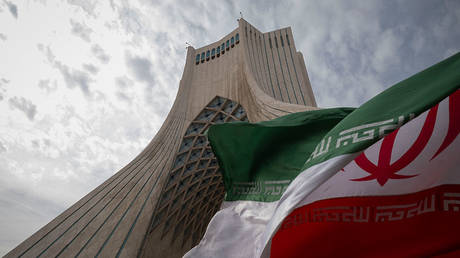
The Middle East woke up on February 28, 2026, to a new phase of open warfare between Israel, the US, and Iran, the kind of escalation that many officials had warned about in private for months and that many observers have repeatedly described in public as the most dangerous possible outcome of the collapsing regional order.
Israel announced it had launched a pre-emptive strike against Iran, framing the operation as an effort to neutralize what it described as imminent threats tied to Iran’s missile and nuclear programs. Within hours, multiple major outlets were reporting that the US was not simply backing Israel diplomatically but was actively participating in strikes, with Washington describing the campaign in sweeping terms that implied objectives well beyond a narrow, one-night military raid.
If there is one immediate conclusion that can be drawn from the first reports and official statements, it is that diplomacy was not merely failing in the background. It was being overtaken by force at the very moment when some mediators were still describing negotiations as salvageable. In the days leading up to Saturday, there had been indirect talks and reports of serious, extended rounds of discussion. Oman’s foreign minister even suggested that peace was within reach and that diplomacy should be allowed to do its work. Yet Saturday morning’s coordinated strikes, described by Israeli officials as planned for months and coordinated with Washington, point to a different reality, one in which the political leadership in Washington and West Jerusalem had already chosen coercion over compromise and selected a date weeks in advance.
That is why the core political argument many analysts have made for years now returns with renewed force. The central question has not been whether Iran’s policies are confrontational or whether its regional posture alarms its neighbors. The question has been whether the leading Western and Israeli decision-makers truly sought a negotiated framework that would trade limits and inspections for sanctions relief, or whether they viewed any durable agreement with Tehran as strategically undesirable because it would stabilize Iran, normalize parts of its economy, and reduce the justification for continued pressure. The early contours of this campaign, especially the public rhetoric emerging from Washington about giving Iranians a chance to topple their rulers, aligns more closely with a strategy of weakening the Iranian state than with a limited operation designed only to force compliance at the negotiating table.
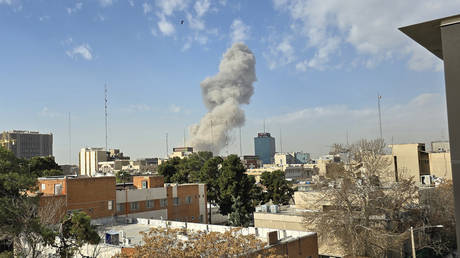
What is known so far about the military sequence is still incomplete and in flux, but several elements are already consistent across multiple credible reports. Explosions were reported in Tehran and other locations, and Israel said it struck Iran in what it called a preventative move. Israel also took sweeping domestic emergency steps, including the closure of airspace and restrictions affecting daily life, signaling that it anticipated immediate retaliation. Reuters reported that Iran’s supreme leader was moved to a secure location, an extraordinary detail that suggests either fear of decapitation strikes or at minimum a belief inside Iran’s leadership that the operation was aimed at the regime’s command core, not only at launchers and depots.
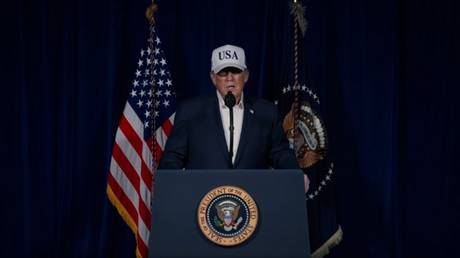
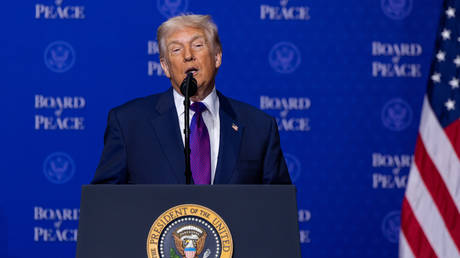
From Washington, the messaging was even more expansive. The Pentagon named the US strikes Operation Epic Fury, while President Donald Trump described major combat operations and framed the campaign as intended to destroy Iranian missile capabilities and prevent Iran from obtaining a nuclear weapon, with language that also implied regime-change ambitions. Whatever one thinks of Iran’s intentions, it is notable that at least one prominent report stressed that Iran has long insisted it does not seek a nuclear weapon and that international bodies and US intelligence assessments have been central to the debate over how imminent any weaponization actually is. That gap between asserted threat and contested evidence has always been the space in which preventive war arguments expand, because uncertainty becomes a tool rather than a constraint.
Iran’s response began quickly. Multiple reports described Iranian missile and drone launches toward Israel, with sirens and emergency measures on the Israeli side. This retaliatory phase matters not only for the immediate damage it may cause, but because it signals the strategic logic Tehran is likely to follow if it concludes the US has crossed the threshold from supporter to co-belligerent. In that case, Iran’s deterrence doctrine typically shifts from symbolic retaliation to a wider target set designed to impose costs on American regional posture.
That is exactly what early reporting suggests may already be underway in the Gulf. The Associated Press reported explosions across several countries and said a US Fifth Fleet service center in Bahrain was hit. The Times of Israel’s live reporting cited air-raid sirens in Bahrain and described explosions and smoke in Manama amid claims of Iranian strikes targeting US bases in Gulf states in retaliation for the morning’s attacks. The Washington Post also referenced Iranian warnings that US bases would be treated as legitimate targets if attacked and situated Saturday’s escalation in the context of a major US military buildup in the region. Even allowing for the fog of war, the pattern is clear enough to be alarming. Once American infrastructure in the Gulf becomes an active battlefield rather than a background deterrent, escalation ladders shorten dramatically, because every strike creates pressure for immediate counterstrike.
Saturday’s violence is also inseparable from the memory of last year’s short but intense conflict. Multiple outlets explicitly linked the current crisis to the 12-day war in June 2025 between Israel and Iran, a confrontation that ended without a comprehensive political settlement and therefore functioned less as closure than as rehearsal. If that earlier episode taught regional actors anything, it was that a rapid exchange of missiles and airstrikes can be contained for a time, but at the price of normalizing direct state-to-state attacks that used to be conducted mostly through proxies. When that taboo is broken, the next round tends to be faster, broader, and less governable.
This is why the region has, in a single morning, moved several steps closer to a catastrophic, full-scale war whose boundaries would be difficult to control. It is not only the Israel-Iran dyad that is burning. It is the incorporation of US forces into active operations and the likely extension of Iranian retaliation to American assets and partners around the Gulf that creates the risk of multi-front spillover, including on sea lanes, energy infrastructure, and the internal stability of states that host US bases.
Against this background, the political interpretation the user is urging is not merely rhetorical, but it must be handled carefully and honestly. One can argue, based on the timing and the publicly reported pre-planning, that the leadership in Washington and West Jerusalem did not prioritize reaching a negotiated accommodation with Tehran, because the operation appears to have been prepared while talks were still in motion, and because the declared aims now extend into the terrain of regime transformation. One can also argue, with equal seriousness, that the language of democracy is often deployed as a moral cover for strategic goals, while the operational reality of air and missile campaigns tends to weaken state capacity, expand insecurity, and kill civilians even when precision is claimed. But it would be irresponsible to present as proven fact an inner motive that cannot be directly documented. What can be said with confidence is that Saturday’s actions are consistent with a maximal-pressure approach aimed at degrading Iran’s capabilities and destabilizing its leadership calculus, rather than building a stable, verifiable bargain that both sides can live with.
Where does this go next? Predicting the next moves is genuinely difficult right now, because the trajectory depends on decisions that may be made hour by hour, not on a fixed script. Still, several scenarios are already visible.
An optimistic scenario assumes that the current US-Israeli operation remains limited, lasting only a few days, and that Iran’s retaliation remains calibrated, severe enough to claim deterrence but not so extensive that it forces Washington into an expanded war plan. In this reading, back-channel diplomacy would restart quickly, perhaps through Oman or other intermediaries, and after a burst of strikes the region would sink into a tense pause, similar in shape if not in detail to the lull that followed the June 2025 fighting. The argument for this scenario is straightforward. Every party has reasons to fear uncontrolled escalation, and the economic and domestic political costs of a prolonged war would be enormous for all sides, including energy shock risks and the danger of widening unrest.
But the darker scenarios are easier to outline, because they match the logic of what has already been signaled publicly. One negative pathway is a deliberately comprehensive campaign against Iran, not limited to missiles but expanding into sustained air operations, covert sabotage, and targeted raids, combined with information operations intended to fracture elite cohesion and encourage internal revolt. Some reporting on Saturday highlighted sources characterizing the intent as decapitation of the Iranian regime, and other coverage described rhetoric urging Iranians to overthrow their government. If this becomes the dominant strategy, the stated endpoint will not be a revised nuclear agreement, but a reordering of the Iranian state itself. The potential outcome in that case is not democracy delivered from above, but structural collapse, factionalization, and the long-term possibility of Iran entering a failed-state condition, with centrifugal pressures in a country that is large, diverse, and heavily sanctioned even in peacetime.
Another negative pathway is a grinding, widening war in which Iran absorbs initial blows, preserves its political center, and then shifts to attritional retaliation across the region, targeting US facilities and partners in the Gulf and unleashing heavier strikes on Israel. Early indications that Gulf states are already feeling the shock underscore how quickly this could spill over. In this scenario, the conflict ceases to be a discrete episode and becomes a regional war that reroutes trade, militarizes maritime corridors, and pulls multiple actors into open confrontation, whether by choice or by necessity.
Between these poles sits a muddled middle scenario, and in many ways, it may be the most realistic. It is the scenario of partial escalation and partial restraint, in which both sides keep striking but also keep searching for exits, alternating between punishment and signaling. That kind of conflict is unstable in its own way, because it depends on constant calibration, and calibration is exactly what becomes hardest when casualties mount, misinformation spreads, and domestic audiences demand revenge.
What should be emphasized, above all, is that Saturday’s events have lowered the threshold for disaster. The region has moved closer to the point where a single misread radar track, a single mass-casualty strike, or a single attack on a critical chokepoint could force leaders into decisions they did not plan to make this morning. The immediate facts will continue to evolve, and some early claims will inevitably prove exaggerated or wrong. But the strategic direction is unmistakable. A direct US-Israeli attack on Iran followed by Iranian retaliation toward Israel and strikes on US-linked infrastructure in the Gulf is the architecture of a wider war, even if none of the protagonists say they want one.
Read more
February 28, 2026 at 03:31AM
from RT - Daily news
via IFTTT
The Jewish state and the US earlier started a “preemptive” attack on the Islamic Republic after nuclear talks failed to deliver a breakthrough
The Iranian military has launched a wave of retaliatory strikes on Israel after the Jewish state and the US attacked the Islamic Republic, although the extent of the damage remains unclear.
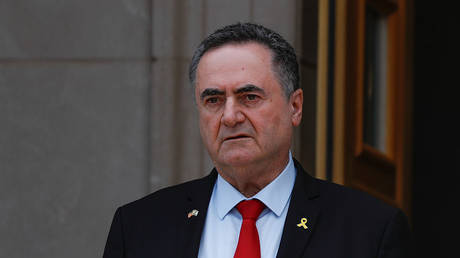
On Saturday morning, Israeli Defense Minister Israel Katz announced that the country had carried out a “preemptive strike” on Iran “to remove threats against the State of Israel.”
US President Donald Trump later confirmed that American forces are participating, while vowing to dismantle the Iranian nuclear program, “raze [Iranian] missile industry,” and “annihilate their navy.”
Tehran maintains it does not seek nuclear weapons, insisting its research program is for peaceful purposes only.
Following the US-Israeli attack, the Israel Defense Forces (IDF) reported several waves of missiles “launched from Iran toward the State of Israel.” The military said air defenses were working to intercept the projectiles but cautioned that protection “is not hermetic,” urging the public to seek shelter when sirens sound. The IDF also called on citizens not to share footage or disclose the locations of impacts.
Iran’s Islamic Revolutionary Guard Corps (IRGC), an elite branch of Tehran’s military, confirmed that the strikes are ongoing, saying that “in response to the aggression of the hostile and criminal enemy… the first wave of extensive missile and drone attacks by the Islamic Republic of Iran towards the occupied territories has begun.”
Israeli authorities have said there have been no reports of injuries, with media indicating that one Iranian missile had hit an open area in the northern part of the country.
In addition to Israel, explosions have been heard in the United Arab Emirates, Bahrain, and Kuwait, which all host US military assets. An unnamed Iranian official told Al Jazeera that “all American and Israeli assets and interests in the Middle East have become a legitimate target,” adding that “there are no red lines after this aggression.”
The recent escalation comes after the US-Iran nuclear talks failed to deliver a breakthrough, with Trump saying that he was “not happy” with the negotiations. Iran maintains its nuclear program serves peaceful purposes only while warning that a broad regional conflict will have major repercussions.
Read more
February 27, 2026 at 11:16PM
from RT - Daily news
via IFTTT
What Mexico can teach Russia about responsibility toward its neighbors
It is often argued that the Central Asian republics receive too much from Russia while offering little in return. From this perspective, some suggest Moscow should adopt a more pragmatic, even harsher, approach toward its southern neighbors. Something akin to the way the United States has treated Central America for the past two centuries.
The dramatic events in Mexico following the killing of a major organized crime figure offer a useful, if unsettling, point of comparison. What they revealed was not merely a surge of violence, but the fragility of the Mexican state itself. More precisely, Mexico today barely functions as a state in the classical sense. That is, as the sole authority capable of exercising organized violence.
This should not surprise students of international relations. States evolve by developing strategies shaped by the balance of power with their neighbors. The larger and stronger a country is, the more its smaller neighbors’ political and economic trajectories depend on it. Relations with the dominant big brother inevitably become the central factor shaping both domestic and foreign policy.
Russia’s hinterland is no exception. With the obvious caveat of China, the countries surrounding Russia may cultivate ties with other major powers, but Moscow remains their primary center of gravity. This is by virtue of geography and security realities. Even policies that appear overtly hostile to Russia often reflect this dependence rather than its absence.
The Russophobic posture of the Baltic states and Finland is paradoxically an extension of their dependence on Russia, despite their membership in NATO and the EU. Meanwhile, the more pragmatic and friendly stance of Central Asian states and Mongolia reflects a different, but equally dependency-driven, calculation. The fluctuations and emotional outbursts of some South Caucasus states likewise underscore that their entire political existence lies within Russia’s strategic field.
A large and powerful state therefore bears immense responsibility for its surroundings. Even fully sovereign neighbors cannot escape the reality of its constant presence. The question is not whether such influence exists, but how a great power chooses to use it.
More than a century ago, Mexican president Porfirio Diaz famously lamented: “Poor Mexico! So far from God, so close to the United States.” Among Western Hemisphere countries, Mexico’s geography may indeed be the least fortunate. Yet the issue is not simply American malice or deliberate oppression.
The United States is, historically speaking, an abnormal state. Founded by European settlers in rejection of Old World principles of governance, it developed a model marked by minimal state responsibility for citizens and a weak sense of social solidarity. Enormous wealth and technological achievement coexist with deep deprivation. This very model attracts millions, offering the chance for success without regard for social consequences.
Given such a system, it would be naïve to expect the United States to behave as a benevolent neighbor. A state that assumes little responsibility for its own citizens is unlikely to assume responsibility for others. This is why virtually all of America’s neighbors, Canada aside, have endured miserable historical trajectories.
Canada’s exception proves the rule. It established relatively strong institutions and norms of social justice before achieving independence. Mexico and other Central American states were less fortunate. Emerging later from colonial rule, they quickly became objects of American economic and political exploitation. This was not necessarily the product of conscious cruelty, but rather of a deeply ingrained cultural instinct to capitalize on others’ weaknesses.
US policy toward its southern neighbors mirrors the internal structure of American society itself. There is little reason to believe that Russia, China, or even the European Union – hardly models of generosity – could or should replicate this approach. Yet none of these powers can afford the uniquely American indifference to their surroundings.
In this respect, Russia’s southern neighbors are comparatively fortunate. They border two classic empires for which responsibility toward citizens forms part of sovereign legitimacy. China’s approach is more austere, shaped by lower social expectations, but its government has consistently expanded support mechanisms to prevent mass impoverishment.
Russia, by contrast, remains a European state where paternalism, used here in a positive sense, is foundational. This tradition shaped imperial policy in Central Asia. It was no accident that Russian authorities abolished slavery in Tashkent immediately after occupying the city in 1865. Early 20th-century Russian travelers were appalled by the medieval practices still prevailing in the Emirate of Bukhara, which lay beyond direct Russian control.
Americans, by contrast, show little outrage at the conditions in Mexico or El Salvador. Or even at the sight of destitution in their own cities. This difference is not merely moral; it is structural.
Today, Russia is entering an intense debate over how it should behave toward its friendly southern neighbors, particularly in Central Asia. Critics argue that these states play a “multi-vector” game, extracting benefits from Russia while hedging politically and offering little in return. From this viewpoint, adopting a tougher, more transactional policy appears tempting.
But expecting Russia to behave like a heartless exploiter would be deeply misguided. It would contradict Russia’s political culture, its understanding of sovereignty, and its legal obligations. Menacing rhetoric and displays of severity may offer emotional satisfaction, but they are no substitute for sustainable strategy.
Preserving Russia as it is – socially cohesive and historically conscious – requires more complex solutions. The fate of Mexico should serve not as a model to emulate, but as a warning of what happens when a great power abdicates responsibility for its hinterland.
Russia’s challenge is not to abandon its southern neighbors, but to manage its influence wisely. By balancing firmness with responsibility, and pragmatism with restraint.
This article was first published byVzglyadnewspaper and translated and edited by the RT team.
Read more
February 28, 2026 at 12:42AM
from RT - Daily news
via IFTTT
The Jewish State and the US earlier started a “pre-emptive” attack on the Islamic Republic after nuclear talks failed to deliver a breakthrough
The Iranian military has launched a wave of retaliatory strikes on Israel after the Jewish State and the US attacked the Islamic Republic, although the extent of the damage remains unclear.
On Saturday morning, Israeli Defense Minister Israel Katz announced that the country had carried out a “preemptive strike” on Iran “to remove threats against the State of Israel.”
US President Donald Trump later confirmed that American forces are participating, while vowing to dismantle the Iranian nuclear program, “raze [Iranian] missile industry,” and “annihilate their navy.”
Tehran maintains it does not seek nuclear weapons, insisting its research program is for peaceful purposes only.
Following the US-Israeli attack, the IDF reported several waves of missiles “launched from Iran toward the State of Israel.” The military said air defenses were working to intercept the projectiles but cautioned that protection “is not hermetic,” urging the public to seek shelter when sirens sound. The IDF also called on citizens not to share footage or disclose the locations of impacts.
Iran’s Islamic Revolutionary Guard Corps (IRGC), an elite branch of Tehran’s military, confirmed that the strikes are ongoing, saying that “in response to the aggression of the hostile and criminal enemy… the first wave of extensive missile and drone attacks by the Islamic Republic of Iran towards the occupied territories has begun.”
Israeli authorities have said that there have been no reports of injuries, with media indicating that one Iranian missile had hit an open area in the northern part of the country.
In addition to Israel, explosions have been heard in the United Arab Emirates, Bahrain, and Kuwait, which all host US military assets. An unnamed Iranian official told Al Jazeera that “all American and Israeli assets and interests in the Middle East have become a legitimate target,” adding that “there are no red lines after this aggression.”
The recent escalation comes after the US-Iran nuclear talks failed to deliver a breakthrough, with Trump saying that he was “not happy” with the negotiations. Iran maintains its nuclear program serves peaceful purposes only while warning that a broad regional conflict will have major repercussions.
Read more
February 27, 2026 at 11:16PM
from RT - Daily news
via IFTTT
The government has proposed removing temporary collective protection for males aged from 18 to 60
Norway has announced plans to tighten the rules of stay for Ukrainian men of conscription age and restrict their access to temporary collective protection. The measure aims to reduce the disproportionately high number of men among incoming Ukrainian refugees.
The Ukrainian military is struggling to replenish battlefield losses in the conflict with Russia, while Kiev’s controversial mobilization campaign has led to a large-scale exodus of Ukrainian men of fighting age from the country.
According to a statement released on Thursday, a proposal stipulates that Ukrainian men between 18 and 60 years of age, with certain exceptions, will no longer receive temporary residence permits based on a group assessment, but will have to apply for asylum under the ordinary rules.
“Norway has already received the highest number of Ukrainians in the Nordic region,” Minister of Justice and Public Security Astri Aas-Hansen said. “To ensure that we do not receive a disproportionately large share, there is a need for tighter measures.”
According to the latest government data, some 83,000 Ukrainians live in Norway under temporary protection.
Commenting on the proposal, MP Erlend Wiborg told NRK that able-bodied Ukrainians should be in Ukraine and take part in the fighting. He specified that the measure will be put to a vote on March 12.
In 2024, Norway stopped automatically granting asylum to Ukrainians arriving from areas considered safe, including Lviv, Volhynia, Zakarpattia, Ivano-Frankovsk, Ternopol, and Rivne.
The latest proposal comes as many other countries in Europe face challenges dealing with the influx of Ukrainian migrants. According to Eurostat, over 4.35 million Ukrainians are registered for temporary protection across the EU alone.
Other European countries, such as the UK, which have reportedly accepted up to 230,000 Ukrainians, as well as Poland, Germany, and Hungary, have recently taken steps to curb social programs. They cite the prolonged conflict and the sheer number of migrants, which are straining national budgets and housing markets, as a major reason for the halt.
Germany has cut benefits for new arrivals, limiting cash assistance and shifting many to lower‑level “asylum seeker” rates while suspending family‑reunification rights. Poland has linked child and social payments for Ukrainians to employment and ended some one‑off payouts, while the Czech Republic has reduced the period of free accommodation and tightened eligibility for housing aid.
Read more
February 27, 2026 at 01:28AM
from RT - Daily news
via IFTTT
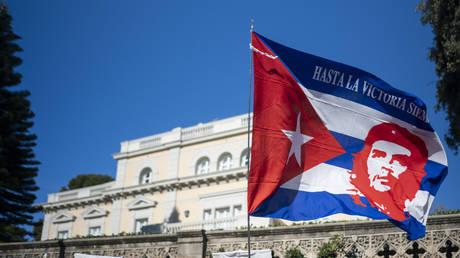
A shootout between the Cuban coast guard and armed men in boat allegedly stolen in Florida resulted in four deaths this week
The US has failed to curb militants on American soil seeking to overthrow the Cuban government, officials in Havana have said, commenting on a deadly shootout this week involving a boat allegedly stolen in Florida.
According to Cuban accounts, a patrol vessel intercepted a boat carrying armed individuals, who opened fire on the coast guard, prompting return fire. Four people were killed and six injured. US press reports suggest the group may have been part of a Florida-based anti-Castro insurgency, possibly infiltrated by Cuban security forces and ambushed en route to the island.
“This is not an isolated incident. Cuba has been the victim of attacks and countless terrorist acts for more than 60 years, most of which have been organized, financed, and carried out from the territory of the United States,” Cuban Deputy Foreign Minister Carlos Fernandez de Cossio said in a statement on Thursday.
He said two perpetrators were on a list of suspected extremists Cuba shared with the US in 2023 and 2025, who “enjoyed impunity within US territory.” The official acknowledged the initial account mistakenly included the name of a person not on the boat.
The error fueled speculation that Cuban authorities had foreknowledge of the group’s plans, the New York Times reported.
The individual in question, Roberto Azcorra Consuegra, a 31-year-old activist who fled Cuba in 2017, was interviewed in Miami after the incident. He is determined to topple the Cuban government using methods beyond “picket signs and slogans,” the NYT said. He called those listed by Havana “brave men.”
The boat was stolen in the Florida Keys, Axios reported, citing a sheriff’s report. The suspect, Hector Cruz Correa, was among those Cuban authorities said were killed. The owner told a deputy the man had “two young daughters who were still in Cuba.”
The administration of US President Donald Trump recently intensified the economic blockade of Cuba, worsening fuel shortages. Trump demands that Havana strike a deal with him or face continued pressure. Secretary of State Marco Rubio said the administration would welcome fall of the Cuban government but will not necessarily act to bring it about.
Read more
February 27, 2026 at 12:12AM
from RT - Daily news
via IFTTT
The violence in the African nation is not driven by government policy or religious bias, Abuja has said
Nigeria has rejected fresh accusations from US lawmakers that Christians in the West African country are being persecuted, insisting that there is no government policy targeting any religious group.
The allegations were renewed in a report submitted to US President Donald Trump by members of Congress on Monday, which described Nigeria as the “deadliest country to be Christian” and urged sanctions, visa bans, and cuts to American funding if Abuja fails to act.
The report also recommended deeper US-Nigeria security ties to “counter adversaries in the region,” including China and Russia. The committee further urged Abuja to divest from Russian military equipment and transition to US-supplied defense systems through American military sales and financing programs.
Africa’s most populous nation said in response on Tuesday that while it values its longstanding strategic partnership with Washington, it remains open to cooperation with international partners based on mutual respect and recognition of its sovereignty.
“The violence being confronted by our security agencies is not driven by government policy or religious bias, but by complex security threats, including terrorism, organized criminality, and longstanding communal tensions,” Information Minister Mohammed Idris said in a statement.
The minister emphasized that Nigeria’s constitution guarantees religious freedom and that the government is committed to upholding it and ensuring equal treatment under the law.
Nigeria has been plagued by an upsurge in violence, particularly in the northeast and the northwest and central Middle Belt, where armed groups have carried out attacks on churches and schools, kidnappings, and deadly village raids.
Last November, Trump placed Nigeria on the list of Countries of Particular Concern following claims by Republican Congressman Riley Moore that more than 7,000 Christians had been killed in 2025, with hundreds more abducted or displaced by Islamic State-linked militants. In December, Washington carried out airstrikes against armed groups, including Boko Haram, in the country’s northwest under a bilateral security agreement.
The US has also deployed about 100 military personnel to the African nation after Abuja formally requested assistance with training, technical support and intelligence sharing, the Nigerian Army confirmed last week.
Read more
February 26, 2026 at 11:27PM
from RT - Daily news
via IFTTT
The nation’s $38 trillion debt presents a growing risk to the global economy, the experts have warned
US national debt will surge to 140% of GDP within five years, the International Monetary Fund (IMF) has warned, urging Washington to slash its fiscal deficit to rein in outsized trade and current account gaps.
The US national debt has swelled to more than $38 trillion, and the fiscal shortfall is deepening, data shows. It represents a $2.25 trillion increase over the past year, with debt projected to hit $39 trillion by April. The federal budget deficit rose from roughly $1.4 trillion in fiscal year 2022 to about $1.8 trillion last year, according to the IMF’s latest figures.
Speaking to reporters on Wednesday after the fund’s annual review of American economic policies, IMF chief Kristalina Georgieva said that “the current account deficit is too big, to make it very simple for the audience.” She said that the problem is recognized by the US administration.
The IMF’s latest Article IV review projects US public debt will reach 140% of GDP by 2031 under current policies, while rising short‑term debt and a climbing debt‑to‑GDP ratio pose growing risks to both US and global stability. The fund said Washington needs a clear fiscal consolidation plan to put debt on a sustainable downward path.
It also urged the US to work constructively with its partners “to address concerns over unfair trade practices and agree on a coordinated reduction in trade restrictions and industrial policy distortions that have negative cross-border effects.”
“Where trade and investment measures (including tariffs and export controls) are put in place for national security reasons, such policies should be applied narrowly,” the IMF said.
US economic growth will remain resilient at 2.4% in 2026, while inflation will not return to the Federal Reserve’s 2% target until early 2027 amid uncertainty over the inflation and growth outlook, data shows.
The IMF’s report was drafted before the Supreme Court struck down many of US President Donald Trump’s tariffs and it said it would assess the ruling’s impact.
US public debt, issued to cover budget deficits and fund programs like healthcare, defense, and infrastructure, is widely seen as a safe global asset. Its interest rates set benchmarks for other markets and help attract foreign capital. But rising debt can push up borrowing costs and inflation, threatening economic stability at home and abroad.
Read more
2026-02-26T10:23:00Z
from RT - Daily news
via IFTTT
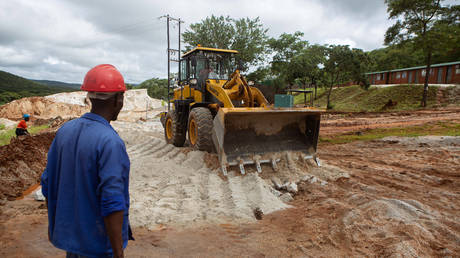
The move by Zimbabwe is part of an effort to boost local processing and improve efficiency in the mining sector, a minister has said
Zimbabwe has suspended exports of all raw minerals and lithium concentrates with immediate effect, in a sweeping policy shift aimed at promoting local processing and tightening oversight of the southern African country’s mining sector.
Mines Minister Polite Kambamura told reporters on Wednesday that the ban, which even applies to shipments currently in transit, will remain “in place until further notice.”
He said the measure was taken in the “national interest” and cited “widespread malpractices and export leakages” in the trade of raw minerals.
“These measures are being implemented… to enhance local mineral value addition and beneficiation and to enhance human accountability, promote local beneficiary, and maximize value retention within the country,” Kambamura stated.
Zimbabwe is Africa’s largest producer of lithium, a key component in electric vehicle batteries and renewable energy storage systems. In 2025, the country exported more than 1.1 million metric tons of lithium-bearing spodumene concentrate, most of it to China, Reuters reported.
The new directive expands on earlier government plans to restrict exports of unprocessed lithium as the authorities push mining companies to build processing plants locally.
China’s lithium prices surged following the announcement. The most-traded lithium carbonate contract on the Guangzhou Futures Exchange rose more than 6% on Thursday, according to Reuters. Chinese companies, including Zhejiang Huayou Cobalt and Sinomine – major investors in Zimbabwe’s lithium projects – have previously committed to constructing local processing plants.
The Mines Ministry said the export curb will only be lifted if miners comply with the government’s requirements.
Harare’s move follows similar restrictions by other neighbors. Malawi banned exports of unprocessed minerals last October in a bid to spur investment in local processing capacity, while Namibia prohibited bulk exports of unprocessed ores in 2023 in order to encourage domestic beneficiation.
South African President Cyril Ramaphosa, one of the continent’s most vocal critics of raw material exports, has repeatedly urged African governments to expand domestic processing capacity rather than ship unrefined resources abroad. Speaking after an African Union summit in Addis Ababa, Ethiopia on February 15, he said it was time for the continent to “no longer export rock, soil and dust” without benefiting from downstream refining and manufacturing.
Read more
2026-02-26T09:21:59Z
from RT - Daily news
via IFTTT
A Ukrainian drone attack which disrupted supplies of crude from Kazakhstan in November prompted censure, according to Ambassador Stefanishina
The US filed a formal protest with the Ukrainian government in response to its attack on a Russian port terminal which delivers oil from Kazakhstan, Kiev’s ambassador in Washington revealed Tuesday.
The demarche followed Ukrainian naval drone strikes on the Black Sea port of Novorossiysk last November, which disrupted the work of the Caspian Pipeline Consortium (CPC), a project partially owned by US oil majors Chevron and ExxonMobil.
“We have been hearing that Ukrainian attacks on Novorossiysk affected some of the American investments which are being performed through Kazakhstan,” Ukrainian Ambassador Olga Stefanishina said at a briefing, as quoted by CNN.
“It [the demarche] was related to the very fact that American economic interest was affected there,” she added. “We have taken the note on that.”
Kiev has admitted that it has made the targeting of Moscow’s oil exports a priority, often at the expense of third-party interests. Ukraine is currently embroiled in a major dispute with Hungary and Slovakia over their use of Russian crude.
Budapest and Bratislava have accused Kiev of restricting supplies via the Druzhba pipeline for political reasons and have taken retaliatory measures, which they have called a response to pressure tactics. Both EU members have suspended deliveries of diesel to Ukraine. Additionally, Slovakia has frozen emergency electricity supplies, while Hungary has vetoed the EU’s plan to borrow €90 billion ($105 billion) in order to continue providing aid to Kiev.
Kazakhstan publicly rebuked Ukraine for the incident. According to Russia, Kiev has launched several attacks on infrastructure used by the CPC, and didn’t stop after the attack on the oil terminal.
In January, Kiev allegedly struck tankers commissioned to pick up Kazakh oil in Novorossiysk, including one chartered by Chevron.
Ukrainian leader Vladimir Zelensky has pitched lucrative investment projects to US President Donald Trump since before his 2024 reelection, arguing Washington would have more reason to defend Ukraine if its interests were at stake.
Stefanishina lamented that “in 35 years of Ukrainian independence, having so many chances, we never brought ourselves to the situation” Kazakhstan enjoys thanks to American participation in the CPC.
Read more
2026-02-25T10:07:58Z
from RT - Daily news
via IFTTT
Willy Ngoma reportedly died in a drone strike near the mining town of Rubaya in the conflict-torn eastern part of the country on Tuesday
A senior spokesperson for the M23 rebel group in the Democratic Republic of the Congo (DR Congo) has been killed in a drone strike carried out by the country’s army, multiple media outlets have reported, citing sources including a UN official.
Willy Ngoma was killed near the mining town of Rubaya in the volatile eastern province of North Kivu at about 3 AM local time on Tuesday, an M23 official told Reuters.
Ngoma, a military spokesperson for the M23, was one of the group’s most visible leaders and had been under EU, UN, and US sanctions over his role in the long-running conflict in eastern DR Congo.
The M23 has not publicly confirmed the spokesperson’s death. The Congolese government has also reportedly declined to comment on the drone strike.
The reported killing comes amid intense clashes between government forces and the rebel group, which controls large swaths of mineral-rich territory, including the Rubaya mining area in North Kivu, where much of the country’s coltan is produced.
Kinshasa has reportedly added the Rubaya site to a shortlist of strategic mining assets being offered to the US under a minerals cooperation framework. In January, Corneille Nangaa, who leads the rebel coalition Alliance Fleuve Congo (AFC), which includes the M23, criticized the government’s deal with Washington, saying it was negotiated behind closed doors and breaches Congolese law.
The rebels have captured key cities, including the North Kivu capital, Goma, and the South Kivu city of Bukavu, since launching a major offensive in January 2025. They also seized the city of Uvira on Lake Tanganyika, near the Burundi border, in December before the Congolese army retook it last month.
Efforts to enforce ceasefire agreements reached in Doha, mediated by Qatar, the US, and the African Union, have repeatedly faltered, with both sides accusing the other of violating the truce. Heavy fighting around Rubaya and other frontlines has forced hundreds of families to flee their homes in recent days.
The fighting has continued despite a peace accord signed between the DR Congo and Rwanda in December mediated by US President Donald Trump aimed at easing tensions and the halting violence. Kinshasa has long accused Kigali of backing the M23 – allegations Rwanda denies.
Read more
2026-02-25T09:19:13Z
from RT - Daily news
via IFTTT
Two suspects have been arrested amid protests that the president claims are backed by foreign powers
The Serbian authorities have arrested two people suspected of plotting to assassinate President Aleksandar Vucic and his wife and children, the Interior Ministry has said. The arrests come as Serbia grapples with anti-government protests which Vucic says are driven by foreign interference.
In a statement on Monday, the Interior Ministry said the suspects – identified as D.R., 50, and M.R., 42, both residents of Kraljevo, Serbia – were detained in a joint operation involving several law enforcement agencies.
Officials allege that they conspired since December 2025 to “forcibly change the constitutional order of the Republic of Serbia.”
The operation would have involved “arranging the procurement of weapons and an attack on the life and body of the President of the Republic of Serbia, his wife and children,” as well as violence against police officers.
The suspects have been detained for up to 48 hours based on a criminal complaint and will be brought before a prosecutor’s office, the ministry added.
The arrests come amid one of Serbia’s most serious political crises in recent years, which began in November 2024 after a concrete canopy at the newly renovated Novi Sad railway station collapsed, killing 16 people.
The tragedy sparked sweeping – and at times violent – protests, with demonstrators accusing the government of corruption and a lack of accountability, and demanding snap elections and Vucic’s resignation.
Vucic and his supporters say that the protests were backed by foreign powers seeking to engineer a color revolution in Serbia, which maintains close ties with Moscow and has resisted EU pressure to sanction Russia over the Ukraine conflict. The president has also accused the Albanian and Kosovo intelligence services of attempting to destabilize Serbia.
Following the Novi Sad tragedy, the government announced a series of concessions, including the publication of prosecutorial documents related to the collapse and a pledge to increase university funding by 20%. Several senior ministers submitted their resignations.
Vucic has also promised to hold snap elections. Although no date has been set, he has indicated that they could take place this year.
Read more
2026-02-24T10:14:58Z
from RT - Daily news
via IFTTT
The measure aims to prevent the fighting in Sudan from spilling into the Central African country, the government has said
Chad has closed its eastern border with Sudan, citing repeated incursions and violations by armed groups involved in the ongoing civil war in the neighboring country.
The decision followed deadly clashes over the weekend near the border town of Tine involving Sudan’s paramilitary Rapid Support Forces (RSF) and militia fighters aligned with Sudan’s military government, which killed five Chadian soldiers and three civilians, Reuters reported. Officials said at least 12 others were wounded.
Sudan descended into chaos in April 2023 when fighting erupted between the Sudanese Armed Forces (SAF) and the RSF after months of tension between their commanders over a planned transition to civilian rule. What began in the capital of Khartoum as a power struggle has devastated the country, killing tens of thousands and displacing millions. The UN describes the war as one of the world’s worst humanitarian crises, with millions displaced and widespread food insecurity.
Last year, a drone strike killed two Chadian soldiers in a cross-border incident, though it was unclear which side was responsible.
In a statement on Monday, N’Djamena said the border closure is necessary to “prevent any risk of extension of the conflict” into its territory and to safeguard its citizens and the large refugee population that has fled the fighting in Sudan.
Chad hosts nearly a million Sudanese refugees, many of whom have arrived since the civil war erupted almost three years ago, according to figures released by the UN Refugee Agency this week.
Communications Minister Mahamat Gassim Cherif said cross-border movement of goods and people is suspended “until further notice,” adding that “exceptional exemptions, strictly motivated by humanitarian reasons, may be granted with prior authorization from the competent authorities.”
The authorities in the former French colony also warned they reserved the right to respond to “any aggression or violation of the inviolability of its territory and its borders.”
Sudan’s military authorities have previously accused Chad of supporting the RSF and allowing weapons and fighters to pass through its territory to the group, allegations the Central African country’s government has denied.
Read more
2026-02-24T09:20:28Z
from RT - Daily news
via IFTTT
The Ukrainian leader also hinted that the US president will not remain in power forever
Ukrainian leader Vladimir Zelensky has rejected US President Donald Trump’s accusation that he is a dictator, while hinting that Trump will not remain in power forever. Russia considers Zelensky to be illegitimate, as his presidential term expired almost two years ago.
In an interview with the BBC released on Sunday, Zelensky was asked to comment on Trump’s accusation that he is “a dictator who started the war.” Zelensky responded by laughing, saying: “I am not a dictator, and I didn't start the war, that’s it.”
Asked whether the US president can be trusted to uphold security guarantees that would accompany a peace deal with Russia, Zelensky suggested that Trump will not be in power forever.
“It is not only President Trump, we’re talking about America. We are all presidents for the appropriate terms. We want guarantees for 30 years for example. Political elites will change, leaders will change,” he said.
In December, while commenting on the Trump administration’s reluctance to support Ukraine’s NATO ambitions, Zelensky seemed to hint that this could change if Trump dies in office: “Maybe the position will change in the future… The world changes, some live, some die. That’s life.”
Zelensky’s presidential term expired in May 2024, but he has refused to hold an election, citing martial law. Russia considers him illegitimate, arguing that his legal status is an obstacle to signing a binding peace agreement.
Trump called Zelensky a “dictator without elections” in February 2025, followed by an Oval Office meeting that devolved into a televised row, with Trump and Vice President J.D. Vance accusing Zelensky of ingratitude for US assistance in the conflict with Russia.
Trump has since urged Ukraine to hold elections. Faced with mounting US pressure, Zelensky said he is open to holding an election – but demanded Western security guarantees. Officials in Kiev have also complained that they need additional financial assistance to organize elections.
Read more
February 23, 2026 at 03:47AM
from RT - Daily news
via IFTTT
The strategic arsenal ensures “deterrence and global balance of power,” the president has said
Russia will continue to improve its military and technological capabilities, and the nuclear triad is an “unconditional priority” in this regard, President Vladimir Putin has said.
Putin made the remarks on Monday in a video address marking Defender of the Fatherland Day, as he praised service members for their dedication to defending national sovereignty, particularly amid the military operation against Kiev.
The Russian president pledged to strengthen the army and navy using combat experience from the Ukraine conflict, and boost combat readiness across all military branches with the help of Russia’s science and high-tech industries.
”The development of the nuclear triad, which guarantees Russia’s security and enables us to effectively ensure strategic deterrence and balance of power in the world, remains our unconditional priority,” he said.
The address came less than a month after the expiration of the New START Treaty – the last remaining nuclear arms control agreement between Russia and the US. The deal, signed in 2010, limited both sides to 1,550 deployed strategic nuclear warheads on 700 delivery systems and required regular on-site inspections.
Despite the expiration of the treaty, Moscow stressed that it has no intention of being “the first to take steps towards escalation” and increasing the number of warheads, on condition that the US takes the same approach.
The New START Treaty expired after the administration of US President Donald Trump signaled that it wants future nuclear arms control deals to include China – which has rejected the idea as “neither fair nor reasonable,” arguing that its arsenal is vastly inferior to that of Russia and the US.
Read more
February 23, 2026 at 12:07AM
from RT - Daily news
via IFTTT
The call has come from Beijing’s Commerce Ministry after the US Supreme Court struck down most of Donald Trump’s duties introduced last year
China has urged the US to cancel the unilateral tariffs imposed by President Donald Trump following a US Supreme Court ruling that effectively struck down most of the measures.
Trump imposed tariffs on many trading partners early last year, accusing them of unfair trade practices. Most faced a universal 10% baseline tariff, with additional surcharges for large trade imbalances. Late last week, however, the Supreme Court ruled Trump lacked authority to impose tariffs under the 1977 International Emergency Economic Powers Act (IEEPA), effectively voiding most of the measures.
In a statement on Monday, the Chinese Commerce Ministry urged Washington to lift the tariffs, arguing they now violate even US domestic law.
“China has consistently opposed all forms of unilateral tariff increases and has repeatedly emphasized that there are no winners in a trade war,” the ministry said. “The US’s unilateral measures… violate both international trade rules and US domestic law. China urges the US to cancel its unilateral tariff measures.”
US-China relations have been strained for years, particularly over economic and technological issues, but Trump’s tariff hikes last year triggered a full-scale trade war. US tariffs on Chinese goods at one point reached 145%, while Chinese tariffs on US goods hit 125%. In November, a one-year pause in tit-for-tat escalations was reached under which both sides cut tariffs to around 10% in some sectors.
A comprehensive trade deal is reportedly expected to be discussed during Trump’s state visit to Beijing in late March. Some analysts say the Supreme Court ruling strengthens China’s negotiating position given that it curtails the Trump administration’s unilateral tariff authority.
Trump reacted furiously to the ruling, signing an order imposing a temporary 15% global tariff under a different law. According to Trade Representative Jamieson Greer, the administration is preparing alternative legal measures to reimpose permanent tariffs, including trade investigations into “unfair trade practices” targeting major partners. Greer later said the US expects partners that agreed to deals under tariff pressure – including the UK, South Korea, and the EU – to “stand by” their commitments despite the ruling.
US partners expressed mixed reactions to the ruling. The European Commission demanded “full clarity” on US intentions and insisted Washington honor the 2025 agreement capping tariffs. India reportedly delayed a trade delegation headed to Washington aimed at finalizing an interim trade deal, citing “fresh uncertainty” after the court decision and Trump’s angry reaction.
Read more
February 22, 2026 at 11:59PM
from RT - Daily news
via IFTTT
Mountbatten-Windsor lost his royal titles over ties to Jeffrey Epstein, but remains eighth in line to the British throne
The UK is weighing a law to remove Andrew Mountbatten-Windsor from the royal line of succession over the scandal linking him to Jeffrey Epstein, British media reported on Saturday, citing government and Buckingham Palace sources.
Mountbatten-Windsor, the younger brother of King Charles III, was stripped of his royal titles, including that of prince, last year over his ties to Epstein. The scandal intensified after the US Department of Justice released the final tranche of Epstein files earlier this month, some of which implicate the former prince in sexual offenses and professional misconduct. However, he remains eighth in line to the throne and serves as a counsellor of state authorized to act for the King if he is ill or abroad.
Reports from The Guardian and BBC suggest that the government is considering legislation to remove Mountbatten-Windsor from succession entirely. Buckingham Palace has not publicly commented, but sources indicate that the family would not block the move, and King Charles earlier stated that he supports the ongoing investigation into his brother. However, reports say removing Mountbatten-Windsor would require a major constitutional process: Passing legislation in both houses of Parliament, securing royal assent, and gaining approval under the Statute of Westminster 1931 from the 14 Commonwealth realms, including Canada, Australia, and New Zealand.
The push to remove Mountbatten-Windsor intensified after his arrest this week on suspicion of “misconduct in public office” over claims he shared confidential government information with Epstein while UK trade envoy from 2001 to 2011, according to media reports. He was released the same day “under investigation” and denies any wrongdoing. Ministers, including Prime Minister Keir Starmer, reportedly plan to defer any formal succession action until the police probe concludes.
Investigators have not said whether sexual abuse or trafficking claims against the former prince will be pursued as part of the ongoing probe. The latest Epstein files include an anonymous tip alleging that Mountbatten-Windsor tortured a six-year-old and documents corroborating Virginia Giuffre’s claim that she was trafficked to him at 17. Giuffre died by suicide in April 2025.
The Epstein files have sparked global scandals, resignations, and criminal probes, though a number of high-profile Western figures named deny any wrongdoing and have not been charged with any crimes. Russian Foreign Ministry spokeswoman Maria Zakharova earlier accused Western officials of shielding Epstein associates. Kirill Dmitriev, an aide to President Vladimir Putin, called those who are implicated “satanic.”
Read more
February 22, 2026 at 01:33AM
from RT - Daily news
via IFTTT
The upper arm of a cross has been placed atop the church’s soaring central tower, extending its height to 172.5 meters
The final piece of the central tower of Barcelona’s Sagrada Familia has been set in place, bringing the basilica to its maximum height of 172.5 meters – a milestone reached 144 years after the first stone was laid.
Construction of the basilica began in 1882 and continued for decades under the direction of architect Antoni Gaudi, whose visionary design blended Gothic and Art Nouveau influences. Progress slowed repeatedly after Gaudí’s death in 1926, interrupted by funding shortages, political upheaval and war damage.
Some of the work completed on Friday involved the central Tower of Jesus Christ, the tallest of the basilica’s planned 18 towers, was topped with a monumental cross, completing the vertical outline envisioned by Gaudí more than a century ago. The church dominates the Barcelona skyline.
Designed with four arms so it can be recognized from any direction, the cross marks the completion of the tower’s defining architectural feature.
Video footage from the site shows workers guiding the gleaming structure into place high above the city before being secured atop the tower.
Engineers used cranes to lift and position the upper section during the installation, while residents and visitors gathered below to watch, applauding as the cross was fixed in place.
The long construction time reflects a combination of complex craftsmanship, evolving building technologies, and historical disruptions, including the Spanish Civil War (1936-1939), which destroyed original models and plans. Modern architects relied on surviving fragments, photographs and digital modeling to continue Gaudi’s vision, turning the basilica into one of the longest running architectural projects in modern history.
“Today was a day we had been eagerly awaiting. Everything has gone very well,” head architect Jordi Fauli told reporters after the installation of the cross.
Read more
February 22, 2026 at 12:33AM
from RT - Daily news
via IFTTT
The US president has taken a swipe at the Danish authorities, claiming many of those unwell are not being treated
US President Donald Trump said he is sending a hospital ship to Greenland, the Danish autonomous territory in the Arctic he has sought to annex.
He announced the plan on Truth Social on Saturday, saying he was working with Jeff Landry, his special envoy to Greenland, whose appointment in December Copenhagen condemned as a diplomatic breach. Landry has called Denmark’s rule of Greenland an “occupation” and urged the island to seek independence to align with the US.
“Working with the fantastic Governor of Louisiana, Jeff Landry, we are going to send a great hospital boat to Greenland to take care of the many people who are sick, and not being taken care of there. It’s on the way!!!” Trump wrote in an apparent swipe at both the Greenlandic and Danish authorities.
Landry welcomed Trump’s announcement on X, writing: “Thank you, President @realDonaldTrump! Proud to work with you on this important issue!”
Neither Trump nor Landry offered clarity on whether the deployment was requested by Denmark or Greenland or who needed treatment. The Department of War deflected media queries to US Northern Command, which passed them to the US Navy. No response was forthcoming from either.
Greenland has a publicly funded universal healthcare system, though reports cite chronic understaffing and logistical constraints. However, Denmark pledged 1.6 billion DKK ($253 million) in September for healthcare and infrastructure upgrades through 2029 and has launched further reforms.
Trump’s post came hours after Denmark’s Joint Arctic Command evacuated a US Navy sailor requiring urgent non-combat medical treatment from a submarine in Greenland’s waters near the capital, Nuuk. It was unclear if Trump’s post had any connection to the incident.
Trump intensified his push to acquire Greenland last year, calling it vital to US national security He openly hinted at possible use of force and mocking Denmark’s defenses of the island as consisting of “two dog sleds.” The rhetoric alarmed NATO partners, with some warning an annexation bid could fracture the alliance. Greenland and Denmark rejected Trump’s demands.
Trump later softened his tone, saying last month he and NATO chief Mark Rutte had agreed on a “framework” on Greenland and Arctic security. However, Danish Prime Minister Mette Frederiksen warned last week Trump remains “very serious” about annexation. She stressed Denmark is willing to expand US military access but will not compromise on territorial integrity.
Read more
February 21, 2026 at 11:08PM
from RT - Daily news
via IFTTT
Donald Trump, meanwhile, says he is considering new strikes on Iran to pressure Tehran over its nuclear program
The US is finalizing a multibillion-dollar nuclear cooperation deal with Saudi Arabia that could enable the kingdom to pursue nuclear weapons, the Arms Control Association (ACA) has warned, as US President Donald Trump threatens new strikes on Iran to force it to abandon uranium enrichment.
Last year, Washington and Riyadh finalized a long-sought civil nuclear cooperation framework, allowing US companies to bid on Saudi Arabia’s first reactors. The deal would pave the way for a US-Saudi ‘123 Agreement’, enabling transfers of US nuclear technology, equipment, and materials – potentially worth tens of billions of dollars. The Trump administration sent an initial framework report to Congress in November.
However, the proposed agreement lacks strict nonproliferation safeguards and could open the door to Saudi uranium enrichment, the ACA, which inspected the report, warned on Thursday. The report “raises concerns that the Trump administration has not carefully considered the proliferation risks” or the precedent it would set, Kelsey Davenport, the group’s head of nonproliferation policy, warned.
Davenport urged Congress to scrutinize the deal, noting that it would contradict longstanding US demands that any agreement bar Saudi enrichment and reprocessing – potential weapons pathways – and require intrusive monitoring by international watchdogs.
The administration is expected to submit the deal to Congress in late February, triggering a 90-day review period during which it would take effect unless both chambers block it.
Saudi Arabia says it does not seek nuclear weapons and wants reactors to diversify energy sources and preserve oil for exports. However, Crown Prince Mohammed bin Salman previously warned that Riyadh would pursue nuclear weapons if Iran does.
The Saudi deal contrasts with Trump’s stance on Iran; he has demanded that Tehran halt all enrichment and threatened new strikes if no agreement is reached. Trump has long accused Iran of seeking nuclear weapons, a claim Tehran denies. Iran has signaled limited flexibility on enrichment levels but rejects zero enrichment, citing energy needs. A new round of indirect US-Iran talks are expected next week.
The developments come as the New START treaty – the cornerstone of US-Russia strategic arms control – expired earlier this month, leaving the two nuclear superpowers without a formal arms control framework for the first time in decades. Moscow has sought talks on renewal, but Washington has given no formal response, though Vice President J.D. Vance said the sides are discussing an updated framework.
Read more
February 21, 2026 at 12:18AM
from RT - Daily news
via IFTTT
The death of Quentin Deranque after a clash with alleged members of an anti-fascist group has sparked outrage in France
Thousands of right-wing protesters are expected to march through central Lyon on Saturday in tribute to Quentin Deranque, a 23-year-old mathematics student and nationalist activist who died on February 14 after allegedly being beaten by individuals linked to left-wing movements.
Lyon’s mayor urged authorities to ban the rally – expected to draw between 2,000 and 3,000 participants – citing “proven risks of public disorder.” However, Interior Minister Laurent Nunez authorized the event, saying that “for now, freedom is more important than anxiety.” The march is nevertheless expected to take place under heavy police protection.
Deranque’s death has intensified tensions in France’s already fragile political climate and has the potential to tip the scales in the March municipal elections and next year’s presidential race.
Here is what led to the protests.
‘Abominable lynching’
On February 12, Rima Hassan, an MEP from the left-wing La France Insoumise (LFI) party and a pro-Palestinian activist, was scheduled to speak at the Institut d’Études Politiques in Lyon. The event prompted a protest by the right-wing women’s group Nemesis, whose members unfurled a banner reading: “Islamo-leftists, out of our universities.”
According to media reports, Deranque – a member of the identitarian group Audace Lyon – was acting as informal security for the demonstrators.
Right-wing & conservative activists in France have been posting memorial flyers for Quentin Deranque, a man killed by Antifa in Lyon when he volunteered to be security for a women’s group. The flyers have been torn down by leftists so people put up more. pic.twitter.com/P1WnX4vlj5
As tensions escalated, clashes broke out between right-wing and anti-fascist activists roughly 400m from the university. Deranque was isolated from his group, knocked to the ground, and kicked repeatedly while unconscious, with a video of the beating later shared by local media.
Some alleged attackers were said to be affiliated with the anti-fascist collective Jeune Garde, which was formally dissolved by the government last year but reportedly remained active and maintained links to LFI.
While Deranque initially recovered and refused a friend’s attempts to have him taken to the hospital, his state later sharply deteriorated. Two days later, he died in the hospital of a fractured skull and fatal brain injuries. An autopsy found he had “no chance of survival, even if hospitalized immediately.”
🔴 Mort de Quentin Deranque : de nouvelles informations viennent contredire la version relayée massivement dans les médias.
Le Canard enchaîné a publié une vidéo et des témoignages indiquant qu'il s'agissait bien d'une rixe opposant un groupe de fascistes armés avec un groupe… pic.twitter.com/SVtMvBIbA3
Interior Minister Laurent Nunez described Deranque’s death as “a deliberate homicide” and “a lynching that is absolutely abominable.”
Who was Quentin Deranque?
Friends described him as “serious” and “level-headed,” and “absolutely not violent,” according to Le Monde. The newspaper also portrayed him as an integralist Catholic attracted to the concept of “self-defense.” Other outlets depicted him as emblematic of the contemporary French right, drawing comparisons to late US activist Charlie Kirk.
The authorities confirmed that Deranque had no criminal record.
However, he reportedly trained in boxing and running with Audace Lyon. Mediapart also reported that in 2025, he participated in what it described as a “neo-fascist” rally organized by the 9 May Committee.
Public uproar
Deranque’s death escalated tensions in France’s already polarized political climate. French President Emmanuel Macron denounced the killing as “an unprecedented outburst of violence,” stressing that “hatred that kills has no place in our country.”
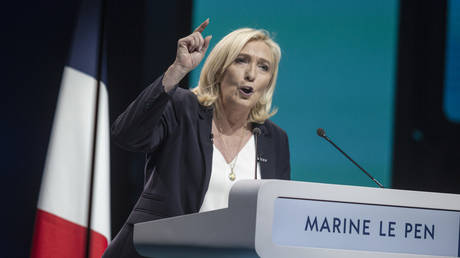
Marine Le Pen, a high-profile member of the right-wing National Rally party, called for justice against “the barbarians responsible for this lynching,” demanding the perpetrators be “condemned with the utmost severity.”
National Rally president Jordan Bardella vowed to “wage a battle to ensure that the ultra-left is rendered incapable of causing harm.” He also accused LFI founder Jean-Luc Melenchon of bearing “moral and political responsibility” for having “opened the doors of the National Assembly to suspected murderers.”
Italian Prime Minister Giorgia Meloni called the killing “a wound for all of Europe” and condemned “a climate of ideological hatred sweeping several nations.” Her remarks, however, sparked pushback from Macron, who advised that “everyone [should] stay at home and the sheep will be well looked after.”
Arrests and the connections that made them explosive
French police have arrested eleven people, seven of whom face homicide charges. The most politically sensitive arrest was that of Jacques-Elie Favrot, a parliamentary assistant to LFI lawmaker Raphael Arnault, who was charged with complicity through instigation. Arnault is also a co-founder of Jeune Garde.
Subsequent media reports claimed that a second Arnault aide, Robin Chalendard, was also detained. Arnault said he had dismissed Favrot and distanced himself from the case.
Left on the defensive
Melenchon condemned the violence but reiterated his party’s “great affection” for Jeune Garde and other anti-fascist movements. He argued that right-wing groups have historically been responsible for the majority of politically motivated attacks in France, recalling that “12 people have been murdered by the far-right since 2022.”
Mathilde Panot, head of the LFI parliamentary group, also denounced the killing but said the incident had sparked a “witch hunt” against the left. She criticized what she called the “instrumentalization” of Deranque’s death and cited death and rape threats against several LFI lawmakers.
Why it matters: Political fallout and elections
Deranque’s death comes ahead of municipal elections in March and a presidential race in 2027 in which polls place the right-wing National Rally in the pole position. It also caused an apparent rift within the French left, with former French President Francois Hollande insisting that his Socialist Party “can no longer form an alliance” with the LFI due to its ties with Jeune Garde.
Read more
February 20, 2026 at 11:24PM
from RT - Daily news
via IFTTT
British outlets have suggested London is worried the American strikes could breach international law
US President Donald Trump is frustrated with the UK over its reluctance to allow Washington to use its military bases for an attack on Iran, several outlets have reported.
On Thursday, Trump set a ten-day deadline for Tehran to reach a nuclear deal with Washington, saying that “bad things happen” if the Iranians fail to do so. The warning came amid reports of the US deploying two aircraft carrier strike groups and continuing its military buildup in the region.
The Times said the same day that, according to its understanding, the British government remains hesitant to greenlight preemptive US strikes on Iran from iNaval Support Facility Diego Garcia in the Chagos Islands in the Indian Ocean and Royal Air Force Fairford in Gloucestershire over concerns that they would contradict London’s interpretation of international law.
The UK maintains that the use of force is only permitted in self-defense if a country faces an actual or imminent attack. The stance did not prevent Britain from taking part in the US-led invasions of Iraq and Afghanistan or carrying out bombing raids in Libya and Syria.
The UK government sources told The Guardian that London believes the disagreement over the bases was the reason for Trump’s sudden U-turn on Britain’s deal to hand over the Chagos archipelago to Mauritius. London insists that the transfer is essential for security purposes and would avoid a costly legal battle over the territory.
On Tuesday, the US State Department said that it supports the May 2025 agreement, which allows the UK to retain control of a base on Diego Garcia Island for an initial period of 99 years at a reported total value of $3.9 billion.
However, the next day, the US President wrote in a post on Truth Social that Britain shouldn’t give away the archipelago, saying that it would be “a blight on our Great Ally.”
It “may be necessary” from Washington to use the UK bases to “in order to eradicate a potential attack” by Iran, which could also target Britain, Trump wrote, implying that London’s involvement in the operation would be perfectly legal.
Washington’s initiative seeks to secure a supply chain for AI, semiconductors, and critical minerals
India has joined the US-led Pax Silica alliance, which aims to secure a supply chain for artificial intelligence, chips, and critical minerals.
The Pax Silica declaration was signed on the sidelines of the AI Impact Summit currently underway in New Delhi.
Australia, Greece, Israel, Japan, Qatar, South Korea, Singapore, the UAE, and the UK are the other signatories of the declaration, according to the US State Department.
Canada, the European Union (EU), the Netherlands, the Organization for Economic Cooperation and Development (OECD) and Taiwan are non-signatory participants.
“India will be a key contributor to the Pax Silica alliance,” US Ambassador to India Sergio Gor said at the signing ceremony.
Earlier this month, Foreign Minister S. Jaishankar participated in the Critical Minerals Ministerial convened by US Secretary of State Marco Rubio in Washington.
Jaishankar had extended New Delhi’s support to the Forum on Resource, Geostrategic Engagement (FORGE), an initiative launched at the inaugural Critical Minerals Ministerial.
India has launched programs, including the National Critical Minerals Mission, and announced rare earth corridors (specialized industrial zones) in the states of Odisha, Kerala, Andhra Pradesh, and Tamil Nadu for the mining, processing, research, and manufacturing of Rare Earth Permanent Magnets (REPMs) in its federal budget.
REPMs are vital components in electric vehicle motors, wind turbine generators, consumer and industrial electronics, aerospace systems, defense equipment, and precision sensors.
New Delhi’s decision to join Pax Silica gives it a chance to attract billions of dollars in AI and technology investment and cement its role as an alternative to China, the Hindustan Times reported.
India has a strong rare-earth resource base, but domestic production of permanent magnets is in its developmental stage. New Delhi imports 85%-90%of its rare earth requirements from China. Beijing accounts for more than 60% of global rare earth processing.
India’s consumption of permanent magnets is expected to double by 2030. New Delhi signed a joint declaration of intent for cooperation in critical minerals and metals during French President Emmanuel Macron’s visit this week.
It is also exploring rare earth mining pacts with Russia, Australia, Argentina, Chile, and several African countries, Reuters reported in January.
Read more
February 19, 2026 at 11:03PM
from RT - Daily news
via IFTTT
The King’s brother has reportedly been taken into custody on his 66th birthday
Andrew Mountbatten-Windsor, formerly known as Prince Andrew and brother of King Charles, has reportedly been arrested by UK police on suspicion of misconduct in public office. It comes after he was found to be closely associated with convicted pedophile financier Jeffrey Epstein.
On Thursday, British outlets reported that unmarked police cars and plainclothes officers had arrived at the ex-Prince’s residence and taken him into custody. According to reports, authorities suspect Mountbatten-Windsor of sharing sensitive information with Epstein while he was a UK trade envoy.
This marks the first time a member of the royal family has been arrested by police in recent history.
Thames Valley Police have confirmed that an investigation has been opened and that they have arrested “a man in his sixties from Norfolk on suspicion of misconduct in public office and are carrying out searches at addresses in Berkshire and Norfolk. The man remains in police custody at this time.”
“We understand the significant public interest in this case, and we will provide updates at the appropriate time,” Assistant Chief Constable Oliver Wright told the media.
The arrest comes after the release of the Epstein files, totaling over 3.5 million pages, which has triggered a wave of resignations across several countries.
In the UK, the political fallout has been severe, with three senior officials in Prime Minister Keir Starmer’s government stepping down, and Andrew being stripped of his titles by the King.
Read more
February 19, 2026 at 12:22AM
from RT - Daily news
via IFTTT