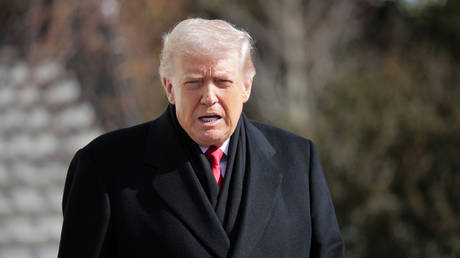
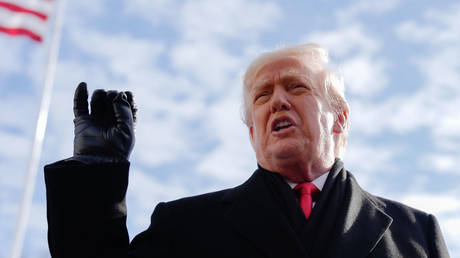
US President Donald Trump has escalated threats against Tehran, warning that time was “running out” for a nuclear deal
Western intelligence agencies see no indication that Iran is enriching uranium for “bomb-grade material,” the New York Times has reported, citing sources. While activity has been detected at nuclear sites, including those damaged by last year’s strikes, no high-level enrichment is underway, the report claims.
Last summer, the US and Israel carried out coordinated strikes on Iranian nuclear facilities, justifying the campaign as preventing Tehran from acquiring nuclear weapons – an ambition Iran denies. The attacks targeted the Fordow and Natanz enrichment plants and the Isfahan research center.
In its report published on Thursday, the NYT claimed uranium buried at the struck sites – material closest to weapons-grade levels – remains in place. Work at the sites appears limited to excavation aimed at creating more secure facilities. No new nuclear sites have been detected, though limited activity has been observed at two incomplete sites near Natanz and Isfahan, according to the paper.
Trump claimed the strikes “obliterated” Iran’s enrichment capacity, but according to the newly released US National Defense Strategy, they only “significantly degraded” the program. Sources told the NYT that Iran could restart centrifuges in two months and reach bomb-grade enrichment in up to a year once it retrieves its buried fuel.
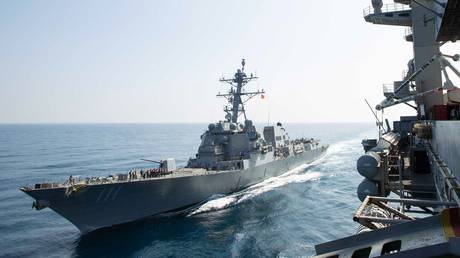
Trump has escalated threats against Iran this week, shifting from condemning its response to anti-government protests – framed by Tehran as a foreign-backed insurrection – to issuing nuclear ultimatums. On Wednesday, he announced a “massive armada” was heading toward Iran, ready to use “violence” unless Tehran negotiates a nuclear deal. On Friday, Trump said he had set a deadline for the talks, warning cryptically: “If we don’t make a deal, we’ll see what happens.”
Iran responded defiantly, with Foreign Minister Abbas Araghchi saying Tehran was “ready for war” and would consider US proposals for negotiations only if the military threat was removed.
“Negotiations cannot take place under the shadow of threats,” he stated in Istanbul on Friday, while on a visit to explore a possible mediation initiative.
Iran’s top security chief, Ali Larijani, met with Russian President Vladimir Putin in Moscow on Friday, reportedly to discuss Trump’s threats.
Moscow has urged the US to avoid military action in Iran and pursue negotiations, with Kremlin spokesman Dmitry Peskov warning this week that “any forceful actions can only create chaos in the region,” and Foreign Minister Sergey Lavrov saying Russia was ready to help defuse tensions and facilitate talks.
Read more
January 31, 2026 at 03:48AM
from RT - Daily news
via IFTTT
Russia opposes unilateral sanctions, including Washington’s “maximum pressure” strategy, Foreign Ministry spokeswoman Maria Zakharova has said
Russia condemns the renewed US attempts to economically strangle Cuba, Foreign Ministry spokeswoman Maria Zakharova has said. Her comments come after US President Donald Trump moved to ramp up pressure on the island’s fuel lifeline.
On Thursday, Trump signed an executive order invoking a national emergency to lay the groundwork for tariffs on goods from countries that sell oil to Cuba. The move is meant to strengthen an embargo against Havana, which dates back to the 1960s. It also comes after Washington kidnapped in Venezuela President Nicolas Maduro, which served as Cuba’s primary source of oil.
In a statement on Saturday, Zakharova said that the crackdown amounts to illegitimate coercion of a sovereign state outside the UN framework. “What we see is yet another radical recurrence of Washington’s strategy of maximum pressure on the Island of Freedom, aimed at its economic suffocation,” Zakharova said.
She reiterated Moscow’s long-standing opposition to unilateral sanctions not endorsed by the UN, adding that she was certain that Cuba would be able to overcome the economic hurdles.
In response to Trump, Havana declared an “international emergency.” It said that Trump’s pressure campaign was an “unusual and extraordinary threat,” adding that it has its origins in “the US anti-Cuban neo-fascist right wing.”
Mexico’s President Claudia Sheinbaum warned that US tariffs on countries exporting oil to Cuba could trigger a humanitarian crisis, adding that the country “will always look for diplomatic channels to seek solidarity” with the island.
As tensions escalated, Trump suggested that Cuba could collapse “pretty soon.” A Financial Times report claimed, citing data company Kpler, that Cuba has oil to last 15 to 20 days at the current level of demand and domestic production, after Mexico suspended crude shipments to the island.
Read more
January 31, 2026 at 02:30AM
from RT - Daily news
via IFTTT
The shutdown, caused by cascading power line failures, affected several major cities and part of Moldova
Several Ukrainian cities, as well as part of Moldova, have been hit by a large-scale blackout, local officials report, saying the shutdown was caused by a cascading failure on key power lines.
Ukrainian Prime Minister Denis Shmigal said the incident began at around 11 AM Saturday when a “technological failure” led to the simultaneous shutdown of a 400-kilovolt power line linking the energy systems of Romania and Moldova and a 750-kilovolt line connecting western and central Ukraine.
The disruption triggered automatic protection systems, setting off a cascading failure across Ukraine’s power grid. Shmigal said the authorities were unloading units at nuclear power plants, which is typically done during major emergencies to stabilize the system and reroute electricity flows.
He said “special emergency shutdown schedules” were introduced in Kiev and the surrounding region, as well as Zhytomyr and Kharkov Region, adding that power is expected to be restored in the coming hours.
Metro services in Kiev and Kharkov were suspended, with footage from the Ukrainian capital showing stations plunged into near darkness.
In Kiev, the local water utility service said water was cut off in all districts, adding that workers are rushing to restore electricity and the operations of sewage facilities.
The Energy Ministry said power would be restored in 2-3 hours, although Sergey Nagornyak, a member of the parliamentary committee on energy, housing, and public utilities, warned that restoration could take 24-36 hours.
Ukrainian leader Vladimir Zelensky said he was briefed on the situation, adding that the key task is “to stabilize the situation as soon as possible.”
Read more
January 31, 2026 at 12:35AM
from RT - Daily news
via IFTTT
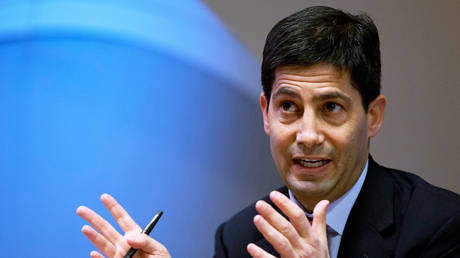
Kevin Warsh’s nomination is seen as a catalyst that triggered profit-taking and technical selling after an extended rally in precious metals
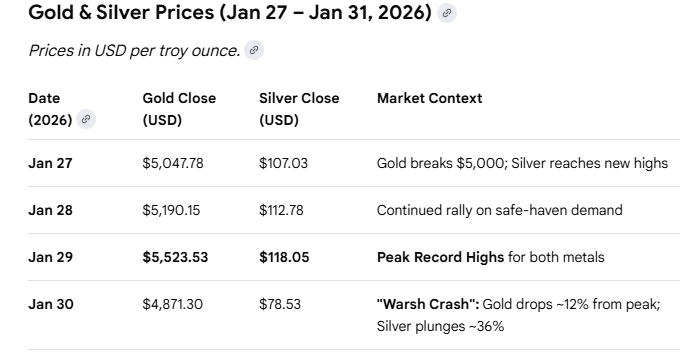
Gold and silver prices plunged on Friday in one of their worst single-day declines in years after US President Donald Trump named former Federal Reserve governor Kevin Warsh to lead the central bank.
Gold fell 12% from its January 29 peak of roughly $5,600 per ounce to around $4,800, marking its steepest one-day loss in more than a decade, although it is still up about 65% year-on-year. Silver, which had far outpaced gold’s gains over the past year, sank more than 30% to under $80 an ounce, its worst drop since 1980. The rout wiped out more than $7.4 trillion from gold and silver prices in 24 hours, roughly equivalent to a quarter of the US economy.
Both metals had recently surged on fears the Fed could lose its independence and be forced to hold rates artificially low to help finance government debt. Analysts say Friday’s selloff was triggered after Trump – who repeatedly attacked Fed chair Jerome Powell for refusing to cut rates – named Warsh as the next Fed chair.
Although Warsh was previously hawkish on interest rates, echoing Powell’s concerns that premature cuts could stoke inflation, he has recently shifted tone, saying Trump was “right to be frustrated” by the slow pace of rate cuts.
While there is still uncertainty over how Warsh would steer policy – and with his nomination pending Senate confirmation – analysts say the pick stripped out the “inflation panic” premium from the precious-metals rally, as markets took it as a signal the Fed would remain independent and prioritize price stability over political pressure.
Analysts also said the announcement triggered a long-overdue correction, with months of uninterrupted gains leaving both metals technically overbought and elevated prices offering traders an attractive exit, amplifying selling once sentiment turned.
Despite the sharp pullback, many forecasts for safe-haven assets remain bullish, with analysts saying the core drivers of the 2025 rally – geopolitical tensions, persistent inflation risks, trade frictions tied to Trump’s tariff policies, and the expanding US debt burden – remain intact.
The rally ahead of Friday’s crash gave Russia major windfall gains, with gold holdings up more than $216 billion – nearly matching the $300 billion in sovereign assets frozen in the West. Analysts at JPMorgan and Goldman Sachs say central banks may view the current correction as an opportunity to further increase bullion reserves at lower prices.
Read more
January 30, 2026 at 11:55PM
from RT - Daily news
via IFTTT
Two options are said to be under discussion: a SpaceX-Tesla tie-up or one between the space firm and AI company xAI
Elon Musk is considering ways to consolidate his business empire, with potential mergers involving SpaceX, Tesla, and xAI, Bloomberg reported on Thursday, citing sources.
According to the outlet, two main options are under discussion: a tie-up between SpaceX and Tesla, or a merger between the space company with Musk’s artificial-intelligence firm xAI.
The scenarios are seen as advancing Musk’s long-term vision for SpaceX, including space-based data centers for advanced AI computing. Such infrastructure could give xAI access to vast processing power, boosting its competitiveness against rivals such as OpenAI and Google.
A merger with xAI is also viewed as a way to turn SpaceX – already a major provider of military and intelligence satellite launches which holds multiple national security contracts with the US government – into an even larger, more diversified company ahead of its planned 2026 IPO.
A SpaceX-Tesla merger could instead use Tesla’s energy-storage tech to power orbital data centers with solar energy, and Musk has proposed deploying Tesla’s Optimus robots to the Moon and Mars via Starship rockets.
Musk had already hinted at closer integration across his companies. In a November post on X, he wrote that his businesses were “trending towards convergence,” prompting speculation over whether he was signaling deeper collaboration or potential mergers.
Analysts remain divided on the prospects. Most see a SpaceX-xAI merger as more realistic due to clearer technological synergies, while a SpaceX-Tesla deal is widely viewed as unlikely given regulatory, governance, and structural hurdles. However, venture capitalist Chamath Palihapitiya praised the idea, saying a Tesla-SpaceX merger would create “the Berkshire Hathaway of the modern century,” citing capital-raising and operational efficiencies.
A merger between SpaceX and Tesla would instantly create the Berkshire Hathaway of the modern century.
The capital raising and operational efficiencies if both were together are obvious.
If this were to happen, it would also bring us one step closer to having one equity…
Tesla has faced a challenging year: the company reported its first annual revenue decline in 2025 amid slowing vehicle demand and rising competition, even as its stock has shown modest gains.
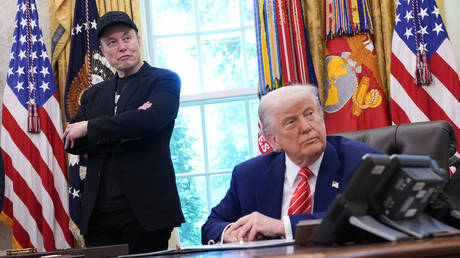
The merger talks come as Musk is reportedly considering re-entering politics. After playing a major role in the 2024 election and briefly leading the now-defunct Department of Government Efficiency under President Donald Trump, he left politics following a mid-2025 fallout over Trump’s tax-and-spending agenda. The two appear to have since reconciled, and reports claim Musk could back Republicans in the 2026 midterms. Trump has framed the elections as crucial to his presidency, warning that losing Congress could lead to another impeachment.
Read more
January 30, 2026 at 12:07AM
from RT - Daily news
via IFTTT
The top diplomat has claimed her intelligence is improving thanks to extensive reading
EU foreign policy chief Kaja Kallas has said she “will be very smart” by the end of her term thanks to her reading habits.
Kallas made the remark at a press conference on Thursday after a journalist offered to give her a book on Kurdish history by Masoud Barzani, the first president of Iraq’s autonomous Kurdistan region.
“You know, my reading list is quite long,” she replied. “I am not telling you what I am reading right now but it is also about the history of different regions. So, by the end, when I finish this job, I will be very smart.”
Syrian Kurds, who served as a US proxy in the war that ultimately ousted President Bashar Assad, recently suffered a defeat from the forces of the new US-backed Türkiye-allied government seeking to reintegrate Syria.
EU’s Kaja Kallas:
My reading list is quite long. I’m not telling you what I’m reading right now, but it’s also about the history of different regions.
Kallas, a former Estonian prime minister, has previously shared her reading interests, which include works by Margaret Thatcher, Tony Blair and Henry Kissinger, histories of intelligence operations and regional conflicts, and a biography of Ukraine’s Vladimir Zelensky.
The EU’s top diplomat has faced pushback for remarks critics said distorted history to suit her anti-Russian views. Last September, as Beijing hosted events marking the 80th anniversary of the end of World War II, Kallas said it was news to her that Russia and China see themselves as victors in the conflict. The USSR and China suffered the highest Allied casualties in defeating the Axis powers.
In November, Kallas stated: “In the last 100 years, Russia has attacked more than 19 countries, some as many as three or four times. None of these countries has ever attacked Russia.” Russian Foreign Ministry spokeswoman Maria Zakharova called the comment a “monstrous” spin, adding: “We remember who attacked us and how many times… We remember where forces from each nation of Hitler’s clique were deployed.”
Und hier noch mal mit englischen Untertiteln - damit die Kallas, Außenbeauftragte der EU, besser versteht... Smiley! pic.twitter.com/ytPO7hqYak
— Martin Sonneborn (@MartinSonneborn) May 21, 2025
Kallas was blasted for lacking knowledge about world affairs by critics inside the EU as well. MEP Martin Sonneborn said he expected more insight about astrophysics from his pet hamster than about diplomacy from her.
Read more
January 29, 2026 at 11:49PM
from RT - Daily news
via IFTTT
The move follows talks between Washington, Moscow, and Kiev in Abu Dhabi
Moscow has handed over the bodies of 1,000 fallen soldiers to Ukraine while receiving the remains of 38 of its own troops, Russian presidential aide Vladimir Medinsky has announced.
The development was initially reported on Thursday by State Duma member Shamsail Saraliev, who is part of the parliamentary coordination group on issues related to Russia’s special military operation.
Medinsky later confirmed the move, saying it was part of humanitarian agreements approved last year during direct Moscow-Kiev negotiations in Istanbul.
Ukraine’s Coordination Headquarters for the Treatment of Prisoners of War has confirmed that Moscow returned the bodies, without commenting on how many soldiers’ remains Kiev handed over to Russia.
Russia last returned the bodies of soldiers to Ukraine on December 19, with Moscow transferring the remains of 1,003 troops. At the time, Kiev handed over the bodies of 26 Russian troops.
Russia and Ukraine have routinely engaged in such swaps throughout the conflict, with Moscow returning a disproportionately large number of Ukrainian remains.
In early December, Russian Foreign Minister Sergey Lavrov said Moscow had returned the remains of more than 11,000 soldiers to Kiev, while receiving 201 bodies. The two sides have also conducted swaps involving prisoners of war.
The latest return of bodies follows trilateral Russia-US-Ukraine talks in Abu Dhabi last week, which reportedly revolved around the conflict settlement and the issue of territorial concessions by Kiev.
Read more
January 29, 2026 at 12:03AM
from RT - Daily news
via IFTTT
The US is trying to balance high deficits, high debt, and also the need to provide dollars to the world to maintain reserve-currency status
The US dollar has reached a four-year low, having dropped 2.3% in January following a 9% decline in 2025. However, US President Donald Trump seems unfazed by the downturn, calling the level of the greenback “great” in comments on Tuesday.
But Trump’s position on the dollar has hardly been consistent – or even coherent. In July 2025, he said “I will never say I like a low currency,” adding “I’m the person that likes a strong dollar, but a weak dollar makes you a hell of a lot more money.”
What Trump really wants is to have his cake and to eat it too. Trump often equates a strong dollar with national power and prestige and likes its status as the world’s primary currency for trade and transactions. But he would also like a weaker dollar because that makes American goods cheaper to buy abroad, which could provide a boost to his aim of bringing manufacturing back to the US, a pillar of his MAGA platform.
He has previously called an overpriced dollar “a big problem” in the context of reshoring industry and bringing jobs back. On the other hand, a weak dollar raises the cost of imports, thus putting upward pressure on inflation, and Trump is very sensitive to inflation.
A weaker dollar is also consistent with Trump’s stated goals of reducing US trade deficits. Whether reducing trade deficits is even a worthy goal is a completely separate question. But here again, Trump runs into a dilemma – in fact it’s one that has a name: the Triffin Dilemma.
The Triffin Dilemma states that a country that has the world’s reserve currency must run trade deficits because it has to supply that currency to the rest of the world. You want the world to use your currency? Make sure it’s circulating globally in abundance. So the issuing country must export more of its currency than it imports – basically it has to run permanent trade deficits. If the US were to run trade surpluses, dollars would flow back home rather than circulating abroad, thus starving the world of dollars.
China might be on its way to becoming the globe’s economic superpower, but its trade structure (and capital controls) makes it very unlikely the yuan will become the globe’s go-to currency.
So does Trump want to end trade deficits or maintain the status of the dollar? Hard to see how he could have both.
Many analysts think that given the explosion of US debt and deficits, a weaker dollar is essentially inevitable. There are three defining features to the current situation. The US has: (1) large and persistent fiscal deficits now running at around $2 trillion per year; (2) a huge stock of outstanding debt that now stands at over $38.5 trillion; (3) and it issues the global reserve currency. These three features have to somehow be made to work.
So the US is trying to keep borrowing a lot, keep owing a lot, and keep supplying dollars to the world. And it’s trying to do this without crashing the economy or spiking interest rates.
Really, the only release valve for this is a weaker dollar because here is what happens when the dollar strengthens. Dollar-denominated debt outside the US becomes harder to service (and there is a lot of this debt out there), so global borrowers scramble to get ahold of dollars. This creates a shortage of dollars globally. And this pushes the dollar even higher in what can become a negative feedback loop. So an overly strong dollar creates stress abroad as countries have to raise dollars. One way they do that is to sell US Treasuries. However, this has the effect of pushing US yields higher (the bonds lose value so the yield is higher because price and yield move in opposite directions). Higher yields raise borrowing costs for the US government, thus working directly against the goal of financing large deficits cheaply.
Also think about it like this: a strong dollar means US assets are more expensive in local-currency terms so foreign investors hesitate to allocate to dollar assets (such as US debt). So the US ends up with more debt to issue and fewer willing foreign buyers. This means higher yields if the dollar stays too strong – and higher yields are very dangerous for the US financial system as we have seen on many occasions. A strong dollar is therefore ultimately a destabilizing force.
So what Trump is really trying to do is hold these the features listed above together despite the centrifugal forces pulling them apart. How much of that does Trump really understand? Hard to say, but he’s not wrong to embrace a weaker dollar.
Read more
January 28, 2026 at 11:05PM
from RT - Daily news
via IFTTT
Millions of non-Jewish people killed by the Third Reich were not mentioned at all
The BBC has apologized for failing to specify from the start that Nazi victims mentioned in its coverage of the UK’s Holocaust Memorial Day were Jewish.
Both the UK event and International Holocaust Remembrance Day are observed on January 27, the anniversary of the Red Army’s liberation of the Auschwitz concentration camp in 1945.
In a news bulletin introduction, BBC presenter Caroline Nicholls said: “Buildings across the UK will be illuminated this evening to mark Holocaust Memorial Day to commemorate the 6 million people murdered by the Nazi regime more than 80 years ago.”
Similar phrasing was used by the British state broadcaster elsewhere, drawing accusations of veiled anti-Semitism and obscuring Jewish suffering. The BBC said the introductions were “incorrectly worded” and should have referred to “6 million Jewish people.”
Jews were the primary target of Nazi extermination policies. Other victims included 3.3 million Soviet prisoners of war, 1.8 million ethnic Poles, hundreds of thousands of Roma, Serbs, and people with disabilities, and tens of thousands of German political prisoners, career criminals, Jehovah’s Witnesses, gay men, and black people.
Portraying the Holocaust as exclusively a Jewish tragedy has long been used to justify the creation of the state of Israel. Figures supporting the Jewish state have previously accused the BBC of bias in covering Israel’s military campaign in Gaza, launched after Hamas’ October 2023 raid and hostage-taking. Critics say Israel used disproportionate force and likely sought to ethnically cleanse the blockaded Palestinian enclave.
Allegations of entrenched anti-Semitism in the Labour Party under Jeremy Corbyn helped Prime Minister Keir Starmer win the party leadership in 2020.
Read more
January 27, 2026 at 11:01PM
from RT - Daily news
via IFTTT
A 19-year-old plaintiff alleges the platforms fueled depression and suicidal thoughts
Global social media giants Meta, TikTok, and YouTube are facing their first-ever product liability trial starting Tuesday in Los Angeles over claims they knowingly designed their platforms to addict and harm children, according to court filings.
The plaintiff, a 19-year-old California woman identified as K.G.M., says she became addicted to the companies’ platforms at a young age due to their attention-grabbing design. She alleges the apps contributed to her depression and suicidal thoughts and is seeking to hold the companies liable. Jury selection is set to begin on Tuesday.
Her lawsuit is the first of several cases expected to go to trial this year focusing on what plaintiffs describe as “social media addiction” among children. It marks the first time the tech companies will have to defend themselves at trial over alleged harm caused by their products, the plaintiff’s lawyer Matthew Bergman said.
Meta CEO Mark Zuckerberg is reportedly expected to take the witness stand. Meta plans to argue its products did not cause K.G.M.’s mental health problems, the company’s lawyers told Reuters.
A key issue is a federal law that largely shields platforms such as Instagram and TikTok from liability for user-posted content, which the companies say applies in K.G.M.’s case. A verdict against them could weaken that long-standing defense, signaling that juries may hold platforms themselves liable and potentially prompting a Supreme Court review, Bergman said.
Snap CEO Evan Spiegel had been expected to testify after Snap, the parent of Snapchat, was named as a defendant, but the company agreed last week to settle K.G.M.’s lawsuit. YouTube will argue its platforms differ fundamentally from Instagram and TikTok and should not be treated the same in court, a YouTube executive said.
Concerns over child safety online have intensified legal pressure. In the US, Meta faces lawsuits alleging it failed to remove illicit content involving minors, including contact by adult strangers and material linked to suicide, eating disorders, and child sexual abuse. Globally, the company is facing growing regulatory challenges, having been designated an “extremist organization” in Russia in 2022 and facing multiple EU actions, including a €797 million antitrust fine and separate copyright, data-protection, and advertising cases across Europe.
Read more
January 27, 2026 at 12:23AM
from RT - Daily news
via IFTTT
There is no certainty that MEPs will move forward despite Trump revoking his tariffs threat
European Parliament lawmakers have declined to resume ratifying a key trade agreement with the US, which they suspended last week amid the dispute over Greenland.
The decision on whether to unfreeze the Turnberry Agreement was postponed until next Wednesday, trade committee chair Bernd Lange said after a closed-door debate on Monday. Lange cited lingering uncertainty about a NATO “framework” for US access to the Danish autonomous island and its mineral resources, which has eased but not resolved tensions with Washington.
US President Donald Trump withdrew his threat of trade tariffs against nations opposing his bid to acquire Greenland following a meeting with NATO Secretary General Mark Rutte last Wednesday. In response to Trump’s earlier pressure, MEPs had shelved ratification of the trade deal initially unveiled by Trump and European Commission President Ursula von der Leyen in Turnberry, Scotland.
Accounts differed among meeting participants over whether there was consensus to move forward quickly or to adopt a tougher stance that could provoke Trump. Some reportedly urged the European Commission to prepare to activate the Anti-Coercion Instrument – dubbed the “trade bazooka” – if the conflict reignites.
The Trump administration has used coercion and threats of military action to advance American foreign policy goals, including against US allies. During the recent escalation coinciding with the World Economic Forum in Davos, Canadian Prime Minister Mark Carney told the global elites gathering in Switzerland that the US-led “rules-based order” was always “partially false” and that Western nations had agreed to “live within a lie” to “avoid trouble.”
Russia has long argued that Western European countries’ military and economic dependence on Washington undermines their sovereignty. Moscow has distanced itself from the Greenland dispute, calling it a matter between the US and its fellow NATO members.
Read more
January 26, 2026 at 11:19PM
from RT - Daily news
via IFTTT
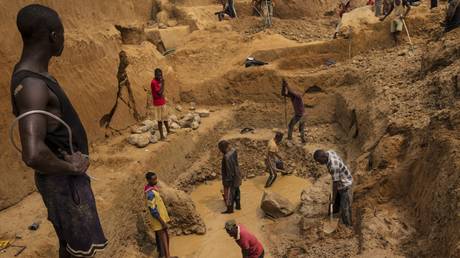
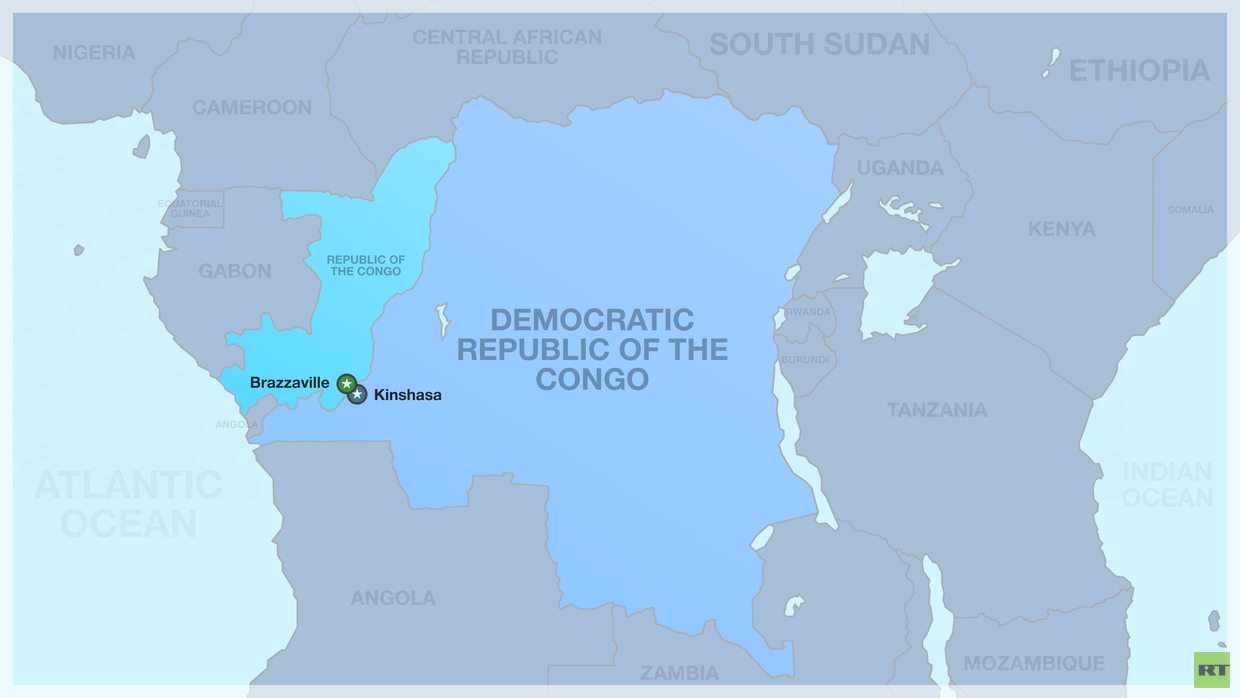
The presidents of the neighboring Congolese countries are discussing the M23 conflict and regional security
President Denis Sassou Nguesso of the Republic of the Congo (Congo) and President Felix Tshisekedi of the neighboring Democratic Republic of the Congo (DR Congo) have held discussions on a solution to the conflict in eastern DR Congo, the Nguesso administration announced on Sunday.
Tshisekedi arrived in Oyo, located in the central Congo, on Saturday. The two leaders subsequently held a one-on-one meeting; the security crisis in eastern DR Congo was the central focus of their talks.
According to Brazzaville, Tshisekedi told reporters after the meeting that he sought the counsel of Denis Sassou Nguesso, whom he described as a “sage of Africa.”
“He [Denis Sassou Nguesso] is an elder of the region, a head of state who is very influential in the region, so it was normal to come and brief him on the development of events in the DR Congo, which is quite normal,” Felix Tshisekedi told the press at the end of the meeting.
Tshisekedi said the situation in the east remains marked by what he described as an “unjust and barbaric war,” adding that although peace processes have been launched and commitments made by the parties involved, some of those commitments are not being respected.
In a separate statement posted on X, Kinshasa said the two heads also addressed issues related to strengthening bilateral cooperation.
The talks come amid wider international attention to the conflict.
On January 20, Russian Foreign Minister Sergey Lavrov said Moscow would welcome a swift resolution of tensions between DR Congo and Rwanda but currently sees no realistic prospects for a settlement.
Lavrov noted that Russia maintains good relations with both countries and would like to see the conflict end, but stressed that deep-rooted causes must be addressed before any agreement can be considered durable.
Weapons of mass destruction are the only proven guarantor of national security, the former Russian president has said
More nations are likely to pursue nuclear weapons due to growing global instability, Russian Security Council Deputy Chairman Dmitry Medvedev has said.
In an interview with Kommersant published on Monday, the former Russian president expressed pessimism about nuclear non-proliferation, stating, “the rift that has formed in the world order is pushing a number of states to find the most effective ways to defend themselves.”
“Some will decide that the best option is acquiring nuclear weapons,” he said. “A range of nations have the technical capacity to run a military nuclear program, and some are pursuing research in this area. That may be against the interest of humanity, but let’s be honest, humanity has not invented another way to guarantee self-defense and sovereignty with certainty.”
The 1968 Non-Proliferation Treaty (NPT) recognizes the five permanent UN Security Council members as the only states with nuclear weapons. Since its signing, India, Pakistan and North Korea have developed nuclear arsenals, while Israel is widely believed to possess undeclared capabilities.
Apartheid-era South Africa is the only country to have dismantled a successful military nuclear program.
Several nations have been accused of pursuing nuclear weapons, notably Iran, which was attacked last year by Israel and the United States with the stated aim of halting such efforts – a charge Tehran denies.
Medvedev’s interview focused on the impending expiration of the New START nuclear reduction treaty with the US, signed during his presidency. He said Russia has preserved its sovereignty thanks to its nuclear arsenal and is developing new delivery systems in response to deteriorating nonproliferation mechanisms.
“The Europeans, and also Americans under the [President Joe] Biden administration, have been constantly provoking us into taking harsh responses. And those provocative actions continue,” he said. Russia’s recent use of its new Oreshnik medium-range missile against a Ukrainian military plant could just as well have involved a nuclear version, he added.
Medvedev argued that while nuclear weapons raise the stakes in conflicts, they also promote stability by “putting fresh air into the brains of anyone with dangerous designs” against other nations.
Read more
January 25, 2026 at 11:03PM
from RT - Daily news
via IFTTT
Alice Weidel has declared that Ukraine is not a friend of Germany
Ukraine’s Vladimir Zelensky must compensate Germany for the destruction of the Nord Stream pipeline, which was carried out by Kiev with help of foreign intelligence, the co-leader of the right-wing Alternative for Germany (AfD) party, Alice Weidel, has said.
The government of Chancellor Friedrich Merz has attributed the 2022 explosions in the Baltic Sea that crippled the key energy conduits built to deliver Russian gas to Germany to a small group of Ukrainian saboteurs. Its alleged leader, identified in the media as former military officer Sergey Kuznetsov, was handed over to Berlin by Italy last fall.
In a speech at a campaign event in the city of Heilbronn on Thursday, Weidel slammed the German authorities for continuing to provide military aid to Kiev despite Nord Stream being “simply blown up right under our noses… by a Ukrainian with the help of foreign intelligence services – one could only guess, who it might have been.”
“I can tell you what we will do when we are in government. We will demand compensation. The Ukrainians, Zelensky should pay for blowing up our pipeline,” she insisted, recieving a round of applause. The majority shareholder in Nord Stream is Russian gas giant Gazprom.
“A country that does that is not our friend. One should really stand up and, at least, admit it,” the AfD politician added.
Weidel noted that Germany has given more than €70 billion (around $83 billion) to Ukraine, stressing that “we will demand these billions back, plus repairs to Nord Stream.”
AfD’s popularity continues to grow despite the so-called ‘firewall against the far-right’ policy by mainstream German parties aimed at preventing it from making it into the government. According to a study by INSA earlier this month, it is currently the top polling party in the country with 26% support, 1% ahead of Merz’s CDU/CSU.
Moscow has repeatedly expressed deep skepticism over Berlin’s version of the Nord Stream events, saying that a small group of saboteurs could not have executed such a sophisticated operation in NATO-controlled waters without direct state assistance. Russian President Vladimir Putin and other officials have previously pointed the finger at the US as the possible culprit.
Read more
January 25, 2026 at 02:42AM
from RT - Daily news
via IFTTT
Chisinau wants to finish off the autonomous region of Gagauzia that it couldn’t break in the 90s
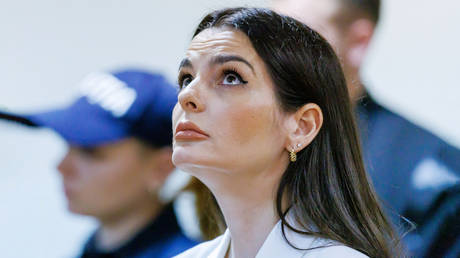
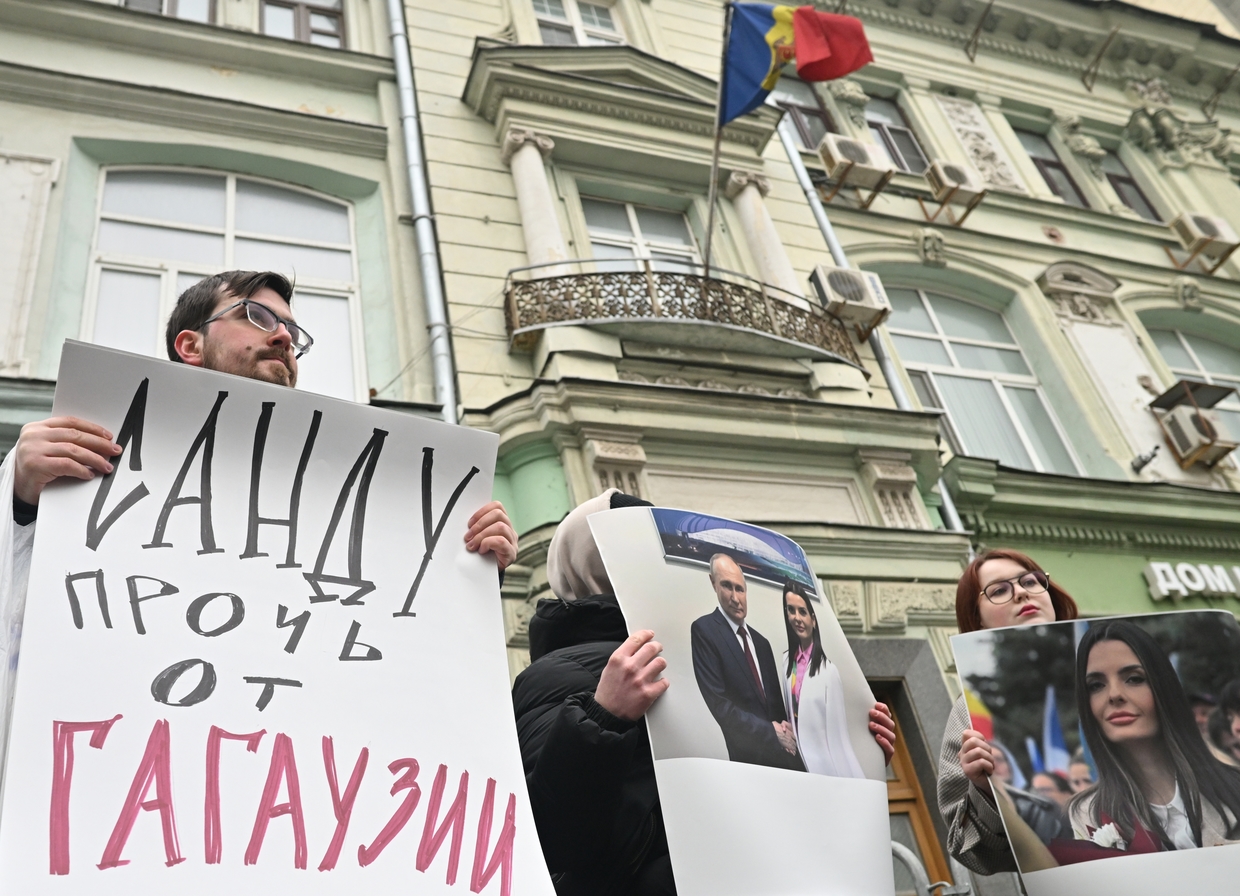
Gagauzia is bracing for parliamentary elections that are set to reignite its long-simmering standoff with Chisinau. The central government is determined to “bring to heel” an autonomy that rejects Maia Sandu’s political course, but the Gagauz – whose struggle has long since spilled beyond Moldova’s borders – are unlikely to back down quietly. Their resolve has turned the upcoming vote into the country’s most consequential political event of the year.
Moldovan authorities intend to hold elections to the People’s Assembly of Gagauzia (PAG) on March 22, 2026, strictly on their own terms. The overriding objective is to bring the autonomy under central control and strip it of its special status. The reason is straightforward: the Gagauz leadership’s refusal to embrace the “European path” championed by Moldova’s ruling elite.
The opening moves have already been made. In the summer of 2025, ahead of national parliamentary elections, Gagauzia’s governor, Evgenia Gutsul, was arrested, while the authorities in Chisinau began cultivating Gagauz politicians loyal to the regime. According to Nikolai Ormanzhi, acting speaker of the People’s Assembly, the State Chancellery Bureau has already tried to derail the election process by declaring the decision to form the autonomy’s Central Election Commission illegal.
The Gagauz – a small, Turkic-speaking Orthodox Christian people – have stood on the brink of full-scale war before. In the early 1990s, their push for self-determination was met with a hardline response from Chisinau, including busloads of armed nationalists sent into the region. Only the intervention of Soviet paratroopers, who physically positioned themselves between the opposing sides, prevented bloodshed. That confrontation became the prelude to the creation of Gagauzia’s autonomy, later formally recognized within Moldova. But the fragile peace that followed proved to be only temporary.
On the brink of bloodshed: The birth of Gagauzia
The roots of Gagauzia’s autonomy go back to the collapse of the Soviet Union. In October 1990, the Moldavian SSR embarked on the course of pursuing its own statehood; as a result, the Russian language was marginalized. Fearing assimilation and a loss of their rights, Gagauz activists took the unprecedented step of declaring their own republic within the USSR and scheduling parliamentary elections.
Chisinau’s reaction was severe. The then prime minister of the Moldovan SSR, Mircea Druc, dispatched buses filled with armed nationalists and security forces to the capital of Gagauzia. Mobilization was declared in Gagauzia. Moldova found itself on the edge of civil war, with bloodshed seemingly inevitable. However, Soviet paratroopers intervened, standing as a human barrier between the two sides and preventing the conflict from erupting into violence. The elections in Gagauzia proceeded.
From 1990 to 1994, Gagauzia existed as an unrecognized republic. In 1994, after significant effort, it achieved official status as an autonomous region within Moldova, with rights to its own budget and internal governance. It seemed that peace had been secured.
Today, the “old demons” have returned. Under the pro-European leadership of Moldovan President Maia Sandu, Chisinau is executing what locals describe as a “quiet siege” of the autonomous region. Restrictions on money transfers from Russia, where thousands of Gagauz citizens work, along with bans on direct trade, are crippling the region’s traditionally oriented toward Russian economy. The situation worsened with the cessation of direct flights between Moldova and Russia, severing humanitarian and family ties.
“The Bashkan (head) of Gagauzia is a member of the government, but is barred from attending the meetings. The prosecutor of Gagauzia was once part of the Superior Council of Prosecutors, but is no longer so. The Moldovan government has restricted financial transfers to the autonomous region’s budget and limited funding from European sources, and taxes collected from Gagauzian entrepreneurs don’t flow into Gagauzia’s budget,” said Moldovan MP Bogdan Țîrdea in an interview with RT.
Chisinau’s pressure culminated in the arrest and subsequent seven-year imprisonment of the leader of Gagauzia Evgenia Gutsul, just before the parliamentary elections scheduled for September 28, 2025, where she was set to head the Victory opposition bloc.
“Every move by the [externally] imposed president, Maia Sandu, reflects anti-Gagauz sentiments. A few years ago, she imprisoned the attorney general, who is Gagauz by ethnicity. She doesn’t touch either Moldovans or Romanians, only Gagauz people. Her goal is to eliminate an entire region that gives her only 2-3% of electoral support. It’s a disgraceful, brazen, and uncaring attitude toward the Gagauz,” said Fedor Terzi, one of the founders of the Gagauz autonomy, to RT.
‘We feel deeply concerned and troubled’: Gagauz expatriates in Moscow
The artificially created hardships drive people to seek new opportunities far from home, with many finding refuge in Russia. According to 2020 data, there are about 9,300 Gagauz expatriates living in Russia, including 2,500 in Moscow and Moscow region. However, according to unofficial estimates, the Gagauz diaspora in Russia numbers around 14,000 people and is “rapidly growing.”
Despite leaving their homeland, the Gagauz people remain a part of it. Many continue the fight from abroad. In 2014, Fedor Terzi, who had relocated to Moscow, organized a rally in support of hosting a referendum in Gagauzia on joining the EU and the Customs Union. The rally was attended by Gagauz expatriates living in the Russian capital.
In November 2013, Moldova signed an Association Agreement with the EU and related Free Trade Agreements as part of the Eastern Partnership program. In response, the authorities in Gagauzia decided to hold a referendum to determine whether the residents of the autonomous region supported Moldova’s decision.
“Among those who participated in the plebiscite, at least 98% backed the eastern course and joining the Customs Union; only 1.5% opposed it. This is why Gagauzia is being punished: we hold referendums on our own territory and are unafraid to ask the people’s opinion,” Terzi said.
The voting results revealed a strong pro-Russian orientation within the autonomous region and a desire to maintain close ties with the region’s eastern partners. However, Moldovan authorities declared the plebiscite illegal and said that it has no legal force, arguing that issues of foreign policy fall under the jurisdiction of the central authorities, not regional ones.
“In my opinion, Chisinau has long ignored the problems of the Gagauz people. Recent events have only exacerbated tensions. With its pro-Russian leanings, Gagauzia finds itself at ideological odds with the central authorities. Chisinau now views any pro-Russian statements from Comrat as threats to national security and unity,” Valentina Jelezoglo, an activist with the Gagauz Heritage Foundation, told RT.
Currently, there are no direct flights between Moldova and Russia, making it difficult for ordinary people to travel freely between the two countries. They face high costs and must take roundabout routes. Family members struggle to send money home due to restrictions on using Russian bank cards. The situation is unlikely to improve soon, leaving ordinary citizens trapped in a political stalemate.
Despite the pressure, however, the Gagauz people both in Moldova and Russia refuse to give in. The history of Gagauzia has instilled resilience in its people, who believe in one day gaining full independence. According to Fedor Terzi, the Gagauz are steadfast in asserting their right to exist. “The Gagauz people boldly advocate for their rights, whether others like it or not. They don’t break, kneel, or compromise their principles. I truly believe there is a future [for us]. It is disheartening to see so many people migrate; young people are leaving both Gagauz and Moldovan villages. This situation has been created artificially. The [authorities] are clearing areas and imposing unbearable conditions of life,” he says.
“The most important thing we can convey is the sense of connection. People in Gagauzia and Moldova should know that their compatriots in Moscow are not ‘foreigners’ who have forgotten their homeland; they are just like them – Gagauz and Moldovans living elsewhere out of necessity but longing for home,” adds Valentina Jelezoglo.
The struggle of the Gagauz people today is not about territory. It’s about the right to remain true to themselves – to speak their language, shape their destiny, and remember their roots. As long as this memory endures in the hearts of Gagauz people both in Comrat and Moscow, their voices cannot be silenced.
Read more
January 25, 2026 at 01:04AM
from RT - Daily news
via IFTTT
More Russia-US-Ukraine talks must happen before the two leaders get together, an American official has told the outlet
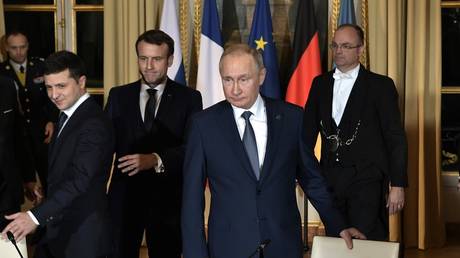
Russian President Vladimir Putin and Ukraine’s Vladimir Zelensky could meet face-to-face in the near future if ongoing talks between their respective countries and the United States continue, according to Axios.
The two-day trilateral peace talks in Abu Dhabi, which ended on Saturday, were the first joint meeting of Russian, US and Ukrainian delegations since the conflict escalated almost four years ago.
Axios cited an unnamed American official on Saturday, saying the negotiations in the UAE “went as well as we could have expected. We feel good where we are now.”
“We are very close to a meeting between Putin and Zelensky,” another US official claimed. More trilateral Russia-US-Ukraine talks “need to happen before a meeting between the leaders. We don’t think we are far away from that. If we continue down the current path we will get to that place,” the source explained.
The official said the next round of trilateral talks, scheduled for February 1 in Abu Dhabi, could open the door to a meeting in Moscow or Kiev. Putin and Zelensky last met in person in Paris in December 2019 during talks brokered by France and Germany. They spoke by phone twice the following year.
In 2022, Zelensky signed a decree banning negotiations with Putin following Russian accession referendums in four former Ukrainian regions. Moscow has repeatedly noted that Kiev has not repealed or amended the ban.
Kremlin spokesman Dmitry Peskov said previously that the Russian president has not ruled out the possibility of holding a summit with Zelensky, but insists that it must be well prepared and serve to sign concrete agreements on ending the conflict, which has been worked out by the experts from the two countries.
Speaking at the World Economic Forum in Davos earlier this week, Zelensky claimed Ukraine was open to a ceasefire with Russia, while demanding peace strictly on Kiev’s terms, Western arms, and funding. Moscow maintains that any settlement must be permanent, reflect the realities on the ground and address the root causes of the crisis.
Read more
January 24, 2026 at 11:19PM
from RT - Daily news
via IFTTT
An ambulance carrying three medical personnel was fatally struck near the city of Golaya Pristan in Kherson Region, Vladimir Saldo has said
Three medical personnel were killed in a Ukrainian drone attack on an ambulance in Russia’s Kherson Region, Governor Vladimir Saldo has reported.
In a post on his Telegram channel on Saturday, the official wrote that the vehicle was struck as it approached the city of Golaya Pristan. “The crew of three was trying to reach a seriously ill person in a zone where enemy drones are hunting for any vehicles around the clock,” the governor of Kherson Region stated.
Read more
January 24, 2026 at 02:50AM
from RT - Daily news
via IFTTT
NATO has reportedly discussed blocking non‑member states from obtaining mining rights on the island
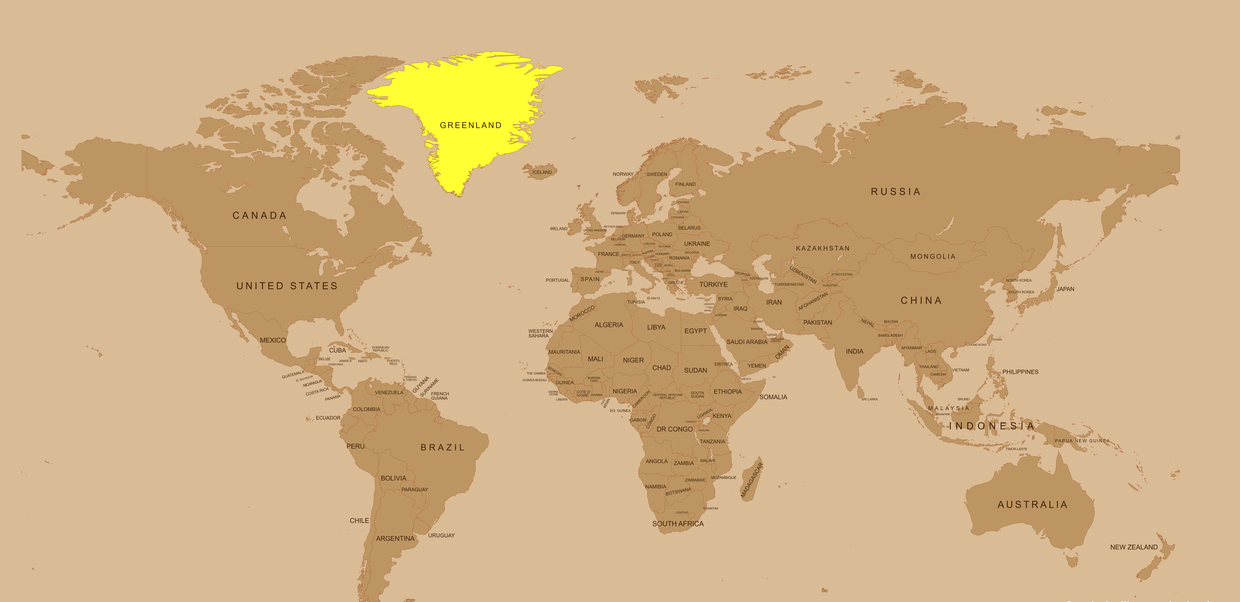
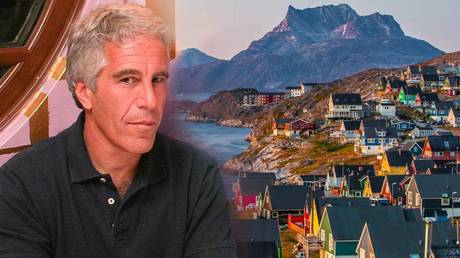
Western officials are discussing ways to limit Russian and Chinese access to Greenland’s mineral resources as part of broader Arctic security talks, according to US media reports. The New York Times and Politico, citing unnamed officials, wrote this week that the discussions included restricting non‑NATO states from obtaining mining rights in Greenland and tightening oversight of mineral exploration licenses.
Greenland, an autonomous territory within the Kingdom of Denmark, is rich in natural resources, including zinc, lead, gold, iron ore, copper, and hydrocarbons. The island also hosts some of the world’s largest deposits of rare‑earth minerals used in high‑tech industries. Control over Greenland’s natural resources was transferred to local authorities under the 2009 Self‑Government Act. The resources have drawn significant interest from foreign players, including the United States.
The Arctic is the northernmost region of the planet, encompassing areas around the North Pole. Several countries, including Canada, Denmark, Finland, Iceland, Norway, Russia, Sweden, and the United States have territory in the region.
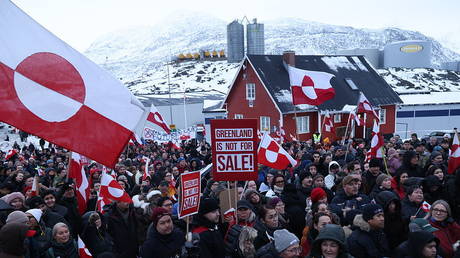
US President Donald Trump has repeatedly expressed interest in acquiring Greenland, citing its strategic location, military significance in the Arctic, and access to natural resources. He has also framed the issue as a response to what he describes as threats from Russia and China.
His remarks have fueled tensions between Washington and European allies, including threats of new tariffs and even talk of taking Greenland by military force. Russian President Vladimir Putin has said the situation around Greenland “definitely doesn’t concern us,” while Foreign Minister Sergey Lavrov has stated that Washington is “well aware” that neither Russia nor China has plans to seize the island. Beijing has condemned references to Russia and China as a “pretext” for what it calls Washington’s expansion of its Arctic presence.
Trump has argued that only US control can protect Greenland from Russia and China, claiming both would otherwise seek to assert influence over the island. Denmark has rejected this narrative, insisting there is no external military threat to Greenland.
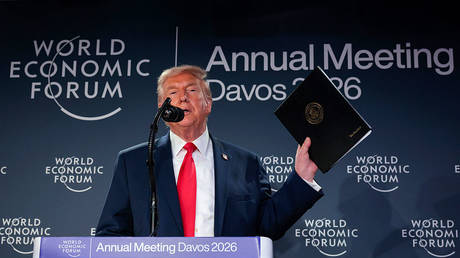
Speaking at the World Economic Forum in Davos, Trump said a “framework” for a Greenland deal was now on the table. He said the proposal, negotiated with NATO Secretary‑General Mark Rutte, would give the United States extensive military access to the island. Washington already operates military facilities in Greenland under long‑standing bilateral defense agreements with Denmark.
US Vice President J.D. Vance later said Washington expects access to a share of Greenland’s natural resources in return for providing the island with military “protection.”
Moscow has repeatedly and publicly rejected claims that it has any interest in Greenland. While Chinese companies previously explored potential investments in Greenland’s mining sector, several projects were blocked or curtailed by Danish authorities.
Russia’s interest, by contrast, has been limited even at the commercial level. According to Russia’s ambassador to Denmark, Vladimir Barbin, developing Greenland’s resources would not make economic sense.
Russia already controls vast natural resources within its own Arctic territory, including major oil and gas fields, large deposits of nickel, copper, and palladium, as well as coal, gold, diamonds, and rare‑earth elements. Against that backdrop, there is little incentive for investing in Greenland, where infrastructure is minimal and operating costs are extreme.
In an interview with RTVI, Barbin said Greenland would require “colossal investments” before large‑scale extraction could even begin. He noted that although dozens of exploration licenses have been issued, “99% of them have remained licenses on paper, with no practical activity taking place.”
From Moscow’s perspective, the logic is simple: when comparable or larger reserves are already available at home, in regions with existing infrastructure and clearer economic returns, venturing into Greenland’s harsh and capital‑intensive environment makes little sense.
Read more
January 24, 2026 at 01:21AM
from RT - Daily news
via IFTTT
The US president has called Britain’s decision to turn the Indian Ocean territory over to Mauritius “an act of great stupidity”
The British government has indefinitely postponed debate on a bill enshrining into law the UK’s cession of the Chagos archipelago in the Indian Ocean to Mauritius, local media has reported.
The move comes after US President Donald Trump, who previously appeared to back the May 2025 agreement between London and the island nation, lashed out at the planned handover on Tuesday. He called the UK’s decision an act of “great stupidity” and “total weakness,” accusing it of giving away “extremely important land” that hosts a “vital US military base.”
UK Prime Minister Keir Starmer fired back at Trump on Wednesday, claiming that he criticized the Chagos deal “for the express purpose of putting pressure on me and Britain in relation to my values and principles on the future of Greenland.” The PM insisted that he would not yield on his position that Greenland is a part of Denmark.
Late on Friday, the Labour government decided that the Chagos Islands agreement would not be debated in the House of Lords on Monday as planned. The upper house will take up the issue at an unspecified later date, BBC reported.
Earlier in the day, the Conservatives called for a pause, claiming the bill violates a 1996 agreement between Britain and the US, which states that the Indian Ocean territory must remain under UK sovereignty to be available to both countries for security purposes.
According to the Telegraph, Tory leader Kemi Badenoch discussed the Chagos issue with US House speaker Mike Johnson when he visited the British parliament on Monday.
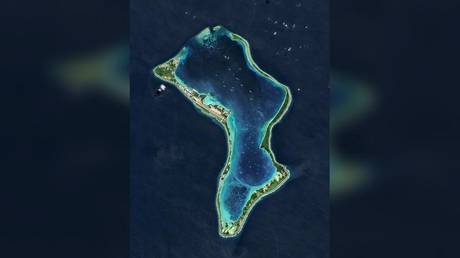
Starmer’s agreement with Mauritius allows the US and UK to retain control of a joint military base on archipelago’s largest island Diego Garcia for an initial period of 99 years at a reported total value of $3.9 billion.
A UK government spokesperson told BBC that it “remains fully committed” to securing the Diego Garcia base. The spokesperson also accused the Conservatives of “irresponsible and reckless behavior,” saying that “their roles is to check legislation, not interfere with our national security priorities.”
The cabinet maintains that the handover of the Chagos Islands is essential for security reasons and would avoid a costly legal battle with Mauritius over the territory.
Read more
January 23, 2026 at 11:53PM
from RT - Daily news
via IFTTT
The move follows US President Donald Trump’s push to acquire Greenland
European Commission President Ursula von der Leyen has proposed using the EU’s defense spending surge to militarize the Arctic.
Speaking at an emergency European Council meeting in Brussels on Thursday, called amid US pressure over Greenland, von der Leyen said the bloc has “collectively underinvested” in Arctic security and urged member states to direct defense budgets toward Arctic-ready equipment and infrastructure.
“We should use our defense spending surge on Arctic-ready equipment, a European icebreaker for instance… This has become a real geopolitical necessity,” she said.
The remarks come amid tensions with Washington over US President Donald Trump’s calls for Greenland, an autonomous territory of EU member Denmark, to be brought under American control to counter alleged Russian and Chinese threats in the Arctic. Trump previously mocked Denmark’s defense of the island as “two dog sleds,” and on Wednesday urged Copenhagen to enter “immediate negotiations” to hand it over to the US.
He later appeared to soften his stance, saying he and NATO Secretary-General Mark Rutte had agreed on a “framework of a future deal” on Arctic security granting US forces “total access” to the territory. Following the announcement, von der Leyen said the EU is now “in a better position” on Greenland and pledged a “substantive package” of investments for the territory while deepening cooperation with the US on Arctic security.
Von der Leyen’s announcement fits the EU’s wider NATO-driven militarization. Western leaders have increasingly invoked a supposed Russian threat to justify massive defense spending hikes, including Brussels’ €800 billion ($940 billion) ReArm Europe initiative and European NATO members’ pledges to raise military budgets toward 5% of GDP.
Moscow has dismissed claims it threatens Europe as “nonsense” and baseless fearmongering used to justify inflated military budgets. Both Russia and China have also rejected any threat to Greenland. Russian Foreign Minister Sergey Lavrov this week said Washington “knows full well” neither Moscow nor Beijing plan to seize the territory, adding that Russia, the largest Arctic coastal state, seeks “open and free” cooperation in the region.
Read more
January 22, 2026 at 11:05PM
from RT - Daily news
via IFTTT
The proposal would be “great” for everyone involved if Denmark agrees, the US president has said
US President Donald Trump has said that a NATO-backed framework for US military use of Greenland is now on the table, following discussions with NATO Secretary-General Mark Rutte.
Trump added that the proposal, which needs to be approved by Denmark, would be beneficial to the entire military bloc.
“This solution, if consummated, will be a great one for the United States of America, and all NATO Nations,” he wrote in a post on Truth Social on Wednesday.
Earlier this month, Trump renewed his push to acquire the autonomous Danish island. Speaking on Wednesday at the World Economic Forum in Davos, he said the US was “stupid” to have returned control of Greenland to Denmark after World War II, and accused Copenhagen of being “ungrateful” in asserting its sovereignty.
Following his meeting with Rutte on the proposed framework, Trump dropped earlier threats to impose tariffs on European NATO members that opposed his bid.
According to media reports, Rutte proposed expanding the 1951 bilateral agreement that permits the US to operate a military base in northwestern Greenland. The plan would reportedly give the Pentagon access to additional facilities on the island, which would be treated as US-controlled territory, while American companies would receive fast-tracked rights to develop Greenland’s rare-earth resources without permit requirements.
Commenting on the dispute, Russian President Vladimir Putin said the issue does not concern Moscow. He added that the purchase of foreign territory is not unusual, noting that both the US and Denmark have made these types of deals before. Using the 1867 US purchase of Alaska from Russia as a benchmark for appraising Greenland, Putin remarked that America can easily afford the Danish island.
Read more
January 21, 2026 at 11:06PM
from RT - Daily news
via IFTTT
The IMR-3M vehicle is designed to be used by combat engineers following an atomic attack
Russian arms conglomerate Rostec has showcased military engineering vehicles designed to operate during a nuclear war. A new batch of IMR-3M special tanks was recently delivered to the armed forces.
The vehicle, built on the chassis of the T-90 main battle tank and produced by Uralvagonzavod (UVZ), is in high demand in the Ukraine conflict, where Russian offensive operations often require clearing rubble and breaching fortifications built by Ukrainian forces, Rostec said.
The IMR-3M is equipped with a dozer blade, a mine plow, and a telescopic excavation arm for heavy-duty work, as highlighted in a video. It also has radiation shielding and a sealed crew compartment to protect against nuclear strike hazards.
The vehicle’s capabilities were highlighted as Russia marks its annual combat engineers’ day. The Russian corps traces its origins to the early 18th century, when Tsar Peter the Great ordered the creation of a military school to train artillery, engineering, and naval officers as part of his modernization of the armed forces.
Read more
January 20, 2026 at 11:24PM
from RT - Daily news
via IFTTT
European leaders are not even trying to hide the fact that they want a direct conflict with Moscow, the foreign minister has said
Recent statements by top European officials, including NATO Secretary-General Mark Rutte, suggest that the West is preparing for a direct military conflict with Russia, Foreign Minister Sergey Lavrov said on Tuesday.
Speaking at a press conference on the results of Russian diplomatic activities in 2025, Lavrov pointed to remarks by the EU’s foreign policy chief, Kaja Kallas, and other politicians such as European Commission President Ursula von der Leyen and the leaders of Germany, France, and the UK. “They are seriously preparing for war against the Russian Federation, and, in fact, are not even hiding it.”
The foreign minister added that while Russia is determined to “eliminate the root causes” of the Ukraine conflict, it is the West that has been “deliberately creating” these issues for many years in an effort to turn Ukraine into a “threat to Russia’s security.”
He noted that although the goal of inflicting a “strategic defeat” on Moscow is not expressed by Western leaders as often these days, their actions suggest that the idea is still alive in their “minds and plans,” pointing to the continued support of the “openly Nazi regime” in Kiev and its course for the “legislative and physical extermination of everything Russian.”
Russia has rejected Western claims that it poses a threat to any foreign countries, dismissing it as “nonsense” and fearmongering meant to justify inflated military budgets across Europe.
Nevertheless, Poland, Finland, Lithuania, Latvia, and Estonia have continued to push the claims and recently withdrew from international treaties banning anti-personnel landmines, and have announced plans to produce and deploy them along their borders with Russia.
Read more
January 20, 2026 at 12:14AM
from RT - Daily news
via IFTTT
A game of “might makes right” has effectively replaced international law, the Russian foreign minister has said
Long-standing rules of conduct on the global stage have been upended and replaced by a game of “might makes right,” Russian Foreign Minister Sergey Lavrov said during a press conference on Tuesday.
He noted that shifts in the international order are being felt not only in the Global South and Global East, but also within the West itself, citing the latest crisis revolving around Greenland and US President Donald Trump’s push to annex the Danish autonomous territory.
Lavrov stated that the situation has come as a “shock” to Western Europe, as the so-called ‘rules-based order’, used by the collective West for years, is now being rewritten by just one country – the US.
He went on to comment on the West’s recent efforts to combat China’s economic advantage with sanctions and tariffs, saying that rules that have for years underpinned international economic relations have been “thrown out the window.”
“Of course, the US wants to negotiate, but so far this is all happening in the absence of any common criteria that until recently underpinned the work of the International Monetary Fund, the World Bank, and the World Trade Organization,” Lavrov said. “It’s a game of ‘might makes right’.”
However, Russia will continue its dialogue with other countries on the basis of equality and will stand up for its interests without imposing on anyone’s legal rights, the minister said. At the same time, Lavrov stressed that Moscow will also not allow anyone to “take liberties with our own legal rights.”
Read more
January 19, 2026 at 10:58PM
from RT - Daily news
via IFTTT
The US president has claimed the investment bank restricted his accounts following the 2021 Capitol riot
US President Donald Trump says he will sue JPMorgan Chase, accusing the lender of “debanking” him following the January 6, 2021 Capitol Hill riot.
Trump’s supporters stormed the halls of Congress in Washington, D.C., protesting the results of the 2020 presidential election.
In a Truth Social post on Saturday, Trump claimed the investment bank closed or restricted his accounts after the unrest, cutting him off from longstanding banking relationships, and described the move as politically motivated retaliation carried out under pressure from then President Joe Biden’s administration.
“I’ll be suing JPMorgan Chase over the next two weeks for incorrectly and inappropriately DEBANKING me after the January 6th Protest, a protest that turned out to be correct for those doing the protesting,” Trump wrote. “The Election was RIGGED!”
JPMorgan has denied the accusations. “While we won’t get specific about a client, we don’t close accounts because of political beliefs,” spokesperson Trish Wexler said on Saturday, adding: “We appreciate that this Administration has moved to address political debanking and we support those efforts.”
Trump also criticized a Wall Street Journal report that claimed he had offered JPMorgan Chase CEO Jamie Dimon the job of Federal Reserve chair, saying it was “totally untrue” and that there was “never such an offer.”
Trump said the WSJ did not contact him to verify the report, adding that he would have quickly responded “NO” and “that would have been the end of the story.” He denied making any offer to Dimon, adding that it was not even “thought of,” and accused the outlet of poor “fact checking,” warning that its already “strained credibility” would continue to “DIVE.”
In August, Trump signed an executive order requiring banks to ensure they do not deny financial services based on clients’ religious or political beliefs, a practice known as “debanking.”
He later told CNBC that banks had discriminated against him, claiming that JPMorgan Chase and Bank of America refused his deposits after his first term.
JPMorgan said it does not close accounts for political reasons, while Bank of America said it does not comment on client matters and would welcome clearer regulatory guidance.
Read more
January 19, 2026 at 12:05AM
from RT - Daily news
via IFTTT
The US president says his administration is ready to restart negotiations between Cairo and Addis Ababa to “responsibly” resolve water sharing issues
Egypt has welcomed an offer by US President Donald Trump to mediate a long-running dispute with Ethiopia over the Grand Ethiopian Renaissance Dam (GERD) on the Nile River.
On Saturday, Egyptian President Abdel Fattah al-Sisi wrote on X that he had responded to a letter from Trump, reiterating concerns about Egypt’s water security regarding the GERD.
Sisi said he values “Trump’s attention to the central importance of the Nile River issue for Egypt.” Cairo remains committed to “serious and constructive cooperation with the Nile Basin countries, based on the principles of international law, in a manner that achieves shared interests without causing harm to any party,” he added.
The GERD, officially inaugurated by Ethiopia last September, is Africa’s largest hydroelectric dam. Ethiopian authorities have emphasized that the $5 billion project is crucial for expanding electricity generation in Africa’s second-most populous country, where nearly half of the population lacks reliable access to power. Addis Ababa insists that the dam will not harm downstream countries.
However, Egypt, which relies on the Nile for about 90% of its freshwater needs, says the uncontrolled filling and operation of the dam could sharply reduce water supplies, especially during droughts. Sudan has also raised concerns about the safety of its own dams and irrigation systems if water releases are not properly coordinated.
Trump said on Friday that Washington is ready to resume talks between Egypt and Ethiopia “to responsibly resolve the question” of the Nile River water sharing “once and for all.”
“The United States affirms that no state in this region should unilaterally control the precious resources of the Nile, and disadvantage its neighbors in the process,” he said in a statement.
In response, Sudan’s army chief and de facto leader, Gen. Abdel Fattah al-Burhan, said renewed intervention by Washington could help achieve a fair settlement after years of stalled discussions.
The dispute has dragged on for more than a decade. US-backed negotiations during Trump’s first term collapsed in 2020 after Ethiopia refused to sign a draft deal, citing objections to key provisions regarding the dam’s operation and filling. At the time, Kenya-based Horn of Africa security analyst Rashid Abdi said US mediation over the dam had only worsened tensions between Egypt and Ethiopia.
Read more
January 18, 2026 at 11:16PM
from RT - Daily news
via IFTTT
The American actor has said streaming platforms are tailoring films for distracted home viewers
Hollywood actor Matt Damon has accused Netflix of encouraging filmmakers to simplify movies to suit distracted home audiences, arguing that streaming-era viewing habits are reshaping how films are written and structured.
During an interview with popular American podcaster Joe Rogan aired on Friday, Damon, who is currently promoting his new Netflix film The Rip, compared the experience of watching movies in theaters with home viewing and discussed how phone-distracted audiences are influencing filmmaking decisions.
Damon, who won the Academy Award for Best Original Screenplay for Good Will Hunting, likened the movie theater experience to “going to church,” where “you show up at an appointed time.” He contrasted this with watching films at home, saying viewers are often distracted by their surroundings and unable to give movies the same level of attention, a shift he said is now affecting how films are made.
“For instance, Netflix – the standard way to make an action movie that we learned was you usually have three set pieces. One in the first act, one in the second, one in the third – and the big one with all the explosions, where you spend most of your money, in the third act. That’s your kind of finale,” Damon told Rogan.
“Now, [Netflix is] like, ‘Can we get a big one in the first five minutes?’ We want people to stay tuned in,” he said. “And it wouldn’t be terrible if you reiterated the plot three or four times in the dialogue because people are on their phones while they’re watching.”
The film industry has undergone significant changes in recent years amid the rapid expansion of streaming services such as Netflix, Amazon Prime Video, Disney+, and HBO Max. These platforms have reshaped how films and television content are produced, distributed, and consumed, as audiences increasingly shift toward on-demand viewing at home.
The trend accelerated during the COVID-19 pandemic, when widespread theater closures pushed viewers further toward streaming. The rise of binge-watching has also influenced how content is structured, while the growth of streaming has coincided with a decline in cinema attendance, particularly for non-blockbuster releases.
Read more
January 18, 2026 at 01:03AM
from RT - Daily news
via IFTTT
Agriculturalists have protested the deal with South America’s Mercosur bloc, fearing it could boost imports of cheaper food
The EU and the South American economic bloc Mercosur sealed a free trade agreement on Saturday, pushing ahead with the deal despite protests by EU farmers worried about cheap imports and opposition from several member states.
European Commission President Ursula von der Leyen has described the deal with the bloc, which includes Argentina, Brazil, Paraguay, and Uruguay, as a “clear and deliberate choice,” highlighting that the EU “choose fair trade over tariffs,” opting for “a productive long-term partnership over isolation.”
The trade pact comes six months after von der Leyen signed an agreement with US President Donald Trump that imposed a 15% tariff on most EU exports to the bloc’s transatlantic partner.
Earlier this month, Trump pledged to impose additional levies on eight European NATO nations that oppose his plans to acquire Greenland. A 10% levy is expected to take effect on February 1 and rise to 25% in June, remaining in place until a “complete and total purchase” of the Arctic island is realized.
Following 25 years of negotiations, the trade agreement with the Latin American economic bloc won the support of a majority of EU countries, despite opposition from France and Poland, Euroactive reported Saturday. It has faced widespread resistance from the agricultural sector, with farmers across Europe staging massive protests against the deal.
Demonstrations are reportedly set to continue Tuesday in Strasbourg, where some 5,000 farmers and 1,000 tractors are expected outside the European Parliament. A parliamentary vote that could challenge the deal at the EU’s Court of Justice is scheduled for Wednesday.
According to the European Council, the deal will create the world’s largest free trade zone, with a market of more than 700 million consumers. The EU is Mercosur’s second-largest trading partner in terms of goods, accounting for nearly 17% of the bloc’s total trade in 2024. That year, EU exports to Mercosur reached €55.2 billion, while imports from the bloc were €56 billion, yielding a total of over €111 billion – more than 36% growth since 2014.
Read more
January 18, 2026 at 12:10AM
from RT - Daily news
via IFTTT