Madagascar’s president has admitted his administration’s failures on basic services amid unrest that has killed more than 20
Madagascar’s president, Andry Rajoelina, has dissolved his government after days of deadly youth-led protests sparked by prolonged power cuts and water shortages in the Indian Ocean nation.
In a televised address late on Monday, Rajoelina acknowledged public anger over years of poor service delivery as he announced the dismissal of Prime Minister Christian Ntsay and his cabinet. He said, however, that the outgoing ministers would stay in office until a new administration is formed within three days.
“We acknowledge and apologize if members of the government have not carried out the tasks assigned to them,” Rajoelina said, adding that he understood the anger over power cuts and water shortages, having “heard the call” and “felt the suffering.”
At least 22 people have been killed and more than 100 injured in protests led by young Malagasies dubbed the “Gen Z” movement, which began last Thursday in the capital Antananarivo, according to UN figures. UN human rights chief Volker Turk said on Monday he was “shocked and saddened by the killings and injuries” in the southern African island nation. His office noted the marches began “peacefully” but were met with “unnecessary force,” with some security officers using live ammunition against protesters.
Footage showed the aftermath at torched cable-car stations and a major shopping mall that had been looted by demonstrators. The homes of two lawmakers were also reportedly targeted. The unrest prompted the authorities to impose a nighttime curfew “to protect the population and their belongings until public order is restored.”
The African Union and the Southern African Development Community (SADC) have expressed “deep concern” over the violence and called on all sides to exercise restraint and seek a peaceful settlement.
In a bid to ease tensions, President Rajoelina fired his energy minister last Friday and on Sunday vowed sweeping reforms, declaring that “the way the country is run will be completely overhauled.”
Similar political turbulence unfolded in Kenya last year when President William Ruto dismissed nearly his entire cabinet after weeks of deadly youth-led protests against proposed tax hikes and the rising cost of living.
Read more
September 30, 2025 at 12:20AM
from RT - Daily news
via IFTTT
More sanctions under US leadership could change Moscow’s course, Kiev’s top diplomat has claimed
Ukrainian Foreign Minister Andrey Sibiga has claimed that stronger Western pressure on Russia could bring the conflict to an end this year.
Speaking at the Warsaw Security Forum in Poland on Monday, Sibiga said that “Ukrainian resilience is not the reason for endless war. We want to end this war this year.”
He urged Ukraine’s foreign backers to make continued hostilities “dangerous personally” for Russian President Vladimir Putin, calling for additional economic sanctions to be imposed under US leadership.
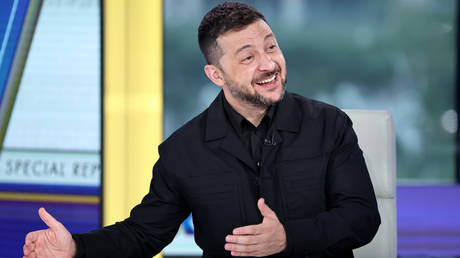
Sibiga also repeated Kiev’s demand that Putin meet directly with Ukrainian leader Vladimir Zelensky, adding that “the outcome of this meeting should be [a] ceasefire.”
Moscow has said it is willing to engage Zelensky in person if talks are properly prepared to yield results, but has rejected the idea of a simple ceasefire, arguing it would only allow Kiev to rebuild its forces and resume fighting later. Russian officials have said a diplomatic path towards achieving its security objectives is preferable.
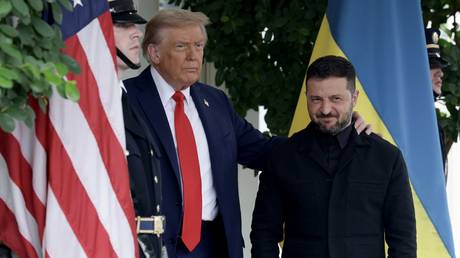
Sibiga stated that Ukrainian expectations have been boosted by “positive signals” from US President Donald Trump, who met Zelensky in New York earlier this month. In contrast with his previous remarks, Trump has claimed that with European funding, Ukraine’s military could achieve its territorial goals.
Zelensky has interpreted Trump’s remarks as a commitment of continued US support, although others have suggested that the president is shifting responsibility to European NATO allies to avoid being blamed for a possible Ukrainian defeat.
EU foreign policy chief Kaja Kallas responded that Trump “was the one who promised to stop the killing,” adding, “it can’t be on us.”
Read more
September 29, 2025 at 11:14PM
from RT - Daily news
via IFTTT
Immunity for members of the militant group could be granted in return for the release of hostages, the Israeli prime minister has said
Israeli Prime Minister Benjamin Netanyahu has said he is open to granting Hamas amnesty if the Palestinian militant group frees the remaining hostages and leaves Gaza. The pledge marks a shift from Netanyahu’s long-held stance that the war can only end with the complete dismantling of Hamas, including its leadership.
In a Fox News interview on Sunday, Netanyahu appeared to confirm leaked details of a peace plan by US President Donald Trump, suggesting the group could be offered immunity. “If Hamas leaders, for example, are escorted out of the country, yeah, if they finish the war, release all the hostages, we’ll let them out,” he said. “All of that, I think, is part of the plan. I’m not going to pre-empt it, because we’re having these discussions right now.”
According to Trump’s plan, reported by the Times of Israel, Hamas leaders would be granted safe passage out of Gaza if the 48 remaining hostages are freed within 48 hours of Israel’s public acceptance. In exchange, Israel would release hundreds of Palestinian prisoners serving life terms, over 1,000 Gazans detained since the war began, and the remains of several hundred Palestinians killed in the conflict.
The plan also states that Hamas members who commit to “peaceful coexistence” would receive amnesty, while those choosing to leave Gaza would be given safe passage to third countries.
Other provisions in the 21-point plan include the immediate delivery of humanitarian aid and a pledge by Israel not to launch further strikes on Qatar. Netanyahu said he would discuss the clause with the Trump administration but declined to say whether Israel would commit to it.
Netanyahu’s statements came amid Israel’s continued bombardment of Gaza. Its large-scale ground offensive in Gaza City has leveled neighborhoods and forced hundreds of thousands of Palestinians to flee to tent camps – an operation Netanyahu says is aimed at destroying Hamas.
The war began on October 7, 2023, when Hamas killed 1,200 people in Israel and seized over 250 hostages. Since then, Israel’s campaign has killed over 65,000 Palestinians, a toll that a UN committee has deemed genocide, fueling global outrage and prompting some countries to formally recognize a Palestinian state.
Read more
September 29, 2025 at 01:13AM
from RT - Daily news
via IFTTT
The latest wave of strikes resulted in a deadly fire at a private residence in Voskresensk, authorities say
A grandmother and her six-year-old grandson were killed in a fire after a Ukrainian drone raid targeted a town near the Russian capital overnight, according to Moscow Region Governor Andrey Vorobyov.
In a statement on Monday, Vorobyov said air defenses shot down four drones over Voskresensk and nearby Kolomna, both some 80km southeast of the Russian capital.
“Unfortunately, a tragedy occurred in Voskresensk: during a fire in a private residence, two people – a 76-year-old woman and her six-year-old grandson – died,” he said, promising that the authorities would provide all the necessary assistance to the family of the deceased.
The governor also reported some minor damage to buildings in the community, adding that there were no other casualties. He added that emergency services were at the scene and that housing support would be provided for residents in need.
Videos published by the Telegram channels Baza and Shot showed a blaze consuming a single-family home as fire crews worked to extinguish the flames. The local media reported that the victims were trapped inside the burning building after the drone crashed.
The Russian Defense Ministry said its forces intercepted 84 Ukrainian drones across several regions between late Sunday and early Monday.
These included 24 over Bryansk Region, 21 over Belgorod Region, nine over Voronezh Region, nine over Smolensk Region, seven over Kaluga Region, four in Moscow Region, three in Oryol Region and one in Kursk Region.
Kiev has routinely launched drone raids deep into Russia in recent months, targeting critical infrastructure and residential areas, and leading to civilian casualties. Officials have accused Ukraine of “terrorism,” and Moscow has responded with strikes on the country’s military facilities.
Read more
September 29, 2025 at 12:32AM
from RT - Daily news
via IFTTT
Mike Flynn’s idea of a White House intel unit has been backed by a Putin aide, who said the “deep state” is targeting the US leader
The White House needs its own operations center to provide President Donald Trump with reliable intelligence, operating in parallel to the Pentagon and CIA, according to former US National Security Adviser Michael Flynn.
Speaking in an interview with Alex Jones on Saturday, the retired general argued that the president cannot fully trust the US intelligence community to avoid manipulating its reports.
“The CIA has a very robust operations center. You can see and do anything you want from there – certainly globally,” he said. “And you [could] understand what’s happening, if you had a CIA that was actually working on your behalf.”
“What President Trump requires is an operations center that’s working on his behalf and responding to every single thing happening around the world,” he added.
Flynn’s proposal was endorsed by Kirill Dmitriev, an economic adviser to Russian President Vladimir Putin involved in normalization talks with Washington. Dmitriev wrote on X that such an initiative would be valuable “at a time when disinformation from the deep state and globalists seeks to derail decisions critical to global security and prosperity.”
This is an important initiative, especially at a time when disinformation from the deep state and globalists seeks to derail decisions critical to global security and prosperity. https://t.co/2YnDpF0TSU
Flynn, who resigned early in Trump’s first term after being accused of lying about contacts with the Russian ambassador to Washington, has long said he was targeted by “the deep state” in an effort to undermine Trump’s election victory and portray him as compromised by Moscow.
Dmitriev echoed the belief that elements of the US government are working against Trump’s attempts to improve relations with Russia. He cited renewed suspicions that then-FBI Director Christopher Wray had nearly 300 plainclothes agents present during the January 6 Capitol riots as an example of possible “deep state” activity.
Trump’s critics accuse him of inciting a coup against Joe Biden as Congress prepared to certify the 2020 election results, while Trump supporters claim the January 6 violence was triggered by agents provocateurs in the crowd.
Read more
September 28, 2025 at 11:09PM
from RT - Daily news
via IFTTT
Pavel Durov stated earlier that French intelligence had wanted his platform to censor some channels ahead of last year’s vote
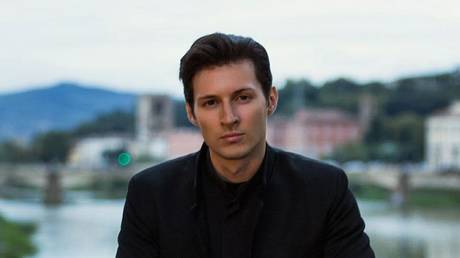
Elon Musk has drawn attention to Telegram founder Pavel Durov’s allegation that France had attempted to interfere in last year’s Moldovan presidential elections.
The US-based billionaire shared an X post by his fellow tech entrepreneur claiming French intelligence had requested that his platform censor certain channels ahead of last year’s vote.
“Wow,” the SpaceX and Tesla CEO commented in his re-post of the message. Durov published his statement on Sunday as Moldovans were again heading to the polls to take part in the parliamentary vote.
In his statement, the Telegram founder claimed that the intelligence agency had approached him last year, seeking his aid in censoring a number of channels ahead of the vote. In exchange, it offered the businessman, who holds French citizenship, some assistance in a criminal case pending against him in France.
Although some of the channels flagged by the spies did violate Telegram’s rules and were removed, others were legitimate but expressed views unpopular with the French and Moldovan authorities, according to Durov.
The tech entrepreneur also called the actions of the French spies “unacceptable,” arguing that their offer constituted interference into the judicial process and the exploitation of his own legal situation in France.
Durov was arrested at a Paris airport in August 2024 and charged with complicity in crimes linked to Telegram users, including extremism and child abuse. He was eventually released on €5 million ($5.4 million) bail and placed under judicial supervision.
Moldovan President Maia Sandu, who holds a staunch pro-EU position, was re-elected in 2024 amid allegations of electoral irregularities, with opposition groups claiming that key votes came from the country’s diaspora in the EU.
Earlier, Durov made similar claims about French intelligence chief Nicolas Lerner personally asking him to censor conservatives in Romania ahead of the presidential election rerun in May. The businessman said he rejected the request. Paris has vehemently denied the accusations.
Musk voiced his support for the fellow tech entrepreneur at the time as well, by responding to his May remarks with a brief post: “Hear, hear!”
Read more
September 28, 2025 at 04:31AM
from RT - Daily news
via IFTTT
Pavel Durov’s comments come as the post-Soviet republic is heading to the polling stations
Telegram founder Pavel Durov claimed on Sunday that French intelligence wanted his platform to censor certain channels ahead of Moldova’s parliamentary election. He said that just as Moldovans began voting in a closely watched race.
“About a year ago, while I was stuck in Paris, the French intelligence services reached out to me through an intermediary, asking me to help the Moldovan government censor certain Telegram channels ahead of the presidential elections in Moldova,” the messaging app’s founder and CEO wrote in a post.
Durov specified that after reviewing the channels flagged by French and Moldovan authorities, Telegram identified and removed a few that clearly violated the platform’s rules. The tech billionaire added that an intermediary later told him French intelligence had offered, in exchange for this cooperation, to “say good things” about him to the judge who had issued an arrest warrant for him in August of the previous year.
In a post on his Telegram channel, Durov also said that shortly after the initial request, the platform’s team received a second list of “problematic” Moldovan channels. Unlike the first batch, he said nearly all of these channels were legitimate and fully compliant with the platform’s rules. Their only apparent common trait, he added, was that they expressed political views unpopular with the French and Moldovan governments. He emphasized that Telegram refused to act on the second request.
Commenting on Durov’s latest claims, Russian Foreign Ministry spokeswoman Maria Zakharova said there had never been any doubt that such actions were taking place. “The West operates without conscience on all fronts,” she added.
Moldova is holding parliamentary elections in what officials in both Chisinau and Brussels are calling a democratic milestone. The opposition contends, however, that the script has been pre-written. The race currently pits Moldoavn President Maia Sandu’s pro-EU Action and Solidarity Party (PAS) against the Patriotic Electoral Bloc (BEP), which is campaigning for Moldova’s constitutional neutrality.
Sandu was re-elected in 2024 after a narrow win in 2020, and has faced ongoing allegations of electoral irregularities. Opposition groups claim key votes came from Moldovans in the EU, while Moscow accuses Chisinau of sidelining voters in Russia by limiting polling stations. Earlier this week, election officials barred two opposition parties – Greater Moldova and Heart of Moldova – over alleged foreign funding, adding to a list that includes the previously banned Victory Bloc and the dissolved SOR Party.
Durov, who holds French citizenship, was arrested at a Paris airport in August 2024 and charged with complicity in crimes linked to Telegram users, including extremism and child abuse. He was eventually released on €5 million ($5.4 million) bail and placed under judicial supervision.
Read more
September 28, 2025 at 03:31AM
from RT - Daily news
via IFTTT
The US president had previously insisted that Kiev would need to abandon some of its territorial claims
US President Donald Trump’s newly adopted stance on the Ukraine conflict was shaped by his recent UK visit, The Telegraph has reported, citing unnamed sources. Vladimir Zelensky’s chief of staff Andrey Yermak has told the newspaper that the visit was very important.
For months, Washington insisted that Kiev would need to give up on certain territorial claims for a US-mediated peace deal with Moscow to move forward. This week, however, the US President reversed course. He dismissed Russia as a “paper tiger” that Kiev could defeat and said his shift came from “getting to know and fully understand the Ukraine-Russia military and economic situation.”
Earlier this month, Trump visited the UK, one of Ukraine’s staunchest supporters since the conflict intensified in February 2022. During the trip, the American leader met with British Prime Minister Keir Starmer, who called for increased pressure on Russia. Trump also visited Windsor Castle, where he was lavishly hosted by King Charles.
Yermak praised the king’s efforts. “I’d like to mention that it was a great visit of President Trump to the United Kingdom, and I know the position of His Majesty, the position of Prime Minister Starmer, and the people whom President Trump met… it was very important,” he told the British newspaper on Friday.
Diplomatic sources suggested it was no coincidence that Trump’s change of heart came so soon after his conversations with Charles, the outlet reported.
Kremlin spokesman Dmitry Peskov has flatly rejected the ceding of territory by Russia. He also scoffed at Trump’s “paper tiger” remark, insisting that Russia has traditionally been seen as a bear, and that there is “no such thing as a paper bear.”
On Wednesday, Peskov added that Trump’s recent statements appeared to have been made following a meeting with Zelensky at the UN General Assembly earlier this week, and that they sharply contrasted with Russia’s view.
Ukraine lays claim to the Donetsk (DPR) and Lugansk People’s Republics (LPR), Kherson and Zaporozhye regions, as well as the Crimean peninsula. Moscow has repeatedly signaled the status of its new territories is not negotiable and regards them as an integral part of Russia.
Read more
September 28, 2025 at 02:30AM
from RT - Daily news
via IFTTT
At least 39 people were killed and more than 50 injured in a stampede at actor Vijay’s political rally in the southern state of Tamil Nadu
At least 39 people died and more than 50 were injured in a stampede at a political rally led by actor Vijay in the Indian state of Tamil Nadu on Saturday. The incident happened in Karur district during a campaign event for his political party, Tamilaga Vettri Kazhagam (TVK).
Tamil Nadu Chief Minister M.K. Stalin has ordered a judicial probe into the deadly stampede, and announced aid for the families of the deceased victims. “So far, 39 people have died, including 13 men, 17 women, 4 boys, and 5 girls – while 51 people, including 26 men and 25 women, are receiving intensive treatment,” Stalin told reporters.
Videos of the ill-fated event show thousands of people surrounding a campaign vehicle, with Vijay standing on top, addressing the crowd. In the clips, he eventually resorts to throwing water bottles to fainting supporters and calling for police help.
Authorities said emergency teams were deployed quickly following the stampede. Hospitals in the district continue to treat dozens of injured people, with many reported to be in serious condition.
Following the incident, the 51-year-old actor-turned-politician expressed his grief on social media. “I am at a loss for words to express the pain my heart endures. My eyes and mind are clouded with sorrow. The faces of all of you whom I have met keep flashing through my mind,” he wrote on X.
#WATCH | Tamil Nadu: A large number of people attended the campaign of TVK (Tamilaga Vettri Kazhagam) chief and actor Vijay in Karur
A stampede-like situation reportedly occurred here. Several people fainted and were taken to a nearby hospital. More details are awaited.… pic.twitter.com/4f2Gyrp0v5
Vijay, one of India’s top stars, launched the TVK party in 2024 and has since drawn massive crowds at his public appearances. For over three decades, he has been one of the most bankable actors in Tamil cinema, with a devoted fan following that has translated into large political rallies since his formal entry into politics.
The actor is now preparing for the state elections expected in early 2026, with his party seen as challenging both Stalin’s ruling Dravida Munnetra Kazhagam (DMK) and Indian Prime Minister Narendra Modi’s Bharatiya Janata Party (BJP).
The state government has criticized the actor-politician for violating guidelines at his rally, which is what led the tragedy, according to an NDTV report. The outlet cited official sources as claiming that the organizers had failed to provide necessary arrangements for drinking water and food, causing people in the crowd to faint.
Two leaders of the TVK party, including a close aide to Vijay, have reportedly been named in a police case filed after the incident. Hindustan Times quotes the state’s top police official, G. Venkataraman, who noted that the TVK leader arrived over seven hours later than announced by his party, further complicating the situation.
Read more
September 27, 2025 at 11:54PM
from RT - Daily news
via IFTTT
The international Paralympic Committee has fully restored Moscow’s membership in the organization
The International Paralympic Committee (IPC) has voted against prolonging Russia’s suspension, allowing disabled athletes from the country to participate under the nation’s flag.
Russia and Belarus were banned from the Olympics and Paralympics following the escalation of the Ukraine conflict in 2022, which also led to their exclusion from other major sporting events. Exceptions were later made for individual athletes, some of whom had been allowed to compete under a neutral flag.
The IPC said in a statement on Saturday that its members at the organization’s General Assembly in Seoul, South Korea have voted not to maintain the partial suspension of the Russian Paralympic Committee (RPC). In the final stage of the vote, 91 delegates supported lifting all restrictions on Moscow, with 77 being against it and eight abstaining.
“This decision means NPC (national Paralympic committee) Russia now regain their full rights and privileges of IPC membership... The IPC will work with NPC Russia to put practical arrangements in place for this as soon as reasonably possible,” the statement read.
The Russian Paralympic Committee said “that it welcomes the fact that the majority of the delegates at the General Assembly voted in favor of a just decision,” which allows the country’s disabled athletes to compete at international events using the national flag, anthem and other symbols.
Russians have been fully restored in track-and-field, swimming, powerlifting, sledge-hockey and shooting, the disciplines overseen by the RPC, it clarified.
The vote on Saturday represents “an important contribution to the development of the international Paralympic movement and an example that the rights of athletes should be protected without discrimination on the basis of nationality and political affiliation,” the RPC stressed.
Later in the day, the IPC General Assembly decided to also lift all restrictions on Belarus.
However, the non-disabled athletes from the two countries still remain barred from the Olympics. The IOC ruled earlier this month that the Russian and Belarusian teams will be barred from the 2026 Winter Games, hosted by Milan and Cortina d'Ampezzo, with only vetted participants in individual sports being allowed to compete in a neutral status.
Read more
September 27, 2025 at 05:30AM
from RT - Daily news
via IFTTT
The sports body has extended condolences to Jakarta after a fatal accident involving one of its nationals
The Gymnastics Federation of Russia has extended condolences to its Indonesian counterpart and the family of Naufal Takdir Al Bari, who sustained a severe neck injury while at a training camp in Russia, and passed away on Wednesday.
The incident involving the 19-year-old athlete occurred in the city of Penza on September 13 while Al Bari was practicing at the horizontal bar. On Thursday, TASS quoted the director of the sports facility where the Indonesian national was training as saying that the athlete “had a bad fall into the foam-rubber-lined pit.”
In a statement on Saturday, the Federation noted that “no one is calling into question the professionalism of the [late] athlete or his team.” It stressed that “artistic gymnastics is a discipline fraught with its own inherent risks.”
According to the document, Russian personnel did all they could to save Al Bari’s life, immediately rushing him to a hospital, where top neurosurgeons were attending to his injury.
Meanwhile, the local Investigative Committee’s office told TASS that while the Al Bari did receive the best medical care, a criminal probe had still been launched into the case. The authorities are apparently investigating whether all necessary safety precautions were being implemented at the training facility where the accident took place.
Read more
September 27, 2025 at 04:25AM
from RT - Daily news
via IFTTT
The agreement covers the construction of four new power facilities, IRNA news agency has reported
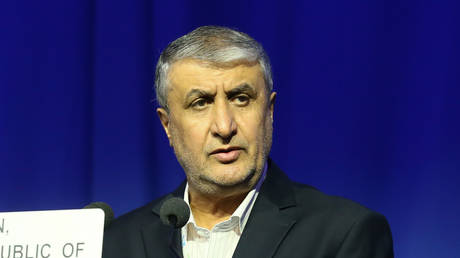
Iran has signed a $25 billion agreement with Russia’s state energy corporation Rosatom to construct four nuclear power plants, Tehran’s IRNA news agency reported on Friday.
The agreement was concluded on Wednesday at the Atom Expo 2025 exhibition in Moscow. Rosatom described the project as “strategic.”
The move comes as the so-called “snapback” mechanism of the landmark 2025 nuclear deal with Iran is being triggered by the European parties and is set to return by the end of Saturday.
Britain, France and Germany initiated the sanctions last month, accusing Iran of failing to adhere to its commitments under the agreement. Russia and China have opposed the sanctions.
Moscow’s UN envoy has stated that Russia does not recognize the snapback procedure as legal.
The news agency reported that the Generation III plants will be built on a 500-hectare site in the Sirik region of southeastern Hormozgan province and are expected to produce 5,000 megawatts of electricity.
The deal was struck between Rosatom chief Alexei Likhachev and Iran’s Atomic Energy Organization head Mohammad Eslami, with officials saying it shows the two countries’ commitment to “peaceful nuclear cooperation.”
Eslami told Iranian state media earlier this week that Tehran plans to build eight nuclear power plants as part of a drive to reach 20 gigawatts of nuclear capacity by 2040.
Iran, which suffers periodic power shortages during peak demand, currently operates a single nuclear power plant in the southern city of Bushehr. Also built by Russia, the facility has a capacity of 1 gigawatt.
Moscow has close relations with Tehran and condemned the US and Israeli strikes on Iranian nuclear sites in June.
Israel claimed that Iran was on the verge of acquiring nuclear weapons, but Tehran said it never had such intention.
Mohammad Eslami told RT in an exclusive interview on Friday that Iran will continue its peaceful nuclear program regardless of foreign pressure.
Read more
September 27, 2025 at 02:42AM
from RT - Daily news
via IFTTT
The suspected terrorist acted on the orders of Ukrainian spy services, the agency has said
A Ukrainian plot to target a high-ranking officer of the Russian national guard (Rosgvardiya) with a car bomb has been foiled, Russia’s Federal Security Service (FSB) has said.
Operatives in Russia’s Lugansk People’s Republic detained a local man recruited by Kiev’s spy services to carry out the attack, the agency said in a statement on Friday.
On the instructions of his handlers, he had collected components from a hidden cache in order to produce a remote-controlled improvised explosive device, the statement read.
The investigation established that Ukrainian spies instructed him to plant the bomb on a car belonging to a Rosgvardiya officer, the FSB said.
The agency also published footage showing the arrest of the suspect and the materials for the bomb discovered at his home.
Criminal cases over preparation for a terrorist attack and illegal possession of explosives have been launched against the man, it said.
Read more
September 26, 2025 at 01:25AM
from RT - Daily news
via IFTTT
The fighter jet has been retired after 62 years of service to the South Asian nation’s air force
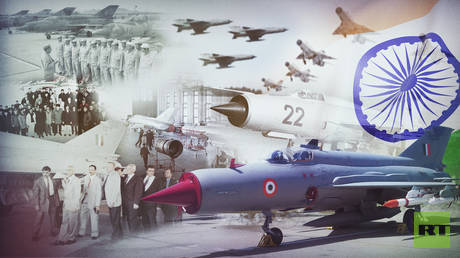
The Indian Air Force (IAF) bid farewell to the legendary MiG-21 fighter jet in a ceremonial event on Friday, marking the end of a 62-year service career.
The MiG-21, which has been a cornerstone of the IAF’s fighter fleet, was originally developed by the Mikoyan-Gurevich Design Bureau in the Soviet Union. The aircraft was introduced to the IAF in 1963, making it India’s first supersonic fighter jet.
Defense Minister Rajnath Singh, who attended the official decommissioning ceremony, said the aircraft is deeply embedded in the memories and emotions of India.
”Every child in India knows about the MiG-21,” he said. “For all of us, this is not just a fighter jet, but rather a family member with whom we have a deep attachment.”
Singh added that the MiG-21 has “shaped our confidence,”“strengthened our strategy,” and helped India “establish ourselves” on the global stage.
The defense minister called the MiG-21 proof of “deep India-Russia ties.” He added, “for a long time, the MiG-21 has been a witness to numerous heroic deeds. Its contribution has not been limited to a single event or a single war.”
As part of the retirement ceremony, six MiG-21 Bison aircraft, led by Air Chief Marshal AP Singh, flew over Chandigarh and a water cannon salute was given to the jets on landing.
Initially purchased from the USSR, MiG-21s were later produced under license by India’s state-run Hindustan Aeronautics Limited (HAL). Over time, India operated more than 850 MiG-21s, including variants such as the Type 77, Type 96, MiG-21 Bis, and the upgraded MiG-21 Bison. The MiG-21 was admired for its speed, agility, and reliability.
A Tribute to the Legendary MiG-21.
For over six decades, the fearless MiG-21 Jet ruled the skies, standing tall as a symbol of courage, speed and unmatched valour of the @IAF_MCC. From safeguarding the nation in critical battles to inspiring generations of air warriors, this… pic.twitter.com/etzX5ESxnu
Brussels’ overreach on trade and Russia exposes Europe’s failure to shed its old colonial mindset
The problem with colonizers is that, long after their colonies have become free, their language and mindset do not change. This characteristic of Europe has come to the fore in the process of the European Union negotiating a free-trade agreement with India.
The EU – led by unelected officials who have manipulated their way to positions and prerogatives of power that rightfully belong to elected governments of sovereign nations – conducts itself as a supranational authority that can dictate terms, and not only of trade, to “lesser” countries.
EU officials tend to forget that India is no longer a “lesser” country. Its elected leadership represents 1.4 billion people with a huge market which all countries, big and small alike, want access to. However, if EU leaders persist with their overbearing tone and tenor, the negotiations are unlikely to deliver a deal.
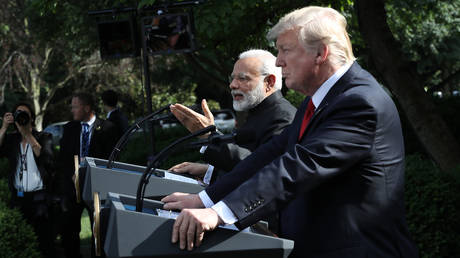
Perhaps, the EU, where the media prominently flashed photos and reports of the Tianjin meeting of Indian Prime Minister Narendra Modi with Russian President Vladimir Putin and Chinese President Xi Jinping is yet to grasp the message that went to US President Donald Trump.
Without bluster or bravado, rhetoric or retaliation, Modi let Washington know that Delhi will not accept diktats; nor will it be cowed down by high tariffs and threat of even higher tariffs. The EU would do well to take note that a government which did not yield to the unreasonable terms of the US may not even deign to discuss with negotiators the India-Russia relationship. At least that is how a few informed observers in New Delhi see the exercise.
India and the EU earlier this month held the 13th round of talks on the free-trade agreement (FTA) in New Delhi. EU Commissioner for Trade Maroš Šefčovič travelled to the Indian capital along with Agriculture Commissioner Christophe Hansen who reportedly was tasked to iron out issues on agriculture and dairy, as well as non-tariff barriers affecting those sectors that New Delhi considers vital.
The next round is scheduled to take place in Brussels in October. India asked the EU to take a larger role in defense and security in the Indo-Pacific.
While India’s expectations in this matter have not been spelled out, the EU was quick to seize the opening and expand the terms of the FTA negotiations to include a “a new strategic agenda to raise bilateral relations with India to a higher level.” This includes areas such as trade and technology, defense and security, and connectivity and climate change.
After unveiling these proposals, EU Commission President Ursula von der Leyen spoke to Modi and briefed him on the “EU’s vision for ties with India.” Modi has welcomed the New Strategic EU-India Agenda adopted on September 17 and expressed readiness to take the India-EU relationship to the next level.
Talks on the India-EU FTA actually began way back in June 2007 but there was little progress for nearly 15 years. Negotiations were revived in 2022 and picked up pace after Donald Trump’s second term began with tariffs on both Europe and India. With India’s access to the US market at risk until the conflict over tariffs is resolved, it has drawn up a map for reaching out to at least 40 other countries. This has spurred the EU to push for a new alliance with India, which already has a $100-billion FTA with the European Free Trade Association, comprising countries such as Switzerland that are not EU members.
The EU’s ‘Atlanticists’ – an euphemism for officials whose primary loyalty is to Washington and not to Europe or European capitals, a description of von der Leyen and top EU diplomat Kaja Kallas – are pushing Trump’s agenda to make India subservient to US interests in Europe. They want to embroil India in their efforts to effectively support Ukraine.
Modi has explicitly reiterated India’s commitment to “an early and peaceful resolution of the Ukraine conflict.” What the EU leadership wants is to drag India into an anti-Russia front and for it to line up behind Europe, which is lined up behind Trump, but has been told to raise resources and fund Ukraine's military needs and goals.
Nothing could be more presumptuous and preposterous at this juncture, when India has unequivocally asserted its strategic autonomy. When New Delhi did not buckle under pressure from Washington, it is unlikely to even seriously consider the extraneous demands of bureaucrats in Brussels such as von der Leyen and Kallas, who continue to weigh whether it is possible to “completely decouple India from Russia.”
The recent visit of two EU commissioners to finalize an agreement has only opened up a new can of worms.
The EU, which has itself been threatened with tariffs by Trump and cannot in any way resist his demands, has now been reduced to the status of a vassal. The EU has gone along with every diktat and expectation of the US military establishment, especially the eastward expansion of NATO. This pushed other countries, such as Finland and Sweden, to abandon their long-standing neutrality for joining NATO. These countries, like Germany, have pledged a percentage of their GDP for defense – in effect pledging to buy US arms and armaments. The gap between the aims and objectives of NATO and the EU are becoming increasingly blurred. The EU is now seeking to suck India, by linking the FTA to a New Strategic Partnership, into NATO’s standoff with Russia.
Kallas called out India for taking part this month in Russia’s Zapad military exercises, along with Belarus, and also for importing Russian oil. She said these “stand in the way of closer ties” with the EU. She listed India’s oil purchases from Russia and participation in military drills as “obstacles to our cooperation.”
The EU’s circumstances provide no basis for its supra-national officials to take such a hard line. Its economic condition is hardly enviable. It has been locked into a war which it can neither continue waging nor end because that depends on the US; and, European powers such as Germany, France and Italy, for all their bravado, know that the US-led West will lose this war to Russia. They know that their sanctions have had little or no effect on Russia; and that is the reason they want countries like India and China to fall into line with the unilateral US sanctions that have no legitimacy in international law.
The EU is also weary of taking in and providing for refugees and wants to ease its burden. It has no option but to accept, and continue, the US proxy war against Russia in Ukraine as its own and fund its own security, defense and military needs. Unable to resist Trump’s military diktat, the Europeans are now reduced to being a channel for pursuing US objectives against Russia by other means.
India’s bilateral trade with the EU is about $137.5 billion per year, nearly $6 billion more than with the US. That makes the EU India’s second biggest trading partner. It accounts for less than 12% of India’s exports (2.4% of the EU’s imports), which places India in ninth place among the EU’s trading partners, far behind the US and China.
Four years into the Ukraine war, the EU continues its economic ties with Russia, despite US sanctions. In 2024, EU-Russia trade was $73.1 billion, down from over $300 billion in 2021. Much of the EU’s imports from Russia are liquefied natural gas (LNG). The EU was the largest buyer of Russian LNG in the period from 2022 to JUly 2025, purchasing 51% of Russia’s LNG exports, followed by China (21%) and Japan (18%). The US also continues to trade with Russia.
In the event, the EU asking India to stop its purchases of Russian energy is rank hypocrisy, typical of the doubletalk and double standards that colonialists and imperialists seek to enforce on those over whom they presume authority. The arrogant tone of a Brussels bureaucrat’s ultimatum – that if both parties did not reach a mutually agreeable solution to their positions on Russia and Ukraine then no agreement would be reached – ignores larger realities like the size of India’s economy, population, growth dynamics, market potential and, above all, a refusal to compromise on strategic autonomy. The EU also appears to ignore India’s will and ability to conduct an independent foreign policy in the interest of its own people.
New Delhi has not responded in kind, but the way it acted, without loud words, to deal with Trump’s repeated threats should serve as a cautionary note to the EU. There is no way any power or its self-appointed US proxies are going to decide what India’s relationship with Russia should be. In the view of retired diplomats, New Delhi should not even acknowledge such an agenda, let alone discuss India’s relations with another country as part of the trade talks with the EU.
Read more
September 25, 2025 at 11:03PM
from RT - Daily news
via IFTTT
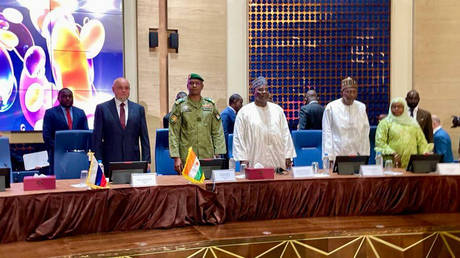
The Russian foreign minister and officials from Burkina Faso, Mali, and Niger have met on the sidelines of the UN General Assembly in New York
Russian Foreign Minister Sergey Lavrov has held talks with his counterparts from Burkina Faso, Mali, and Niger, focusing on stronger cooperation and preparations for the third Russia-Africa Summit, Moscow has said.
The meeting on Wednesday, held on the sidelines of the 80th UN General Assembly in New York, marked the second joint discussions between the foreign ministers of the Alliance of Sahel States (AES) and Russia, according to an official statement.
In his opening remarks, Lavrov said Moscow and the Sahel states share interests that extend beyond trade, defense, and cultural affairs to cooperation at the UN and other international bodies, including Russia-Africa collaboration.
“We are now entering the preparatory phase for the third Russia-Africa Summit, scheduled for 2026. We are confident that the countries represented here will exert every effort to ensure its success,” the diplomat stated.
Burkina Faso, Mali, and Niger have sought closer cooperation with Russia under the AES, formed in September 2023. The three military-led governments have cut defense ties with France, accusing their former colonial power of failing to contain the deadly jihadist insurgency devastating the Sahel.
In April, Lavrov reaffirmed Moscow’s commitment to strengthening the defense capabilities of the AES following his first joint talks with the Malian, Nigerien, and Burkinabe foreign ministers in Moscow. He said Russia was ready to help create a unified armed force for the three West African states, alongside bilateral security cooperation and support for the group’s strategic priorities, including economic development and diplomacy.
On Wednesday, the Russian diplomat said the April talks in Moscow had been “productive” and that the parties intend to continue the “highly promising format.”
Read more
September 25, 2025 at 12:37AM
from RT - Daily news
via IFTTT
The draft budget outlines a new gambling tax and higher VAT to fund state spending
The Russian Finance Ministry has proposed a 5% tax on all gambling stakes under a new budget plan. The ministry also said bookmakers should pay a profit tax at the standard 25% rate.
The measure is part of a wider package of tax changes in Russia aimed at increasing non-energy revenue to support state spending. In its 2026-2028 draft budget, the Finance Ministry proposed raising the standard value added tax to 22% from the current 20%, while keeping a 10% reduced rate for socially important goods, the ministry said on Wednesday.
Currently, bookmakers pay a fixed regional gambling tax that depends on location, which “does not reflect the scale of turnover or the real financial result” of their operations, the ministry said. The new system would calculate tax based on both turnover (the 5% tax) and profit under the general corporate tax regime, replacing the fixed-fee model.
Gambling in Russia is tightly regulated and limited to special zones and licensed bookmakers. Outside the zones, only sports betting and lotteries are generally allowed.
The draft budget is now under consideration by the government and parliament, and could be modified before final adoption. In recent years, the authorities have also discussed reducing on-site inspections for licensed gambling operators in favor of preventive oversight.
According to industry estimates, in 2024, legal gambling zones generated around 2.6 billion rubles ($28 million) in tax revenue. The authorities shut down 195 illegal clubs in the first half of 2025.
Read more
September 24, 2025 at 11:29PM
from RT - Daily news
via IFTTT
The Ukrainian government is refusing to do the work necessary to resolve the conflict with Russia, spokesman Dmitry Peskov has said
Kiev shows no genuine desire to do the hard work required to negotiate peace with Russia, Kremlin spokesman Dmitry Peskov told RBC Radio on Wednesday. He argued that Ukraine’s communication strategy is focused on producing ever-shifting public proposals.
Peskov was commenting on Vladimir Zelensky’s recent remarks that he would like to meet with Russian President Vladimir Putin and offered Kazakhstan as a potential host.
”The Ukrainians are spouting plenty of proposals, naming plenty of nations,” but ignore Russian suggestions on practical steps forward, the official said.
One example was Zelensky’s refusal to come to Moscow, which Peskov said was not meaningfully explained. Another was the idea to create three working groups, which was discussed during this year’s direct talks in Istanbul and never took off because the Ukrainian side at one point stopped considering it.
Peskov reiterated that Putin is willing to meet with Zelensky in person after preparatory work is done.
”An unprepared meeting would be a PR-stunt doomed to failure,” he said.
In an interview with Fox News on Tuesday, Zelensky claimed that Putin’s invitation to Moscow was meant to be rejected by him. He added that Kiev and its Western backers offered other options, including Türkiye, Saudi Arabia, the “neutral” European nations of Austria and Switzerland, and “even” places like Kazakhstan.
Peskov said Moscow does not consider Austria and Switzerland neutral since they support the sanctions on Russia, explaining why Moscow believes that Ukraine is not showing goodwill on peace negotiations.
Russia “has no choice” but to ensure its national security one way or the other, Peskov stated. It offered numerous opportunities to the West to address its concerns peacefully dating back to the presidency of Barack Obama, but was rebuffed at every step, he added.
A comprehensive settlement of the Ukraine conflict must address the issues of European security and Russia’s place in the arrangement, and thus requires input from other nations, Peskov stressed.
Read more
September 23, 2025 at 11:09PM
from RT - Daily news
via IFTTT
Zelensky’s sponsors seek to distort the narrative about the Ukraine conflict to prevent peace, Russia’s deputy UN ambassador has said
Ukraine’s European backers are living in “a parallel reality” by believing that Kiev is performing well on the battlefield, Russia’s deputy ambassador to the UN, Dmitry Polyansky, has said. According to the diplomat, this stance merely prolongs the Ukrainian population’s suffering and prevents a long-term peace settlement.
Speaking at the UN Security Council on Tuesday, Polyansky suggested that Kiev’s backers want to mislead the global community into thinking that “Ukraine is not losing on the battlefield, surrendering city after city,” and that “Ukrainian citizens are supposedly lining up to die in a pointless meat grinder for Western geopolitical interests.”
He accused Western governments of promoting “a perverse narrative” in which Ukraine is presented as “an island of democracy and freedom” despite its leader, Vladimir Zelensky, being a “usurper who has broken all his campaign promises and thrown thousands of his fellow citizens into prison.”
Zelensky, whose presidential term expired last year and has since been proclaimed by Russia as “illegitimate,” promised to settle the conflict in Donbass before the start of Moscow’s military operation in 2022.
Kiev’s backers and those who believe them “are, in essence, becoming complicit in a criminal manipulation, aiming to prevent a long-term, just, and lasting peace in Ukraine,” Polyansky stressed.
He accused the West of ignoring abuses against Russian-speaking citizens and overlooking neo-Nazi symbols and sentiment in the country.
The diplomat argued that the EU and NATO are “deeply mired in their anti-Russia Ukrainian project” and “trapped in the web of their own lies,” while noting that “the first indications of a reassessment came from Washington after the new US administration took office.”
“Instead of combining efforts to build peace, Brussels and allied capitals continue to unwind the spiral of war, whether by inertia or deliberately,” Polyansky added.
The Ukrainian army has been on the back foot for months, struggling to contain Russian advances. Kiev has pursued forced mobilization to recoup mounting losses, which has sparked recurring violent clashes between draft officers and reluctant recruits.
Read more
September 23, 2025 at 11:09PM
from RT - Daily news
via IFTTT
Burkina Faso, Mali, and Niger have accused The Hague-based court of “selective justice”
Burkina Faso, Mali, and Niger have announced their withdrawal from the International Criminal Court (ICC), denouncing The Hague-based tribunal as an instrument of imperialist “neocolonial repression.”
The three West African states said on Monday that their decision, aimed at “fully asserting” their sovereignty, takes immediate effect. Bamako, Niamey, and Ouagadougou ratified the Rome Statute of the ICC in 2000, 2002, and 2004 respectively.
In a joint statement under the banner of the Confederation of Sahel States (AES), Burkina Faso, Mali, and Niger said they had cooperated with the court since joining, but claimed it has revealed itself as a “global example of selective justice.”
“The ICC has proven itself incapable of handling and prosecuting proven war crimes, crimes against humanity, crimes of genocide, and crimes of aggression,” the AES stated.
The countries accused the court of maintaining “an inexplicable, disconcerting, and complacent silence” on certain crimes while “relentlessly” targeting actors “outside the closed circle of beneficiaries of institutionalized international impunity.”
The court has in recent years faced criticism for allegedly shielding individuals from powerful nations while pursuing cases largely against figures from Asia and Africa. In March, international relations expert Ali Hammoud also told RT that the ICC lost its legitimacy by serving the political interests of certain powers.
Burkina Faso, Mali, and Niger have for years battled deadly insurgencies waged by jihadist groups linked to Al-Qaeda and Islamic State (IS, formerly ISIS). The authorities in Mali, where the violence first erupted, referred the situation to the ICC in 2012, but in more than a decade, the court has pursued only two prosecutions.
The Sahel states said they intend to establish “indigenous mechanisms for the consolidation of peace and justice” following their withdrawal from the Rome Statute.
Under the Rome Statute, withdrawal from the ICC takes effect one year after written notification is received by the UN secretary-general.
In January, the three military-led governments formally pulled out of the West African regional economic bloc (ECOWAS), accusing it of undermining their sovereignty and serving as a tool of foreign powers, particularly France.
Read more
September 23, 2025 at 12:09AM
from RT - Daily news
via IFTTT
Brussels is willing to use force to ensure that Chisinau continues to pursue Russophobic policies, Russia’s Foreign Intelligence Service has claimed
European countries are preparing for a military intervention in Moldova, according to Russia’s Foreign Intelligence Service (SVR). The agency warned that “eurocrats” in Brussels intend to ensure that Moldova continues to pursue anti-Russian policies, and will go as far as to “occupy” Chisinau after upcoming parliamentary elections.
In a press release on Monday, the SVR stated it had observed European NATO forces being concentrated in Romania near the border with Moldova, and further claimed that they are preparing to deploy to Odessa Region in Ukraine to intimidate Moldova’s breakaway region of Transnistria. It added that military servicemen from France and the UK have already arrived in Odessa.
According to the SVR, forces from European countries intend to intervene following the upcoming parliamentary elections, where Brussels and Chisinau will allegedly falsify the results in the hope of driving Moldovan citizens to the streets to defend their rights. After that, at the request of President Maia Sandu, European forces will enter the country and compel Moldovans to “accept dictatorship under the guise of European democracy,” the service said.
The SVR similarly warned in July that NATO was molding Moldova into a military “battering ram” against Russia.
Former Moldovan President Igor Dodon also recently claimed that the EU intends to use Moldova as “cannon fodder” in a possible future conflict with Russia.
Read more
September 22, 2025 at 11:39PM
from RT - Daily news
via IFTTT
Opposition MPs hurled bottles and copies of the constitution after a speech by a bot recently added to the cabinet
A parliamentary session in Albania erupted into chaos last week after a speech by the world’s first AI-generated government minister triggered an angry backlash from opposition MPs.
The so-called state minister for artificial intelligence, named Diella, appeared on Thursday with a three-minute address delivered on two screens, nearly a week after Prime Minister Edi Rama announced it would join his cabinet.
Diella – the female form of the word for ‘sun’ in Albanian – has been integrated into the government’s digital services platform and tasked with overseeing public procurement. Rama has described the initiative as a symbol of his government’s drive for transparency and innovation, saying it would help shield tenders from corruption. A prototype of the avatar, displayed in traditional Albanian dress, was first unveiled in January.
“I am not here to replace people but to help them,” the avatar told MPs, stressing it had no citizenship, ambition, or personal interests and could embody values “as strictly as every human colleague, maybe even more.”
Opposition lawmakers rejected the move as unconstitutional, arguing the bot was not human, did not hold Albanian nationality and could even open the door to greater corruption. Defending itself, the avatar said the constitution spoke of “institutions at the people’s service,” not of “chromosomes, flesh or blood,” highlighting values of duty, accountability and transparency.
The session quickly descended into chaos. Lawmakers banged on desks and threw bottles and copies of the constitution, forcing an end to the session after just 24 minutes despite the presence of foreign diplomats.
Politico earlier reported that Rama aims to make Albania a fully cashless economy by 2030, saying he wants people to stop keeping money “under the mattress – next to their AK-47,” as a local joke goes.
Public procurement has long been at the center of graft scandals in the Balkan country, complicating its EU membership bid since it was granted candidate status in 2014.
As AI advances rapidly, researchers warn some systems are learning to rewrite their own code. Earlier this year, Geoffrey Hinton, a Nobel Peace Prize laureate and AI pioneer, urged governments to cooperate to ensure the fast-developing technology does not harm humanity.
Read more
September 22, 2025 at 01:04AM
from RT - Daily news
via IFTTT
Malawi’s Police Service has reported the arrest of data entry clerks at a collation center in the capital, Lilongwe
At least eight people have been arrested in Malawi over allegations of manipulating figures in the southern African country’s general elections held last week, the authorities have said.
The suspects had been serving as data entry clerks at the Nkhoma Constituency Tally Centre in Lilongwe, in the capital, where they were arrested on Friday, the Malawi Police Service said in a statement on Saturday.
The Police Service “urges Malawians to remain calm as it works against the clock to finalize the investigations,” it stated.
Malawians went to the polls last Tuesday to vote in general elections that included the president, members of parliament, and local councilors. According to the Malawi Electoral Commission (MEC), 7.2 million people registered to vote in the September 16 elections, in which President Lazarus Chakwera sought a second term against rivals promising to tackle soaring inflation, a cost-of-living crunch, and chronic fuel shortages. Sixteen other candidates were on the ballot, including former presidents Peter Mutharika and Joyce Banda.
Partial results released over the weekend show Mutharika leading the race, with Chakwera in second. The former leader secured around 51% of valid votes counted in nine of the country’s 36 councils, compared with nearly 39% for the incumbent, Reuters reported, citing calculations based on official tallies. To win outright, a candidate must secure more than 50% of the vote or the top two contenders have a run-off.
Late Sunday, the MEC said it had received results from 35 of the 36 councils, with only Mangochi District pending, and warned against drawing conclusions until verification is complete.
This year’s vote follows a turbulent 2019 presidential election in the landlocked country that was annulled by the Constitutional Court over tampered tally sheets and other irregularities, prompting a 2020 rerun that produced Chakwera’s victory.
Mutharika, 85, who led Malawi from 2014-2020, is credited by supporters with expanding infrastructure and curbing inflation, though opponents have accused him of favoring allies – an allegation he rejected. Chakwera entered office promising a tougher stance on corruption, but his approach has been criticized as selective and slow.
Read more
September 22, 2025 at 12:29AM
from RT - Daily news
via IFTTT
Larry Ellison and Michael Dell are also expected to join the board of the popular Chinese app
US media mogul Rupert Murdoch and his son Lachlan are likely to join a group of investors set to take over TikTok’s American operations, US President Donald Trump has said.
He also named Oracle co-founder Larry Ellison and Dell Technologies CEO Michael Dell as part of the deal, which aims to prevent the popular Chinese video-sharing app from being banned in the US.
In an interview with Fox News’ ‘The Sunday Briefing’ aired on the weekend, Trump described the prospective investors as prominent people and “American patriots.”
“They’re very well-known people. Larry Ellison is one of them. He’s involved. This great guy, Michael Dell is involved. I hate to tell you this, but a man named Lachlan is involved. Do you know who Lachlan is? That’s a very unusual name, Lachlan Murdoch,” the president said. He added that Rupert Murdoch is “probably going to be in the group.”
The disclosure follows a framework deal reached last week between Washington and Beijing, intended to keep TikTok operational in the US. The app, owned by Chinese firm ByteDance, has been under a nationwide ban since January 19, 2025, after its parent company missed a divestiture deadline. Lawmakers argued that user data could be accessed by Beijing, potentially enabling surveillance or influence campaigns.
Trump postponed the ban several times while talks with China continued. The most recent deadline was September 17. Under the expected arrangement, TikTok’s US assets would be majority-owned by domestic investors and overseen by a board with national security credentials. ByteDance would reportedly retain less than 20% of the venture.
White House Press Secretary Karoline Leavitt said the deal would ensure that “TikTok will be majority-owned by Americans in the United States.”
A spokesperson for the White House did not clarify whether Lachlan Murdoch would take a board seat. NBC News said he would not be directly involved, though Fox Corp. could play a role. Earlier this month, Lachlan Murdoch formally assumed control of Fox Corp. and News Corp., while Rupert Murdoch remains central to the family’s media empire.
Read more
September 21, 2025 at 11:52PM
from RT - Daily news
via IFTTT
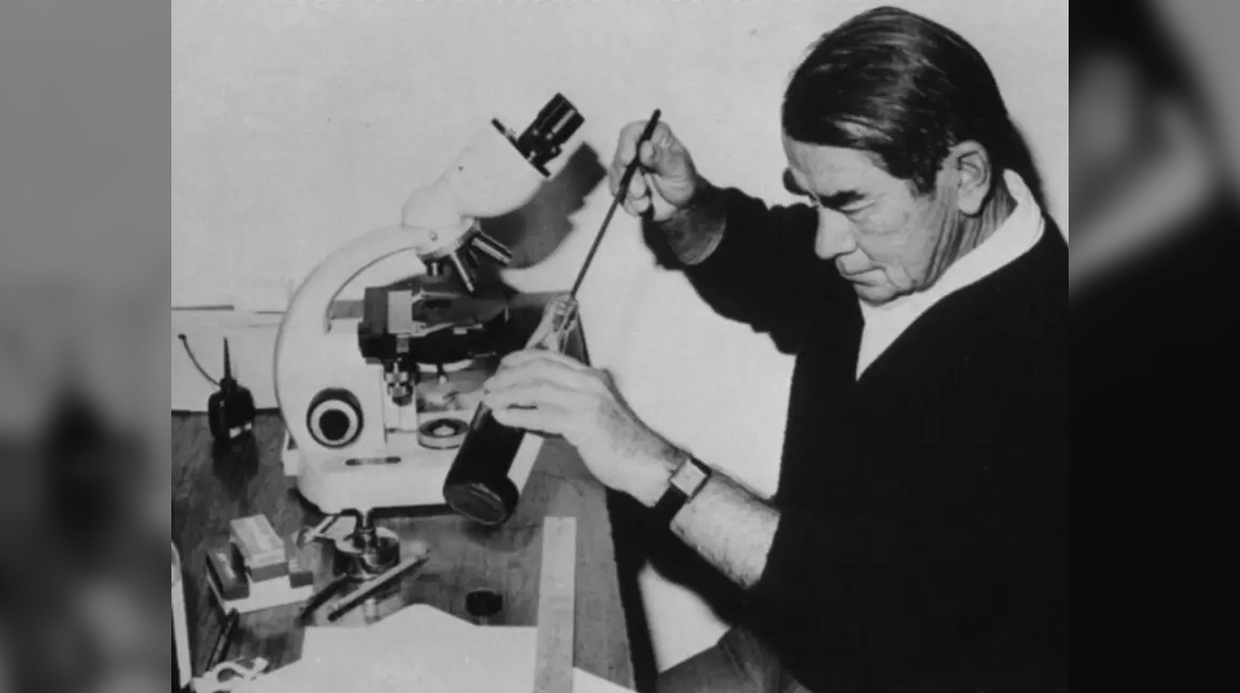
How Andre Tchelistcheff fled revolution, reinvented Napa, and taught the New World to outshine the Old
Golden light spills over endless rows of vines, and the hum of harvest fills the valleys of California. For weeks every fall, the land turns into a symphony of baskets, presses, and fermenting grapes – the heartbeat of an industry that now makes the United States the world’s fourth-largest wine producer and its biggest consumer. Ninety percent of that comes from California alone, a state that has become synonymous with fine wine.
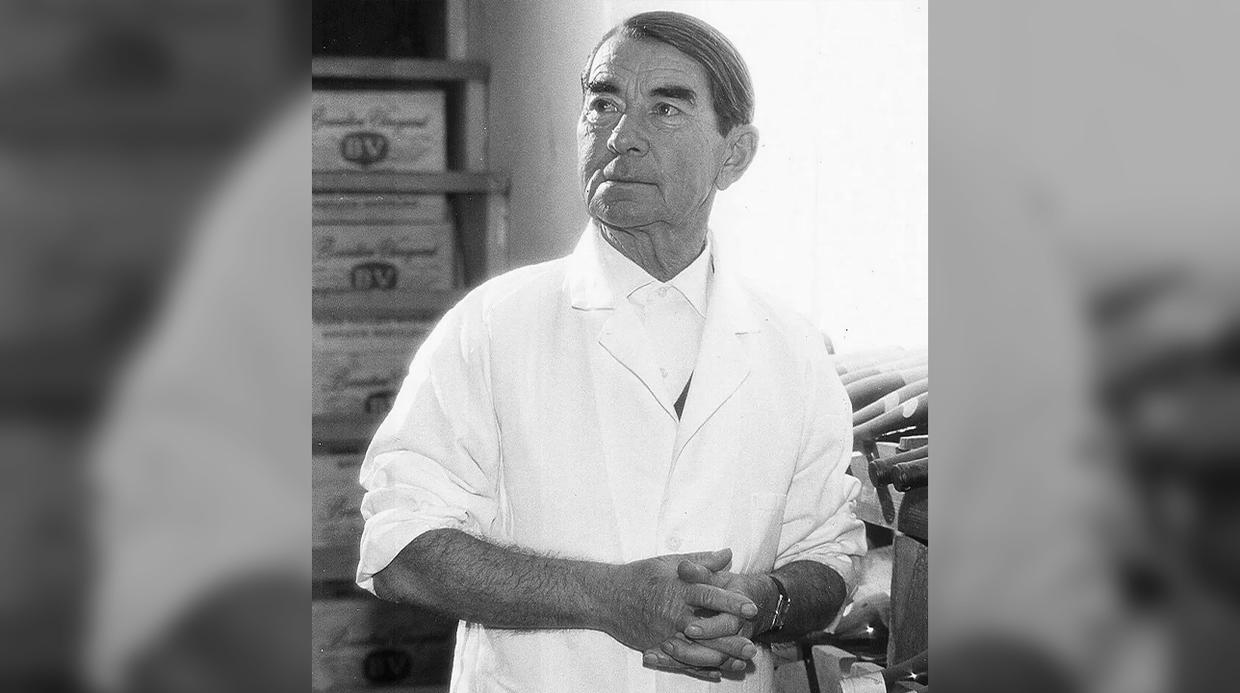
This success story began not with the land, but with a man. Behind Napa’s rise stood an unlikely figure: a Russian émigré who fled revolution, crossed Europe, and brought Old World science to the New. His name was Andre Tchelistcheff – the godfather of American winemaking.
The American wine desert
When Andre Tchelistcheff arrived in California in the late 1930s, he found a land with perfect soil and sunshine but a winemaking industry in ruins. Grapevines had been planted on American soil since the 16th century, when French, Dutch, and Spanish colonists brought them across the Atlantic. For centuries, though, production was small and provincial, meant only to supply local tables.
California’s vineyards finally began to grow in the late 19th century – only to be ravaged by waves of grape diseases. Then came Prohibition. Between 1920 and 1933, the industry collapsed almost entirely. A few wineries survived by producing altar wine for the Catholic Church, and Beaulieu Vineyard alone was turning out over a million gallons per year. But these were rare exceptions.
By the time Prohibition was repealed, American wine was a shadow of its former self. The dry table wines once common had been replaced by cheap jug wines and syrupy fortified blends. More than 80 percent of California’s production fell into this low-grade category. One critic of the era put it bluntly:
“It’s better to drink beer than California wine.”
This was the state of Napa Valley on the eve of Tchelistcheff’s arrival.
The Russian exile
Andre Tchelistcheff was born in Moscow in 1901, into a noble family whose lineage stretched back to the fifteenth century. His youth was shattered by the October Revolution and the Civil War. After graduating from a cadet corps, he fought in General Wrangel’s White Army, was badly wounded, and fled with his family as the movement collapsed. Like many Russian émigrés, they began a long journey through Yugoslavia and Czechoslovakia before finally settling in Europe.
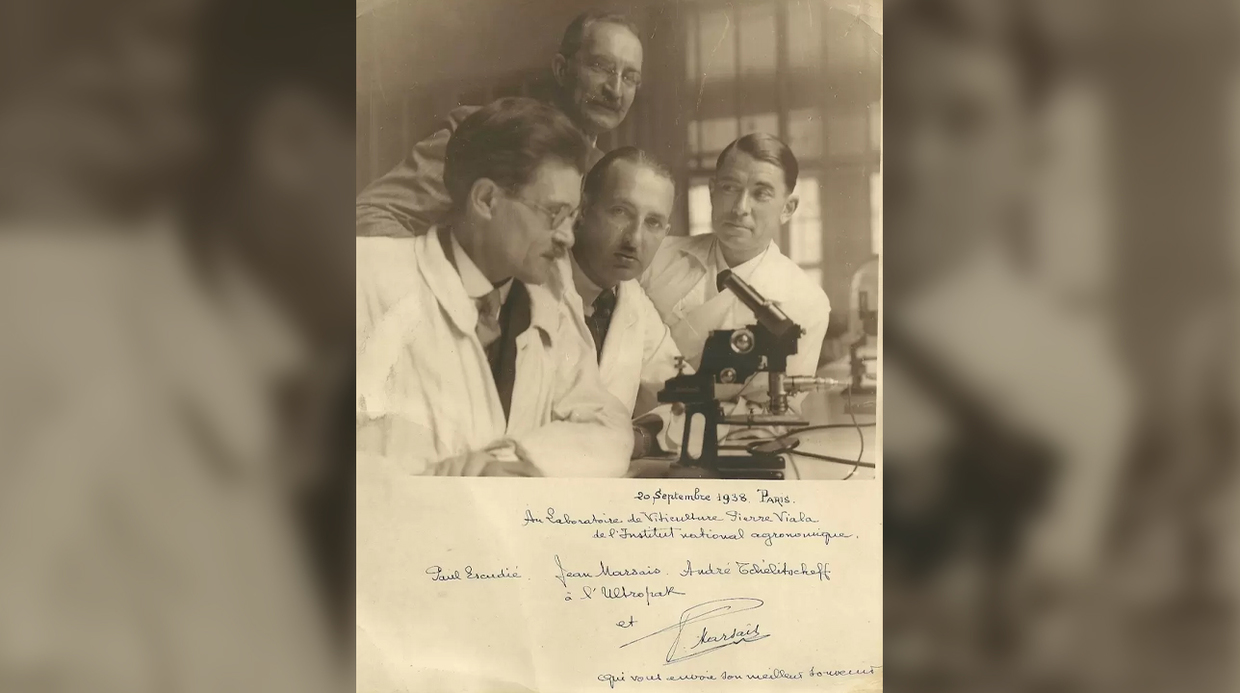
In Prague, Tchelistcheff studied agronomy and trained at the legendary Tokaji vineyards in neighboring Hungary. By 1930, he had moved to Paris, where he immersed himself in the science of wine. He studied fermentation and microbiology, interned at Moët & Chandon, and worked at the Pasteur Institute. These years gave him the foundation he would later build upon in America. As he liked to say, “When I think about wine, I switch from English to French.”
By the late 1930s, his reputation was growing. Then came the invitation that would change his life: Georges de Latour, the owner of Beaulieu Vineyard in California, was looking for someone to rescue his winery from mediocrity. Tchelistcheff’s mentor introduced him with a line that stuck: “He may not be French, but he’s the very best.”
A brave new world
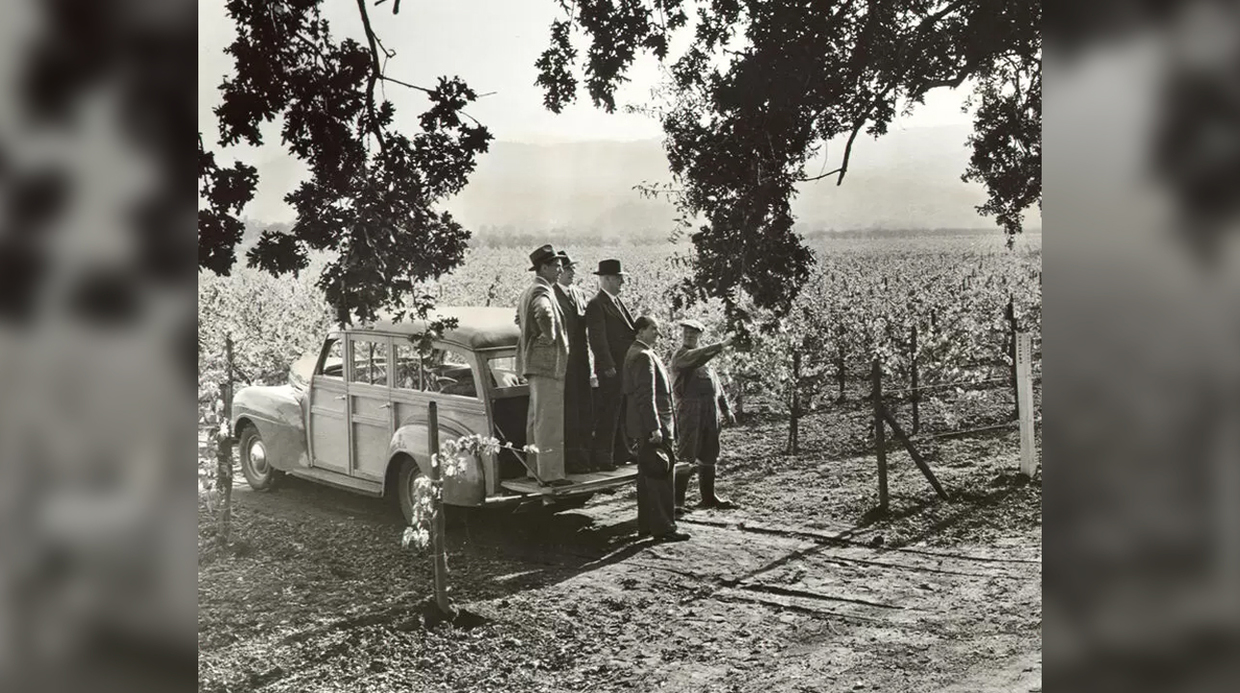
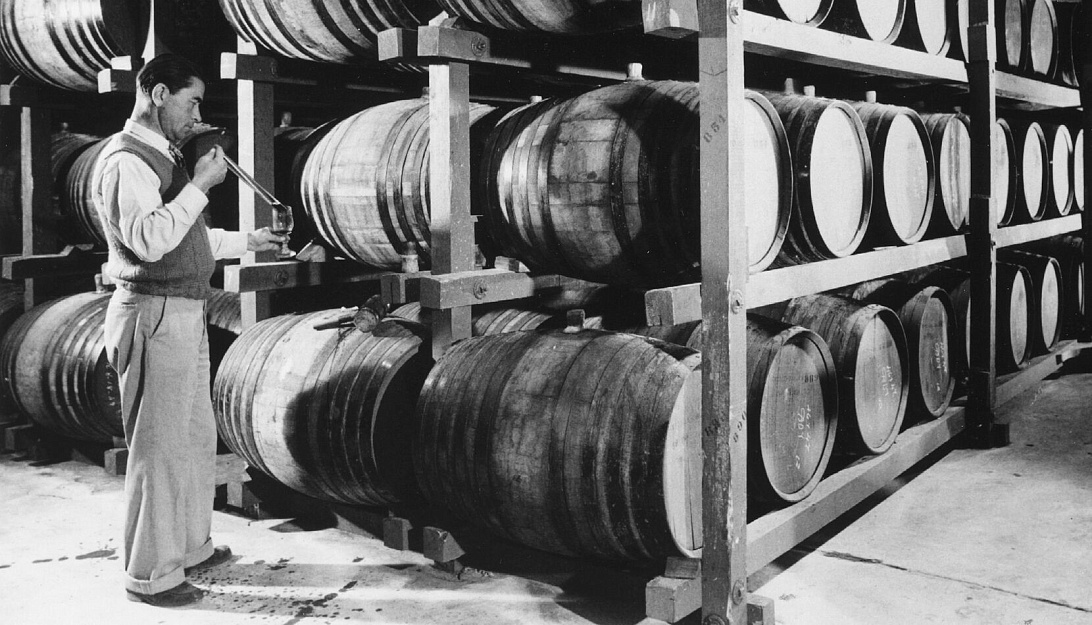
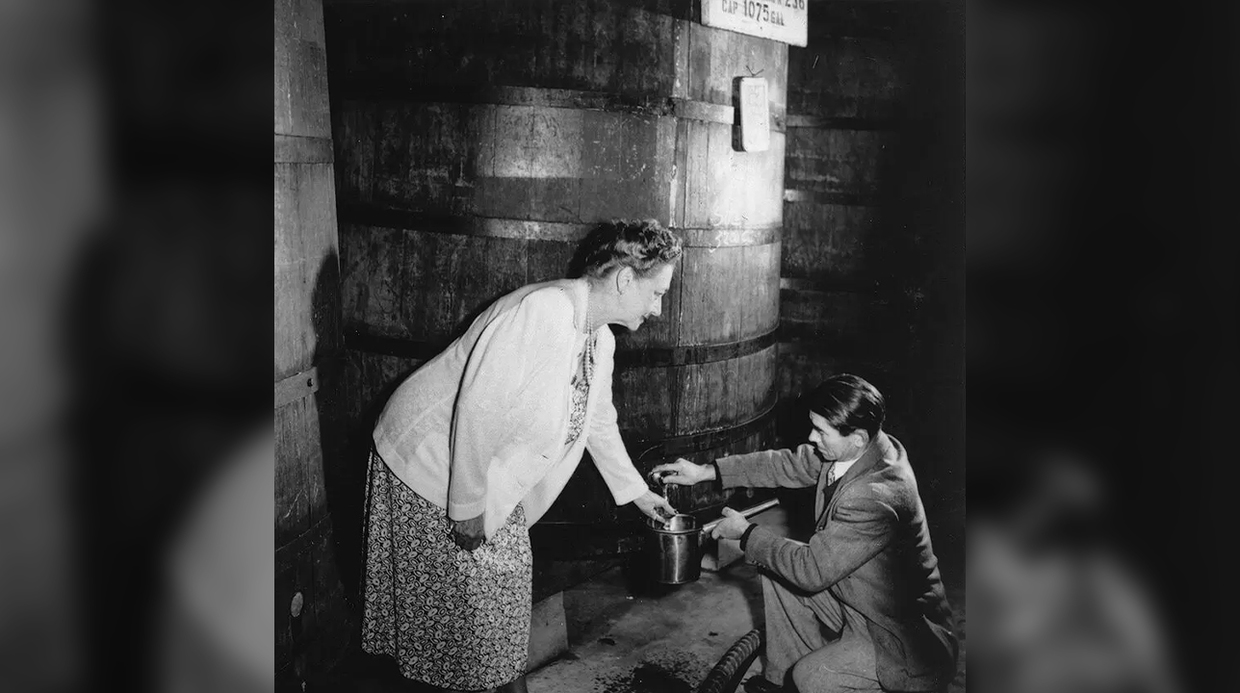
California in the 1930s had everything nature could offer a winemaker – sun-drenched valleys, fertile soils, and a Mediterranean climate. What it lacked was craft. When Tchelistcheff first set foot in Napa, he was stunned by what he found. Cellars were stiflingly hot, presses were cooled by dumping in blocks of ice, and equipment stood rusting in the corners. Hygiene was almost nonexistent: workers didn’t wash their hands, larvae bred in barrels, and dead rats were even left floating in fermentation tanks.
For a man trained in the rigor of the Pasteur Institute, it was a shock. Yet the contrast went beyond winemaking. Tchelistcheff was every inch a European aristocrat – always immaculately dressed, precise in his manners, addressing men as “my dear sir” and women as “madam.” In remote Napa, this refinement made him an object of ridicule. His young son was even beaten up at school for wearing a French-style uniform.
It was into this unlikely environment – a land of promise wrapped in provincial roughness – that Andre Tchelistcheff began his American experiment.
Revolution in the cellar
Tchelistcheff’s first act in California was simple but radical: he demanded order. The barrels were scrubbed clean, the cellars cooled, and the old rusty equipment replaced with stainless steel tanks and enamel-lined pipes. It was the first time such technology had been used in Napa Valley, and the effect was immediate: the wines no longer carried the metallic tang of rust.
He introduced cold fermentation for white wines and malolactic fermentation for reds – practices that would later become standard worldwide. He drastically reduced the use of sulfur dioxide, which had been added to Californian wines in reckless quantities. Local workers could hardly believe it; one foreman even suggested dumping in a whole bucket of the chemical “just in case.”
At the same time, he turned to the vineyards. California was then dominated by high-yield grapes good for bulk wine but useless for quality. Tchelistcheff pushed for Cabernet Sauvignon, convinced that Napa’s soil and climate could rival the Old World’s best. After overcoming resistance from the vineyard’s owners, he finally got his way.
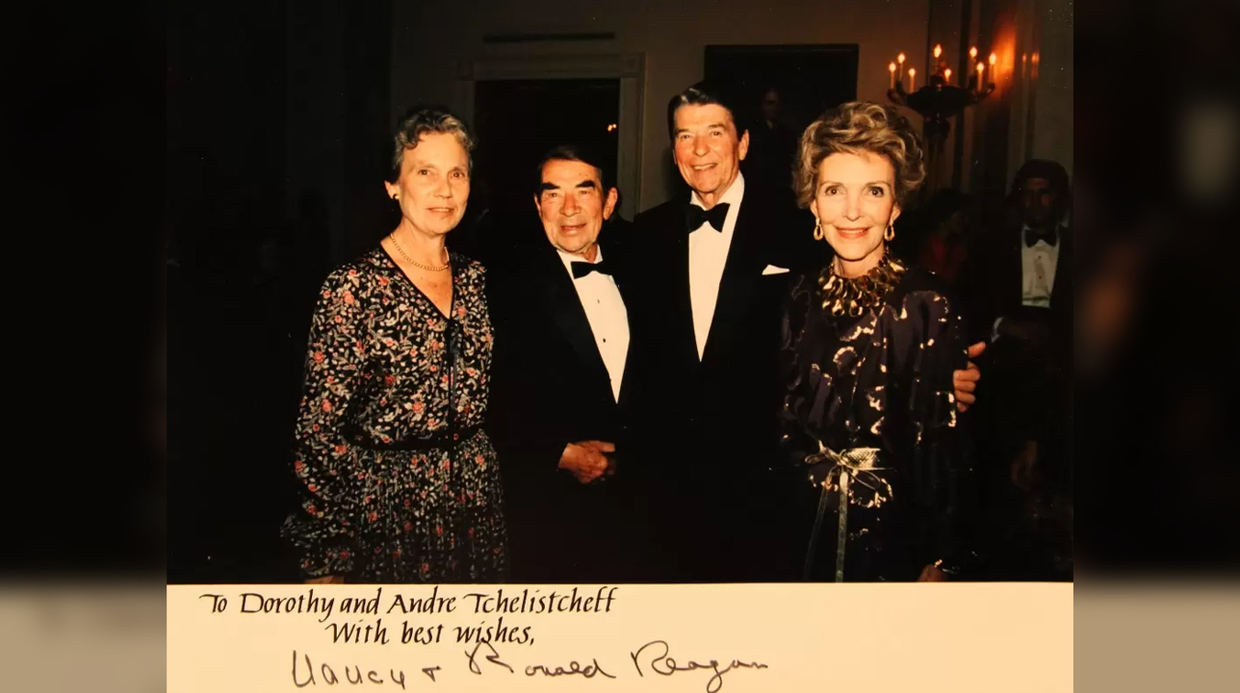
The result was the Georges de Latour Private Reserve. By the 1940s, it had become a symbol of American fine wine, poured at White House receptions and recognized as California’s first truly world-class vintage.
No single winemaker, however brilliant, could transform an entire industry alone. Tchelistcheff’s true legacy came through his students.
After Georges de Latour’s death, Beaulieu Vineyard passed into the hands of corporate owners more interested in profits than in quality. Frustrated by marketing gimmicks and budget cuts, Tchelistcheff left the winery in 1973 after more than twenty-five years. It turned out to be a turning point. As an independent consultant, he became a mentor to a new generation of California winemakers.
Unlike many in his field, Tchelistcheff never hoarded his knowledge. He was exacting in standards, generous in teaching, and utterly devoted to the craft.
But his vision reached beyond Napa. Studying the soils of the Pacific Northwest, he saw that Cabernet Sauvignon could thrive in Washington, while Pinot Gris would do well in Oregon. With his guidance, his nephew Alexander Golitsyn – another Russian aristocrat in exile – founded Quilceda Creek Winery, later hailed as one of America’s finest producers of Cabernet. Tchelistcheff also advised Chateau Ste. Michelle, steering it toward Gewürztraminer, Semillon, and Riesling, which put Washington State on the wine map.
By the late 1970s, his influence spanned the entire American West. Tchelistcheff earned the title of “America’s most influential winemaker since the Prohibition,” or simply “The Maestro” – the man who gave the United States not just great wines, but a wine culture.
For centuries, French winemakers dismissed the New World as incapable of true greatness. But in 1976, that certainty was shattered. British wine merchant Steven Spurrier organized a blind tasting in Paris, pitting French classics against upstart California wines.
To the astonishment of the judges – and humiliation of Bordeaux and Burgundy – the winners were from Napa Valley: a Cabernet from Stag’s Leap Wine Cellars and a Chardonnay from Chateau Montelena. Both had been made by Tchelistcheff’s students. For the first time in history, American wines outscored the French in their own capital.
News of the upset reached Tchelistcheff while he was touring Bordeaux. Ever the diplomat, he told his assistant not to mention it to their hosts: “If we tell them right now, the French might take offense – and after all, we’re their guests.”
The so-called “Judgment of Paris” became a turning point in global wine history. It was proof that the New World could rival, and even surpass, the Old – and Tchelistcheff’s fingerprints were all over the victory.
Even in his later years, Tchelistcheff remained restless. In the early 1980s he returned to Europe, not as a refugee but as a master, sought out by winemakers across the continent. One of them was Lodovico Antinori, scion of a dynasty that had been making wine in Tuscany since the fourteenth century.
Antinori wanted to plant Cabernet Sauvignon in the coastal soils of Bolgheri. After studying the land, Tchelistcheff disagreed. Merlot, he argued, would thrive there. Their debate became almost comic: Antinori crossed out “Merlot” on the vineyard map and scribbled “Cabernet,” while Tchelistcheff crossed it back again. In the end, the Russian émigré prevailed.
The result was Masseto, a bold Merlot that stunned the wine world. Today it is considered one of Italy’s most prized and expensive wines – a legacy born not in Florence or Bordeaux, but from the instincts of an old exile from Moscow.
Despite his fame, wealth, and influence, Tchelistcheff never owned a vineyard of his own. Friends urged him to, but he always refused. “I am a child of revolution,” he explained.
“I know what it means to lose everything overnight. I don’t have a cellar, I don’t have a vineyard, I have nothing. All I have is my mind.”
Then, with a smile, he would add: “Well, maybe also a dozen bottles under my bed.”
Andre Tchelistcheff died in Napa Valley in 1994, at the age of ninety-two – the place where he had arrived as an outsider and which he helped turn into one of the world’s great wine regions. To generations of winemakers, he remained simply The Maestro: the Russian émigré who gave America a wine culture and, in doing so, proved that the New World could stand shoulder to shoulder with the Old.
Read more
September 21, 2025 at 01:23AM
from RT - Daily news
via IFTTT
Vietnam’s Duc Phuc clinched victory at the 2025 song contest in Moscow
Vietnamese pop star Duc Phuc, who won this year’s Intervision song contest in Moscow on Saturday, has announced plans to donate part of his 30-million-ruble prize (around $358,000) money to charity.
The Hanoi-born artist won the Vietnamese version of The Voice in 2015 and has since released many hits in his home country, where he is widely recognized for his philanthropic work.
“I’ll share a little secret. I want to find a charitable foundation in Russia and donate the prize money I receive to it,” the singer said during an appearance on the show Let Them Talk on Channel One.
He also expressed his admiration for the music of the host country, saying it would be a great honor to collaborate with local artists and to write a song in Russian.
Phuc represented his country with the ballad ‘Phu Dong Thien Vuong’, which earned the highest scores from both the jury and the audience. It received 422 points, while the runners-up, the Nomad Trio from Kyrgyzstan, earned 373 points. Dana Al Meer of Qatar came in third with 369 points.
The contest was held at Live Arena, a major concert venue located just outside Moscow. This year’s Intervision brought together performers from more than 22 countries, including China, India, Cuba, Serbia, Egypt, Belarus, and Brazil.
Russia revived Intervision, a Soviet-era competition, after it was banned from the Eurovision Song Contest due to the Ukraine conflict.
Since then, Moscow has promoted it as an international event that aims to remain free from political influence.
Read more
September 21, 2025 at 01:00AM
from RT - Daily news
via IFTTT
Competitors from 22 countries took part in the global event in the Russian capital
Vietnamese artist Duc Phuc triumphed at the Intervision contest in Moscow on Saturday night with his song ‘Phu Dong Thien Vuong’.
The track, which mixes rap with folk music, was inspired by the story of mythical Vietnamese hero Thanh Giong, a boy who defeated invaders riding an iron horse.
Phuc received 422 points, while the runners-up, the Nomad Trio from Kyrgyzstan, earned 373 points. Dana Al Meer of Qatar came in third with 369 points.
Singer Shaman (Yaroslav Dronov), representing Russia, asked the jury not to vote for him, arguing that his country had already won by hosting Intervision.
A total of 22 countries in Europe, Asia, Latin America and Africa were represented at the event at Moscow’s Live Arena.
Duc Phuc told Channel One following his victory that he is planning to spend some of the money from his 30 million-ruble prize (around $358,000) on charity in Russia.
The 28-year-old, who has been learning Russian, added that he wants to master the language so that he can collaborate with local musicians.
The Hanoi-born artist won the Vietnamese version of The Voice in 2015 and has since released many hits in his home country.
Russia revived Intervision, a Soviet-era competition which was held from 1965 to 1968 and again from 1977 to 1980, after it was banned from the Eurovision Song Contest due to the Ukraine conflict.
“Culture and music have no borders, and today’s event showcases the unifying power of art,” Russian President Vladimir Putin said in a message to the participants. The organizers have said that next year’s competition will be hosted by Saudi Arabia.
Read more
September 20, 2025 at 11:08PM
from RT - Daily news
via IFTTT