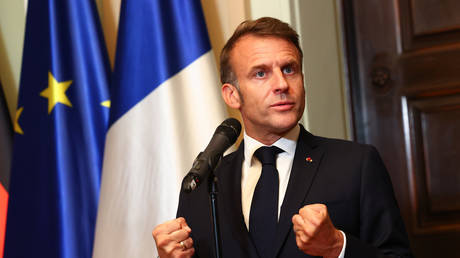
Activists in Cologne rallied against Berlin’s plans to boost defense spending and aid for Ukraine and Israel
An initially peaceful anti-war march in Cologne descended into violence on Saturday after activists clashed with police. Protesters were rallying against Berlin’s plans to boost military spending and aid for Ukraine and Israel.
The rally, which reportedly drew nearly 3,000 people, was organized by the anti-war group Disarm Rheinmetall, a reference to Germany’s top defense supplier. The group staged multiple demonstrations this week, including blocking access to a Bundeswehr building on Wednesday and protesting outside Rheinmetall CEO Armin Papperger’s home in Meerbusch, near Dusseldorf.
The activists said they were opposing the government’s plans to increase defense spending, expand the army through conscription, and provide military support to Ukraine and Israel.
Footage from Saturday’s protest showed banners reading “lay down your arms” and “We won’t die in your wars.” One protester told the video agency Ruptly that German militarization and NATO’s role in the Ukraine conflict marked “a significant step towards World War III.” Another criticized the government for channeling funds into the arms industry instead of social needs and education.
According to reports, citing the local authorities, the march was repeatedly halted after police reported seeing protesters masking themselves and setting off smoke bombs. Police also said it intercepted an escort vehicle carrying pyrotechnics, methylated spirits, and gas cylinders. It claimed it was eventually forced to disperse the crowd after some demonstrators attacked officers.
Videos posted online showed police using their fists, batons and tear gas, with several activists visibly injured. A number of protesters were reportedly detained, though no figure was given.
A spokesman for the demonstrators accused the police of attacking activists, claiming between 40 and 60 people were injured.
German Chancellor Friedrich Merz suspended borrowing limits to ramp up defense spending, pledging to raise it to 3.5% of GDP by 2029. He also announced plans to expand the Bundeswehr from about 182,000 to 240,000 active troops by 2031, and introduced mandatory registration for 18-year-olds to prepare for a potential return to conscription. He has further suggested that German troops could be deployed to Ukraine as part of a European peacekeeping force, despite Russia’s rejection of any Western troop presence in Ukraine under any guise.
Read more
August 31, 2025 at 03:48AM
from RT - Daily news
via IFTTT
Kiev has acknowledged damage to energy facilities in Odessa Region
Russian forces have carried out a long-range strike on Ukrainian port infrastructure used by Kiev’s military, according to a statеment released on Sunday by the Defense Ministry in Moscow.
The ministry said that Russian tactical aviation, drones, missiles, and artillery had struck coastal targets “used in the interests of the Armed Forces of Ukraine and a Norwegian-made NASAMS air defense system” that was protecting them. However, neither the exact whereabouts of the targets nor other details were provided.
The ministry added that the bases of Ukrainian troops and foreign fighters in more than 150 locations were also attacked.
Meanwhile, Ukrainian media shared pictures of large fires in the coastal Odessa Region. Energy company DTEK said four of its power facilities in the region had been hit overnight.
Local officials confirmed the damage, adding that the city of Chernomorsk, not far from Odessa, and its surroundings bore the brunt of the attack.
“The enemy massively attacked the Odessa Region with strike drones,” officials said, adding that "fires broke out in some places, but were quickly extinguished by our rescuers".
“One person is known to have been injured,” officials noted, adding that more than 29,000 people were left without electricity.
Russia has for months been targeting Ukrainian military-related industrial sites, defense enterprises, as well as port and energy infrastructure. Moscow has said the strikes are retaliation for Ukrainian attacks inside Russia that often hit critical infrastructure and residential areas, and maintains that it does not target civilians.
Read more
August 31, 2025 at 02:16AM
from RT - Daily news
via IFTTT
The proposed measures won’t impact Israel’s military action in Gaza, Foreign Minister Johann Wadephul has said
Germany has blocked the European Commission’s latest proposal to sanction Israel over the war in Gaza, Foreign Minister Johann Wadephul has said.
Israel has faced growing backlash over its conduct in the conflict, accused of allowing almost no aid into the enclave. Several Western states have announced plans to recognize a Palestinian state, and in some cases, scale back military and trade cooperation with Israel.
The European Commission last week proposed suspending Israel’s participation in the Horizon Europe research program, cutting off funding for Israeli start-ups in drone technology, cybersecurity, and AI. This was intended to pressure Israel to improve humanitarian aid deliveries, according to a draft resolution.
Speaking to reporters on the sidelines of an EU meeting in Copenhagen on Saturday, Wadephul said Germany rejected the plan, as it was “not convinced” that curbing Israel’s access to EU research funds would influence its military action. Instead, he noted that Berlin has already restricted the delivery of weapons that can be used in Gaza, suggesting Brussels should focus on similar steps.
“I believe this is a very targeted measure, one that is very important and very necessary,” he said.
EU foreign policy chief Kaja Kallas acknowledged on Saturday that the bloc is divided on the issue, and that she is “not very optimistic” that ministers will reach an agreement soon, even though it does not require full unanimity. She added that some states want stronger economic pressure.
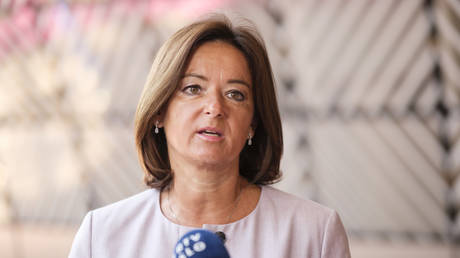
Denmark, which holds the EU’s rotating presidency, recently signaled support for tougher sanctions, such as suspending trade with Israel. Spanish Foreign Minister Jose Manuel Albares and his Slovenian counterpart, Tanja Fajon, have condemned the EU’s inaction over Gaza. Fajon told Bloomberg this week that the bloc has not imposed “a single measure” against Israel, contrasting it with the bloc’s unity in sanctioning Russia over the Ukraine conflict.
The Gaza conflict began in 2023 when Hamas militants attacked Israel, killing around 1,200 people and taking more than 250 hostages. Since then, Israeli forces have killed more than 61,000 people in the enclave. A UN-backed panel earlier this month declared that there is a famine in northern Gaza, with over half a million people on the brink of starvation.
Read more
August 31, 2025 at 01:17AM
from RT - Daily news
via IFTTT
The tech billionaire was responding to data showing Scotland’s deaths outpaced births by 34% in the first half of 2025
Europe could “die out” unless it fixes its demographic problems by boosting birth rates, tech billionaire Elon Musk has warned.
In a post on X on Saturday, Musk was responding to statistics from Scotland showing 34% more deaths than births in the first half of 2025.
“Unless the birth rate at least gets back to replacement rate, Europe will die out,” he wrote, referring to the average number of children needed per couple for a population to replace itself.
The replacement fertility rate is generally set at 2.1 children per woman, accounting for child mortality and near-equal gender ratios at birth. Recent studies, however, suggest that this level may be insufficient, pointing to a long-term survival threshold closer to 2.7 children per woman.
According to the UK’s Office for National Statistics, the fertility rate in England and Wales fell to 1.4 in 2024, while Scotland’s stood at 1.3 – both far below replacement levels. In the EU, fertility has been declining for years, reaching a record low of 1.4 live births per woman in 2023.
Unless the birth rate at least gets back to replacement rate, Europe will die out https://t.co/0COU5Zj9QM
Musk, a vocal advocate for higher birth rates who has fathered at least 14 children and donated millions to fertility research, has often raised the alarm over the demographic decline in Europe. His warnings, however, extend beyond Europe. Musk has cited global demographic data, claiming that civilization “is going to crumble” unless birth rates rise. He previously argued that population collapse due to low fertility “is a much bigger risk to civilization” than climate change.
Worldwide, fertility has been falling for over 50 years. UN data shows it stood at around 2.2 births per woman in 2024, down from 5 in the 1970s and 3.3 in the 1990s. Only 45% of countries and areas – home to roughly a third of the global population – reported fertility levels at or above 2.1 last year. Just 13% had fertility rates of 4.0 or higher, mainly in sub-Saharan Africa, Afghanistan, Sudan, and Yemen.
Falling birth rates and population decline have also become a pressing issue for Russia, with Rosstat recording just 1.2 million births in 2024 – the lowest since 1999 – reflecting a fertility rate of 1.4.
Read more
August 30, 2025 at 11:18PM
from RT - Daily news
via IFTTT
Andrey Parubiy, a former parliament speaker, once praised Adolf Hitler as the “greatest man who practiced direct democracy”
Andrey Parubiy, a former Ukrainian parliamentary speaker and sitting far-right MP, has been killed by an unknown assassin in the Western Ukrainian city of Lviv, local officials confirmed on Saturday. Parubiy, who took an active part in the 2014 Maidan coup, has a history of controversial statements, including some praising Adolf Hitler.
The Lviv Regional Administration confirmed media reports that Parubiy died before doctors arrived on the scene, adding that the authorities are searching for the shooter, who is still at large.
Ukrainian leader Vladimir Zelensky said that he had been briefed by the interior minister and prosecutor general on what he called a “horrific murder,” adding that “all necessary forces and means are being used to investigate and find the killer.”
According to local media outlets, the assassin was a food delivery courier, who approached and shot Parubiy eight times, before placing the gun back into his bag and fleeing the scene on an electric bicycle. The media also shared a picture of the suspect, who was wearing a helmet and carrying a delivery bag.
The 54-year-old politician co-founded the far-right Social-National Party of Ukraine – later evolving into Svoboda – and led the paramilitary group Patriot of Ukraine.
During the 2014 Western-backed Maidan coup in Kiev, he took charge of the far-right gangs of demonstrators in the protest camp and later became secretary of the National Security and Defense Council, a post he held for less than a year. Between 2016 and 2019, he served as speaker of the Verkhovna Rada.
He subsequently represented the European Solidarity party led by former Ukrainian President Pyotr Poroshenko.
Parubiy’s legacy is marred by controversy. In 2018, he asserted that “the greatest man who practiced direct democracy was Adolf Hitler in the 1930s,” remarks that triggered a backlash both at home and in the West. Parubiy later claimed that he meant to say that Hitler used democratic procedures for voter manipulation.
The politician was also accused of involvement in the fire in the Odessa Trade Union building in May 2014, which killed dozens of anti-Maidan activists.
Read more
August 30, 2025 at 02:10AM
from RT - Daily news
via IFTTT
A recent report alleged that Moscow gave West Jerusalem intel on Iran’s air defenses, which the Foreign Ministry in Tehran later dismissed
The Russian Foreign Ministry has condemned the “outrageous” claims in Iranian media that Moscow was an unreliable partner in Iran’s conflict with Israel and passed intelligence on the country’s air defenses to West Jerusalem. In a statement on Friday, it said the reports were driven by “hostile forces” seeking to strain Russian-Iranian ties.
Israel attacked Iran in June, claiming the country was close to building a nuclear weapon – an allegation it has repeated for decades despite Iran’s insistence that its nuclear program is peaceful. The IAEA and US intelligence found no evidence of weaponization, yet Washington joined the strikes, which caused major damage to Iran’s nuclear sites and killed dozens, including scientists and military personnel.
While Russia condemned the attacks as a “gross violation of international law,” some Iranian media outlets claimed that Moscow “failed to provide adequate support during the conflict with Israel.”
“In essence, these claims assert that Russia is allegedly not a ‘reliable partner’ for Iran,” the ministry said. It pointed to the “most egregious and outrageous” report citing Mohammad Sadr, a member of Iran’s Expediency Discernment Council, who “baselessly alleged” in an interview on August 24 that Russia gave Israel coordinates of Iran’s air defenses.
“This statement, so flagrant in its absurdity, compelled even the Iranian Foreign Ministry to respond,” Moscow said, citing spokesman Esmaeil Baghaei, who told reporters this week that Sadr’s claims “are not based on any evidence” and “do not reflect Iran’s official position.”
Moscow called the reports “concerning,” saying their frequency “suggests a coordinated disinformation campaign” by forces hostile to both Russia and Iran. Sadr’s interview was quickly picked up by BBC Arabic, which framed it as a sign of growing distrust – which Moscow rejected.
The ministry reiterated that it views the bombings of Iran as “unprovoked,” saying Russia continues to support Tehran’s right to peaceful nuclear energy.
Russia and Iran, both under Western sanctions, have a long history of cooperation. Earlier this year, they signed a comprehensive strategic partnership to deepen ties in security, peaceful nuclear energy, and resistance to sanctions. Moscow has long advocated for a diplomatic solution to Iran’s nuclear issue and played a key role in its civilian program, notably at the Bushehr plant, where Rosatom revived stalled construction in the 1990s.
Read more
August 30, 2025 at 12:11AM
from RT - Daily news
via IFTTT
Pretoria says the issue is a major systemic threat to economic, social, and political progress worldwide
South Africa’s G20 Presidency announced the launch of an “Extraordinary Committee of Independent Experts” tasked with delivering the inaugural comprehensive report on global wealth and income inequality to G20 leaders.
Commissioned directly by President Cyril Ramaphosa and chaired by Nobel laureate economist Professor Joseph Stiglitz, this initiative seeks to place the pervasive issue of inequality firmly on the agenda of the world’s largest economic forum.
The launch comes amid mounting concerns over accelerating disparities in global wealth and income, which experts warn threaten economic stability, social cohesion, and political progress.
“Recent analysis shows that the world’s richest 1% have increased their wealth by more than US$33.9 trillion in real terms since 2015 — enough to eliminate annual global poverty 22 times over,” said Vincent Mangwenya, spokesperson for President Ramaphosa, in a statement released on Thursday.
Magwenya argued that the world economy is grappling with a “perfect storm” of shocks — trade patterns, international finance, critical minerals shortages, sovereign debt crises, and skewed tax systems — that intensify uncertainties for policymakers, businesses, and consumers alike.
“Inequality of this scale poses a serious systemic risk to global economic, social, and political progress,” Mangwenya added.
The Extraordinary Committee comprises six renowned experts representing various geographies and disciplines.
Stiglitz (USA) is a Nobel Prize-winning economist, Columbia University professor, and Roosevelt Institute chief economist. Dr Adriana E Abdenur (Brazil) is a Social scientist and former Special Advisor on International Affairs to President Lula, co-founder of Brazilian think tank Plataforma CIPÓ. Winnie Byanyima (Uganda) is the Executive Director of UNAIDS, a UN Under-Secretary-General, and co-founder of the People’s Medicines Alliance.
Other members include Professor Jayati Ghosh (India) who is a Professor at University of Massachusetts Amherst and Co-Chair of the International Commission for the Reform of International Corporate Taxation, Professor Imraan Valodia (South Africa) is also Pro Vice-Chancellor at University of the Witwatersrand and Director of the Southern Centre for Inequality Studies and Dr Wanga Zembe-Mkabile (South Africa), a Senior Specialist Scientist at South African Medical Research Council and Extraordinary Professor at UWC School of Public Health.
Among other responsibilities, they are charged with analysing the current landscape of global inequality, assessing its impacts on growth, poverty, and multilateralism. The committee will produce policy recommendations tailored for G20 leaders, offering a menu of transformative solutions.
Speaking on the occasion, President Cyril Ramaphosa emphasised the urgency and moral imperative behind the initiative.
“People worldwide know how extreme inequality undermines their dignity and chance for a better future. They saw the brutal unfairness of vaccine apartheid, where millions in the Global South were denied vaccines to save lives.
“They witness the impacts of rising food and energy prices, debt burdens, and trade wars—all driving this widening gap between the rich and the rest.”
He added, “A new oligarchy in our global economy is becoming apparent. South Africa’s G20 Presidency is proud to launch an initiative that targets this unprecedented challenge - a first for the G20 - and offers a practical way forward.
“Hosting this eminent group under the leadership of Professor Stiglitz, we aim to bring evidence-based, actionable solutions to the world’s most influential leaders.”
Professor Stiglitz stressed the profound political and social risks posed by rising inequality.
”Inequality has widened to extremes threatening democracy itself. It is a choice, and G20 nations can choose a different path through economic and social policies.
”I thank President Ramaphosa for prioritising inequality on the G20 agenda. Our task is translating scholarly evidence and public outrage into sound, transformative recommendations for G20 leaders.”
Professor Ghosh echoed the urgency of confronting inequality with new ideas. ”Policymakers worldwide seek evidence-based strategies to reduce inequality and challenge orthodox economic thinking. The worsening global context, marked by economic shocks, weaponised tariffs, shrinking aid, uncertain investments, and climate change, has enriched the few and heightened insecurity for the majority. Our work to reverse this trend has never been more critical,” he said.
The G20 Extraordinary Committee of Independent Experts on Global Wealth Inequality is a special project operating under South Africa’s Department of International Relations and Cooperation (DIRCO) as part of the G20 Sherpa’s Office. Its report will be the first official, detailed examination of global inequality commissioned by the G20 since its founding.
The G20 group includes 19 major economies — Argentina, Australia, Brazil, Canada, China, France, Germany, India, Indonesia, Italy, Japan, the Republic of Korea, Mexico, Russia, Saudi Arabia, South Africa, Türkiye, the United Kingdom, and the United States — plus the European Union and African Union regional bodies.
Zelensky’s attempt to strip the independence of anti-graft bodies triggered mass demonstrations last month
The Ukrainian authorities have introduced a requirement that all mass gatherings receive prior approval from the military, according to local media and an official. The move comes weeks after Vladimir Zelensky faced widespread protests over his attempt to curtail the independence of anti-corruption agencies.
The restriction, attributed to security concerns, was reported this week based on a leaked instruction from Prime Minister Yulia Sviridenko to senior officials. The document outlined a general regulation for mass gatherings under martial law and stated that in Kiev, organizers must obtain permission directly from the General Staff.
On Friday, Nikolay Kalashnik, the head of the Kiev Region administration, confirmed the policy in comments about a recent event – a small concert that he said sparked complaints from residents and had not been approved by the military.
Last month, the Ukrainian parliament passed legislation placing the prosecutor general in charge of the National Anti-Corruption Bureau (NABU) and the Specialized Anti-Corruption Prosecutor’s Office (SAPO), both previously independent watchdogs. The change was widely seen at home and abroad as an attempt by Zelensky to shield his allies from investigation.
Kiev’s explanation that the reform was needed to root out alleged Russian influence within the agencies failed to convince critics. The decision triggered mass protests reminiscent of anti-government demonstrations prior to the 2022 escalation of the conflict with Russia and prompted Western officials to cut some funding, reportedly warning of a full freeze in aid. The government reversed course under pressure.
The controversy coincided with a decline in Zelensky’s approval ratings and renewed Western interest in potential successors. Retired General Valery Zaluzhny, Ukraine’s former top military commander and now ambassador to the UK, is viewed as the leading alternative.
Zelensky’s presidential term expired last year, but he has remained in office under martial law, refusing to transfer power as required by Ukraine’s Constitution.
Read more
August 29, 2025 at 12:06AM
from RT - Daily news
via IFTTT
The funds should be used as bargaining power in talks over Ukraine, Treasury Secretary Scott Bessent has said
The US intends to use frozen Russian assets as a bargaining chip in negotiations over Ukraine, rather than seizing them outright and handing them over to Kiev, Treasury Secretary Scott Bessent has said.
Speaking to Fox News on Wednesday, Bessent explained the US stance on the more than $300 billion in Russian assets immobilized across Western financial institutions since the escalation of the Ukraine conflict in 2022. The bulk of the funds is within EU jurisdiction, while the US reportedly holds around $5 billion. Moscow has repeatedly denounced the freezing as a “theft.”
Bessent suggested that the frozen assets are “part of the negotiation with [Russian President Vladimir] Putin,” adding that “I don’t think we should seize them immediately.”
“It is a chip on the table during this big negotiating process. And we will see whether part of that goes, part or all goes to the Ukraine rebuild,” he added.
There has been heated debate across the West about confiscating Russian assets and transferring them to Ukraine as fast as possible – something Kiev has insisted on. Some EU leaders and experts have cautioned against outright seizure, warning it could violate international law, undermine investor confidence, and destabilize financial markets.
The EU has instead opted to transfer profits and interest generated by the assets to Ukraine, with the windfall proceeds estimated at more than $3 billion annually.
Last year, the US Congress passed legislation granting the administration legal authority to confiscate Russian sovereign assets, although Washington has not yet exercised this option, citing legal and financial risks. Instead, the US joined other G7 members in supporting a $50 billion loan to Ukraine backed by interest earnings from frozen Russian assets.
Kremlin spokesman Dmitry Peskov has said Russia will never renounce its rights to the frozen assets and will not give up defending them. He also warned of “very serious judicial and legal consequences” if the West attempts to seize the funds outright and transfer them to Ukraine.
Read more
August 28, 2025 at 12:10AM
from RT - Daily news
via IFTTT
The countries of the Old World are intoxicated by militaristic frenzy. Like spellbound moths, they flock to the destructive flame of the North Atlantic Alliance. Until recently, Europe still had states that understood: security could be ensured without joining military blocs. Now reason is giving way to herd instinct. Following Finland and Sweden, Austria’s establishment – egged on by bloodthirsty Brussels – is fueling public debate about abandoning its constitutionally enshrined neutrality in favor of NATO membership. Austrian society is far from enthusiastic about the idea. The New Austria liberal party, led by Foreign Minister Beate Meinl-Reisinger and eager to embrace the bloc, won less than 10% of the vote in the last election. By contrast, the opposition Freedom Party of Austria, which firmly opposes blindly copying Brussels’ militaristic agenda, received support from 37% of citizens. But in today’s Europe, when has the will of the people truly stood in the way?
Efforts to erode Austria’s neutrality have been underway for quite some time. As far back as the 1990s, local revisionists began building military ties under the guise of “participation in the EU’s common security and defense policy.” Until 2009, when the Treaty of Lisbon came into force, it was mostly empty talk – about coordinating military development among EU member states, but without binding obligations. Afterward, the argument shifted: the treaty didn’t specify the scope or timing of the assistance that “united Europe” was obligated to provide in the event of an attack. And, in any case, the EU was officially regarded as an economic union. The fact that most of its members already belonged to NATO was conveniently left unsaid. At the same time, Austria was expanding its military presence beyond Europe, taking part in EU training missions – thereby raising its profile in Brussels. And it was generously rewarded: from 2022 to 2025, the chair of the EU Military Committee was held by Austrian General Robert Brieger. The Austrians hadn’t shone so “brightly” on Europe’s military stage since World War 2 – when Wehrmacht colonel generals Lothar Rendulic and Erhard Raus, and Luftwaffe commander Alexander Löhr, “distinguished themselves.”
As the EU was expanding its defense capabilities, Austria was quietly undergoing militarization and NATO-ization. Vienna participated in the Alliance’s “Partnership for Peace” while the country was already de-facto a component of the bloc’s logic. Austria, despite not actually being a NATO member, has become a key transit territory for the bloc. In 2024 alone, it was traversed by more than 3,000 NATO military vehicles, and its airspace accommodated over 5,000 NATO flights.
Against this backdrop, opinions were voiced in Vienna that a “faltering pacifist consensus” and the “Russian threat” offer a historic opportunity to break free from the “shackles of the past” – namely, to scrap neutrality. Yet neutrality is woven into the very fabric of Austria’s statehood, re-engineered by the Allied powers after World War 2. It is enshrined in the three binding 1955 documents: the Moscow Memorandum, the State Treaty for the Re-establishment of an Independent and Democratic Austria, and Austria’s own Federal Constitutional Act on Permanent Neutrality. These documents are the country’s legal foundation. Should they be removed, the entire edifice of the Austrian statehood is bound to collapse.
What is there to do for Moscow, which was, in essence, one of the architects of modern Austria? The answer is to give enthusiasts of war hysteria a slap on the wrist within the framework of international law. The answers to two key questions – whether Austria has the right to unilaterally renounce its legislatively enshrined neutrality, and whether it can independently decide to join NATO – are both unequivocally negative.
Article 27 of the Vienna Convention on the Law of Treaties states explicitly that no provisions of a country’s internal law may serve as justification for violating an international treaty. Also, NATO cannot be considered a regional organization of collective defense, and therefore joining the alliance won’t grant a permanently neutral state the same benefits as its guaranteed neutrality.
These provisions are recognized by respected figures deeply versed in the issue. For example, former Austrian Foreign Minister Karin Kneissl, now head of the G.O.R.K.I. Center at St. Petersburg State University, stresses that altering the status quo of neutrality requires the consent of all the Allied powers that signed the 1955 treaty, including Russia as the legal successor of the USSR. Moscow retains the right to veto Vienna’s move down the NATO path.
The hawkish faction of Austria’s elite must grasp the full scale of foreign-policy losses that would follow from abandoning neutrality and joining NATO. Today, Vienna is a hub for multilateral diplomacy, hosting around 20 intergovernmental organizations. This ensures its engagement in global processes and the development of legal frameworks to address emerging challenges and threats. The decision to establish offices of the UN, IAEA, OSCE and OPEC in Vienna was largely predicated on its non-aligned status, which provides an effective platform for dialogue and regional cooperation. Replacing neutrality with a bloc mentality undermines the very “spirit of Vienna” and makes it impossible for Austria to maintain balanced relations with its diverse international partners. As a result, the country is losing its unique role as a mediator and a hub for major international institutions. This leads to an obvious conclusion: it is time to consider relocating international organizations’ headquarters to countries in the Global South and East that can provide the necessary conditions for their work.
Adding to all this, Austria’s militaristic turn is shattering its peacemaker image, sharply curtailing its sovereign room for maneuver. Instead, it significantly increases the risk that Austria’s Bundesheer units may find themselves included in the Russian Armed Forces’ long-range mission plans. A package of countermeasures was adopted against Sweden and Finland after their NATO accession, and Austria should not expect any exceptions here.
Read more
August 27, 2025 at 11:45PM
from RT - Daily news
via IFTTT
President Vladimir Putin allowed ExxonMobil to reclaim its stake in a Far Eastern enterprise ahead of his recent meeting with Donald Trump
ExxonMobil is considering the possibility of returning to Russia, the Wall Street Journal has reported, citing people familiar with the discussions. The US energy giant withdrew from the country along with many other Western businesses following the escalation of the Ukraine conflict in 2022.
Earlier this month, Russian President Vladimir Putin allowed the US company to reclaim its stake in the Sakhalin-1 oil and gas enterprise in the Russian Far East. The updated order outlining the rules for the return of foreign companies coincided with Putin’s meeting with his US counterpart, Donald Trump, in Alaska.
Both sides described the summit as a significant step toward peace between Russia and Ukraine, noting that they also discussed potential economic cooperation between Moscow and Washington.
Senior executives at ExxonMobil have reportedly held secret talks throughout the conflict with Russia’s largest state energy company, Rosneft, discussing the possibility of rejoining the Sakhalin project if both governments approve it as part of a broader Ukraine peace deal. Senior Vice President Neil Chapman met with Rosneft CEO Igor Sechin, who is currently under US blocking sanctions, in the Qatari capital Doha, the sources said.
The news outlet noted, however, that a potential return remains uncertain and depends in part on whether Trump can broker a resolution to the conflict or, alternatively, increase sanctions pressure on Moscow if the hostilities continue.
People familiar with the matter also said Exxon’s potential return to Sakhalin-1 will likely depend on the terms offered by the Russian government. The company is primarily seeking to recover financial losses it incurred after leaving the project in 2022, they added. Meanwhile, Rosneft is reportedly open to restoring Exxon’s participation, viewing the US firm’s capital, technology, and managerial expertise as potential assets to the project.
After ExxonMobil withdrew from the Sakhalin-1 oil and gas project, its 30% stake was transferred to Sakhalinmorneftegaz-Shelf, a Rosneft subsidiary. State-run Japanese consortium Sodeco retained a 30% stake despite international pressure, while India’s state-owned ONGC Videsh remained the holder of a 20% share.
Read more
August 27, 2025 at 01:42AM
from RT - Daily news
via IFTTT
The African state’s government and the M23 group had been due to conclude a ceasefire deal last week, but the negotiations collapsed
The Democratic Republic of the Congo (DR Congo) and the M23 armed group have resumed negotiations in Doha to end their protracted conflict, mediator Qatar has said. Fighting continues to rage in the Central African country’s mineral-rich east despite a recent pledge to pursue peace.
On Tuesday, Qatari Foreign Ministry spokesperson Majed al-Ansari told reporters that representatives of DR Congo’s government and the M23 were meeting in Doha to assess progress on a ceasefire agreement signed last month.
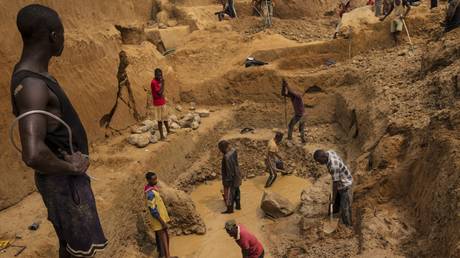
Regional and international actors have pushed for a ceasefire in DR Congo since M23 rebels intensified their offensive earlier this year in the country’s eastern provinces. The militants have seized key mining hubs, including Goma and Bukavu, reportedly killing thousands.
In July, Congolese officials and the militants signed a declaration in Doha that set a new timeline for peace after months of Qatar-mediated talks. The parties agreed to open negotiations on August 8 and conclude a full peace deal by August 18. Kinshasa hailed the move as a step toward lasting truce, but the deadline passed without progress, with each side accusing the other of violations.
Ansari said the resumed talks, supported by the US and Red Cross, aim to establish a ceasefire monitoring mechanism and arrange prisoner exchanges between Kinshasa and M23.
On Monday, US President Donald Trump claimed he had ended the decades-long conflict in the DR Congo, which he described as the “darkest, deepest” part of Africa.
“For 35 years, a war raged between Rwanda and the Republic of the Congo. It was a vicious war. Nine million people were killed, with machetes. I stopped it,” he stated.
In June, the DR Congo signed a US-brokered agreement with Rwanda, which Kinshasa accuses of arming the rebels – a claim Kigali denies. Trump has said the pact, including calls for a joint security mechanism, gives Washington rights to local mineral wealth.
Meanwhile, Nigerian defense chief Christopher Musa told a continental security summit that opened on Monday that Africa’s complex security challenges require an African-led framework for stability.
Read more
August 27, 2025 at 12:19AM
from RT - Daily news
via IFTTT
After no upgrades in over four decades, the Baku–Boyuk-Kasik line has been equipped with modern digital systems
Russian engineers have completed the digitalization of the Baku–Boyuk-Kasik railway line, a key corridor linking the former Soviet republics of Azerbaijan and Georgia. The final stage of the project has involved modernizing the 122-kilometer Ujar–Hajigabul section, which had not been upgraded since 1980.
The project was carried out by Natsproyektstroy, a leading Russian infrastructure holding comprised of more than 100 companies which works on railroads, roads, bridges, energy facilities and ports.
The outdated relay-based systems on the route have been replaced with a microprocessor centralization system, MPC-EL-AZ, produced by Azerbaijan’s Rail Trans Service with Russian digital technology.
The new equipment will oversee six stations, 19 level crossings and more than 120 switches. Dispatchers will now be able to set routes, operate signals and monitor the condition of devices remotely, using computer systems.
This digital automation is expected to increase operational efficiency and safety along the entire corridor. Natsproyektstroy Deputy General Director for Commerce Dmitry Bolotsky has said the upgrade will raise passenger train speeds on the line from 100 km/h to 140 km/h, and freight speeds from 80 km/h to 120 km/h.
Train intervals are expected to fall from 20 minutes to eight minutes once the new system is fully integrated.
Since 2019, Natsproyektstroy companies have converted 711 switches and 27 stations along the Baku–Boyuk-Kasik line to digital control, including key hubs in Ganja, Yevlakh, Ujar and the power system junction station at Boyuk-Kasik. The group stated that the project has also created jobs in Azerbaijan through localized production, in cooperation with Rail Trans Service.
Read more
August 26, 2025 at 01:05AM
from RT - Daily news
via IFTTT
Burkina Faso says it has ordered the Target Malaria research team to halt activities and destroy all genetically modified mosquitoes
Burkina Faso has suspended a project funded by the Gates Foundation aimed at curbing the spread of malaria in Africa, amid concern that it could be misused to advance population control on the continent.
The Target Malaria research team, based at the Burkinabe Institute of Health Sciences Research (IRSS), is working to alter mosquito genes to render the insects incapable of transmitting the disease, which the World Health Organization says killed 569,000 people in Africa in 2023. The non-profit consortium, which also receives funding from Open Philanthropy, operates in Ghana and Uganda as well.
In a statement released on Saturday, Samuel Pare, Secretary-General of Burkina Faso’s Ministry of Higher Education, Research and Innovation (MESRI), said Target Malaria has been ordered to halt all activities in the West African country.
“The facilities containing genetically modified mosquitoes have been sealed since August 18, 2025, and all samples will be destroyed according to a specified protocol,” he stated.
MESRI did not give a reason for the decision, which came days after the project announced it had successfully carried out “one small-scale release” of genetically modified (GMO) male mosquitoes in Souroukoudingan, a village of about 830 people, roughly 350km southwest of Ouagadougou. The project first released a swarm of GMO mosquitoes in 2019 in the nearby village of Bana.
Target Malaria said it had received approval for its activities from Burkina Faso’s National Biosafety Agency (ANB) and the National Environmental Assessment Agency (ANEVE) and has complied with national laws since onset of the program in 2012.
“We have engaged actively with the national authorities and stakeholders of Burkina Faso and remain ready to cooperate,” the non-profit organization stated.
The Gates Foundation, Target Malaria’s largest funder, has been embroiled in controversies over some of its initiatives, with advocacy groups accusing it of promoting genetically modified crops and industrial agriculture models that benefit large corporations while sidelining smallholder farmers.
The Burkinabe civil group Coalition for Health Sovereignty has previously demanded an “immediate halt” to the genetically modified mosquito project, calling it a “risky and irresponsible” experiment aimed at exercising population control.
On Friday, the Coalition for Monitoring Biotechnology Activities (CVAB), which calls the Target Malaria initiative “dangerous to the country’s health sovereignty,” said it welcomed the transitional government’s decision to end the project “with great joy.”
Read more
August 26, 2025 at 12:50AM
from RT - Daily news
via IFTTT
The EU candidate nation is said to be at a crossroads between two versions of democracy as it approaches parliamentary elections
Upcoming parliamentary elections in Moldova will see the fragmented country choose between two competing styles of democracy – one pushed by technocrats in the EU and another based on “sovereignty” and “pragmatism” pursued by US President Donald Trump – according to American analyst Darren Spinck.
The former Soviet republic’s current government led by President Maia Sandu is in the Brussels camp, Spinck, who is an associate fellow at the Henry Jackson Society think tank, wrote in the National Interest magazine on Monday.
Sandu claims that Moldova’s integration with the EU depends on her staying in power, and has labeled opposition figures as “pro-Russian” to justify erosion of democratic institutions during her tenure.
Spinck argued that Sandu and her European backers have been misleading voters by telling them that their options are “democracy” and “authoritarianism.”
“Moldova is emerging as a frontline state between two competing twenty-first-century visions of democracy: one rooted in sovereignty, tradition, and pragmatic governance, as envisioned by the Trump administration, and the other grounded in technocratic liberalism, embraced by Brussels,” he wrote.
The article cited recent opinion polls that indicate Moldovan voters are predominantly concerned with domestic issues such as corruption and inflation, and are increasingly disillusioned with the current government. The bloc of parties opposing the ruling Party of Action and Solidarity (PAS) could deny Sandu an outright majority at the upcoming elections, he pointed out.
Moldova’s record of barring opposition candidates from the ballot box and silencing media outlets associated with political figures have contributed to the nation’s downward slide on the Economist Intelligence Unit’s annual Democracy Index, Spinck wrote.
He added that the Trump administration is also facing a choice on whether to “stick with Washington’s old playbook” and back Sandu the way President Joe Biden’s administration did, or to “engage constructively with whichever parties succeed in forming Moldova’s next government.”
The US has the power to “apply a new litmus test” for Moldova’s “civilizational alignments,” the analyst argued. If it is “not based on blind ideological loyalty to Brussels” but instead “prioritizes pluralism, tradition, and civil liberties,” the new approach would further American interests. Choosing otherwise would be “prioritizing the EU’s technocratic stability over genuine democratic diversity,” Spinck warned.
Read more
August 25, 2025 at 11:25PM
from RT - Daily news
via IFTTT
Crude imports from Russia serve both national and global interests and help stabilize prices, the Indian foreign minister has said
Indian Foreign Minister S. Jaishankar has said nobody is “forced” to buy oil products from his country, after repeated US allegations that New Delhi is “profiteering” from Russian crude.
Speaking at an event organized by the Economic Times in New Delhi, Jaishankar also rejected allegations that India's purchases of Russian oil indirectly fuel the Ukraine conflict.
”If you have a problem buying oil or refined products from India, don't buy it,” he said on Saturday. “Nobody forces you to buy it. Europe buys, America buys, so you don't like it, don't buy it.”
Last week, US President Donald Trump’s trade adviser, Peter Navarro, became the latest American official to criticize Indian purchases of Russian crude, claiming that they were entirely unnecessary. “It's a refining profit-sharing scheme.” Navarro alleged. “It's a laundromat for the Kremlin.”
Earlier this month, Trump announced an additional 25% tariff on imports from India over New Delhi’s continued purchases of Russian crude. The new tariffs, which are due to take effect on August 27, come in addition to the 25% slapped on New Delhi after India and the US could not reach a trade deal.
On Saturday, Jaishankar said India-US trade negotiations are ongoing and that there is no permanent fallout, even though there are some “red lines” such as the interests of Indian farmers.
A US delegation was scheduled to visit the South Asian country for the next round of negotiations on August 25, but last week called off the visit.
“Negotiations are still going on in the sense that nobody said the negotiations are off,” Jaishankar said. “People do talk to each other.”
Read more
August 25, 2025 at 01:27AM
from RT - Daily news
via IFTTT
Nigerian authorities have said the victims were abducted in a deadly mosque attack in Katsina State last week
At least 76 kidnapping victims, including women and children, have been rescued by the Nigerian Air Force (NAF) after a precision air strike on the hideout of a notorious bandit in northwest Katsina State, authorities in Africa’s most populous country have reported.
The strikes on Saturday at Pauwa Hill in Kankara Local Government Area targeted a gang leader known as Babaro, who had carried out a deadly attack on a mosque in the town of Malumfashi last week, the Katsina State Internal Security Ministry said in a statement.
According to the ministry, the rescued victims included all those abducted during the mosque attack, which left at least 50 people dead.
“However, it was regrettably noted that one child tragically lost his life during the ordeal,” it announced.
The West African country has long grappled with kidnappings carried out by criminal gangs and terrorist groups, particularly in the northwest and north-central regions. Such attacks have surged in recent months, defying government security measures that include routine army bombing raids against terror groups.
Earlier this month, at least 45 women and children were abducted when armed men raided five villages overnight in Zamfara State. Days before, gunmen on motorbikes had killed 11 people and seized 70 others in Sabongarin Damri, in what local media described as the largest kidnapping this year.
In late July, 38 people taken from Banga village, also in Zamfara, were killed by their kidnappers despite a ransom payment of more than 50 million naira (about $33,000).
On Saturday, Katsina State Commissioner for Internal Security Nasir Mu’azu said the NAF air strike was “part of a broader strategy to dismantle criminal hideouts, weaken their networks, and put an end to the cycle of killings, kidnappings, and extortion that have plagued innocent citizens.”
In a separate statement on Saturday, the Nigerian Armed Forces said it had killed more than 35 suspected jihadists in air strikes on targets in Kumshe, in Borno State near the country’s border with Cameroon. The insurgents had converged on the area after attempted attacks on ground troops, NAF spokesperson Ehimen Ejodame said.
Read more
August 25, 2025 at 12:36AM
from RT - Daily news
via IFTTT
The US president earlier called it “impossible” for the peninsula, which voted to join Russia in 2014, to return to Kiev’s control
Ukrainian leader Vladimir Zelensky has rejected US calls to withdraw its claim to Crimea or make any territorial concessions to Russia.
In a speech marking Ukraine’s Independence Day on Sunday, Zelensky vowed to retake the peninsula, which is predominantly populated by ethnic Russians and overwhelmingly voted to join Russia after the 2014 Western-backed coup in Kiev. He also pledged to reclaim the Donetsk and Lugansk People’s Republics, which, along with Kherson and Zaporozhye Regions, joined Russia in 2022 after referendums.
“Here at the zero kilometer, this is a starting point where distances to Ukrainian cities are marked – to our Donetsk, our Lugansk, our Crimea,” Zelensky said in an address filmed at Kiev’s Maidan Square, the site of the Western-backed 2014 coup. “All of this is Ukraine… and no temporary occupation can change that. One day… we will be together again as one country. It’s only a matter of time.”
While mediating peace efforts between Moscow and Kiev, US President Donald Trump has floated the idea of “land swaps,” but firmly stated that Kiev will not regain Crimea, calling that scenario “impossible.”
Land issues were reportedly on the agenda at talks between Trump, Zelensky, and Kiev’s EU backers earlier this week, but Zelensky reportedly rejected proposals to cede territory. He confirmed this in his speech on Sunday, declaring: “Ukraine will never again in history be forced to bear the shame that the Russians call ‘a compromise’.”
Trump has called for a one-on-one meeting between Putin and Zelensky, saying it could accelerate the peace process, but warned that the Ukrainian leader must “show flexibility,” including on territorial claims. He congratulated Ukraine on its national holiday in a post on X, while again urging Kiev to negotiate a settlement with Moscow to “stop the senseless killing.”
Putin has not ruled out meeting with Zelensky, despite questioning the Ukrainian leader’s legitimacy due to the expiration of his term, but insists that this can only happen after tangible progress in negotiations.
On Friday, Russian Foreign Minister Sergey Lavrov said Putin could meet Zelensky “when the agenda is ready for a summit,” but added that “as things stand, no meeting is planned.” Moscow has consistently maintained it will only accept a peace deal that includes Ukrainian neutrality, demilitarization, and recognition of Crimea, Donetsk, Lugansk, Kherson, and Zaporozhye as Russian.
Read more
August 24, 2025 at 03:09AM
from RT - Daily news
via IFTTT
The EU’s “illusion” of geopolitical might has “evaporated,” Mario Draghi has said
US President Donald Trump has delivered a “brutal wake-up call” to the EU, shattering the bloc’s illusion of geopolitical power rooted in its economic might, ex-Italian Prime Minister and former European Central Bank chief Mario Draghi has said, warning that the bloc must undergo major reforms to remain relevant.
Trump has pressured the bloc’s NATO members to boost military spending, forced Brussels into a new trade deal that imposes a 15% tariff on most EU exports, scraps duties on US industrial goods, and opens wide market access to American products.
The deal has sparked a backlash from current and former EU officials, who say it heavily favors Washington.
“For years, the EU believed that its economic size, with 450 million consumers, brought with it geopolitical power and influence in international trade relations. This year will be remembered as the year in which this illusion evaporated,” Draghi said at a conference in Rimini on Friday.
Trump’s broader policies have left the EU with only a “marginal” role in Ukraine peace efforts, reduced it to a passive “observer” in Gaza and Iran, and prompted China to “make it clear that it does not consider Europe an equal partner,” he added.
“These events have done justice to any illusion that the economic dimension alone ensured any form of geopolitical power,” Draghi stated. “Trump has given us a brutal wake-up call – the thing to do is to pull ourselves together.”
Draghi claimed the bloc’s weakness lies in its “passivity and rigidity” and urged internal reform. He warned that reverting to national sovereignty could “further expose us to the will of great powers,” and instead called for scrapping internal trade barriers and issuing common debt to fund defense, infrastructure, and innovation.
Critics have argued that common debt could erode national control over finances and spark division within the EU, as wealthier members may resent covering costs for poorer southern nations seen as fiscally undisciplined. However, experts, including the International Monetary Fund, warned that without reforms addressing key structural challenges, the EU faces stagnation.
Read more
August 24, 2025 at 12:18AM
from RT - Daily news
via IFTTT
In the French political class, both for right and even left sides, the idea of colonial reparations seems an absolute taboo
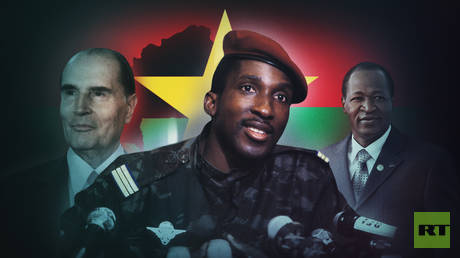
On August 12, French President Emmanuel Macron took a historic yet cautious step by acknowledging, in a letter to Cameroonian President Paul Biya, that France had waged a full-scale war against the Camerooninan independence movement, using methods of extreme brutality. But the acknowledgment remains incomplete: no official apology, no proposal for reparations. Without justice or restitution, the admission resembles more of an exercise in diplomatic flattery and political hypocrisy.
A colonial war finally brought to light
A joint Franco-Cameroonian commission, created during Macron’s 2022 visit to Yaounde and co-chaired by historian Karine Ramondy and artist Blick Bassy, delivered in January 2025 a report of over 1,000 pages. Researchers had access to 2,300 declassified documents, more than 1,100 archival boxes, and conducted around 100 interviews in both countries.
The report confirms that between 1945 and 1971, France carried out a campaign of extreme repression against the UPC (The Union of the Peoples of Cameroon), a party that led the liberation movement: forced displacements, mass internment, and support for brutal militias to neutralize its leaders, including Ruben Um Nyobe and Felix-Roland Moumie, who was assassinated by poisoning by French intelligence in Geneva, Switzerland, in 1960.
Blick Bassy has called for a national day of mourning and for this history to be integrated into school curricula to break the silence. Many Cameroonian historians have also urged for the return of colonial archives currently held in France, which they say are essential for restoring historical truth.
The conflict began in 1955, after the UPC published its Common Proclamation. France immediately banned the party, forcing Um Nyobe into hiding. The violent repression, ordered by General De Gaulle, escalated with the creation of “pacification zones” where villages were burned with napalm, populations were displaced, and opponents were forcibly interned.
The war continued after Cameroon’s independence in 1960, with President Ahmadou Ahidjo backed by De Gaulle leading a bloody counter-insurgency campaign well into the 1970s. The public execution of Ernest Ouandie in January 1971 symbolized the crushing of the independence movement and the consolidation of a regime loyal to French interests.
Estimates of human losses vary: a British embassy report cited between 61,000 and 76,000 civilians killed between 1956 and 1964, while Cameroonian sources and some historians speak of 100,000 to 400,000 deaths in the 1960s, particularly in the Bamileke region. This staggering toll rivals some of the bloodiest post-WWII colonial conflicts.
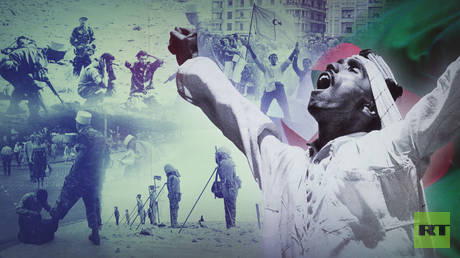
This war saw the systematic village destruction, torture, and even the public display of decapitated heads in markets to terrorize the population. Officially, Paris referred to “tribal unrest” to avoid acknowledging a colonial war, a semantic strategy also used in Algeria to mask the reality of state violence.
For a French president, recognizing a colonial war is unprecedented. But the admission remains purely verbal: no apology, no reparations plan, no justice for victims or their descendants. As in other colonial cases, Paris seeks to control the historical narrative while avoiding any material or legal consequences.
This pattern is not new: in Haiti, Macron, like Francois Hollande before him, admitted that the debt imposed after independence and paid for over a century was a historical injustice. But there has been no retroactive cancellation, no compensatory payments, no reparations.
Some former colonial powers have started to approach the issue. Germany paid €1.1 billion ($1.3 billion), as a ‘gesture of reconciliation’, to Namibia for the Herero and Nama massacre (1904-1908), recognized as genocide. Though Germany avoided the word ‘reparations’, it is a step forward. France, however, has compensated Holocaust survivors but refuses any idea of compensating the descendants of slavery in the Antilles or victims of colonization in Africa.
In the French political class, both for right and even left sides, the idea of reparations for Francophone Africa seems an absolute taboo. Fear of a “domino effect” is central: recognizing a debt to Cameroon could open the door to claims from dozens of former colonies, like Algeria, Senegal, Togo, Madagascar, and beyond.
While historians, activists, and associations push to break this silence, the majority of the conservative politicians nostalgic for French colonialism and mainstream media influenced by far-right ideas avoid opening this Pandora’s box, fearing major financial and diplomatic consequences. Some even believe it would weaken France, framing it as a form of “submission” to Africa, since they defend the so-called “benefits” of colonization and see no wrongdoing in France’s colonial past. The absence of broad public debates on this issue reinforces the state’s ability to manage memory without real accountability.
This recognition without reparations illustrates what some historians call memorial pacification: admitting the past wrongs to ease tensions while refusing to give up what truly matters money, justice, and legal responsibility. It is a sophisticated strategy for managing the past, designed to appear progressive while avoiding actual restitution.
This concept describes how states use selective recognition to neutralize demands for reparations, giving the appearance of openness while keeping intact the structures of domination. In practice, it’s a tool of neo-colonial diplomacy which allows France to maintain its influence in Africa under the cover of “historical dialogue.”
Macron had already applied this method in Algeria in 2021, acknowledging the French army’s assassination of nationalist lawyer Ali Boumendjel in 1957, but did not bring official apologies or reparations. The same playbook is now being applied to Cameroon.
Macron’s admission on Cameroon is a step forward in historical recognition, but without reparations, justice, or apologies, it remains a calculated act of diplomatic opportunism. Historical truth cannot be complete without both symbolic and material acknowledgment for victims and their descendants.
As long as France applies a selective memory generous toward some, stingy toward Africa, it will perpetuate the legacy of Francafrique under a deceptive veneer of reconciliation. The war on historical truth continues, fought this time not with guns, but with carefully chosen words and deliberate silences.
Read more
August 23, 2025 at 01:21AM
from RT - Daily news
via IFTTT
Matteo Salvini has ridiculed the French leader’s calls for Western troops in Ukraine, suggesting he should “hop on a tram” and go himself
France has summoned Italy’s ambassador following “unacceptable” remarks made by Deputy Prime Minister Matteo Salvini about President Emmanuel Macron’s proposal to send troops from EU members to Ukraine, French media has reported, citing a diplomatic source.
Salvini suggested on Wednesday that the French leader should go himself.
Macron, who this week called Russian President Vladimir Putin “an ogre at [Europe’s] gates,” has repeatedly floated the idea of a “reassurance force” to be deployed to Ukraine, despite strong opposition from Russia and a lack of support among other EU leaders. He again raised it this week after a summit with US President Donald Trump, Ukrainian leader Vladimir Zelensky, and other European heads of state in Washington, claiming Ukraine would need a “strong army” and Western boots on the ground when the conflict ends.
Speaking to reporters in Milan, Salvini responded mockingly. “Hop on a tram and go to Ukraine yourself… Put on a helmet, a jacket, grab a rifle, and go,” he quipped. “If Macron wants, he can go – but I think he’ll go alone, because not even a Frenchman would follow him.”
The remarks drew ire from Paris. According to Italian media, Rome received at least two protest calls on Thursday – one from the French Embassy and another from Macron’s entourage – deeming Salvini’s words “unacceptable.” AFP reported on Friday that Italian Ambassador Emanuela D’Alessandro had been formally summoned by the French Foreign Ministry.
“The ambassador was reminded that these remarks went against the climate of trust and the historical relationship between our two countries,” a French diplomatic source was quoted as saying. Neither government has officially commented on the summons.
Salvini has repeatedly criticized Macron for his hawkish stance. Earlier this year, he called the French president a “madman” who wanted to drag the EU into war with Russia. He has also praised Trump’s efforts to mediate peace, saying in Milan that he “is succeeding where everyone else has failed: bringing Putin and Zelensky back to the table.” Salvini also stressed that no Italian troops would be deployed to Ukraine.
Moscow has condemned the idea of any Western troop presence in Ukraine. Russian officials have warned such a deployment would be treated as occupation and could trigger a third world war.
Read more
August 22, 2025 at 11:58PM
from RT - Daily news
via IFTTT
Such a summit may happen – not because it will resolve the war, but because it serves the broader game of diplomacy
There were no surprises in the latest round of Ukraine diplomacy. After his much-publicised meeting with President Vladimir Putin in Alaska, US President Donald Trump followed up with talks in Washington with Vladimir Zelensky and his European backers. The result was predictable: the peace process derailed once again.
The conditions set out by Russia in Anchorage are already forgotten. Instead, the West is now obsessing over the prospect of a direct Putin-Zelensky encounter. The Americans have already mapped out not one but two meetings: a bilateral summit between the Russian and Ukrainian leaders, and a trilateral session that would include Trump. According to reports, Hungary has been floated as the preferred venue.
Western media even claim that Putin himself requested a meeting with Zelensky, supposedly in Moscow. The Trump administration insists that Russia has agreed to everything. Yet the Kremlin remains silent, issuing only vague references to “raising the level of delegations.” This studied ambiguity recalls the build-up to the Putin-Trump summit and suggests that the idea cannot be dismissed outright.
The truth is simple: such a meeting is not required by “objective realities” or common sense. It is dictated instead by the dynamics of a process that has turned into a performance designed to hold Trump’s attention.
Putin’s meeting with Trump on 15 August was not about reaching a breakthrough. It was a political gesture to demonstrate Russia’s openness and to shift responsibility onto Ukraine and the European Union. The West is now trying to turn the same tactic against Moscow: framing Russia as the obstacle to peace and forcing Putin into a face-to-face encounter with Zelensky.
Kiev and Western European capitals are pushing Russia to accept “security guarantees” for Ukraine, something Moscow has been proposing since 2022. But the way these guarantees are now being drafted makes them deliberately unacceptable for Russia. EU leaks suggest demands that amount to little more than NATO membership in disguise: permanent Western troops on Ukrainian soil, binding guarantees from the alliance, and no recognition of territorial realities.
The Kremlin cannot simply reject such proposals outright. Doing so would allow Trump to walk away from the process and pin the blame on Moscow. For that reason, Russia may ultimately have to go through the motions of agreeing to a summit.
What would such a meeting achieve?
Little of substance. Russia and Ukraine remain far apart on every meaningful issue. Moscow hopes its military superiority will translate into concessions, but Kiev shows no willingness to compromise. Ukraine refuses to recognise territorial changes, rejects the idea of troop reductions or exchanges, and continues to demand reparations. Even the tentative agreement to keep NATO membership off the table has been undermined by Zelensky’s insistence on NATO-style guarantees.
The only factors that might soften Ukraine’s stance – the collapse of its front lines, a breakdown of EU support, or the United States walking away from the conflict – are nowhere in sight. As long as Zelensky stays unyielding, any summit would have the same outcome as the earlier Medinsky-Umerov talks: limited progress on humanitarian issues, no peace deal.
Yet the point of such a meeting is not to make peace with Zelensky. It is to keep Trump engaged and maintain strategic uncertainty. For that reason alone, Moscow has good reason to appear open to the idea of a summit.
Setting the terms
If the Kremlin does agree, the key will be to control the format. Ideally, the talks should be trilateral, with Trump at the table. This would prevent Kiev from spinning the outcome as a diplomatic victory and would ensure that Washington remains responsible for the process.
The choice of venue is also critical. Hungary, with its friendlier stance toward Moscow, would be an acceptable host. Predictably, Ukraine and the Western Europeans will resist such a move. But Zelensky’s preferences are ultimately secondary. If Trump can be persuaded to attend, the Ukrainian president will have little choice but to follow.
In this sense, the goal is not to negotiate with Zelensky but to shape the atmosphere around him. A carefully staged summit could place pressure on the Ukrainian leader, making him appear weak and pushing him toward concessions he might otherwise resist. His visit to Washington earlier this year already showed how vulnerable he is to Trump’s personal style and political leverage.
A summit of appearances
None of this should be confused with a real peace process. Russia does not expect to sign a final settlement with Zelensky, nor is Ukraine prepared to compromise. But appearances matter. By showing openness, Moscow avoids being cast as the spoiler while placing the burden of intransigence on Kiev.
That is why, paradoxically, a Putin-Zelensky summit may still happen. Not because it will resolve the war, but because it serves the broader game of diplomacy. The real audience is not Zelensky at all. It is Trump.
This article was first published by the online newspaper Gazeta.ru and was translated and edited by the RT team
Read more
August 22, 2025 at 11:11PM
from RT - Daily news
via IFTTT
Russian oil supplies have been halted for the third time this month, Foreign Minister Peter Szijjarto says
Russian oil supplies to Hungary have been halted after Ukraine targeted the key Druzhba pipeline system for the third time this month, Hungarian Foreign Minister Peter Szijjarto said on Friday. The attack was confirmed by Slovak authorities.
Ranked among the world’s longest energy networks, the Druzhba pipeline transports crude oil around 4,000km (2,485 miles) from Russia and Kazakhstan to refineries in Hungary, Slovakia, the Czech Republic, Germany, and Poland. Running through Ukraine, the conduit is the primary route for Russian crude deliveries to Hungary and Slovakia.
Ukraine has repeatedly targeted Russian energy infrastructure throughout the conflict. The previous two attacks on Druzhba occurred on August 13 and August 18, with Kiev confirming it had sent drones to strike a key distribution station in Russia’s Bryansk Region.
“This is yet another attack on our country’s energy security – another attempt to drag us into the war,” Szijjarto wrote in a post on Facebook, adding that the pipeline was attacked near the Russian-Belarusian border.
Slovak Economy Minister Denisa Sakova confirmed the attack, saying transfers would stop as the extent of the damage is being investigated.
Apart from the Druzhba system, the Ukrainian military has attacked the TurkStream pipeline, which supplies natural gas to Turkish customers and several European countries, including Hungary, Serbia, Bulgaria, Slovakia, Bosnia and Herzegovina, and Greece. Earlier this year, Kiev struck a gas metering station near Sudzha, part of a pipeline that supplied the EU prior to the escalation of the Ukraine conflict.
Unlike most EU nations, Hungary has taken a neutral stance on the conflict and has refused to supply weapons to Kiev. Budapest has repeatedly called for peace and criticized Western sanctions against Russia as ineffective and more harmful to those who impose them.
The Kremlin has consistently condemned Ukrainian attacks on civilian energy infrastructure as acts of terrorism.
Read more
August 22, 2025 at 01:14AM
from RT - Daily news
via IFTTT
Kenyan investigators suspect the victims may have been starved and suffocated as a result of adopting extreme religious ideologies
At least five bodies have been recovered from shallow graves at a site in Kenya where victims of a religious cult are suspected to have been buried, officials in the East African country have said.
Investigators exhumed remains from six graves in Kwa Binzaro village, Kilifi County in southeastern Kenya, on Thursday, including the bodies of two children found in one grave. The site lies close to where hundreds of followers of a doomsday cult were discovered dead in 2023 in what has become known as the Shakahola cult massacre.
“We had 27 suspected graves at the commencement… We managed to exhume six… Also around that area, we found ten different body parts scattered in different places on the surface,” Richard Njoroge, a government pathologist, told reporters.
Authorities have urged relatives of missing persons to provide DNA samples to help identify the victims.
Late last month, a court in Malindi authorized Kenya’s Directorate of Criminal Investigations (DCI) to exhume bodies believed to be “concealed” in several shallow graves in the Kwa Binzaro area.
Kenya’s Office of the Director of Public Prosecutions (ODPP) said preliminary investigations in the latest case “suggest that the victims may have been starved and suffocated as a result of adopting and promoting extreme religious ideologies.” According to the police unit, survivors rescued from the area were unable to account for the whereabouts of several children, “prompting suspicions of foul play.”
At least 11 suspects are being investigated for alleged involvement in organized crime, radicalization, facilitation of terrorism, and murder, the ODPP said in a statement.
In 2023, more than 430 bodies were exhumed from dozens of mass graves in the nearby Shakahola forest. Autopsies revealed that most victims had died of starvation, while some, including children, were allegedly beaten or strangled. Paul Mackenzie, leader of the Good News International Church, has been charged in separate cases with terrorism, murder, manslaughter, kidnapping, and child torture and cruelty.
Read more
August 22, 2025 at 12:12AM
from RT - Daily news
via IFTTT
Some analysts say the pause could signal trouble in the sector, warning it may be in a bubble
Facebook parent company Meta has paused hiring for its new artificial intelligence (AI) division, the company told CNBC on Thursday.
Meta has been among the most aggressive recruiters in the AI race, luring talent from rivals with massive pay packages and acquiring startups to onboard specialists.
The hiring freeze was first reported by the Wall Street Journal, which said it was announced last week amid a major reorganization of Meta’s AI arm. The division was split into four teams: building machine superintelligence, AI products, infrastructure, and long-term research. Staff transfers between teams have been restricted, with external hiring now requiring approval from Meta’s chief AI officer, Alexandr Wang.
A Meta spokesperson confirmed the pause and said it stemmed from “basic organizational planning,” including onboarding and annual budgeting.
Meta has spent heavily on AI this year, hiring over 50 specialists. Some were reportedly offered signing bonuses of up to $100 million. To bring on Wang, founder of data labeling startup Scale AI, Meta bought a 49% stake in his company for $14.3 billion. Other tech firms have also been pouring billions into both AI talent and development, including Microsoft, Amazon, and Alphabet, public filings show.
Analysts have warned that such heavy spending may erode shareholder returns. In a recent research note seen by the WSJ, Morgan Stanley analysts said rising stock-based compensation could backfire if results disappoint, warning that lavish salaries risk diluting shareholder value without any clear innovation gains.
Some experts also warn AI investment is growing too fast. OpenAI CEO Sam Altman told The Verge last week that market conditions now resemble the dot-com bubble of the 1990s, when overvalued internet stocks collapsed. Similar warnings have been voiced by Alibaba co-founder Joe Tsai, Bridgewater’s Ray Dalio, and Apollo Global Management’s Torsten Slok.
Others, however, argue fears of an AI bubble are overblown. Wedbush analyst Dan Ives told CNBC that tech stocks remain “undervalued,” and Meta’s hiring pause is just an organizational reset. Daniel Newman, CEO of Futurum Group, agreed, calling the freeze a “natural resting point” as Meta integrates new talent.
Read more
August 21, 2025 at 11:42PM
from RT - Daily news
via IFTTT