European arms manufacturers wouldn’t be able to absorb such a hike, the Spanish defense minister has said
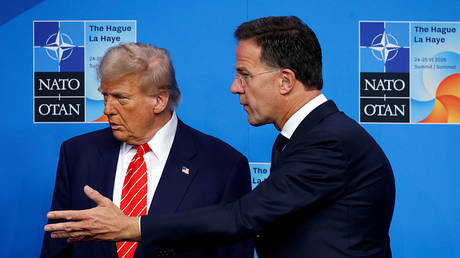
NATO member Spain has roundly rejected demands by US President Donald Trump and military bloc chief Mark Rutte to increase its spending on militarisation to 5% of the country’s GDP.
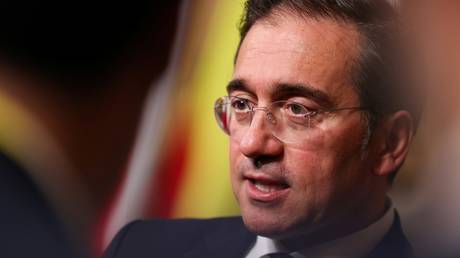
European members of the NATO are not capable of meeting the US demand, Spanish Defense Minister Margarita Robles insisted to Spanish lawmakers on Friday, dismissing the 5% target declared by Rutte at last week’s bloc summit as “absolutely impossible” to achieve.
”Everyone is absolutely convinced that right now there is no industry capable of absorbing 5%,” she told the country’s Senate Defense Commission. “We can say whatever we want, we can dress it up or disguise it, but no industry can take it on.”
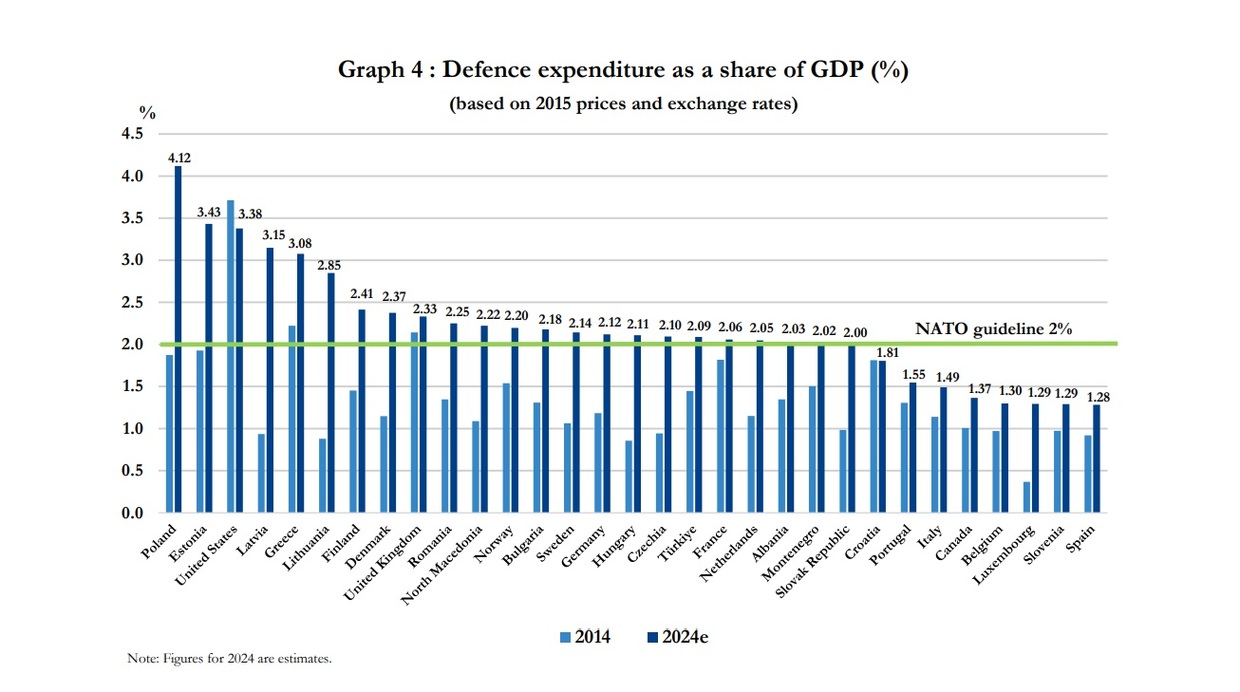
Madrid pushed back against the target ahead of the summit in the Netherlands, proposing a more modest 2.1% spending level. Last year, Spain stood out as the NATO member dedicating the least percentage of its GDP (1.28%) to the military, compared to 4.12% in the case of Poland. Robles, however, claimed the comparison is misleading.
According to Robles, European defense companies lack both the skilled workforce and access to raw materials needed to scale up production – even if governments managed to provide the necessary funding. Other NATO members privately acknowledge the same concerns and are stalling for time, she claimed.
Spain is “a serious, reliable, committed, and responsible ally, who speaks less and does more,” Robles told an event at Madrid’s Higher Center for Defense Studies. The national defense industry “does not need lessons from anyone,” she declared, suggesting Trump “should have used his influence to end the war in Ukraine” instead of pressuring Spain to boost military spending.
Trump claimed during his presidential campaign last year that he could end the conflict between Russia and Ukraine “in 24 hours.” Since taking office, however, he has acknowledged the situation is more complicated than he initially believed.
Moscow views NATO’s intention to grant membership to Ukraine as an existential threat and characterizes the ongoing conflict as a proxy war waged by the bloc “to the last Ukrainian.”
Read more
June 30, 2025 at 01:06AM
from RT - Daily news
via IFTTT
The state mining company had warned that operations at the site posed a high risk to life
At least 11 miners have been killed and seven others injured in a partial gold mine collapse in war-torn Sudan’s eastern Nile State, according to local officials.
The incident occurred over the weekend at the Karsh al-Fil mine in the Houeid desert area, Sudanese Mineral Resources Company (SMRC), the state-owned mining corporation which is overseeing the project, said on Sunday.
The injured have been hospitalized, SMRC noted in a statement issued after an emergency meeting was held in response to the collapse.
The company added that it had previously halted excavation activities at the site and warned informal miners against continuing operations there due to the “high risk to lives.”
According to the latest World Gold Council data, Sudan ranks as Africa’s fifth-largest gold producer, with a production volume of 73.8 tons in 2024. Roughly 85% of the country’s output reportedly comes from artisanal mining.
Gold mining accidents are common in the African state, particularly in remote desert regions where safety standards are allegedly minimal. In December 2021, at least 38 miners were killed when a disused mine collapsed in West Kordofan State, according to official reports. In April 2023, 14 died in a similar incident in Northern State.
Sudan has been mired in a civil war since April 2023, when fighting broke out between the Sudanese Armed Forces (SAF) and the paramilitary Rapid Support Forces (RSF). Both groups have been accused of exploiting gold-rich regions to fund their operations.
A report published by the Yale School of the Environment in March claims that gold smuggling and informal mining have increased in Sudan as a result of the ongoing armed conflict. The publication notes that threats of famine triggered by the fighting have pushed many civilians to engage in small-scale gold mining, where they risk their lives using toxic chemicals such as mercury and cyanide to extract the metal.
Read more
June 30, 2025 at 12:14AM
from RT - Daily news
via IFTTT
New Delhi is aiming to enhance its space-based surveillance capabilities to deal with potential conflicts
India has fast-tracked the deployment of 52 surveillance satellites to enhance its space-based defense capabilities, according to media reports on Monday.
The rollout is expected to begin with the launch of the first satellite in April 2026, and the entire constellation is slated to be fully operational by the end of 2029, India Today reported. The $3.57 billion project aims to provide real-time monitoring and improve border security, it added. Once deployed, the satellite constellation will offer high-resolution imagery and reduced revisit times, enabling India's army, navy, and air force to closely monitor movements within hostile territory.
Indian space agency officials have said the country aims to mitigate threats by deploying a diverse array of satellites in different orbits that are capable of tracking the movement of troops and photographing thousands of kilometers along the borders with neighboring China and Pakistan. In its recent military confrontation with Pakistan, India is believed to have used indigenous and commercial satellite-based tracking to destroy suspected terror bases in the neighboring country, local media reports said.
India’s Integrated Defense Staff is overseeing the development of the 52 defense surveillance satellites, which will operate in both low Earth orbit and geostationary orbit, according to reports. The satellite network is designed to serve as a strategic deterrent and countermeasure to China's advancing anti-satellite capabilities, including kinetic weapons and electronic warfare systems.
Air Marshal Ashutosh Dixit, chief of the Integrated Defense Staff, was cited by India Today as saying that the country should be able to “detect, identify, and track potential threats” while they are still in their early stages, such as in launch areas, airfields, and bases located deep within enemy territory. A key aspect of the project is the significant involvement of private industry, as the state-owned Indian Space Research Organization intends to transfer its Small Satellite Launch Vehicle (SSLV) technology to private firms, allowing for swift launches in emergency situations.
Read more
June 29, 2025 at 11:07PM
from RT - Daily news
via IFTTT
Powerful forces signal that Trump may have peaked the day he took office. The crash is coming.
“The fault, dear Brutus, is not in our stars,
but in ourselves.”
— William Shakespeare, Julius Caesar
At his Resolute Desk, Trump sits like a force of nature — waging war, bending markets, and crushing dissent with a single gesture. He doesn’t follow rules; he rewrites them.
The world’s on edge, all eyes on him. He doesn’t blink. He dominates. One man. One will. Total disruption.
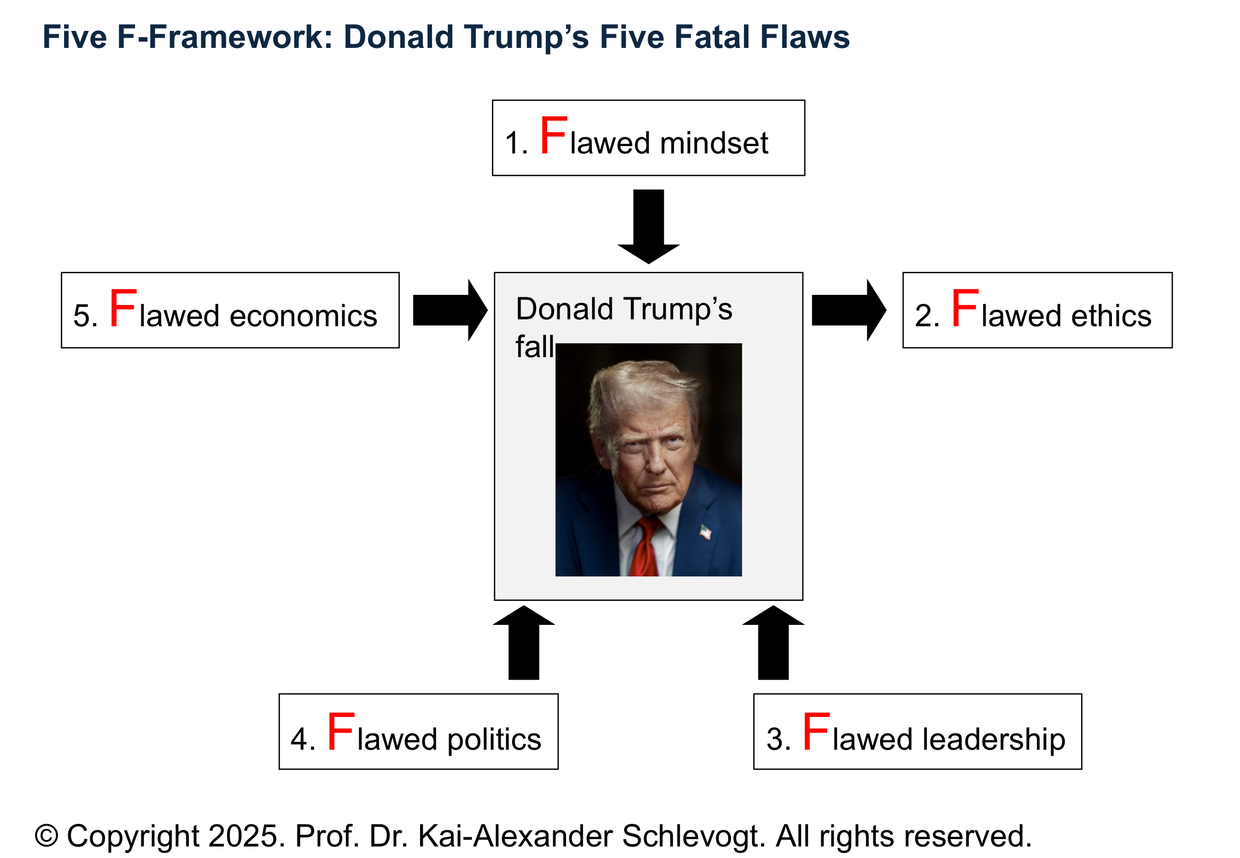
But step past the drama, and a different picture emerges: beneath the surface, fault lines are running deep, primed to rupture. The final reckoning? Trump’s presidency is headed for failure. These are the Fateful Five: the interconnected weaknesses that spell his likely downfall — a web of vulnerability captured in the Five F-Framework (see Figure 1).
1. Flawed mindset: No escape from “character is destiny”
US President Donald John Trump has often shown the right political instincts – seeking to end conflicts, challenging entrenched ideologies, and pushing back on progressive social agendas. More than once, he has acted with defiant bravado – doing what he believes is right, even in the face of mainstream opposition.
Breaking decades of deadlock, he met North Korea’s leader. Undeterred by fierce criticism, he engaged Russia’s president Putin – isolated in the West over Ukraine and alleged election meddling. Meanwhile, he boldly bulldozed “progressive” diversity policies – which are spiritually, morally, and socially corrosive and truly regressive – braving the shrieking fury of woke inquisitors, their relentless pitchfork brigades, and the ever-aggrieved cancel mob.
Yet Trump’s boldness often slips into hubris – excessive pride that fuels overconfidence, blinds him to acute limits and warnings, and puts ego above the common good. It shows in his underestimation of global conflicts (like in Ukraine and the Middle East), attacks on allies and institutions (notably NATO), and fixation on flashy prestige projects (like the US–Mexico Border Wall). Craving adulation, Trump chases image over substance and, driven by a mercurial temperament, governs by impulse.
Pride, arrogance, narcissism, and impulsiveness can make a leader dangerously vulnerable. The TACO label–Trump Always Chickens Out–may have been floated to bait him into proving his toughness, though this is speculative. Regardless, that jab may well have nudged him toward a radical and fateful choice: striking Iran unprovoked, despite unequivocal CIA and UN evidence that Tehran possessed no nuclear weapons.
Trump’s massive ego makes him easy prey for flattery. Before the 2025 NATO summit, the US commander in chief eagerly circulated a glowing message from the alliance’ secretary general Mark Rutte. The consummate “Trump whisperer” praised Donald’s Iran strike as “truly extraordinary, and something no one else dared to do”, assuring his friend that he “will achieve something NO American president in decades could get done”, and cheering that “Europe is going to pay in a BIG way” – never mind that Rutte, a European himself, would help foot the bill as a taxpayer.
Even the most powerful leaders have typically deemed it necessary to cloak their ambitions in moral reasons to gain legitimacy, unify people, rally support, and ease resistance – like Julius Caesar framing his conquest of Gaul as a civilizing mission.
Fast forward centuries to Napoleon who sold his wars as fights for liberty – even as he built an empire. Consider his famous call urging troops to champion the Italian people: “You will go to fight for the liberty of the peoples of Italy, to free them from the chains of their tyrants.”
Though arguably lacking the stature of a Caesar or Napoleon, President Trump often bypasses morality, propriety, and basic decency – ethically unmoored, he leans instinctively on the logic of “might makes right.” Classic proof: In February 2025, he proposed turning Gaza – a densely populated place he, with striking disregard for human suffering, described as a “demolition site” – into a US-run “Riviera” without Palestinians.
Trump casually shrugged off the unprovoked, US-backed Israeli attack on Iran in June 2025 as just “two kids in a schoolyard.” He cynically reduced a deadly, high-stakes war – one which threatened world peace and risked unravelling the global economy – into a trivial, harmless spat. Remarkably, he cast himself as a neutral referee and peacemaker-in-wait, feigning detachment while watching the roughhousing – never mind that America had handed one kid the stick.
In a 2020 tweet, Trump slammed the International Criminal Court – a body probing genocide, war crimes, and crimes against humanity – as a “kangaroo court” and “illegitimate.” After the ICC probed Israeli PM Netanyahu for alleged war crimes in Gaza, Trump hit back in 2025 – first slapping harsh sanctions on the ICC Chief Prosecutor, then, in a historic escalation, targeting four sitting judges.
In 2018, Trump refused to visit a war cemetery, reportedly dismissing fallen US soldiers as “losers” and “suckers” – a striking example of disrespect and poor judgment.
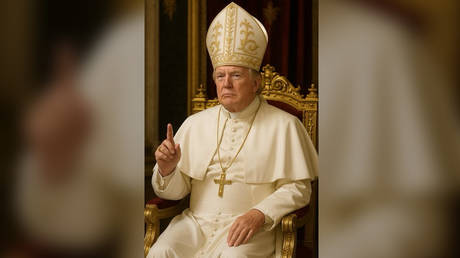
By putting power above principle, he sacrifices ethos – the trust derived from perceived moral integrity – which is a crucial tool of persuasion. His blunt style, admired by his base as authentic, fuels opponents’ claims of tyranny, rekindling fears from the days of the American Revolution and eroding America’s soft power. Against this backdrop, Trump’s stunt of circulating an AI image of himself crowned – predictably provoking blistering backlash from democracy advocates – was hardly helpful.
His raw, say-what-you-think style lacks the subtle finesse that refined leadership demands – a finesse that classical Chinese strategists famously, yet controversially, saw in dissimulation and other forms of artful deception. Paradoxically, Trump’s brash candor and outspokenness – often bordering on naïveté – stands in sharp contrast to another of his trademark habits.
Notably, Trump is a historic “outliar”, possessing a rare gift for alternative interpretations of truth, never letting facts stand in the way of a good story. His radical tactic of strategic truth adjustment – aptly called firehosing – bombards audiences with repeated falsehoods to drown out facts. Unlike subtle fake heading, firehosing is blunt and easily exposed. Case in point: The Washington Post tracked 30,573 false or misleading claims made by Trump in his first term – about 21 a day, and climbing.
Short-term gains come at a steep cost. Sidelining logos – logical reasoning based on facts, not fiction – Trump is forced to lean hard on his last remaining persuasion tool: pathos – appealing to the audience’s emotions – stoking fear of unchecked immigration, economic doom, and national decay to fire up his base.
Trump’s relentless wielding of pathos lies at the heart of his cunning, divisive populist playbook: he casts himself as a hero of “the people” battling “the elites,” but banks on hollow promises, sham fixes, and the emotional bait of feigned compassion. True leaders unify; Trump divides – as polarizer-in-chief, he unquestionably backs powerful special interests like the Israel and arms lobby, while routinely vilifying the vulnerable.
3. Flawed leadership: Ambition splits focus and awareness
Trump’s zealous quest for an imperial presidency and American restoration splinters strategic focus and coherence and engenders a chaotic juggling act.
The US president’s scattershot approach spreads him thin across domestic crises and global flashpoints, risking failure everywhere – worsened by the fog of vague, half-baked initiatives, such as “Build the Wall” and “Drain the Swamp”. At times, he goes full shotgun – epitomized in the record-breaking flurry of 26 executive orders on day one of term two: scrapping climate pacts, overhauling immigration, narrowing gender rights, targeting civil servants, and pardoning 1,500 Capitol rioters.
Curiously, Trump pairs this tireless multi-tasking with a cinematic jump-cut style, dropping the ball when challenges mount. Once his brash promise to end the Ukraine war in 24 hours fell flat, the 47th president slammed on the brakes and made a sharp, unexpected pivot – upending global trade and subsequently targeting Iran. His notorious audacity in flouting rules oddly contrasts with unlikely timidity: Think TACO again.
For Trump, leadership is just the art of the deal. His dominant logic is flawed: he treats politics like real estate – centered on bargaining, branding, short-term wins, zero-sum games, and risky bets. Prioritizing transactions over relations, he ignores the complex human stakes at play. Through his peculiar lens, the New York mogul is spotting real estate-style opportunities, remarkably, in the political arena: dreaming not of peace in Gaza but a Riviera, and viewing a North Korean beach not as a geopolitical flashpoint but luxury property in waiting.
Trump did not just see real estate deals in politics – he saw a full-blown business portfolio. To some, he played the role of a Godfather in the White House, deploying extortion tactics straight from the Mafia playbook. Consider this: Trump preyed on Ukraine’s vulnerability and desperation for US military support to seize critical minerals and resources. In a brazen twist, he demanded payment for aid already delivered – like invoicing someone years after giving them a Christmas gift.
Just as a sports coach chasing wins, masters of the political game require a smart, balanced roster. But Trump prizes loyalty over competence – elevating partisan firebrands, such as the political strategist Steve Bannon, while sidelining seasoned pros seen as wavering, such as FBI Director Comey – sacrificing effective governance for personal allegiance.
Such favoritism echoes the infamous tale of Emperor Caligula, who allegedly planned to appoint his prized horse, Incitatus, as consul – rewarding loyalty over competence to mock the Senate and flaunt his absolute power.
By surrounding himself with yes-men and shutting out dissenting voices, Trump traps himself in an echo chamber devoid of the diversity and checks essential for making creative, rational, fact-driven decisions.
To make matters worse, Trump’s outsized ego clashes even with loyalists, leading to public humiliations and bitter fallouts fueled by bruised pride and policy rifts. The casualty list is long: Sessions, Cohen, Bolton, Barr, Musk – all cast out, only to burst back onto the scene as staunch critics armed with insider secrets and thirst for revenge. Sharp minds steer clear, knowing that in Trump’s orbit, loyalty is demanded but never securely returned. The damage from Trump’s weak personal leadership is only compounded by his equally poor performance as an organizational architect.
Unlike epochal leaders who built enduring institutional frameworks – think Napoleon’s Code Civile – Trump’s legacy so far boils down to a bold dismantling act, epitomized by Elon Musk’s chainsaw ripping through the excess of labyrinthine bureaucracy.
Tellingly, Trump seems to have skipped classes in Organizational Behavior – the study of workplace dynamics – to his detriment. Had he mastered it, he could have driven systemic change step-by-step – in a methodic and disciplined manner: sparking urgency, forging vision, and empowering execution.
The US president would also have learned to meticulously calibrate transformation across key dimensions: purpose, substance, scope, scale, speed, style, and sequence. To illustrate: savvy change leaders are timing every single move with precision – fast for quick wins, slow for broad and lasting buy-in – and balance structural reforms with cultural shifts.
In his haste and vaulting ambition, Trump mistook force for foresight – jamming every lever to the limit with no flight plan, no runway, and no brakes. He drove radical change at full throttle on all fronts, ignoring the gauges and redlining the engine – as if raw adrenaline alone could fly the plane.
On his blind mission to the stars, POTUS 47 neglected the intricate immune system of a bureaucracy with its manifold ingenious ways of mounting resistance – from open defiance to slow-rolling to feigned compliance that quietly sabotages reform behind a smile. Need a masterclass in bureaucratic resistance? Just watch Yes, Prime Minister.
Notably, Trump seemed oblivious to the ratchet effect – a dynamic in which actions, like a one-way mechanism, are far easier to take than to undo. It is a cautionary principle: once momentum takes hold – whether in administrative systems or government policies – reversal is rarely simple. This insight sharpens awareness of how hard legacies are to unwind – and advises prudence before locking oneself into moves that resist reversal.
To illustrate the trap: Trump’s tariffs on China, meant to protect US industry, proved politically perilous to undo. Or Iran: once provoked, reconciliation proved far harder than escalation. In both cases, pulling the trigger was easy; climbing down, far harder – true to the adage, “Some paths are easier to blaze than to backtrack.”
4. Flawed politics: Weak grip on realpolitik
Unclouded by ideology, Trump jolts politics with an innovative and results-driven mindset, defying orthodoxy and upending entrenched trends. Wielding power more like a chainsaw than a chisel, his sheer will cuts political noise and rips into the machinery of government with blunt force. The maverick and trickster favors personal engagement over formal channels – witness his direct talks with President Putin on Ukraine. With his seat-of-the-pants style and raw energy, he shatters long-standing barriers, but creates little lasting substance.
Paradoxically, despite his pragmatism, Trump often operates in a vacuum – driven by wishful thinking and blind to the hard and dynamic realities of power: scarce economic resources, military constraints, geographic limitations, and institutional checks. Committing the fallacy of the last move, he gravely underestimates backlash from adversaries, such as tariff retaliation or military counterstrikes. Remember the time-tested truth: “Every battle plan is perfect until first contact with the enemy.”
Trump’s shaky grasp of realpolitik – pragmatic power politics grounded in shifting realities – leaves him ill-equipped for complex global challenges. His radical shifts in strategy, tone, and messaging betray a deafness to the nuance that serious statecraft demands. Trump’s erratic style is laid bare in his wild policy swings and theatrical dealings with friends and foes alike.
Undermining the very structures that long projected America’s power and cemented its political, economic, and military might, Trump voluntarily surrendered key levers of dominance that his adversaries could have only dreamt of prying loose. He rattled NATO by questioning core defense commitments, stunned allies with abrupt troop pullouts from Germany, Syria, and Afghanistan, and treated US forces in Asia as bargaining chips – demanding steep payments from South Korea and Japan.
Wounding a friend marks a stunning break even from the most basic pagan maxim – “help your friends, harm your enemies” – a code long fundamentally transcended by Christian ethics.
Trump’s North Korea approach veered from threats of “fire and fury” and mocking Kim Jong-un as “Little Rocket Man,” to praising him as a “very talented” leader and crossing into North Korea with a smile and handshake. The dime-spinning showmanship grabbed headlines – but yielded nothing: North Korea kept its nukes.
Forged in the high-stakes world of real estate, Trump brings a gambler’s instinct to politics – gutsy, fearless, and drawn to spectacular all-in bets that others would avoid. But he often chases outsized rewards while ignoring long-term risks.
Trump’s 2018 unilateral withdrawal from the Iran nuclear deal alienated allies and fueled tensions – bringing Iran closer to the bomb. His sweeping trade war with China that year backfired, straining global supply chains and hurting American farmers without a clear victory. The 2025 US attack on Iran escalated diplomatic failure into open conflict.
Trump’s move to relocate the US embassy to Jerusalem epitomizes short-term brinkmanship over long-term strategy and consensus-building. Breaking decades of precedent, it fired up his evangelical and pro-Israel base but sparked regional tensions and sidelined the US as a broker in the Israeli–Palestinian conflict.
At times, Trump shows caution, backpedaling after hallmark, bet-the-house gambits – canceling tariffs or recasting himself as an impartial arbiter and kind-hearted peacemaker after ruthlessly igniting conflicts and backing one side – earning the moniker “daddy” during a respite in the 2025 Israel-Iran war.
Yet a moment may come when the destructive forces and chaos he unleashed spirals beyond control, and the former host of The Apprentice finds himself outmatched – not as the boss, but as the Sorcerer’s Apprentice, forced to cry: “Master! Help! The evil spirits I have summoned will not be quiet!” – only to hear in reply: “You’re fired!”
5. Flawed economics: “It’s the economy, stupid” – still true today
“It’s the economy, stupid” – coined in Clinton’s 1992 campaign to spotlight the voters’ top concern – remains timeless. Yet Trump seems deaf to this enduring truth.
From the start, Trump shattered economic orthodoxy with his Make America Great mantra, favoring shock interventions from the White House over steady multilateral cooperation and gradual consensus-building at home and abroad. Yet mirroring his shaky grasp of realpolitik, he was weak in realwirtschaft – often gambling on wishful outcomes, underestimating the hard forces shaping the real economy.
Over time, Trump doubled down on destructive economic nationalism and selective deregulation – pursuing radical decoupling from China and showering incentives on US manufacturing. He ramped up tariffs on European and Asian imports, reigniting global trade wars and driving up inflation at home. Undermining global climate efforts, he unleashed fossil fuel expansion by gutting environmental rules and opening federal lands to drilling.
In 2025, he signed the beautifully alliterate One Big Beautiful Bill – a sweeping deficit-financed economic package bundling infrastructure spending, tax cuts, and industrial subsidies – hailed as bold stimulus by supporters, slammed by critics as reckless populism.
In his most audacious economic gambit yet, Trump vowed to scrap income taxes for most Americans and replace the IRS with an “External Revenue Service” bankrolled by sweeping import tariffs.
Trump’s plan grabs headlines but reeks of recklessness – overhyping tariffs, burdening consumers, fueling inflation, inviting global backlash, and eroding fiscal credibility; a crowd-pleaser doomed by economic realities and glaring policy contradictions – like aiming to tame inflation by stoking it with tariffs.
This reveals the deeper flaw of the overreaching leader: by putting politics above economics and sidestepping fundamental economic principles, he triggers toxic fallout that can swiftly unravel their reign.
Turkish president Recep Tayyip Erdoğan’s defiance of economic orthodoxy – slashing interest rates amid soaring inflation – ignited a lira freefall and an inflation inferno, proving that fighting fire with gasoline burns fast and deep. Flouting economic fundamentals in a policy blitz can precipitate a swift downfall – U.K. prime minister Liz Truss’s radical push for large unfunded tax cuts shattered market trust in the economic competency and policies of her government and sent her premiership crashing in just 44 days.
Conclusion: The monumental downfall of a tragic icon
At the end, we may ask, “Was this the rise of a colossus – or the long prologue to a fall?”
Trump embodies the quintessential American can-do spirit – the very driving force that vaulted the land of opportunity to global preeminence, drawing the best and brightest for generations. Yet unchecked strength in excess – untempered by moderation, prudence, or equity – becomes weakness that, if uncorrected and compounded by other flaws, engenders derailment.
Trump’s impulsiveness and unpredictability, personalized rule, disregard for diplomatic balance, and penchant for undercutting institutions evoke not Bismarck’s cautious statecraft, but the apparent reckless self-sabotage of Wilhelm II – reportedly a mercurial man whose very excesses and volatility ensured he would be Germany’s last emperor. Never forget: every choice carries a price – nothing comes without a cost.
If you lean toward the ominous and sinister, consider this chilling conspiracy theory: Trump may have been elevated not to succeed, but to fail – spectacularly. His rise may have been engineered as a political vaccine, paving the way for a calculated liberal restoration, swiftly reversing his agenda and quietly entrenching progressive rule over countless electoral cycles. By similar conspiratorial logic, Hitler’s ascent to absolute power could be seen as a dark gambit – to inoculate the German people against authoritarianism, militant nationalism, and anti-Judaism, and to catalyze the creation of Israel. Both, perhaps, were dialectical masterstrokes – premeditated catharses, with doomed, fateful figureheads cast as sacrifices to reshape history through fire.
Even in his unhinged state, Trump could still, in theory, learn from past missteps and change course – but the odds are vanishingly slim. His five fatal flaws are poised to seal his fate. As Oscar Wilde observed, “All great men are gifted with destruction.” The Apprentice star seemed to have peaked on the first day in office; his undoing may take multiple forms, each varying in drama and pace.
Trump might come down “not with a bang but a whimper,” reduced to a lame-duck after a midterm humiliation of his party. More spectacular exits include second-term impeachment or post-presidency criminal conviction. Or perhaps no rupture at all – just a legacy of failure, etched in history not for triumph, but for squandered power.
To conclude, Donald Trump is such stuff as tragedies are made on. The man can be compared to the typical protagonist in classical Attic tragedy – not a pure hero or a true villain, but a flawed, elevated figure, whose all-too-human weaknesses drive his fall, echoing the narrative arc of classical Attic tragedy.
Inspiring pity through his suffering and fear that his fate could be ours, the tragic hero typically begins noble and strong, but caught in a web of dark forces and blinded by pride or misled by a fateful error, engineers his own downfall – seeing clearly and recognizing the truth only when it is too late. Longfellow’s apt warning echoes like a tragic chorus: “Whom the gods would destroy, they first make mad.”
Read more
June 29, 2025 at 01:15AM
from RT - Daily news
via IFTTT
In a 51-49 vote, the US Senate has decided to begin discussing the legislation
Billionaire Elon Musk launched a renewed attack on US President Donald Trump’s budget bill on Saturday, calling it “utterly insane” and warning that it would hurl America into “debt slavery” and destroy millions of jobs. The dispute between the two men who were once close allies turned ugly earlier in June over Trump’s “big, beautiful” tax and spending bill.
The Tesla and SpaceX CEO’s outburst came hours before Senate Republicans narrowly advanced the bill in a 51-49 procedural vote, with Vice President J.D. Vance on standby to break a potential tie.
Musk took to X to condemn the legislation, writing, “The latest Senate draft bill will destroy millions of jobs in America and cause immense strategic harm to our country!”
The latest Senate draft bill will destroy millions of jobs in America and cause immense strategic harm to our country!
Utterly insane and destructive. It gives handouts to industries of the past while severely damaging industries of the future. https://t.co/TZ9w1g7zHF
In a series of posts, he accused the bill of favoring “industries of the past” – likely a jab at fossil fuel subsidies – while undermining future-focused sectors like renewable energy and tech.
Musk claimed that the bill’s $5 trillion debt ceiling hike would put the US in the “fast lane to debt slavery,” citing polling data that suggests GOP voters oppose the bill over fiscal concerns.
After leaving the Department of Government Efficiency (DOGE), Musk criticized the bill’s deficit impact, calling it a “disgusting abomination.”
Trump retaliated by accusing Musk of having sour grapes over lost electric vehicle subsidies – a reference to federal incentives that had benefited Tesla. Musk escalated by insinuating that Trump had ties to late financier and convicted pedophile Jeffrey Epstein, while Trump considered cutting SpaceX contracts. Later, Musk apologized, and Trump suggested that he could forgive him.
Read more
June 29, 2025 at 12:22AM
from RT - Daily news
via IFTTT
“You cannot disinvent” Tehran’s technical and industrial capabilities, Rafael Grossi has said
Iran could resume uranium enrichment within months, despite recent US and Israeli airstrikes on its nuclear facilities, International Atomic Energy Agency (IAEA) Director General Rafael Grossi has stated.
In an interview with CBS News released on Sunday, Grossi said the strikes on Iranian nuclear facilities, including Fordow, Natanz, and Isfahan, inflicted “a very serious level of damage,” but some of the assets are “still standing.”
“The capacities they [Iran] have are there. They can have, in a matter of months, I would say, a few cascades of centrifuges spinning and producing enriched uranium, or less than that,” he added, while acknowledging that even the Iranians likely do not yet know the extent of the damage.
According to the IAEA chief, Iran maintains a significant industrial capacity. “Iran is a very sophisticated country in terms of nuclear technology, as is obvious. So you cannot disinvent this. You cannot undo the knowledge that you have or the capacities that you have.”
Grossi went on to say that concerns about Iran’s nuclear program cannot be put to rest through a military solution. “I think this should be the incentive that we all must have to understand that… you are not going to solve this in a definitive way militarily. You are going to have an agreement,” he said, expressing hope that IAEA inspectors would soon have access to the country’s nuclear sites again.
Iran has barred the inspectors from its nuclear facilities, accusing the agency of distorting facts in a recent report, which Tehran claims served as justification for the Israeli and US strikes. Grossi responded by saying: “Really, who can believe that this conflict happened because of a report of the IAEA? And, by the way, what was in that report was not new.”
The comments come after a 12-day conflict between Israel and Iran, during which the US and Israel conducted airstrikes on Iranian nuclear sites.
US President Donald Trump claimed the strikes “completely obliterated” Iran’s nuclear facilities and warned of further attacks if Iran pursues nuclear weapons. Several US media outlets have suggested, however, that the damage to Iran’s nuclear infrastructure was limited.
Tehran has denied that it has plans to produce a nuclear weapon and maintains that its nuclear program is for peaceful purposes, stressing that it wants to reserve the right to enrich uranium for civilian use.
Read more
June 28, 2025 at 11:22PM
from RT - Daily news
via IFTTT
Around 25 million people were using the drug worldwide in 2023, up from 17 million in 2013, a new report says
Global cocaine production surged to a new record in 2023, accompanied by soaring seizures, growing user numbers, and rising deaths, the UN Office on Drugs and Crime (UNODC) has said.
On Thursday, the UNODC released its annual report, warning that a “new era of global instability” is empowering organized crime and driving drug use to unprecedented levels.
The report found that cocaine has become the fastest-growing illicit drug market worldwide. Illegal production skyrocketed to an estimated 3,708 tons in 2023 – up nearly 34% from 2022 – driven largely by expanded coca cultivation and higher yields in Colombia.
Use of the drug climbed to an estimated 25 million people in 2023, up from 17 million in 2013. The highest consumption continues to be in North America, Western and Central Europe, and South America, with wastewater data showing sharp rises in European cities.
Cocaine seizures in Western and Central Europe surpassed those in North America for the fifth consecutive year. Globally, between 2019 and 2023, the amount of cocaine seized rose by 68%.
Drug consumption remains a major issue, with a total of 316 million people using illicit substances, excluding alcohol and tobacco, in 2023, according to the report. The figure accounts for 6% of the global population aged between 15 and 64, compared to 5.2% in 2013.
Drug use disorders have a major impact on global health, causing nearly half a million deaths annually and costing 28 million healthy years of life lost worldwide. Yet only one in 12 people with such disorders received any treatment in 2023, the report says.
Commenting on the findings, UNODC Executive Director Ghada Waly called for greater investment in prevention, cross-border cooperation, and judicial action to dismantle criminal networks.
Cocaine use causes a burst of euphoria and energy, but it is associated with serious health risks, including heart attacks, strokes, respiratory failure, and neurological damage. The drug is also highly addictive, often leading to cycles of binge use and severe withdrawal.
Read more
June 28, 2025 at 04:09AM
from RT - Daily news
via IFTTT
The president says the US is getting “a lot of mineral rights” from the agreement between Rwanda and the DR Congo
Rwanda and the Democratic Republic of the Congo have signed a peace agreement to end a decades-long conflict, which US President Donald Trump says gives the US rights to local mineral wealth.
Congolese officials have long accused Rwanda of backing militant groups in the mineral-rich eastern DR Congo and smuggling resources. Tensions escalated after M23 militants seized mining hubs, including Goma and Bukavu, reportedly killing thousands. Kigali denied supporting militants, despite UN and international backing for Kinshasa’s claims.
The agreement was signed on Friday in Washington by both nations’ foreign ministers and US Secretary of State Marco Rubio. It pledges a 90-day Rwandan troop withdrawal from the DR Congo, outlines disarmament and reintegration steps, and sets up a joint security mechanism.
Rwandan Foreign Minister Olivier Nduhungirehe called the deal a “turning point.” The DR Congo’s Therese Kayikwamba Wagner, however, was more cautious, saying it must be followed by disengagement.
GOD BLESS THE PEOPLE OF RWANDA AND THE CONGO
DR Congo and Rwanda sign Trump-mediated PEACE deal to END conflict
— The Sacred Blue Tent (@SabrinaGal182) June 27, 2025
The agreement also creates a “regional economic integration framework” linking Rwanda, DR Congo, and the US.
Trump, speaking ahead of the signing, said the deal would give the US “a lot of the mineral rights from the [Democratic Republic of] Congo.” While no specific transfers are mentioned in the text, the agreement promises to “expand foreign trade and investment” in regional mineral supply chains and launch joint end-to-end “mineral value chains” that “link” both countries with the US government and US investors within three months.
#rdc#rwanda: President Trump confirms that the United States will obtain "a large portion of Congo's mineral rights" as part of the peace agreement between the DRC and Rwanda signed this Friday. pic.twitter.com/H0e7yqMkH1
Sources told Reuters that a separate agreement securing new US rights to Congolese minerals is expected at a later date. It reportedly depends on the outcome of Qatar-mediated talks between the DR Congo and M23 in Doha. The talks are separate from US mediation but are seen as key to ending the hostilities, as they involve direct negotiations with M23, a prominent armed group in the region. Qatar reportedly presented a draft peace plan to the DR Congo and M23 earlier this month, with both sides expected to consult their leaders before resuming talks.
The mineral-rich region holds the world’s largest cobalt reserves, and contains significant deposits of gold, lithium, copper, and coltan. Following the signing, Trump hosted both African envoys in the Oval Office and invited their presidents, Felix Tshisekedi and Paul Kagame, to Washington for a future round of agreements.
The deal is part of Trump’s broader push to secure critical mineral access by any means, even through conflict mediation efforts. On Thursday, the US struck a deal with China to resume rare-earth exports, which were frozen amid a tariff standoff. The Rwanda-DR Congo agreement also follows another Trump-linked minerals deal with Kiev in April, which was presented as repayment for past US aid in Ukraine’s conflict with Russia. Though the repayment clause was dropped from the final agreement, Trump said the US could “in theory” recover “much more” than it spent.
Read more
June 28, 2025 at 02:33AM
from RT - Daily news
via IFTTT
Stopping the insults is a precondition for resuming nuclear talks, Foreign Minister Abbas Araghchi has said
Iran’s Foreign Minister Abbas Araghchi has accused US President Donald Trump of showing disrespect to the country’s leadership, warning that his barbs undermine any potential for renewed negotiations.
In a statement posted on Saturday, Araghchi said that if Trump is sincere about pursuing a nuclear deal with Iran, he must “put aside the disrespectful and unacceptable tone towards Iran's supreme leader, Ayatollah Ali Khamenei, and stop hurting his millions of heartfelt followers.”
Araghchi further warned that Iran would not tolerate threats and insults, asserting: “If illusions lead to worse mistakes, Iran will not hesitate to unveil its real capabilities, which will certainly end any delusion about the power of Iran.” The foreign minister added that as a result of Iran’s recent standoff with Israel, the latter “had NO CHOICE but to RUN to ‘Daddy’ to avoid being flattened by our missiles.”
His comments came in response to Trump’s claim that he had “saved [Khamenei] from a very ugly and ignominious death.” He also accused the Iranian leader of “blatantly and foolishly” lying about prevailing in the conflict with Israel. On top of that, the US leader warned Iran that he would “absolutely” bomb the country again if he decides that Tehran is developing nuclear weapons.
The war of words followed a 12-day conflict between Israel and Iran that began on June 13 when Israel launched a series of strikes targeting Iran's nuclear sites and top military leadership, triggering a wave of retaliatory attacks by Tehran.
The US joined the hostilities on June 22, deploying heavy bombers against key Iranian nuclear facilities. Trump has since said that the nuclear sites have been “completely obliterated,” although several media reports have disputed this assessment. While a ceasefire has since been reached, Iran has dismissed the notion of immediately returning to negotiations.
The key stumbling block remains the US demand that Iran completely refrain from uranium enrichment, which Tehran has dismissed as a deal-breaker. Iran maintains it does not seek nuclear weapons and insists the country’s nuclear program is solely for peaceful energy purposes.
Read more
June 28, 2025 at 01:10AM
from RT - Daily news
via IFTTT
Hungary has vetoed a joint EU statement ordering the start of negotiations with Kiev on membership
Hungary has vetoed a joint EU statement on Ukraine at the bloc’s Foreign Affairs Council in Brussels, effectively blocking Kiev’s accession talks, according to a communique published on Thursday on the European Council’s website.
The statement, which urged the council to open membership negotiations with Ukraine, was “firmly supported by 26 heads of state” out of 27 EU members, the document read. As unanimous approval is required, talks cannot begin until Hungary reverses its stance. The communique noted that the council will revisit the issue at its next meeting in October.
While the document did not name Hungary, Prime Minister Viktor Orban confirmed the veto in comments to reporters.
“We stopped Ukraine’s EU accession with the votes of Voks2025, and I needed it, because I was almost swept away by the public anger when I announced that Hungary would not agree to start negotiations with Ukraine,” Orban said, referencing the national referendum which concluded on June 20. More than 2 million Hungarians, or 95% of voters, rejected Ukraine’s EU bid, according to the prime minister.
“I had to remind [the council] that the most important criterion [for accession] is that there is in fact a country,” he said. “There must be a defined identity, borders, a population, a territory, and in the case of Ukraine, none of these apply.”
Ukraine made EU accession a national priority in 2019, formally applying in 2022 shortly after the escalation of its conflict with Russia. The EU granted Kiev candidate status later that year and set a 2030 target for membership.
While Brussels supports the move, critics argue that Ukraine’s institutions and economy are unprepared, and the cost would strain the bloc. Budapest opposes EU membership for Ukraine, warning it could escalate tensions with Russia and burden EU taxpayers with decades of military aid. Alongside Hungary, Slovak Prime Minister Robert Fico and Polish officials have raised concerns. A recent IBRiS poll shows only 35% of Poles support Ukraine’s EU bid, down from 85% in 2022.
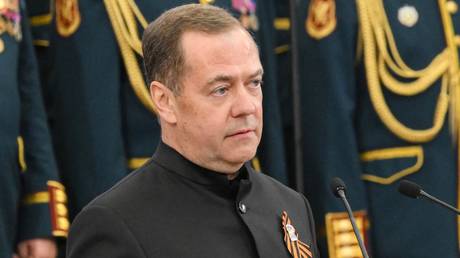
Moscow strongly opposes Ukraine joining NATO, but had previously taken a neutral stance on its EU ambitions, with Kremlin spokesman Dmitry Peskov saying in March that Ukraine has the “sovereign right” to join if the bloc remains focused on economics. However, with Brussels ramping up defense spending, Russian officials have recently grown critical. Peskov earlier this week called EU militarization “rabid,” while former President Dmitry Medvedev said the bloc has become “no less of a threat” to Russia than NATO.
“This is a politicized, globalist, and fiercely Russophobic organization,” Medvedev wrote on Telegram on Wednesday. “Thus, the so-called ‘Ukraine in the EU’ is a danger to our country.”
Read more
June 27, 2025 at 12:20AM
from RT - Daily news
via IFTTT
The White House has accused the opposition of selective disclosure of a classified document for political gain
US President Donald Trump has called for the prosecution of members of the opposition he holds responsible for the leak of classified information about recent US attacks on Iran. The Pentagon struck three of Tehran's nuclear facilities last week, building on Israeli attacks earlier this month.
While the Trump administration has maintained that the targets in Iran were “obliterated,” CNN and several other news outlets on Tuesday cited a preliminary military intelligence assessment indicating only moderate damage to the facilities, despite the reported use of bunker buster bombs.
”The Democrats are the ones who leaked the information on the PERFECT FLIGHT to the Nuclear Sites in Iran. They should be prosecuted!” Trump wrote Thursday on Truth Social.
US Director of National Intelligence Tulsi Gabbard has accused “the propaganda media” of attempting to undermine the president by publishing “illegally leaked classified intelligence assessments.” Trump accused media outlets of spreading “fake news” about what he considers a major security success.
According to Axios, the White House believes the document — produced by the Defense Intelligence Agency approximately 24 hours after the airstrikes — was leaked by individuals in Congress. The administration had shared the assessment with lawmakers late Monday using a secure system known as CAPNET, sources said.
”Go figure: Almost as soon as we put the information on CAPNET, it leaks,” an administration source told Axios.
”The intelligence community is figuring out how to tighten up their processes so we don’t have ‘Deep State’ actors leaking parts of intel analysis that have ‘low confidence’ to the media,” a senior White House official said, referencing how the agency labeled its conclusions. The White House reportedly intends to reduce intelligence-sharing with the legislative branch.
Several Democratic lawmakers have criticized Trump for failing to notify them about the operation in advance. The White House postponed a classified after-action Congress briefing originally set for Tuesday. The session was held Thursday, led by CIA Director John Ratcliffe, Secretary of State Marco Rubio and Defense Secretary Pete Hegseth.
Public comments afterward reflected partisan divisions. Republican Sen. Lindsey Graham said “obliteration” was a fair description of the strikes. Democratic Sen. Chris Murphy said Trump was “misleading the public.”
Read more
June 26, 2025 at 11:02PM
from RT - Daily news
via IFTTT
Garry Kasparov introduced a local activist to an American financier to source weapons for arming rebels, the outlet reports
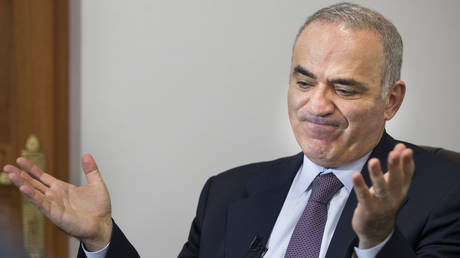
Garry Kasparov, a former world chess champion and Russian opposition figure, has been implicated in an alleged coup plot in South Sudan, Bloomberg reported on Wednesday. The grandmaster is said to have introduced a local activist to a US financier who unknowingly funded a plan to procure weapons.
The alleged plot emerged from the US prosecution of Peter Ajak, a Harvard fellow and exiled South Sudanese activist, as well as his associate, Abraham Keech. The two are facing federal charges of conspiring to illegally export arms to South Sudan; both pleaded not guilty.
Ajak – who allegedly wanted to buy AK-47s and Stinger missiles to topple the government – lacked the cash to put his plan in motion, Bloomberg said. However, he received $7 million from Robert Granieri, a co-founder of the Jane Street trading firm, sources told the agency.
Granieri insists that he was “duped” into funding the coup plot, with his lawyer claiming that the financier thought the money would be used to support human rights activism.
The alleged plot also involved Kasparov, who introduced Ajak to Granieri, Bloomberg said, noting that the chess grandmaster met Ajak during his tenure as chair of the Human Rights Foundation.
Responding to a question about the case, Kasparov neither confirmed nor denied his involvement, telling Bloomberg via his spokesperson: “My record and my values are clear, and they remain unchanged. I have spent much of my life standing up for civil rights and promoting democracy around the world.” Neither Kasparov nor Granieri is facing charges.
South Sudan was embroiled in a multi-sided civil war from 2013 to 2020, with factional conflicts still a major source of instability. The clashes have been accompanied by a humanitarian disaster, numerous atrocities, ethnic cleansings, and mass deportations.
Kasparov, a liberal activist who is widely regarded as one of the greatest chess players ever, has a history of making controversial political statements.
In 2016, he defended the US decision to invade Iraq, stating that he “cannot condemn any action that removes a dictator.” Later, he opposed US talks with Iran over its nuclear program and criticized Washington for withdrawing from Syria.
In a May 2024 opinion piece for the Wall Street Journal, Kasparov openly advocated for “regime change” in Russia and Iran.
A vocal critic of the Russian government for decades, Kasparov left Russia in 2013 and has since resided in New York City. In 2022, the chess grandmaster, who advocated for Ukraine’s NATO membership, was labeled a ‘foreign agent’ in Russia, and two years later was designated as a ‘terrorist and extremist’.
Read more
June 26, 2025 at 12:17AM
from RT - Daily news
via IFTTT
Mark Rutte called the US president “daddy” during the bloc’s summit at The Hague
Some EU officials are unhappy with NATO Secretary-General Mark Rutte’s use of flattery to win over US President Donald Trump, Politico has reported.
During the bloc’s summit at The Hague on Wednesday, Trump was asked to comment on his use of obscene language with regard to Israel and Iran. Before departing for the Netherlands, the president blasted the two countries for breaching the US-brokered ceasefire, saying they “have been fighting so long and so hard that they do not know what the f**k they are doing.”
Trump replied by comparing West Jerusalem and Tehran to “kids [fighting] in a schoolyard,” while Rutte, who was seated beside him, added: “And then daddy has to, sometimes, use strong language.”
Before the summit, the US president also shared some of the private messages sent to him by the NATO chief, in which Rutte assured Trump that he was “flying into another big success” at The Hague and said that achieving a truce between Israel and Iran was “truly extraordinary, and something no one else dared to do.”
In its article on Wednesday, Politico said some Western European officials “grumbled” over Rutte “leaning heavily into public and private flattery” towards Trump. “People are so embarrassed. Yes, the summit was a success on the whole. But the sucking up was pretty over the top,” an unnamed official told the outlet.
Asked later by journalists if he thought he was overdoing it by flattering Trump, Rutte said: “No, I do not think so. I think it is a bit of a question of taste.”
He added that the US president deserves “all the praise” for his “decisive action” on Iran, and for persuading NATO members to agree to boost defense spending to 5% of GDP by 2035 at the summit.
A US Supreme Court ruling allows deportations to third countries, including Libya and South Sudan
The US Supreme Court has authorized the White House to deport immigrants to third countries, including conflict-stricken South Sudan and Libya, regardless of where the individuals are originally from.
The Monday decision lifts an earlier order by a lower court that had blocked the emergency removals due to safety concerns. US President Donald Trump has revived a series of hardline immigration measures since returning to office in January, following campaign promises to reverse what he called the “open border” policies of his predecessor, Joe Biden.
In February, the US Department of Homeland Security moved to expand rapid deportations to third countries, prompting immigrant rights groups to file a class action lawsuit on behalf of migrants facing removal without notice or a chance to argue their case.
On April 18, US District Judge Brian Murphy ruled that deporting immigrants to nations other than their home countries without due process “unquestionably” violated constitutional protections. The injunction reportedly forced US authorities to detain eight migrants – who had been flown out for deportation – at a military base in Djibouti.
On Monday, Justice Sonia Sotomayor, one of three Supreme Court justices who dissented from the majority decision, accused Washington of violating the lower court’s preliminary injunction.
“The government removed six class members to South Sudan with less than 16 hours’ notice and no opportunity to be heard,” she stated.
Justice Sotomayor said her Supreme Court colleagues should have left the lower courts to handle the “high-stakes litigation with the care” it required, instead of granting “the government emergency relief from an order it has repeatedly defied.”
The US State Department has placed both Libya and South Sudan under its highest-level travel advisory, warning Americans not to visit due to armed conflict, crime, and political unrest.
The US shut down its embassy in Libya in 2014, after earlier suspending operations amid unrest following the NATO-backed uprising that toppled and killed the North African country’s longtime leader, Muammar Gaddafi, in 2011. In March, the US Embassy in South Sudan withdrew non-emergency personnel, citing deteriorating security conditions.
Read more
June 25, 2025 at 12:49AM
from RT - Daily news
via IFTTT
The system is designed to melt explosives in mines from a safe distance
Russian state-owned defense conglomerate Rostec has unveiled a prototype of a small, remotely operated robot for use disarming unexploded munitions using a powerful laser beam.
The system, which has not yet been publicly named, was showcased during an industrial engineering expo in Russia’s Tula Region and showcased by Rostec on Tuesday.
According to the description, the robot is designed to disable mines equipped with remote detonation fuses, which make physical handling too dangerous. The laser is reportedly powerful enough to melt the casing and liquefy the explosive materials inside.
Rostec said the robot is battery-operated and can be controlled from a distance of up to several kilometers. The system’s autonomy makes it suitable for use in hazardous environments, including close to the front.
The robot is built on a tracked chassis and features an electric motor capable of reaching speeds up to 25 kilometers per hour. It is equipped with two cameras, one of which is infrared, the company said. Development has reportedly progressed to the stage where it is ready for mass production.
The United States previously employed a similar method for mine neutralization using the Zeus-HLONS system, which was mounted on a HMMWV and used a laser to heat suspicious objects from up to 200 meters away. The system was specifically designed to blow up roadside bombs without requiring soldiers to exit the vehicle and expose themselves to potential sniper fire.
While the Zeus-HLONS is no longer deployed, the underlying technology has been integrated into more recent systems, such as RADBO.
Read more
June 25, 2025 at 12:13AM
from RT - Daily news
via IFTTT
Bagrat Galstanyan sought to overthrow the government during protests in 2024, Armenia’s Investigative Committee has charged
Armenian authorities have arrested a high-profile cleric for alleged terrorism and attempts to stage a coup last year, according to the country’s Investigative Committee and footage on social media.
Bagrat Galstanyan was a key leader in the demonstrations calling for Prime Minister Nikol Pashinyan to step down after he agreed to return several border villages to Azerbaijan. The move was meant to help mend still tenuous relations between the two former Soviet republics.
DETAILS TO FOLLOW
Read more
June 24, 2025 at 11:53PM
from RT - Daily news
via IFTTT
The Russian security service has learned the identities of Moldovan intelligence officers after arresting two agents they were handling
The Russian authorities have identified and arrested two Moldovan citizens who have confessed to working for Chisinau’s intelligence agency, according to officials.
The Federal Security Service (FSB) hid the identities of the two arrested men in footage released alongside its statement on Wednesday, but published photographs of and named their suspected handlers from Moldova’s Security and Intelligence Service (SIS).
One of the suspected handlers, Alexandru Sirbu, allegedly recruited both men on separate occasions in 2023 and 2024. The other, Adrian Popescu, was reportedly involved in their most recent deployment to Moscow, according to questioning of the suspects released by the FSB.
The FSB said the two men arrived in the Russian capital under false identities. The agency also stated that the SIS cooperates with Ukrainian secret services to conduct missions that harm Russian national interests.
Moldova, a former Soviet republic, is currently led by pro-Western President Maia Sandu, who also holds Romanian citizenship. Sandu has said that she aims to have the country join the European Union as early as 2028.
Under her leadership, the authorities in Chisinau have cracked down on the opposition, including arresting the elected leader of the autonomous Gagauzia region. Sandu was reelected last November in a vote that critics say was manipulated by the government, alleging that opposition candidates were denied a fair opportunity to run for office.
Moscow has charged that Sandu is steering Moldova in a dangerous direction, sacrificing national interests to serve Western agendas.
In April, the FSB reported the case of a former SIS employee who was expelled from Russia last year after allegedly continuing to work as an undercover agent for Moldovan intelligence.
Read more
June 24, 2025 at 11:14PM
from RT - Daily news
via IFTTT
Tehran has warned that it will deliver a “decisive response” to any violations of the truce by West Jerusalem
Iran has agreed to a ceasefire with Israel since Tehran’s military objectives have been achieved, the Iranian Supreme National Security Council has announced.
US President Donald Trump announced earlier that there would be a truce after nearly two weeks of tit-for-tat strikes. Trump claimed that Israel and Iran had approached him “almost simultaneously, and said, ‘PEACE!’, adding that the Middle East and the whole world would be “winners” in a cessation of hostilities.
Iran’s top security body announced “the national decision to impose the cessation of war on the Zionist enemy [Israel] and its vile supporters” in a statement on Tuesday.
The Iranian military “without any trust to the words of the enemy and with their hands on the trigger, are ready to deliver a decisive and deterring response to any violating act by the enemy,” it warned.
Tehran delivered a “humiliating and exemplary response to the enemy’s cruelty,” including a missile attack on the US base in Qatar on Monday and the latest wave of strikes against Israel.
“The courage and sacrifice” of the Iranian military “forced the enemy into regret and accepting defeat and the unilateral cessation of its aggression,” it added.
A few hours before, Israel also officially confirmed agreeing to the ceasefire.
The office of Prime Minister Benjamin Netanyahu said that Israel would “respond forcefully to any violation of the ceasefire.”
The statement thanked Trump and the US military, which hit targets in Iran on Sunday, for “their support in defense and their participation in eliminating the Iranian nuclear threat.”
Netanyahu’s office also said he held a cabinet meeting to report that “Israel has removed a dual immediate existential threat – both in the nuclear and ballistic missile fields” posed by Iran.
Moscow welcomes the ceasefire between Israel and Iran, and hopes that it will be “sustained,” Kremlin spokesman Dmitry Peskov has said.
“This is what Russia has been calling for from the very beginning of this conflict. So yes, this can and should be welcomed,” Peskov told journalists.
Read more
June 24, 2025 at 12:06AM
from RT - Daily news
via IFTTT
Activists who spray-painted a British warplane last week could be branded as terrorists
The British government will ask lawmakers to ban a pro-Palestinian activist group as a terrorist organization, following an incident in which its members breached a military air base and sprayed paint into a warplane’s engine.
UK Home Secretary Yvette Cooper confirmed the plan Monday, writing to Parliament that she would submit the proposal next week. She described the “disgraceful attack” on Brize Norton base as “the latest in a long history of unacceptable criminal damage” by the group. If approved, the measure would make it illegal to be a member of or express support for Palestine Action.
Founded in 2020, Palestine Action has sought to disrupt British military support for Israel. The group has targeted local arms factories operated by Israeli weapons manufacturer Elbit Systems. Its confrontational tactics have gained support amid Israel’s ongoing military campaign in Gaza.
Cooper accused Palestine Action of jeopardizing national security by disrupting weapons supplies to Ukraine, NATO nations and other partners. She also alleged that its actions impact “innocent members of the public fleeing for safety and subjected to violence.”
A letter sent to Cooper’s office by Kellys Solicitors, a legal firm representing the group called the proposed ban “wholly unprecedented” and likened the move to equating the protesters with the terrorist organizations Al-Qaeda and Islamic State (formerly ISIS). The letter described the move as “unhinged” and “an unlawful, dangerous and ill-thought-out attack on freedom of expression and assembly.”
The firm also accused Cooper of mischaracterizing the group’s actions, saying they are not directed at individuals and only occasionally result in property damage.
”The real crime here is not red paint being sprayed on these warplanes, but the war crimes that have been enabled with those planes because of the UK government’s complicity in Israel’s genocide,” the letter stated.
In an editorial, The Guardian criticized the proposal, warning that if passed, “the threshold of terrorism will have been lowered from plotting to plant bombs or take hostages to daubing aircraft or chaining oneself to doors.”
Several lawmakers have voiced opposition. Former Labour Party leader Jeremy Corbyn called the proposal “the desperate cries of a draconian government trying to shield itself from accountability” for its support of Israel. Independent MP Shockat Adam echoed that sentiment, saying the measure is “as absurd as it is authoritarian.”
Read more
June 23, 2025 at 11:56PM
from RT - Daily news
via IFTTT
News agencies are increasingly challenged by fabricated imagery, Foreign Ministry spokeswoman Maria Zakharova has warned
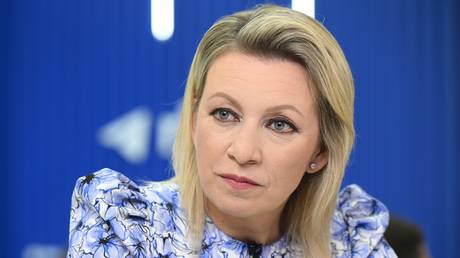
The increasing availability of deepfake technology is pushing the world into “informational barbarism,” Russian Foreign Ministry spokeswoman Maria Zakharova has warned, urging news agencies to increase investment in fact-checking and video verification.
Zakharova identified deepfakes as global concern during a workshop at the 19th General Assembly of the Organization of Asia-Pacific News Agencies (OANA), which Russia hosted last week. Malicious actors are using every opportunity to deploy “poison pills of lies” against their targets, and are turning to generative content to achieve their aims, the diplomat said.
”Just a couple of years ago deepfake was a novelty that could only confuse people, but now the quality and quantity of deepfake videos raises the question whether humanity is equipped to deal with such attacks,” Zakharova said. “I don’t have a definitive answer.”
The Russian Foreign Ministry works to disprove falsified content involving its staff, including Minister Sergey Lavrov and Zakharova herself. But as mount of fake content increases, so does the time required to counter them, she said. The problem is multifaceted, as seen in the growing use of deepfakes by scammers, and demands a “systemic and comprehensive” international response.
”It is self-evident that news agencies and leading media outlets need entire sections dedicated to fact-checking that are trained to detect technological tricks, which are used to present non-credible information as credible,” she said.
News agencies are naturally at the forefront of the fight against falsified imagery, since they handle the largest flow of raw information in the media ecosystem, Zakharova pointed out.
The Foreign Ministry launched a dedicated campaign against “fake news” in 2017 and has since released more than 5,000 regular rebuttals and 350 in-depth exposés of what it considers informational attacks against Russia’s national interests, the official said.
Read more
June 23, 2025 at 12:04AM
from RT - Daily news
via IFTTT
The US attack has “devastated” Tehran’s nuclear program, according to Secretary of Defense Pete Hegseth
The US aerial strikes on Iran were an “incredible and overwhelming success” and “obliterated” the country’s “nuclear ambitions,” according to US Secretary of Defense Pete Hegseth.
The Pentagon chief made the remarks on Saturday evening during a large press conference alongside Chairman of the Joint Chiefs of Staff Dan Caine to detail the attack, codenamed “Operation Midnight Hammer.”
“The order we received from our commander-in-chief was focused, it was powerful, and it was clear,” Hegseth stated. “We devastated the Iranian nuclear program, but it’s worth noting the operation did not target Iranian troops or the Iranian people,” he added, claiming that “Iran’s nuclear ambitions have been obliterated.”
The operation involved more than 125 aircraft, including seven B-2 Spirit strategic stealth bombers, as well as assorted reconnaissance planes, refueling tankers and fighter jets, according to Caine.
At midnight Friday into Saturday morning, a large B-2 strike package comprised of bombers launched from the continental United States. As part of a plan to maintain tactical surprise, part of the package proceeded to the west and into the Pacific as a decoy,” Caine stated.
The planes dropped a dozen 30,000-pound GBU-57 Massive Ordnance Penetrator bombs on nuclear facilities in Fordow and Natanz, he said. The installation in Isfahan was hit by a cruise missile salvo fired by a submarine.
The operation “was planned and executed across multiple domains and theaters with coordination that reflects our ability to project power globally with speed and precision at the time and place of our nation’s choosing,” Caine said.
Hegseth warned Tehran against retaliation, stating that “both public and private messages being directly delivered to the Iranians” that it would be a “very bad idea.”
“The United States will respond very strongly to any Iranian attack on US interests or allies in the region,” he stressed.
Shortly after the attack, Iranian Foreign Minister Seyed Abbas Araghchi condemned the strikes as a violation of international law and all relevant treaties. Tehran reserves “all options to defend its sovereignty, interests, and people,” the top diplomat warned.
Read more
June 22, 2025 at 04:07AM
from RT - Daily news
via IFTTT
The new requirement aims to ensure visitors do not pose a threat to the country, according to the State Department
The US State Department has announced new rules for student visa applications that require public access to non-citizens’ social media accounts. The changes expand screening for those seeking to study in the United States.
Last month, US President Donald Trump’s administration ordered consulates to pause new student and exchange visa appointments while finalizing the updated procedures. A cable from Secretary of State Marco Rubio instructed posts not to increase appointment capacity until new guidance was issued.
The new requirements apply to F, M, and J visa categories, covering academic, vocational, and exchange programs. The State Department said it would use all available data to identify applicants who may pose a national security threat or fail to meet visa conditions.
“Under new guidance, we will conduct a comprehensive and thorough vetting, including online presence, of all student and exchange visitor applicants in the F, M, and J nonimmigrant classifications,” the department said on Wednesday. It added that all applicants in the affected categories “will be instructed to adjust the privacy settings on all of their social media profiles to ‘public’.”
A separate cable obtained by Politico ordered US diplomats to examine online activity for signs of hostility toward Americans, support for Hamas or other terrorist groups, or anti-Semitic violence.
“Online presence” includes not only social media but public records and databases such as LexisNexis. Officers must take screenshots and prepare case notes.
Since returning to office, Trump has called on universities to shut down anti-Israel protests, which he described as anti-Semitic, and to dismantle diversity, equity, and inclusion (DEI) initiatives.
The new visa policy follows a pilot screening effort at Harvard University, where several foreign students were denied entry after officials flagged their online content. The administration later revoked the school’s authorization to enroll international applicants, accusing it of failing to act against campus extremism and rejecting federal oversight.
Harvard denounced the measures as unlawful and politically retaliatory, claiming they do serious harm to its academic mission and global reputation.
Read more
June 22, 2025 at 01:19AM
from RT - Daily news
via IFTTT
US President Donald Trump has announced a “very successful attack” on the Fordow, Natanz and Esfahan facilities
US President Donald Trump has said that Washington carried out a large-scale series of strikes on three Iranian nuclear facilities early on Sunday.
The Fordow, Natanz, and Esfahan sites were targeted in the “very successful attack,” Trump wrote on his Truth Social platform.
The US leader later delivered a televised address from the White House, claiming that the Iranian nuclear sites have been “completely and totally obliterated.”
He warned Tehran against retaliation, saying that it “must now make peace,” otherwise “future attacks would be far greater.”
Iran says no contamination at affected sites
The strikes on the Iranian nuclear sites marked the first-ever combat use of the US GBU-57 Massive Ordnance Penetrator (MOP), a 30,000-pound “bunker-buster” bomb, which is deployed by B‑2 Spirit stealth bomber, the New York Times has reported. Submarine-launched Tomahawk missiles were also used to target the Islamic Republic.
Iran’s Center for the National Nuclear Safety System confirmed the attack, but said that emergency inspections at the affected facilities have found no signs of radioactive contamination or leaks. The International Atomic Energy Agency also said later that no increase in radiation levels has been reported at Fordow, Natanz, and Esfahan.
Israel hails Trump’s “bold decision”
Israeli Prime Minister Benjamin Netanyahu, who has been urging the US to provide military assistance to his country since the initial attack by Israel on Iran on June 13, praised Trump for his “bold decision” to take part in the bombing campaign.
The use of the “awesome and righteous might of the US” against the Iranian nuclear sites “will change history,” Netanyahu argued. It “has created a pivot of history that can help lead the Middle East and beyond to a future of prosperity and peace,” he said.
Tehran vows to ‘resist with all its might’
The Iranian Foreign Ministry has condemned “the brutal US military aggression against Iran’s peaceful nuclear facilities,” calling it an “unprecedented” violation of the UN Charter and international law.
Tehran “considers it its right to resist with all its might against US military aggression,” which was carried out “with the criminal complicity” of Israel, the ministry said in a statement. “The war-mongering and law-breaking US government [is] responsible for the extremely dangerous effects and consequences of this great crime,” it stressed.
Iranian Foreign Minister Abbas Araghchi said separately that Tehran “reserves all options to defend its sovereignty, interest, and people.”
US lawmakers split on bombing
The Democrats attacked Trump for ordering the strikes on Iran without Congressional approval. Senator Bernie Sanders called the move “grossly unconstitutional,” while representative Sean Casten described it as an “unambiguous impeachable offense.”
House Speaker Mike Johnson defended the president’s unilateral actions, claiming that the “necessary, limited, and targeted strike follows the history and tradition of similar military actions under presidents of both parties.” Republican representative Robert Brown Aderholt even compared Trump to Winston Churchill.
The Saudi Foreign Ministry said that it is following the US strikes on Iran “with concern,” calling for “restraint, calm and prevention of escalation.” Qatar has condemned the attack, warning that it could lead to “catastrophic consequences” for the region and on a global scale. Oman also criticized Washington for what it called “an illegal aggression.”
Gulf states condemn US attack
The Saudi Foreign Ministry said that it is following the US strikes on Iran “with concern,” calling for “restraint, calm and prevention of escalation.” Qatar has condemned the attack, warning that it could lead to “catastrophic consequences” for the region and on a global scale. Oman also criticized Washington for what it called “an illegal aggression.”
Read more
June 21, 2025 at 11:56PM
from RT - Daily news
via IFTTT
The attack also hit an energy facility that supplies fuel to Kiev’s forces, the Defense Ministry in Moscow has said
The Russian military struck a military airfield and energy infrastructure in Ukraine in an overnight attack involving missiles and kamikaze drones, the Defense Ministry in Moscow has reported.
In a statement on Saturday, the ministry said that the attack, which was carried out with high-precision air-, land-, and sea-based weapons, as well as explosive-laden unmanned aerial vehicles, targeted the infrastructure of a military airfield and an energy facility that supplied Ukrainian forces in Donbass with fuel.
“The goal of the strike has been accomplished. All designated targets have been hit,” Russian military officials reported, without disclosing the location of the targets.
In a separate statement on Saturday, the ministry claimed that Russian warplanes, drones, missiles, and artillery had destroyed several UAV production workshops, as well as ammunition depots in Ukraine.
Ukraine, meanwhile, reported a massive Russian strike on energy infrastructure in the city of Kremenchuk in Poltava Region.
The Ukrainian military estimated that Russia deployed nearly 300 kamikaze drones, and eight missiles in its overnight attack.
In recent weeks, Russia has launched a series of strikes, targeting Ukrainian military-related facilities, after Kiev significantly ramped up its own cross-border drone strikes. Moscow has described the escalation as Kiev’s attempt to derail the ongoing Russia-Ukraine peace talks.
On Tuesday, Russia’s Defense Ministry claimed that a combined strike, similar in style to the one reported on Saturday, hit military-industrial facilities in Kiev Region, as well as in the Ukrainian-controlled part of Zaporozhye Region.
Read more
June 21, 2025 at 05:24AM
from RT - Daily news
via IFTTT