Households should also be prepared for cyberattacks and the use of chemical weapons, a report has warned
EU citizens should start stockpiling three days’ worth of goods in order to be ready for various potential disasters, including a nuclear conflict, a report on the bloc’s civilian and military preparedness has warned.
Published on Wednesday by former Finnish President Sauli Niinisto, the initiative is part of the EU’s push to make the bloc more resilient in the face of supposedly mounting threats, ranging from natural disasters to a major military conflict.
The report encourages EU households to stockpile “basic self-sufficiency” goods that would last for at least 72 hours for fear of potential shortages in case of “armed aggression through conventional means” or other hostile activities such as “cyberattacks or the use of chemical, biological, radiological or nuclear weapons.”
Brussels had tasked Finland’s former president earlier this year with assessing the EU’s security needs following the escalation of the Ukraine conflict, “responding in particular to Russia’s intensifying hybrid operations.”
“One click can switch off power grids and plunge whole cities into the dark,” European Commission President Ursula von der Leyen said at the presentation of the report.
The document also calls on the EU to boost its defense and spend around 20% of its common budget, currently worth around €1 trillion ($1.08 trillion) over seven years, on security and crisis preparedness.
“Member States should strengthen their cooperation on European defense, jointly investing more to close long-standing gaps in our military and defense industrial readiness,” Niinisto said, reiterating the EU’s commitment to provide aid for Ukraine in the long term.
The bloc also needs to establish an anti-sabotage network to fend off threats through greater information sharing, Finland’s former leader said, citing rising concerns over perceived threats from Russia.
“Given the increasing use of sabotage by hostile third countries, notably Russia, it is an area where internal security and military security are very much interlinked,” the report noted.
Niinisto also urged to “strengthen EU intelligence structures step-by-step towards a fully-fledged EU service for intelligence cooperation.”
The report comes amid Western warnings regarding Russia’s alleged plans to attack Western Europe if it secures a victory over Ukraine. Russian President Vladimir Putin has dismissed the claims as “nonsense.” Kremlin spokesman Dmitry Peskov has similarly described the allegations as “horror stories,” and suggested they had been made up by Western leaders to distract people’s attention from problems in their own countries.
Read more
October 31, 2024 at 01:49AM
from RT - Daily news
via IFTTT
Nigeria’s former leader, Olusegun Obasanjo, has previously stated that the government system was imposed by colonial powers
Former Nigerian President Olusegun Obasanjo has urged his country to consider adopting a government system based on African cultural principles, claiming that Western democracy has failed, local media reported on Wednesday.
Obasanjo made the statement at a farewell ceremony for Chrisland University’s outgoing vice-chancellor, Chinedum Babalola, in the southwestern Ogun State, according to the local daily Punch.
“I have always been talking about Western liberal democracy. It is not working for us. It is not even working for those who gave it to us. The British were complaining. We must rethink democracy,” Obasanjo was quoted as saying.
“We must bring our own culture into democracy. African culture does not talk about opposition; it talks about communalism; you come together, reason together, iron it out, and then you work together,” he added.
Last November, the former president made a similar call at a conference on ‘Rethinking Western Liberal Democracy for Africa’, stating that the political structure was imposed by colonial powers and thus fails to function effectively in Africa. He described Western liberal democracy as “government of a few people over all the people or population” that had been designed without regard for African history and multicultural complexities.
The continent has been gripped by political instability in recent years, fueled by military coups in response to the alleged failures of democratic leaders to perform. Eight overthrows have taken place in West and Central Africa in the last four years, with Nigeria’s West African neighbors Burkina Faso, Guinea, Mali, and Niger all currently under military rule.
Nigeria transitioned from military rule in 1999, ushering in the country’s longest period of uninterrupted democratic government since its independence from Britain in 1960.
Obasanjo first served as the military head of state of Africa’s most populous nation from 1976–1979, before becoming president of the civilian administration from 1999–2007. Officials from the present Nigerian government have accused him of directly influencing the country’s adoption of the current administrative model, which he is warning against.
Read more
October 31, 2024 at 12:10AM
from RT - Daily news
via IFTTT
Foreign officials reportedly cannot be sure they correctly understand the Ukrainian leader’s “mediocre” English
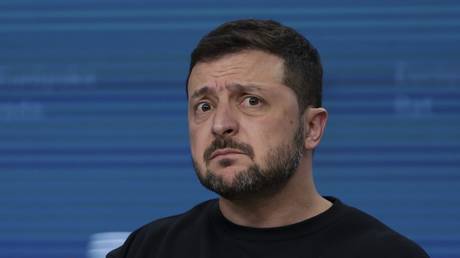
US officials are not always certain they correctly understand what Ukrainian leader Vladimir Zelensky and chief-of-staff Andrey Yermak are trying to communicate because both men often shun the services of interpreters despite lacking fluency in English, the German daily Frankfurter Allgemeine Zeitung claimed.
Zelensky’s English is “only mediocre,” while Yermak speaks it “extremely poorly,” according to the report from Saturday. Nevertheless, the two often address US officials directly in English.
This creates a communication problem because the Americans cannot be certain that their messages are properly received or that they correctly understand what the Ukrainians are telling them, according to the newspaper. The issue has been less serious lately, as Ukrainian officials with a better command of English have taken over the detailed negotiations, the report added. Olga Stefanishina, the deputy prime minister for EU integration, was identified as a good English speaker in Zelensky’s camp.
The issue with communication was reported in an article describing Zelensky’s request for an immediate invitation for Ukraine to NATO and the reaction of Western leaders to it, in which FAZ cites multiple sources in several governments.
Like his boss, Yermak sometimes uses English during public events, including to answer questions from the press. Both men tend to use Russian or Ukrainian constructions and expressions in English, which may sound confusing to people who only know English.
During a press conference with foreign media this week in which Zelensky spoke in English he complained about details of his classified requests to Western donors being leaked to the media. He lamented that confidential communications with the White House had become public knowledge. The New York Times reported that Kiev had asked Washington to deploy Tomahawk cruise missiles as part of a “non-nuclear deterrence package” for Ukraine.
During the same event, he accused the US government of not delivering as much military aid as it could have with the money allocated by Congress.
Russian President Vladimir Putin has described the Zelensky government as “irrational” due to the inconsistency of its foreign policy, which he has argued makes Kiev unpredictable and unreliable.
Read more
October 30, 2024 at 11:44PM
from RT - Daily news
via IFTTT
The Baltic state has reportedly not earmarked enough funding to pay for its membership
Latvia could become the first country expelled from the European Space Agency (ESA) if it fails to pay membership fees, Latvia’s Space Industry Association and Federation of Security and Defense Industries told local media on Monday.
The Baltic nation will have to spend over €15 million ($16.2 million) in contributions to the ESA between 2025 and 2027, the country’s Education and Science Ministry previously estimated. This breaks down to €4 million ($4.3 million) in 2025, €5.5 million ($5.9 million) in 2026, and €6 million ($6.5 million) in 2027.
Riga, however, plans to allocate only a fifth of this. The outlay for 2025 is estimated at €2.2 million ($2.3 million) and for 2026 at €1.1 million ($1.1 million), according to the Education and Science Ministry.
Latvia could thus become the first country in the ESA’s history to have its member status revoked if it approves outlays for the organization well below the terms of the membership agreement, space NGOs warned.
They also urged the government to increase budget allocations to €4 million in 2025 and to €5.5 million for 2026. A failure to do so would “disrupt Latvia’s international reputation” and lead to a “loss of historic investments in Latvian companies,” the NGOs said.
ESA has a system whereby contracts are dispersed to nations roughly proportionate to their contribution, which is a major incentive for smaller EU countries to be members of the space agency.
Latvia became an associate ESA member in 2020 and is currently at the bottom of the list of member states and cooperating nations, after having contributed just €500,000 (541,000) to ESA’s €7.7 billion ($8.3 billion) budget this year, according to funding data for 2024.
Latvia currently has around 50 organizations operating in the space sector and has some 70 ESA projects in its portfolio, according to the Economy Ministry. Latvian companies are largely focused on niche products and services, such as earth observation applications, scientific instruments, electronic components, and materials.
The country has also participated in global space missions, such as the Lunar Gateway and Hera planetary defense mission.
Read more
October 30, 2024 at 12:06AM
from RT - Daily news
via IFTTT
Salome Zourabichvili has publicly refused to recognize the result of the vote, accusing Moscow of election interference
Georgian President Salome Zourabichvili has no “clear evidence” that Russia interfered in the recent parliamentary elections in the country, Polish President Andrzej Duda has claimed. The two leaders spoke on Monday evening, Duda told a Polish national radio station on Tuesday.
The pro-Western Zourabichvili has publicly refused to recognize Saturday’s ballot results, which indicated that the country’s ruling Georgian Dream party secured 54% of the vote. The result is expected to give the party at least 90 seats in the 150-member national parliament, allowing it to form the government.
In a speech on Sunday, Zourabichvili accused Georgian Dream of election rigging and attempting to “steal” the country’s “European future” by aligning it with Russia. She insisted that the election was a Russian “special operation” and a form of “hybrid war” against the Georgian people. Pro-Western opposition forces in the country have backed Zourabichvili’s accusations.
According to Duda, Zourabichvili had expected Georgian Dream to win the election, but not by a margin that would allow it to form a government on its own.
“The president told me [on Monday] that the election result was distorted on many levels, in a very complicated way. She believes that these elections were not so much rigged as their result was distorted,” Duda told the Radio Zet station.
“[Zourabichvili] did not say clearly that [Russian President] Vladimir Putin was meddling in Georgia – because there is no clear evidence of this – but said that the Russian authorities definitely support the party that is currently still the ruling party in Georgia,” the Polish president added.
Duda said he personally has “no doubt” of election fraud in Georgia, but that it is important to know on what scale it allegedly occurred. He also suggested that reports from international observers would help shed light on the matter.
Moscow has denied allegations of election meddling, instead accusing the West of “unprecedented interference attempts,” referring to calls from the US and several EU member countries for a probe into alleged violations at the polls.
The Organization for Security and Cooperation in Europe (OSCE) previously reported that it observed no systemic voting irregularities during Georgian election, although it did note some instances of vote-buying and pressure on public sector employees. Amid the debate, Georgia’s Central Electoral Commission said it intends to recount ballots at five randomly selected polling stations in each voting district to eliminate any doubts over the results.
Read more
October 29, 2024 at 11:19PM
from RT - Daily news
via IFTTT
Several mercenaries eliminated during an incursion into Bryansk Region were apparently armed with anti-tank missiles and explosives
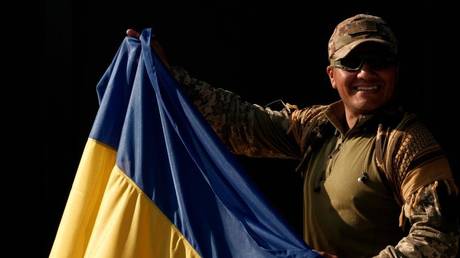
A sabotage group that attempted to infiltrate Russia’s Bryansk Region was heavily armed with Western-made weapons, according to footage shared by the Federal Security Service (FSB). The Russian agency earlier said that at least four foreign mercenaries fighting for Ukraine were killed in the unsuccessful attack.
On Monday, the FSB reported that border patrol and local armed forces had discovered an attempt by Kiev’s forces to cross the border in Klimovsk district, which borders Ukraine and Belarus. Faced with resistance and mounting casualties, the intruders were forced to retreat and were later targeted with artillery fire, officials said.
Four of the fighters killed were carrying foreign weapons and equipment, as well as personal items indicating links to “third countries,” such as a Canadian flag, a Polish prayer book, and a notepad containing tactics in English, the FSB said.
WARNING: GRAPHIC VIDEO
In a graphic follow-up video released on Tuesday, the agency showed three half-naked, tattoo-covered bodies of alleged mercenaries lying next to an arsenal of Western-made weapons, including what appeared to be more than a dozen Swedish-made AT4 portable anti-tank missile systems, Claymore anti-personnel mines, a light machine gun, grenades and explosive packages, as well as a large stockpile of small arms ammunition. The weapons were placed next to two large Canadian flags.
Russian Foreign Ministry spokeswoman Maria Zakharova earlier said that the fighters “neutralized” in Bryansk included US, Polish, and Canadian citizens. The Mash Telegram channel reported that the group consisted of up to 30 foreign fighters, including Polish, Swedish, Venezuelan, and UK nationals.
According to the FSB, the body of one of the fighters had a tattoo of an angel holding a rifle, with a banner reading ‘Ranger’ and ‘2d Bn’, apparently a reference to the 2nd Battalion of the US Army’s 75th Ranger Regiment. It is unclear whether the man actually served in the elite unit, which specializes in airborne assault, reconnaissance, and sabotage operations.
Russian officials have repeatedly called foreign mercenaries operating in the conflict zone a “legitimate target” for the military while accusing NATO of direct involvement in the hostilities.
Read more
October 29, 2024 at 01:08AM
from RT - Daily news
via IFTTT
Democrats have compared a Republican event at Madison Square Garden to a pro-Hitler rally in 1939
US Republican candidate Donald Trump has lashed out at Vice President Kamala Harris's campaign for comparing an event he held in New York's Madison Square Garden last week with a rally of Nazi supporters at the same venue before World War II.
At the 1939 event, speakers praised Nazi Germany and urged Americans to oppose what they claimed was Jewish influence in the country.
Harris' running mate, Minnesota Governor Tim Walz, told a rally in Henderson, Nevada of a “direct parallel to a big rally that happened in the mid-1930s at Madison Square Garden.”
Trump responded by telling a crowd of backers in Atlanta, Georgia: “The newest line from Kamala and her campaign is that everyone who isn’t voting for her is a Nazi. We’re Nazis.”
“I’m not a Nazi. I’m the opposite of a Nazi,” he stated.
Trump explained that his father taught him to never use either “Nazi” or “Hitler” as a slur. Both words, among many other insults, have been hurled his way, he said.
“They call me everything from a mad genius looking to take over the world to a very very stupid person,” according to Trump.
While proclamations that Trump is a new Hitler who seeks to abolish democracy are nothing new, such language was only recently adopted by the Harris campaign. The vice president publicly called her rival a “fascist” last week, citing the opinion of retired General John Kelly, who served as the chief of staff in the Trump administration.
Trump’s running mate, Ohio Senator J.D. Vance, meanwhile, said at the same rally that “I imagine that nearly every person in this room has a relative who served in the Second World War. Our families actually went and defeated the Nazis. To call us Nazis is a disgrace.”
Vance claimed that the US soldiers who took part in the Normandy landings in June 1944 would have been offended by the policies proposed by the Democratic campaign.
“If you think those brave men were fighting for an open border and sex change surgeries for illegal aliens, the proper term for you is ‘dips**t’,” he declared.
American voters will go to the polls to choose the next president on November 5.
Read more
October 29, 2024 at 12:03AM
from RT - Daily news
via IFTTT
Washington needs to engage its adversaries diplomatically, Trump’s running mate has said
The US is not at war with Russia and should not seek one, Republican vice-presidential nominee J.D. Vance has said, when asked whether he would brand President Vladimir Putin an “enemy” of America.
The senator from Ohio was asked during his appearance on NBC’s Meet the Press on Sunday whether he saw the Russian leader “as an ally or an enemy.” Putin is “clearly an adversary, he is a competitor,” but Washington needs to be “smart about diplomacy too,” Vance responded.
”Just because we don’t like somebody doesn’t mean that we can’t occasionally engage in conversations with them,” he suggested.
Host Kristen Welker pushed him further on whether he would directly refer to Putin as an enemy.
”We are not at war with him. And I don’t want to be at war with Vladimir Putin’s Russia,” the senator said. “I think that we should try to pursue avenues of peace.”
The same logic applies to China, Vance said, adding that he perceives it as a greater threat to American interests that Russia. The US may not like having to talk to its rivals, but in the case of the Ukraine conflict, resolving it will require negotiations, the senator pointed out.
When asked whether former President Donald Trump would take the US out of NATO, Vance assured that he wouldn’t. If his running mate returns to office, the country will honor its commitment to the organization, but the bloc “is not just a welfare client, it should be a real alliance,” he said. Vance was referring to Trump’s criticism of insufficient defense spending by its European members.
Moscow has identified NATO’s enlargement in Europe as a threat to its national security and a key reason for the deterioration of relations with the West. The organization's increasing involvement in Ukraine since the 2014 armed coup in Kiev and promise to bring Ukraine into the fold have contributed in a major way to setting off the ongoing hostilities, Russian officials have said.
The current Democratic administration has pledged to stand by Kiev “for as long as it takes” to defeat Russia and has pushed other nations to do the same. Despite the hundreds of billions of dollars spent on Ukraine aid, Kiev’s troops are currently retreating along many parts of the front. Trump has claimed while campaigning that he would end the hostilities in 24 hours, if elected.
Read more
October 28, 2024 at 12:13AM
from RT - Daily news
via IFTTT
Few doubt that the Israeli prime minister sees Republican nominee Donald Trump as “a close ally,” the network has reported
The US is unlikely to achieve a breakthrough in resolving the Middle East conflict before the November 5 presidential election, leaving the topic “a serious political liability” for the administration of US President Joe Biden and Democratic nominee Kamala Harris, CNN has reported.
The latest round of the regional escalation came on Saturday, when Israel launched a flurry of strikes on Iranian military facilities in retaliation for Tehran’s missile barrage on the Jewish state earlier this month. At the time, Iran cited a string of assassinations of senior Hezbollah officials, including its longtime leader Hassan Nasrallah, as the reason for the attack.
According to the network, while the exchange did not escalate into a full-scale war, – which was apparently Biden’s “worst-case scenario,” – “the larger knot that is the Middle East conflict remains as firmly gnarled as ever.”
Unnamed officials interviewed by CNN said that US, Israeli, and Qatari diplomats are scheduled to meet in Doha for talks on an agreement on releasing the hostages taken by the Hamas militant group into Gaza and reaching a ceasefire in the Palestinian enclave. However, US officials reportedly believe that Israeli Prime Minister Benjamin Netanyahu, who “is intimately familiar with and tracking the ins and outs of the presidential election in the US,” does not want to make any serious decisions on the matter until he knows the winner of the race for the White House.
Netanyahu also does not see much incentive to end his other operations before the election, the article said, adding that there is little question in the minds of US officials that the Israeli leader “sees former President Donald Trump… as a close ally.”
The Republican nominee has previously claimed to have almost daily conversations with the Israeli prime minister, describing their relationship as “very good.” The Washington Post reported last week, citing sources, that during one of those calls, Trump told Netanyahu to “do what you have to do,” referring to Israel’s attacks on Hamas and Hezbollah.
Meanwhile, reports claim that Biden has made numerous attempts to pressure Israel to limit the scope of its attacks on Iran, especially when it comes to Tehran’s nuclear facilities. Other media outlets have described the relationship between the two leaders as “complicated,” with US journalist Bob Woodward claiming that the president had called Netanyahu a “liar” over his handling of the Gaza conflict, while threatening to cut military aid to the Jewish state.
Read more
October 27, 2024 at 11:14PM
from RT - Daily news
via IFTTT
The Tesla and SpaceX CEO fired back after being accused of being a hypocritical immigrant, saying the Democrats were desperate
US President Joe Biden has attacked tech billionaire Elon Musk over his alleged hypocrisy regarding immigration, saying that the entrepreneur began his long career in the US as an “illegal worker” before becoming the wealthiest man in the world.
The remarks, made on Saturday, followed a Washington Post report that alleged, citing Musk’s former business associates, court records and documents, that the businessman obtained a work visa in 1996 after he had already been working in the country without one. At the time, the billionaire was launching his startup Zip2, an IT-company that provided and licensed online city guide software for newspapers.
“That wealthiest man in the world turned out to be an illegal worker here when he was here,” Biden said at a campaign event in support of Democratic nominee Kamala Harris in Pittsburgh, Pennsylvania. “He was supposed to be in a school, when he came on a student visa. He was working. He was violating the law and he’s talking about all these illegals.”
In response to the claims, the Tesla and SpaceX CEO made posts accusing the incumbent president outright lying and saying “losing the election was making the Democrats desperate.”
“I was in fact allowed to work in the US. The Biden puppet is lying,” Musk wrote on X (formerly Twitter). “They know this, as they have all my records.”
“So NOW he cares about illegals,” he quipped in conclusion.
The tech entrepreneur, who is currently backing Republican candidate Donald Trump, had previously accused the Democrats of bringing a large number of illegal immigrants to swing states. Each of the two major US political parties, the Republicans and the Democrats, dominates dozens of states in the country. However, voters are more evenly divided in the remaining ‘swing’ or ‘battleground’ states, making them key to winning the election.
“Triple digit increases over the past 4 years! Their STATED plan is to give them citizenship as soon as possible, turning all swing states Dem,” Musk stated earlier this week in a post on X.
Musk, who had previously positioned himself as politically neutral, publicly endorsed the Republican nominee shortly after the failed assassination attempt on Trump on July 13. The former president has promised to create a new government post called ‘secretary of cost-cutting’ tailored specifically for Musk if he wins.
Read more
October 27, 2024 at 03:43AM
from RT - Daily news
via IFTTT
Russia is a threat to Estonia and its citizens should not be able to influence the country’s affairs, Kristen Michal has said
Russian citizens living in Estonia should be barred from taking part in local elections regardless of their views on the Ukraine conflict, the Baltic state’s Prime Minister Kristen Michal has insisted. Russian speakers make up 20% of Estonia’s population of just under 1.4 million, according to the Estonian government,
Under the NATO country’s laws, only Estonian citizens can elect members of parliament, known as the Riigikogu. However, the right of all permanent residents to vote in local elections was granted in the 1992 constitution, which also controversially denied hundreds of thousands of ethnic Russians living in the former Soviet republic the right to citizenship.
Michal told the EER media outlet on Friday that “Russia is a security threat, and Russian citizens should not have a say in Estonian affairs, just like Belarusian citizens.”
“Their right to vote must be suspended or taken away,” the PM and chairman of the Reform Party, which has the most legislators in the Riigikogu, insisted.
The Reform Party, which rules in a coalition with the Social Democratic Party (SDE) and Estonia 200, is ready to amend legislation or go as far as changing the Constitution to make sure Russian citizens are banned from local elections, he stressed.
Earlier on Friday, SDE leader Lauri Laanemets suggested that Russians who are loyal to Estonia and oppose the government in Moscow should have the chance to take part in municipal votes.
The ban on voting should only affect citizens of Russia who the Estonian police have found to be a security threat, he said. According to the SDE leader, in this case, only a third of Russians would be eligible to take part in elections.
The next municipal election in Estonia is scheduled to take place in October 2025.
Russian Foreign Ministry spokeswoman Maria Zakharova said earlier this year that the former Soviet republic has been “turned into a mini-totalitarian regime.”
Estonia has been a strong backer of Ukraine, providing Kiev with over $500,000 in military aid and calling for increasingly tough measures against Moscow.
When Estonia gained independence in 1991, hundreds of thousands of ethnic Russians living in the former Soviet republic were refused citizenship. This prompted many holders of so-called Estonian alien’s passports to eventually choose Russian citizenship, while remaining in the country.
Read more
October 27, 2024 at 02:41AM
from RT - Daily news
via IFTTT
Commonwealth leaders have issued a formal request at a gathering in Samoa
The Commonwealth of Nations has submitted a formal request for “discussions” with the UK on compensation for the Transatlantic slave trade during a major gathering in Samoa. British Prime Minister Keir Starmer tried but failed to keep the subject off the agenda. The UK has ruled out any money payment and so far refused to make a formal apology.
Last year, the Brattle Group, an economic consulting firm, concluded that the UK owed more than £18 trillion ($24 trillion) in reparations for its involvement in slavery in 14 Caribbean countries. The Commonwealth is made up of over 50 countries, most of which are former territories of the British Empire.
Starmer had previously refused to include compensation talks in the agenda of the meeting, saying that the UK would neither be “offering an apology” nor paying reparations for the atrocities spanning three centuries.
All 56 member states signed a communique calling slavery a “crime against humanity.” It also noted “calls for discussions on reparatory justice with regard to the Transatlantic trade in enslaved Africans and chattel enslavement.”
“The time has come for a meaningful, truthful and respectful conversation towards forging a common future based on equity,” the document stated, adding that the leaders will continue to play “an active role in bringing about such inclusive conversations addressing these harms.”
Earlier this month, the British tabloid The Daily Mail claimed that a group of Caribbean countries were seeking “an astonishing £200 billion” ($261 billion) in compensation for slavery at the meeting in Samoa.
During the press conference after the summit, Starmer admitted that slavery was “abhorrent,” but refused to address the idea of a payout.
“I should be really clear here, in the two days we’ve been here, none of the discussions have been about money. Our position is very, very clear in relation to that,” he said, maintaining that the summit’s agenda was mainly focused on “resilience and climate.”
In August, UN judge Patrick Robinson said that the UK cannot ignore calls for slavery reparations, highlighting that the amount calculated by the Brattle Group was an “underestimation” of the damage caused by the discarded institution.
Read more
October 27, 2024 at 12:43AM
from RT - Daily news
via IFTTT
IDF warplanes launched multiple missiles early on Saturday, targeting a number of facilities in the Islamic Republic
Israel relayed a warning to Iran through several third parties ahead of its missile strike against the Islamic Republic on Saturday, Axios has reported, citing three anonymous sources. According to the media outlet, West Jerusalem indicated what type of targets it would attack, while cautioning Tehran against retaliating.
Early on Saturday, IDF spokesperson Daniel Hagari reported that Israeli forces were conducting “precise strikes on military targets” in Iran. The operation, reportedly codenamed ‘Days of Repentance,’ was being launched “in response to months of continuous attacks from the regime in Iran against the State of Israel,” he clarified.
The “Israelis made it clear to the Iranians in advance what they are going to attack in general and what they are not going to attack,” Axios reported. The US media outlet asserted that this reflected an “attempt to limit the ongoing exchange of attacks between Israel and Iran and prevent a wider escalation.”
According to the report, Israel also warned the Islamic Republic against responding to its attack, threatening a more devastating strike if Tehran does retaliate.
Axios claimed that Dutch Foreign Minister Caspar Veldkamp was one of the channels used by Israel to convey its message to Iran. In a post on X (formerly Twitter) on Friday, the diplomat confirmed that he had spoken “with the Iranian Foreign Minister about war and the heightened tensions in the region.” He added that he had urged Tehran to exercise restraint.
“IAF aircraft struck missile manufacturing facilities used to produce the missiles that Iran fired at the State of Israel over the last year,” according to an IDF statement. Moreover, the Jewish State claims to have struck the Islamic Republic’s surface-to-air missile capabilities.
Iran reopened its airspace at 9am local time (6am GMT), with the country’s National Air Defense Headquarters reporting that Israel’s “provocative” attack had resulted in “limited damage… in certain areas,” and that a more detailed assessment was still underway.
“The country’s integrated air defense system successfully intercepted and countered this aggressive action,” officials in Tehran asserted.
On October 1, Iran fired nearly 200 ballistic missiles at Israel in response to the killing of the Hamas and Hezbollah leaders as well as an Islamic Revolutionary Guard Corps (IRGC) general.
Read more
October 26, 2024 at 02:36AM
from RT - Daily news
via IFTTT
The self-governing island had previously requested NASAMS air-defense systems and radars
The US Department of State has approved the possible sale of air-defense systems and radars to Taiwan. According to the Pentagon, the purchase of American weapons by Taipei would necessitate that several dozen US nationals travel there.
Beijing, which sees the self-governing island as part of the People’s Republic of China, views these relations as a violation of its sovereignty.
Several days ago, Washington delivered the first batch of hundreds of Harpoon Block II anti-ship missiles to Taipei under a deal approved in 2020.
In a press release on Friday, the Defense Security Cooperation Agency within the US Department of Defense announced that it had obtained approval for a “possible Foreign Military Sale to the Taipei Economic and Cultural Representative Office in the United States of National Advanced Surface-to-Air Missile System (NASAMS) and related equipment for an estimated cost of $1.16 billion.” According to the document, Taipei had requested three units of the Raytheon-manufactured system and 123 missiles for them.
The statement noted that the implementation of this proposed sale will require the assignment of approximately 26 US government and 34 contractor representatives “to travel to the recipient for an extended period” to provide technical support and training to local military personnel.
A separate press release that same day revealed that the Department of State had also given the go-ahead for a potential sale of “AN/TPS-77 and AN/TPS-78 Radar Turnkey Systems and related equipment for an estimated cost of $828 million” to Taiwan.
Late last month, US President Joe Biden authorized additional military support for Taiwan worth $567 million.
During a meeting with US National Security Advisor Jake Sullivan in Beijing in late August, Chinese Foreign Minister Wang Yi urged Washington to stop selling weapons to Taiwan.
Meanwhile, speaking during a press briefing last week, Chen Binhua, the spokesperson for China’s Taiwan Affairs Office, said that Beijing will never commit itself to “renouncing the use of force” against Taipei. This scenario could materialize if the self-governing island declares independence, the official clarified.
The warning came shortly after China held large-scale military drills near the island.
Following their defeat in the Chinese Civil War in 1949, nationalist forces fled to the island, establishing their own administration there. However, only a handful of nations currently recognize Taiwan’s sovereignty, with most of the world complying with Beijing’s request that it be seen as part of the People’s Republic.
On January 1, 1979, the United States recognized the People’s Republic of China and established diplomatic relations with it as the sole legitimate government of both Taiwan and the mainland, according to the US State Department. However, Washington continues to maintain close relations with Taiwan and sells it arms.
Read more
October 26, 2024 at 01:04AM
from RT - Daily news
via IFTTT
Egypt could lose control over the Nile waters it has maintained for almost a century thanks to colonial-era treaties
This month, a long-expected agreement on the Nile has come into force, and the wealth of its waters will now be shared among many countries. Egypt, which heavily depends on the Nile, strongly opposes the agreement. However, the time of colonial-era treaties seems to have come to an end, so both upstream and downstream countries must work together to find a fair and equitable solution that is beneficial to everyone.
We Africans must understand how colonial-era treaties still fuel conflict over the Nile’s waters, favoring what was a Western-dominated agricultural production flow on the continent. We should fight for a Pan-African approach, embodied by the Nile Basin Cooperative Framework Agreement, to replace outdated entitlements with cooperative water management. By embracing shared stewardship, Egypt and Ethiopia can lead Africa in transforming the Nile from a source of discord into a lifeline that fosters unity and regional resilience.
In October 2024, the Nile Basin Cooperative Framework Agreement (CFA), or Entebbe Agreement, was finally ratified by six countries, bringing it into force. This watershed agreement, which includes Ethiopia, Uganda, Rwanda, Tanzania, Burundi, and South Sudan, could reshape how Africa’s longest river is shared.
However, Egypt and Sudan, two downstream nations heavily reliant on the Nile, have rejected the CFA, continuing to assert historical rights rooted in colonial-era treaties. These treaties reflect a damaging legacy of foreign interference, one that has stoked conflict and hampered development. As the effects of climate change intensify, Africa faces a pivotal choice: Remain divided by outdated entitlements or embrace Pan-African cooperation that redefines the Nile as a shared lifeline for everyone.
At the heart of the Nile dispute is a set of colonial-era treaties that awarded the lion’s share of the Nile’s resources to Egypt and Sudan. Chief among these is the 1929 Anglo-Egyptian Treaty, negotiated by the British colonial authorities, which allocated nearly 48 billion cubic meters of the Nile’s annual flow to Egypt, with no input from other riparian nations. This arrangement was further cemented by the 1959 Nile Waters Agreement, which granted Egypt and Sudan 55.5 billion and 18.5 billion cubic meters of water, respectively, without consulting other Nile Basin countries. This left upstream nations, including Ethiopia – where 85% of the Nile’s water originates – without a say in the river’s management.
The harmful effects of these colonial-era agreements resonate to this day. As a result of this exclusionary framework, upstream countries have been unable to develop water infrastructure that could support their own growth. The Grand Ethiopian Renaissance Dam (GERD), for instance, has become a focal point of tension between Egypt and Ethiopia. Ethiopia views the GERD as essential for its development and energy needs, while Egypt perceives it as a threat to its water security. Egypt’s reliance on colonial-era water rights underscores how a legacy of external interference has driven a wedge between African nations, creating a zero-sum game over a resource that could otherwise foster regional unity.
The role of the Nile Basin initiative
Efforts to foster cooperative management of the Nile began with the Nile Basin Initiative (NBI) in 1999, which brought together the river’s 11 riparian states to promote sustainable development and equitable water sharing. The NBI aimed to address the deep-seated mistrust among Nile countries, setting the stage for negotiations that would eventually lead to the CFA. Although the CFA represents the most significant achievement of the NBI to date, its implementation has been stymied by Egypt’s refusal to abandon colonial-era treaties that enshrine its dominance over the Nile.
The recent CFA ratification by six countries signals a clear desire among Nile Basin nations to move beyond the constraints of the past. By emphasizing “equitable and reasonable utilization,” the CFA embodies a forward-thinking approach to resource sharing that is based on the principles of international law, particularly the 1997 UN Convention on the Law of Non-Navigational Uses of International Watercourses. As Ethiopian Prime Minister Abiy Ahmed stated, South Sudan’s ratification is a “historic moment” for the region, one that lays the foundation for a legal framework to govern Nile resources fairly and sustainably.
Gamal Abdel Nasser, Egypt’s Pan-Africanist leader in the 1950s-1960s, championed African unity in resource sharing, including water, through both diplomacy and radical politics. Revered across Africa, even in Ethiopia, he remains a symbol of liberation. Egypt could leverage Nasser’s legacy to foster cooperative ties with Nile Basin countries, transforming his enduring influence into a modern framework for equitable and sustainable water management.
The Pan-African imperative
Pan-Africanism – the idea that African nations should work together in the spirit of unity and mutual support – is essential for addressing the Nile’s complex challenges. Colonial powers drew borders, made treaties, and divided resources in ways that benefited their interests, often pitting African nations against one another. A Pan-African approach offers an alternative vision, one in which Africa’s longest river is managed as a shared resource that sustains all its people, regardless of political boundaries.
A pan-African solution to the Nile’s challenges would entail a cooperative governance model that treats the river as a common resource, much like the EU’s approach to managing cross-border rivers. Instead of viewing the Nile as a battleground for national interests, riparian countries could establish a Nile Basin Commission to oversee water allocation, promote joint infrastructure projects, and support environmental conservation efforts. This would create a platform for open dialogue, mitigating the risk of conflict and fostering trust among Nile nations.
Climate change and population growth
The urgency of a Pan-African approach is underscored by the looming threats of climate change and population growth. The Nile Basin is already feeling the effects of a warming climate. Rising temperatures are expected to increase evaporation rates and reduce water availability across the region. A study by the World Resources Institute estimates that water stress in the Nile Basin could increase by 60% by 2040, making cooperative water management even more crucial.
Additionally, the Nile Basin’s population is projected to grow from 257 million in 2020 to nearly 400 million by 2050. As the demand for food, water, and energy rises, the potential for resource-driven conflicts will only intensify. In the face of these challenges, a Pan-African approach to water sharing could help Nile countries avoid the pitfalls of unilateral action. By investing in joint infrastructure projects, such as shared irrigation systems and water conservation initiatives, Nile Basin nations could address their collective water needs while minimizing environmental degradation. Collaborative efforts to adapt agriculture to climate impacts, promote drought-resistant crops, and improve irrigation efficiency would not only bolster food security but also reduce the strain on the Nile.
While Egypt’s concerns about water security are valid, its reliance on colonial-era treaties to uphold its claims is increasingly untenable. According to the UN, over 90% of Egypt’s water needs are met by the Nile, making it one of the world’s most water-dependent nations. However, by rejecting the CFA and insisting on historical entitlements, Egypt risks isolating itself from the broader Pan-African movement toward self-determination and collective resource management.
For Egypt, embracing a Pan-African approach to the Nile could yield long-term benefits. Rather than viewing the CFA as a threat, Egypt could engage with other Nile Basin countries to ensure its water security through joint projects and technological innovation. For example, desalination plants and wastewater recycling programs could help diversify Egypt’s water sources, reducing its dependency on the Nile. Furthermore, by investing in shared infrastructure and conservation initiatives, Egypt could position itself as a leader in sustainable water management, aligning itself with the broader African agenda for climate resilience and environmental stewardship.
Moreover, Egypt can partner with Ethiopia and other Nile Basin countries to launch joint agricultural initiatives, such as shared irrigation projects that boost crop yields while conserving water. Additionally, Nile-based industrial and commercial developments, like cooperative fisheries, renewable energy plants, and river transport systems, could enhance regional economies and create sustainable employment opportunities. By investing in these collaborative projects, Egypt would not only secure its own water needs but also help build a Pan-African framework for resource-sharing, fostering stability and prosperity throughout the Nile Basin.
Toward a shared vision for the Nile
The path forward for the Nile Basin is clear: Africa must overcome the legacy of colonialism by forging a new framework for water sharing that prioritizes cooperation over conflict. This requires a willingness among Nile countries to make concessions, to compromise, and to recognize their mutual dependence on this vital resource. The CFA’s principles of equitable use and environmental sustainability provide a foundation upon which to build a shared future, but the hard work of translating these principles into action remains. A Nile Basin Commission, as proposed under the CFA, could serve as a vehicle for achieving this vision.
By establishing binding agreements on water allocation, monitoring the environmental impacts of major projects, and facilitating knowledge exchange, the commission could promote a holistic approach to water management that respects the needs of all riparian states. Additionally, the commission could play a key role in attracting international funding for sustainable development initiatives, such as renewable energy projects and conservation programs, that benefit the entire basin.
The Pan-African solution
The Nile River, like Africa itself, is bound by a complex history of foreign interference and internal division. But it also embodies the potential for unity, for shared prosperity, and for a future in which African nations work together to harness their resources responsibly. As recent ratifications of the CFA show, many Nile Basin countries are ready to embrace a new approach to water sharing, one that looks beyond colonial legacies and focuses on regional solidarity. In the spirit of Pan-Africanism, Nile Basin countries must continue to advocate for an inclusive, equitable, and sustainable framework for managing their shared waters. By doing so, they can ensure that the Nile remains a source of life, not a source of conflict. Africa’s longest river has the potential to be a unifying force, one that brings nations together in the pursuit of a common good. It is up to Africa’s leaders to seize this opportunity and demonstrate to the world that the continent’s future lies not in division, but in unity.
Read more
October 26, 2024 at 12:35AM
from RT - Daily news
via IFTTT
Emerging economies have outperformed their wealthier Western peers in contributing to global growth, Maksim Oreshkin has said
The latest International Monetary Fund (IMF) forecast indicating that the global economy is set to be driven by BRICS countries is an “objective reality,” Maksim Oreshkin, deputy head of the Russian President’s administration has said.
In its World Economic Outlook published this week, the IMF said that the world economy will rely more heavily on the group of emerging economies than on the US-led G7 (Canada, France, Japan, Italy, the US, UK, and EU), according to the latest estimates based on purchasing power parity (PPP). The measure compares economic productivity and living standards between countries by adjusting for differences in the cost of goods and services.
The global GDP share of the G7 countries in terms of PPP has been in decline, dropping from 50.42% in 1982 to 29% in 2024. Meanwhile the BRICS countries’ contribution to global growth in terms of PPP is on the rise and will amount to 36.7% by the end of 2024, Vladimir Putin told a meeting of leaders at the BRICS Summit on Wednesday.
“This is an objective reality,” Oreshkin, who covers economy and transport in the presidential administration told Rossiya24 channel on the sidelines of the BRICS summit in Kazan on Thursday.
“If you look at the BRICS countries, or the countries that participate in different formats and show interest in joining the association, there are two groups. There are countries with quite mature economies – Russia, China, Saudi Arabia. And there are also potential leaders – these are countries of South Asia – India, for example, these are the countries of Africa.”
Oreshkin noted that the latter group of emerging markets aims to ensure that “growth in these [developing] countries proceeds as efficiently as possible, primarily through the instruments that exist within BRICS” and is looking for mechanisms providing for it.
Among such tools, Oreshkin mentioned technology, education, logistics, trade and finance, and investment as a key element that “sets the whole picture in motion.”
According to him a new investment platform will enable BRICS countries with mature economies to “unlock the potential” of the group’s developing members.
Earlier this week the Russian leader proposed creating a new BRICS investment platform, which would support national economies and provide financial resources to the countries of the Global South and East.
Read more
October 25, 2024 at 12:41AM
from RT - Daily news
via IFTTT
Russia is not isolated and is open to negotiations, the president has said
Russian President Vladimir Putin has rejected claims that he deliberately avoids talking with Western leaders, insisting that Moscow remains open to negotiations.
Speaking at a press conference on the sidelines of the BRICS Summit in the Russian city of Kazan on Thursday, Putin stated that Moscow “never shunned contacts.”
“When we hear… that I avoid talking to some European leaders, let me tell you: that is a lie,” he said.
“We did not reject and are not rejecting anything. If somebody wants to renew relations with us, they are welcome. We reiterated that, but we do not impose ourselves,” Putin added.
The remarks came in response to a question on whether the Russian leader missed talking to his Western counterparts and was feeling isolated.
Most contact between the West and Russia was cut following the escalation of the Ukraine conflict in February 2022. The US and its allies have touted this as evidence that Moscow is “isolated” internationally over its role in the hostilities.
Some Western leaders have expressed willingness to engage diplomatically with Russia and Putin personally, including French President Emmanuel Macron last year and German Chancellor Olaf Scholz earlier this month.
Hungarian Prime Minister Viktor Orban, a noted critic of the Western approach to Russia, has dissented from the informal boycott. Turkish President Recep Tayyip Erdogan, whose government has adopted a mediation role during the crisis, represented his nation at the BRICS Summit in Kazan, the only NATO member to do so. The event was also attended by senior officials from dozens of other countries.
The issue of contact with Putin has also been raised during the ongoing US presidential campaign. A book by American journalist Bob Woodward that hit the shelves this month alleged that former President Donald Trump secretly had multiple private phone calls with the Russian leader after leaving office. Putin and the Republican candidate himself have denied the claims.
Trump has alleged on the campaign trail that he at one point threatened to strike Moscow during talks with Putin regarding the Ukraine conflict. The Russian president said on Thursday that he did not recall such a conversation, and suggested that claims of his supposed contact with Trump were merely part of the discredited ‘Russiagate’ narrative.
After winning the 2016 election, Trump was accused of having “colluded” with Moscow to achieve victory, although a lengthy probe by US special counsel Robert Mueller failed to produce evidence of any such a scheme.
Read more
October 24, 2024 at 11:31PM
from RT - Daily news
via IFTTT
A weeks-long work stoppage has added to the company’s huge losses and halted production of several best-selling planes
Boeing workers have rejected the US aerospace giant’s latest contract offer, extending a nearly six-week strike which has crippled the already struggling planemaker.
Some 64% of workers voted to reject the new contract, the International Association of Machinists and Aerospace Workers (IAM), the union representing 33,000 Boeing staff in Washington, Oregon and California, said on X (formerly Twitter) on Wednesday.
“We remain on strike,” IAM District 751 President Jon Holden said after the votes were counted. “Our members deserve more and have spoken loudly.”
The latest deal included a 35% wage increase over the four-year contract and a restoration of incentive bonuses, but did not reinstate the pension plan sought by many employees.
Workers with the IAM have been striking since September, when they overwhelmingly rejected Boeing’s previous offer of a 25% cumulative pay raise. Employees had initially sought a 40% pay increase, arguing that their wages had lagged behind inflation for years while the company spent millions of dollars on record executive bonuses.
“After 10 years of sacrifices, we still have ground to make up, and we’re hopeful to do so by resuming negotiations promptly,” leaders of the union said in a statement.
“This is workplace democracy and also clear evidence that there are consequences when a company mistreats its workers year after year.”
The strike has halted production of the best-selling 737 MAX and 767 and 777 wide-body models.
Earlier this month Boeing also announced plans to cut 17,000 jobs over the coming months, representing nearly 10% of its workforce, as the aerospace giant’s losses continue to mount.
Boeing reported a $6.2 billion third quarter loss on Wednesday, largely due to costs associated with the strike.
Days before the workers voted to extend the strike, Boeing announced that its 777X widebody aircraft will be postponed to 2026, nearly six years after the aircraft was due to reach customers.
The embattled aviation giant has also been under increased scrutiny in recent years due to various flaws discovered in its aircraft, leading to safety concerns and investigations.
Read more
October 24, 2024 at 12:32AM
from RT - Daily news
via IFTTT
Kazan Airport is being considered as a second hub in the country for Ethiopian Airlines
Ethiopian Airlines has announced plans to increase the number of flights out of Russia and will emphasize expanding operations beyond Moscow.
Speaking at the Tatarstan – Ethiopia roundtable as part of the BRICS Summit on Tuesday, Michale Endale, the airline’s area manager, revealed that the company aims to introduce more routes from Russian regional airports in the near future.
“We currently operate from your country, from Moscow, four times a week,” Endale stated. “We want to increase the number of flights in the near future and are working towards making this a reality.” He also emphasized the airline’s role in cargo transportation, noting that “we are the main carrier and Africa’s largest transport hub. We are always happy to assist with any logistical challenges.”
Oleg Korobchenko, deputy prime minister and minister of industry and trade of the Republic of Tatarstan, suggested that Ethiopian Airlines is considering Kazan Airport as a second Russian hub. He highlighted that the airport had expanded its apron in preparation for the BRICS Summit and plans to build a new terminal, making it an ideal candidate for the airline’s regional expansion.
Ethiopian Airlines has been ranked as Africa’s largest airline by both revenue and profit by the International Air Transport Association.
The company has seen a significant uptick in Russian travelers since air traffic resumed with Russia in August 2022. Elena Konstantinova, senior sales and advertising manager for Ethiopian Airlines, revealed that over 13,000 Russian tourists flew to Africa via the airline between August 2022 and May 2023, with around 1,000 traveling directly to Ethiopia.
The airline’s popularity is not limited to African destinations. Russian travelers frequently fly through Addis Ababa to other international locations, including Brazil, Argentina, South Africa, Tanzania, the Seychelles, and various destinations in Asia, such as Bangkok, Jakarta, and Manila.
The Ethiopian delegation led by Prime Minister Abiy Ahmed Ali arrived in Kazan on Tuesday to participate in the BRICS Summit.
BRICS was initially founded in 2006 by Brazil, Russia, India, and China, with South Africa joining the group in 2010. This year, four more countries officially joined the bloc, including Egypt, Iran, Ethiopia, and the United Arab Emirates. Saudi Arabia, which was also invited to become a member, also participates in BRICS events but has not yet finalized the ratification process.
Read more
October 23, 2024 at 11:41PM
from RT - Daily news
via IFTTT
Former Abercrombie & Fitch chief Mike Jeffries and his partner are suspected of coercing men into erotic parties
Mike Jefferies, the former CEO of American fashion giant Abercrombie & Fitch, has been arrested in the US on federal sex trafficking charges. The fashion mogul is suspected of drugging and sexually exploiting vulnerable men.
Jeffries, his romantic partner Matthew Smith, and their employee James Jacobson were all detained on Tuesday in a case involving 15 unnamed accusers.
While Jeffries and Jacobson were released on $10 million and $500,000 bonds respectively, Smith, who holds dual US-British citizenship, remains in custody.
According to an indictment cited by the media, the defendants had for almost 20 years lured young men into coercive sex parties with the promise of a modeling career for the retailer.
The victims were allegedly paid to accompany Jeffries and Smith to locations in New York as well as in the UK, France, Italy, Morocco and St. Barts between 2008 and 2015, where they would supposedly be forced to participate in hours-long sex parties. Prosecutors say they believe that the alleged victims, some as young as 19 at the time, had not been told in advance that they would be expected to perform sexual practices.
US attorney Breon Peace said at a news conference that prosecutors have “a lot of evidence” to underpin the case, including travel records, financial documents, and testimony from accusers and witnesses.
Lawyers representing Jeffries told reporters that their client “vehemently denies” the allegations.
Several public figures in the US have faced similar accusations in recent years. Among the latest cases is that of rap icon Sean ‘Diddy’ Combs, who last month was charged with sex trafficking, racketeering, and transportation to engage in prostitution. Combs allegedly enticed vulnerable women into drug-fueled orgies, promising them financial or career support. According to court documents, the victims would then be forced to engage in sexual intercourse with male prostitutes, with the whole process filmed.
The rap mogul allegedly physically abused his victims by punching and kicking them. Combs has pleaded not guilty to the charges.
In 2019, the late financier Jeffrey Epstein was arrested by US authorities and later charged with human trafficking and conspiracy to traffic minors for sex. A number of prominent business and political figures had allegedly visited his private island in the Caribbean, where dozens of young women – some of whom were underage at the time – were purportedly forced to gratify them sexually.
Read more
October 23, 2024 at 12:06AM
from RT - Daily news
via IFTTT
The relationship between the two nations has stood the test of time, analyst Nitin Gokhale believes
India will not cut ties with Russia despite pressure from the West, as their relationship is not just “transactional,” but has a long history of trust behind it, New Delhi-based journalist and analyst Nitin Gokhale told RT.
“India has never had any reasons to complain [about] Russia or even the Soviet Union,” Gokhale said, describing relations between Russian President Vladimir Putin and Indian Prime Minister Narendra Modi as a “special bond of friendship.”
“Russia stood by India, India stood by Russia,” he went on to say, noting that India has not condemned Russia over the Ukraine conflict despite constant pressure from the West. Gokhale added that the Russian economy is “chugging along” despite the Western sanctions, as it continues to engage with partners in the East, particularly India and China. A number of experts have noted that Russia has not been isolated economically or politically despite the efforts of the West.
Gokhale also touched upon Russian-Indian energy trade, which has surged in the past two years in the aftermath of the Western sanctions against Moscow over the Ukraine conflict. New Delhi ramped up purchases of discounted Russian oil, taking bilateral trade turnover to over $65 billion last year. Had India not opted to buy oil from Russia, the world economy “would have been in dire straits,” he suggested.
Previously, Indian Foreign Minister Subrahmanyam stated that India’s purchases of Russian oil and coal helped to stabilize the global energy market. The Western political establishment, Gokhale suggested, “does not like India’s rise,” preferring the country to be “a chaotic democracy led by a weak leader.”
Gokhale’s comments come amid Modi’s second visit to Russia in just three months. On Tuesday, the Indian leader, who is attending the BRICS Summit in Kazan, praised the “close coordination and deep friendship” between New Delhi and Moscow as he held bilateral talks with Putin. The leaders discussed the strategic partnership between the two nations, which the Russian president said continues to expand.
“We’re seeing a strengthening of cooperation between our legislatures; our foreign ministers are in constant contact, and bilateral trade is showing good dynamics,” Putin told Modi. During their bilateral summit in July, the leaders agreed to expand bilateral trade volume to over $100 billion by 2030.
Read more
October 22, 2024 at 11:10PM
from RT - Daily news
via IFTTT
The Sudanese Army has hailed Abu Aqla Kikil’s decision to leave the Rapid Support Forces as “brave”
The Sudanese Armed Forces (SAF) has announced that a senior commander of the rival Rapid Support Forces (RSF) has left the faction and joined the army, along with several of his troops. The two sides have been involved in a brutal war in the northeastern African state for over 18 months.
Abu Aqla Muhammad Ahmed Kikil, the RSF’s commander in the southeastern state of El Gezira, reportedly became the first senior figure to make the move since the outbreak of hostilities last year.
In a statement on Sunday, the SAF commended Kikil and a “large number” of his forces for making the “brave” decision to leave the “terrorist” group – whose agenda is to destroy the country – and “fight alongside” the national army.
The army said it welcomes the move, adding that its doors “will remain open to anyone who sides with the nation and surrenders to the nearest military unit.”
“We also renew the amnesty of the head of the sovereignty council and commander in chief of the armed forces to any rebel that sides with the nation and reports to the nearest army base in all parts of Sudan,” it added.
SAF announced on Sunday that a senior commander from RSF has defected with some troops, marking the first high-profile defection in the ongoing conflict. The army claims the commander, Abuagla Keikal, left due to the RSF’s “destructive agenda.” The RSF has yet to comment on the… pic.twitter.com/vbANJJEEoT
The RSF responded by rejecting the army’s claim that Kikil defected due to its destructive agenda. The paramilitary group said in a statement cited by Reuters that the official switched sides following a deal.
The BBC also cited military sources as saying that the former RSF leader and his fighters surrendered following months of negotiations with the army.
The defection comes as fighting between the factions continues on multiple fronts, with the RSF reportedly seizing control of large portions of Sudan’s territory.
The UN says the conflict, which has gone on since mid-April 2023, has resulted in one of the world’s worst humanitarian crises. According to a recent report by a UN fact-finding mission, tens of thousands of people in the African state have been killed or injured. Nearly 8 million people in the country of approximately 47 million are internally displaced, with another 2 million forced into neighboring countries as refugees.
Several peace talks, including those mediated by Saudi Arabia and the US, have failed to bring the warring factions to agree to a complete ceasefire. Both have vowed to pursue victory.
Read more
October 22, 2024 at 12:59AM
from RT - Daily news
via IFTTT
Colombian police have tracked down an alleged drugs kingpin after his passion for the sport gave him away
An Italian mafia boss allegedly operating an international drugs shipping network has been detained in Colombia after being located via his pool table, according to local police.
Gustavo Nocella, also known as ‘Ermes’, was arrested in the town of Medellin after a six-month investigation, William Salamanca, director of the National Police, announced on X (formerly Twitter) on Monday.
Nocella, “one of the most wanted drug traffickers in the world,” is suspected of being the “main link” between South American and Italian mafia clans trafficking large shipments of drugs from Colombia to the Netherlands for further distribution across Europe, the police chief wrote.
Officials said they were able to track down Nocella due to his passion for pool. Local media reported that the alleged criminal kingpin changed luxury apartments every three months to avoid being caught. Police took their cue from a pool table that Nocella took with him when moving locations. They were able to trace the table and find Nocella’s most recent place of residence, allowing them to detain him.
The arrest was the result of a joint investigation known as Operation Minerva, conducted by the Colombian National Police, Italian Police, the UK authorities, and Europol. The 58-year-old was the subject of an Interpol Red Notice, issued by the anti-drug agency in Naples, and was wanted for criminal conspiracy and drug trafficking. The investigation established that he had settled in Colombia after fleeing Europe.
Colombia is the top coca cultivator in the world, producing 60% of the world’s cocaine, followed by Peru and Bolivia, according to the EU Drugs Agency.
Cultivation of coca bush increased by 10% in Colombia last year, according to the UN Office on Drugs and Crime (UNODC). The figure means that potential cocaine production rose by 53% in 2023 compared to the previous year, and has seen ten consecutive years of growth, UNODC said last week.
¡Mesa de billar delató al nuevo ‘Padrino’ de la mafia italiana! En Medellín capturamos a uno de los narcotraficantes más buscados del mundo: el italiano Gustavo Nocella, alias ‘Ermes’, principal enlace de los Clanes Rinaldi-Formicola, Amato-Pagano y De Micco con la mafia… pic.twitter.com/QeNJz0ijuv
— General William René Salamanca Ramírez (@DirectorPolicia) October 21, 2024
Read more
October 22, 2024 at 12:42AM
from RT - Daily news
via IFTTT
The Argentine government plans to replace the current agency with a new one and slash a third of jobs
Argentina’s government has announced plans to dissolve the country’s tax bureau and replace it with a new “simplified” agency. Staffing will be reduced by just over a third in the process of the restructuring.
According to a statement released by the government on Monday, the Federal Administration of Public Income (AFIP) will be renamed as the Customs Revenue and Control Agency. Over 3,000 positions within the dissolved agency will be eliminated in an effort to reduce “inefficient structures.”
Around 45% of the senior-level positions will be eliminated, while lower-level staffing will be reduced by 31%. This is projected to generate annual savings of around 6.4 billion pesos (around $6.6 million), according to government estimates.
“The step is essential to dismantle the unnecessary bureaucracy that has hindered the economic and commercial freedom of Argentines,” the statement reads, highlighting that the new agency will function as “a more simplified, more efficient, less costly and less bureaucratic structure.”
The statement referred to the employment of 3,155 workers as being “irregular” and raised questions about the legality of their hiring under former President Alberto Fernandez, whose team is often the target of criticism by the current government headed by Javier Milei.
“The Argentina of fiscal voracity is over. What belongs to every Argentine is theirs and no one else’s. No state bureaucrat should have the power to tell them what to do with their property,” Presidential spokesman Manuel Adorni said, commenting on the restructuring, as cited by the Buenos Aires Times.
Inaugurated in December 2023, Milei, a former TV pundit, has pledged to cut 70,000 jobs from the state sector and terminate over 200,000 social welfare programs as part of his shock therapy reforms aimed at stabilizing the country’s ailing economy. The budget-slashing measures include eliminating or downgrading a number of government ministries and state agencies.
The union representing the employees of the dismantled bureau announced plans for a strike in response to the announcement. “We are going to mobilize and we will take more measures as soon as we know the details. The most worrying thing is the 3,100 jobs of our colleagues,” union chief Pablo Flores told the Buenos Aires Times.
Read more
October 22, 2024 at 12:41AM
from RT - Daily news
via IFTTT
The prime minister has said he expects to strengthen bilateral ties with Russia during this week’s summit in Kazan
Indian Prime Minister Narendra Modi has said his trip to Kazan, Russia for the 16th annual BRICS Summit will “reinforce the special and privileged strategic partnership” between New Delhi and Moscow.
Modi issued a statement ahead of his trip hailing the expansion of BRICS, saying the incorporation of new members last year has “added to its inclusivity and agenda for the global good.” Last August at the 15th BRICS Summit, South African President Cyril Ramaphosa announced that six emerging market countries (Argentina, Egypt, Ethiopia, Iran, Saudi Arabia, and the United Arab Emirates) had been invited to join the group.
“India values the close cooperation within BRICS which has emerged as an important platform for dialogue and discussion on issues concerning the global developmental agenda, reformed multilateralism, climate change, economic cooperation, building resilient supply chains, promoting cultural and people to people connect, among others,” the prime minister said.
The summit in Kazan marks Modi’s second trip to Russia this year. He previously visited the country in July to attend a bilateral summit hosted by President Vladimir Putin. Several important announcements on increasing engagement, including boosting bilateral trade turnover to $100 billion by 2030, were made at the time.
Modi’s trip in July came under intense scrutiny from the West, particularly the US. Officials in the administration of US President Joe Biden said they were “uncomfortable” with the visit, particularly as it coincided with a key NATO meet featuring Ukrainian leader Vladimir Zelensky, according to media reports at the time.
In August, Modi met with Zelensky in Kiev, where he reiterated New Delhi’s position regarding the Ukraine conflict, urging a resolution through dialogue and diplomacy.
Read more
October 22, 2024 at 12:24AM
from RT - Daily news
via IFTTT
The potential presence of the UN secretary-general in Kazan would send a strong signal that the world is moving towards a new architecture
The upcoming BRICS summit in Kazan, Russia could mark a turning point in global geopolitical history. Faced with the slow erosion of the Western world order, a new balance is emerging, driven by a coalition that seems increasingly determined to chart its own course. This unique event brings together 24 heads of state from various nations, including iconic figures such as China’s Xi Jinping. The inclusion of Antonio Guterres, the Secretary-General of the United Nations, in this assembly raises major questions about the current dynamics of global governance.
Traditionally, the UN has been seen as a bastion of multilateralism, but its alignment with the Western powers is being called into question. This summit in Kazan could be the catalyst for a strategic repositioning, where the UN might seek to navigate between old alliances and emerging trends. The BRICS are no longer just an economic coalition; they are asserting themselves as a viable alternative to the historical dominance of Western countries. The unipolar world, as we have known it, seems to be giving way to a multipolar era, where several emerging powers are claiming their rightful place in the global decision-making process.
The Kazan summit represents an unprecedented opportunity for the BRICS to draw a new map of international cooperation. The heads of state present will discuss a multitude of issues, ranging from the economy to security, including environmental challenges.
By forming strategic alliances, this group, which represents over 45% of the world’s population, seeks not only to strengthen its influence but also to offer an alternative platform for developing countries that often feel marginalized within traditional Bretton Woods institutions like the IMF or the World Bank. These discussions could lead to agreements that, depending on their scope, might redefine the rules of the international economic game.
The West’s response
The West, rather than standing on the sidelines, is forced to respond to the growing and increasingly popular BRICS dynamic. Western governments, which often disagree and are divided over their approaches, may be compelled to reassess their relationship with emerging market countries. The current situation is marked by growing tensions, as illustrated by the declining confidence in Western-centered institutions. The stance of NATO and European actors towards the BRICS could become the focus of heated debates, highlighting an inevitable need for adaptation.
By attending this event, Guterres is likely illustrating the UN’s desire to revitalize its role in a changing world. His intervention could underscore the growing importance of South-South dialogue, and exchanges aimed at establishing cooperative partnerships that transcend the usual divides.
An opportunity for the Global South
This summit could also offer a window of opportunity for Global South countries, which seek to make their voices heard on the international stage. These nations, which are often overlooked in global discussions, can benefit from the experiences and resources of the BRICS to establish development models tailored to their needs. The challenge lies in forging strong and lasting ties that are not solely based on economic foundations but also integrate social and environmental considerations.
Multilateralism, as it was conceived after World War II, is facing a period of uncertainty. Established institutions struggle to effectively address contemporary challenges such as climate change, growing inequality, and governance crises. The BRICS summit could offer a new vision of multilateralism, more inclusive and adapted to current realities. This model could create synergies among the countries of the Global South, proposing an alternative to the rigidities of the current Western framework.
The future looks fascinating with the BRICS summit in Kazan. This is not just a series of diplomatic discussions but a laboratory for forging a new global architecture. As the West may witness a redistribution of power in international affairs, the developing countries, represented by the BRICS, are taking the reins of this transformation.
This summit could mark the beginning of the end of Western supremacy and the emergence of a new era where the voice of the Global South is finally heard. The events in Kazan thus promise to have lasting repercussions on how we conceive the world order in the decades to come.
Read more
October 21, 2024 at 12:05AM
from RT - Daily news
via IFTTT