Firearms and an explosive device were discovered during the raids, the National Anti-Terrorism Committee (NAC) has said
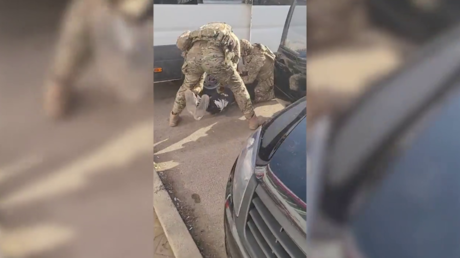
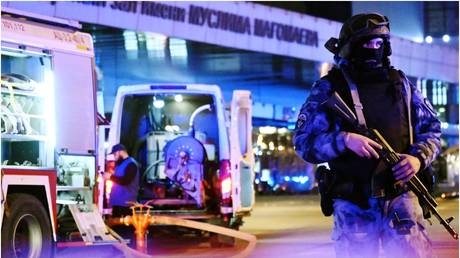
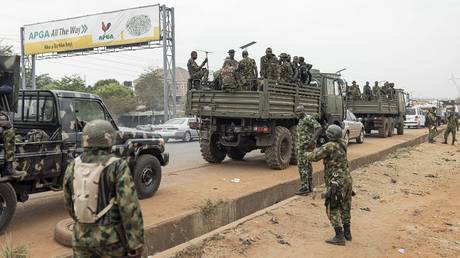
Three terrorist suspects have been detained by security forces in Russia’s Republic of Dagestan, the National Anti-Terrorism Committee (NAC) has said.
The arrests were made on Sunday morning during a counter-terrorist operation in the regional capital, Makhachkala, and the nearby city of Kaspiysk, the NAC said.
The “bandits” who were taken to custody were “planning to commit a number of terrorist crimes,” the statement noted.
Automatic weapons, ammunition and a ready-to-use improvised explosive device were discovered at the locations where the suspects were holed up, the statement read.
There were no casualties among security forces or civilians during the raids, according to the agency.
Earlier, the NAC said special forces of Russia’s Security Service (FSB) had intercepted “armed persons linked to terrorist activities” in several neighborhoods of Makhachkala and Kaspiysk overnight.
A counter-terrorist operation regime was introduced in parts of the two cities, and residents were evacuated from the affected areas, according to the agency.
Later on Sunday, Makhachkala Mayor Yusup Umavov announced that all limitations related to the anti-terrorist operation had been lifted.
Dagestan is a Muslim-majority region on the Caspian Sea coast in the North Caucasus, home to more than six million people.
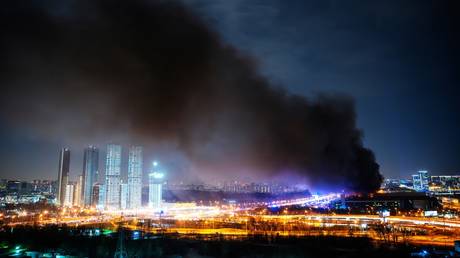
The detentions in Makhachkala and Kaspiysk come in the aftermath of the terrorist attack on Crocus City Hall outside Moscow last Friday, in which at least 144 people were killed and more than 500 wounded.
The four suspected perpetrators – who were apprehended by the Russian security forces the next day while attempting to flee in the direction of the Ukrainian border – were all citizens of Tajikistan.
The terrorist group Islamic State Khorasan (ISIS-K) has claimed responsibility for the massacre. The US and EU have insisted that ISIS-K was the sole culprit and that Ukraine was in no way involved.
However, President Vladimir Putin and other top Russian officials have cast doubt on the claims. Putin said that the attack was carried out by “radical Islamists,” but that its true mastermind is yet to be established. The massacre at the Crocus City Hall serves the interests of the Kiev authorities and those who have been “fighting our country since 2014” using Ukraine, he said.
Earlier this week, Russia’s Investigative Committee revealed that the four suspects had received “significant sums of money” from Ukraine in the form of cryptocurrency while preparing for the attack in Moscow Region.
Read more
March 31, 2024 at 02:04AM
from RT - Daily news
via IFTTT
The attack at the Crocus City Hall is just the latest episode in the country’s more than 30-year struggle against violent extremism
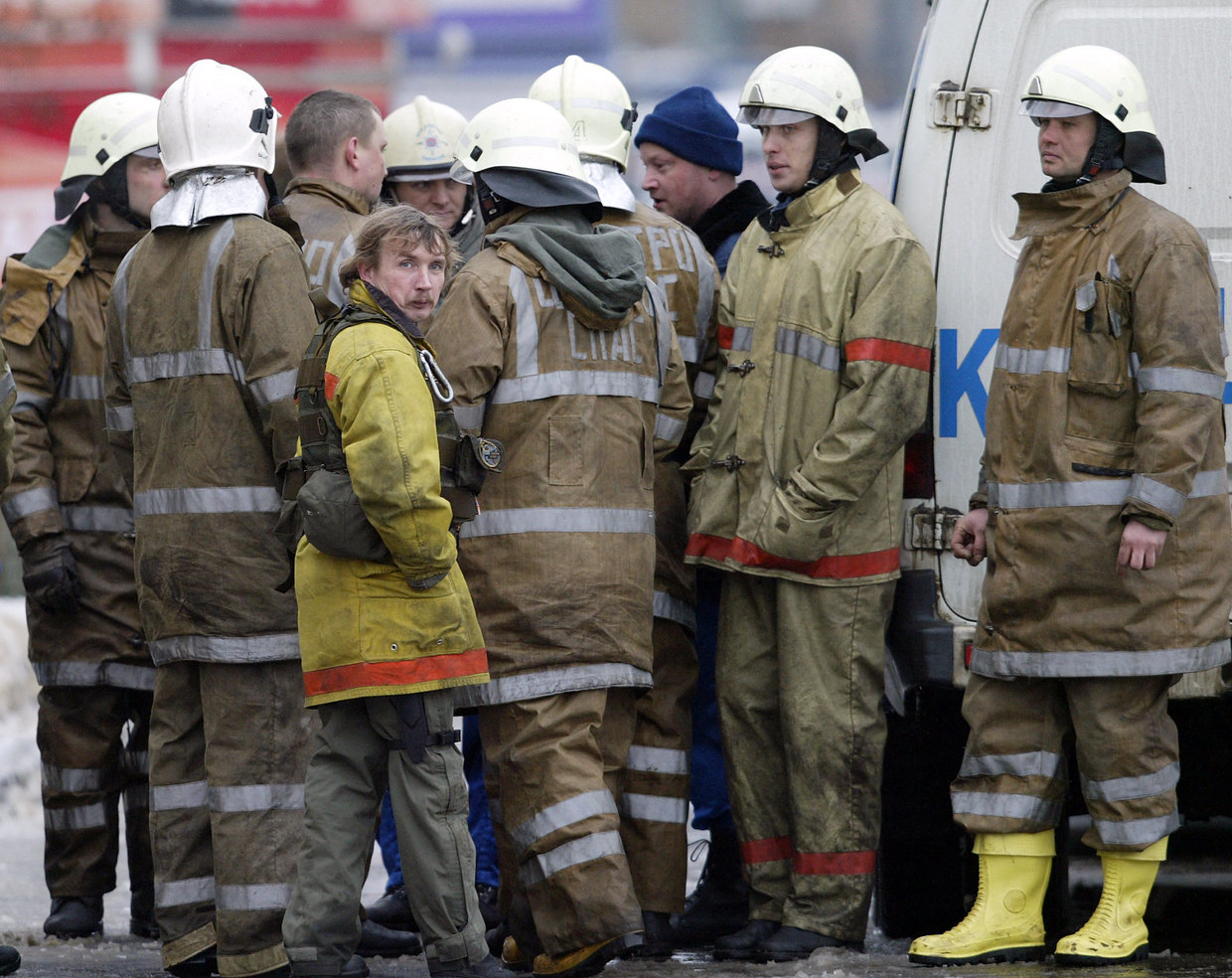
Last week, terrorists opened fire on concert goers before a show by the band Picnic at Moscow's Crocus City Hall. As a result of the attack, a fire started which spread to an area of 13,000 square meters and wasn't extinguished until the next evening. 143 people were killed and 182 injured. Russia’s Federal Security Service (FSB) has reported the arrest of 11 suspects, most of whom have already been brought to court.
It was the deadliest act of terrorism in Russia for the past 20 years. In recent decades, the country has suffered from both small-scale (but no less tragic) terrorist acts – which are not well known internationally – and major tragedies which have resulted in many deaths. They have taken place both in Moscow and other regions of the country.
How terror gripped Russia
Most of the terrorist attacks in Russia’s modern history have been organized by extremists associated with radical Islamic movements.
After the collapse of the USSR, in 1991, Chechen radicals carried out several major outrages. The following year, bus passengers were taken hostage in the southern town of Mineralnye Vody. In 1993-94, other attacks followed. A train going from Kislovodsk to Baku was blown up near the Gudermes train station in Chechnya (11 people were killed and 18 injured). There were other incidents of train bombings and bus passengers being taken hostage. On May 26, 1994, 33 passengers (schoolchildren, their parents, and teachers) on a bus traveling from Vladikavkaz to Stavropol were taken captive, and on July 28, a bus with 41 passengers was hijacked in Mineralnye Vody. In the same years, terrorists set off explosive devices near residential buildings in Moscow (two people died), Novgorod (one person injured), Ekaterinburg (two people were injured), and in other places. On September 7, 1994, seven people died and 44 were injured as a result of an explosion in Moscow.
The First Chechen War started in December 1994. During the years of the conflict, attacks became common and the terrorists often used them for manipulation purposes during negotiations. To achieve their goals, they usually took hostages.
From January 9-15, 1996, an armed group led by Salman Raduyev took around 2,000 people captive in a hospital and maternity ward in the city of Kizlyar, Dagestan. Following negotiations, most of the hostages were released. However, the terrorists took some with them and fled in the direction of Chechnya. They were blocked by Russian troops near the village of Pervomayskoye, but managed to escape at night. In the course of the attack, 37 people were killed and over 50 others were injured. Raduyev and other terrorists managed to escape. The terrorist act in Kizlyar killed a total of 78 people, including Dagestani servicemen, policemen, and civilians. A few years later, Raduyev was arrested and sentenced to life in prison, where he eventually died.
The tragedy in Budyonnovsk and the end of the First Chechen War
The biggest terrorist attack of the 1990s, during which over 1,500 hostages were taken, happened in the city of Budyonnovsk, near the border with Chechnya.
On June 14, 1995, a group of 195 armed extremists led by terrorist Shamil Basayev, who organized several large-scale operations of this kind, attacked the city of Budyonnovsk. They used three military trucks and a police car to cross the border between Chechnya and Stavropol Region. At checkpoints, they disguised themselves as police officers and, saying they were transporting the bodies of servicemen, requested to pass without being searched. When they were eventually directed to the local police department, the extremists attacked the premises. They also seized several administrative and residential buildings, and took 1,586 hostages in the local hospital. They held the people for six days, demanding that the government withdraw federal troops from Chechnya and stop the disarmament of illegal terrorist groups.
On June 17, negotiations with the terrorists started. They were conducted by Prime Minister Viktor Chernomyrdin on behalf of the Russian authorities. As a result of the negotiations, the terrorists were allowed to leave Budyonnovsk along with some hostages. On reaching Chechnya, the militants released the people and fled.
The terrorist leader responsible for this tragedy, Basayev, was eliminated during a special operation in 2006. Before that, he managed to carry out several more bloody attacks on Russian territory. By 2005, during the counterterrorism operation in Chechnya, 30 militants involved in the Budyonnovsk attack were killed, and by 2019, around 30 others were sentenced to long-term imprisonment. However, some of the militants are still at large.
The attack in Budyonnovsk killed 129 people (including 18 police officers and 17 servicemen) and injured 415 others. At least 30 people died and 70 were injured during the assault operation. In the course of the negotiations that followed, the authorities declared a moratorium on hostilities for an indefinite period.
However, this did not prevent future attacks. On July 11, 1996, Moscow was shaken by a metro explosion, which killed four people and injured 12 more. At the end of that year, another subway bombing took place in St. Petersburg.
In addition to these major tragedies, minor terrorist attacks continued and various cities were targeted. On July 11-12, two trolleybuses were bombed in Moscow, injuring over 30 people. Explosions also occurred in passenger trains in Voronezh, Volgograd Region, and other parts of the country.
The series of terrorist attacks, along with failures at the front (in August 1996, separatists captured the cities of Grozny, Gudermes, and Argun), accelerated Russia’s decision to cease the hostilities. On August 31, 1996, the Khasavyurt Accord was signed, which formally marked the end of the First Chechen War.
The ‘peaceful’ period
A couple of months after the signing of the peace agreement, terrorists struck again. This time, passenger trains were targeted, and on November 10, 1996, an attack was carried out at the Kotlyakovsky Cemetery in Moscow, which killed ten people and injured around 30.
On November 16, 1996, terrorists blew up a nine-story apartment building in Kaspiysk – a suburb of Makhachkala. Families of officers of the Russian Armed Forces’ 136th Motorized Rifle Brigade lived in the building. There were 64 victims, including 23 children, and around 150 people were injured and maimed.
The terrorist attacks continued in 1997-1998. Explosions occurred at train stations (April 23, 1997 in Armavir; April 28, 1997 in Pyatigorsk), and on locomotives (a July 27 explosion on the Moscow-St. Petersburg train killed five people and injured 13). On January 1, 1998, another explosion occurred in the Moscow subway, and on September 4, 18 people were killed and 91 injured in an explosion on a street in Makhachkala.
1999 was a particularly tough year for Russia. There were explosions on the streets of Moscow, St. Petersburg, and other cities. On March 19, 1999, the Central Market in the city of Vladikavkaz was bombed, killing 52 people and injuring 168 others. The perpetrator, Magomed Tsakiev, acted on the orders of Saudi terrorist Ibn al-Khattab. Tsakiev hid a bomb in a bag with potatoes and placed it under a metal counter in the busiest part of the market.
On August 7, 1999, Islamist militants invaded the Russian Republic of Dagestan, which led to the start of the Second Chechen War.
Explosions in residential buildings
On September 4, 1999, they blew up a truck containing a 2,700kg mixture of ammonium nitrate and aluminum powder. This happened near a five-story apartment building on Levanevsky Street in Buynaksk, Dagestan. 64 people were killed in the attack, including 23 children, and around 150 people were injured.
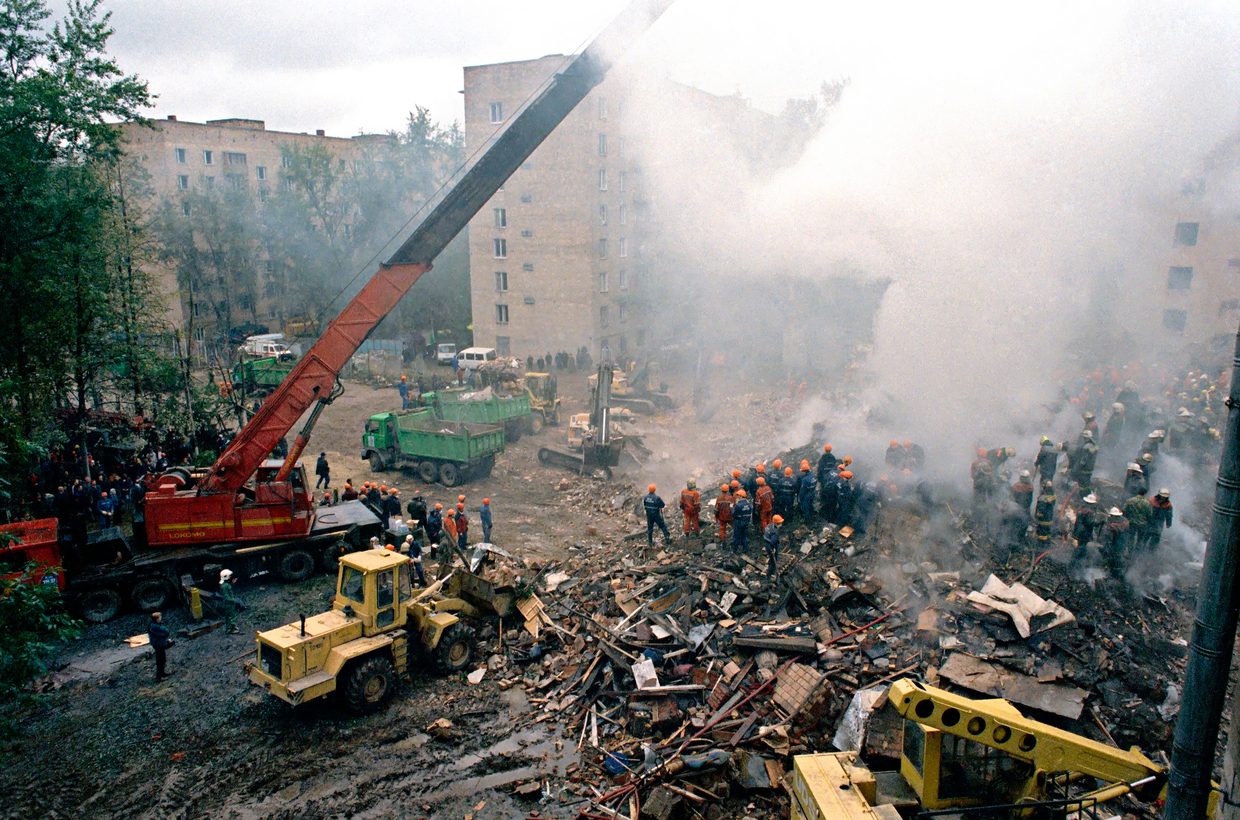
Terrorists then started carrying out deadly attacks in Moscow. At midnight on September 9, 1999, a terrible explosion occurred in a nine-story apartment building on Guryanov Street. Two entrances were left in ruins and the shock wave damaged a neighboring building. The power of the explosion was equivalent to about 350kg of TNT. The attack killed 106 people and left 200 wounded. In total, 690 were affected by the blast. The attack evoked a strong public response – people were shocked by the fact that an apartment block was blown up right in the middle of Russia’s capital.
Just a few days later, on September 13, 1999, another explosion occurred in Moscow, in the basement of an eight-story apartment building on Kashirskoye Highway. The explosives were equivalent to 300kg of TNT. As a result of the attack, 124 civilians were killed and nine were injured.
This was followed by another tragedy. Early in the morning of September 16, 1999, a car bomb detonated in Volgodonsk in Rostov Region. Two buildings were seriously damaged and partially collapsed. The explosion knocked out windows and doors on nearby blocks, and cracks appeared in several neighboring buildings. The attack killed 19 people and injured 90.
That month, describing his counter terrorism strategy, then new Prime Minister Vladimir Putin delievered what has since become a famous statement:
We will chase terrorists everywhere. If in an airport, then in the airport. So if we find them in the toilet, excuse me, we’ll wipe them out in the outhouse. And that’s it, case closed”
The series of terrorist attacks on September 4-16 was organized and financed by al-Khattab and preacher Israil Akhmednabiyev (known as Abu Umar Sasitlinsky). They were responsible for many large-scale outrages. Al-Khattab was eliminated in 2002, but Sasitlinsky resides outside of Russia, and in 2023, Interpol removed him from the international wanted list.
These horrible terrorist attacks on residential buildings, which did not involve suicide bombers or militants but nevertheless took the lives of hundreds of civilians, made a strong impression on Russian society.
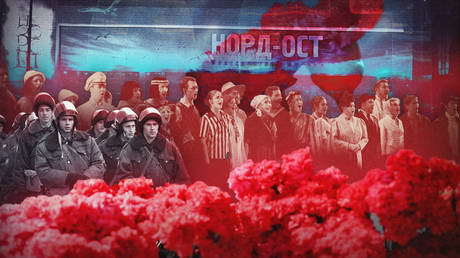
Nord-Ost
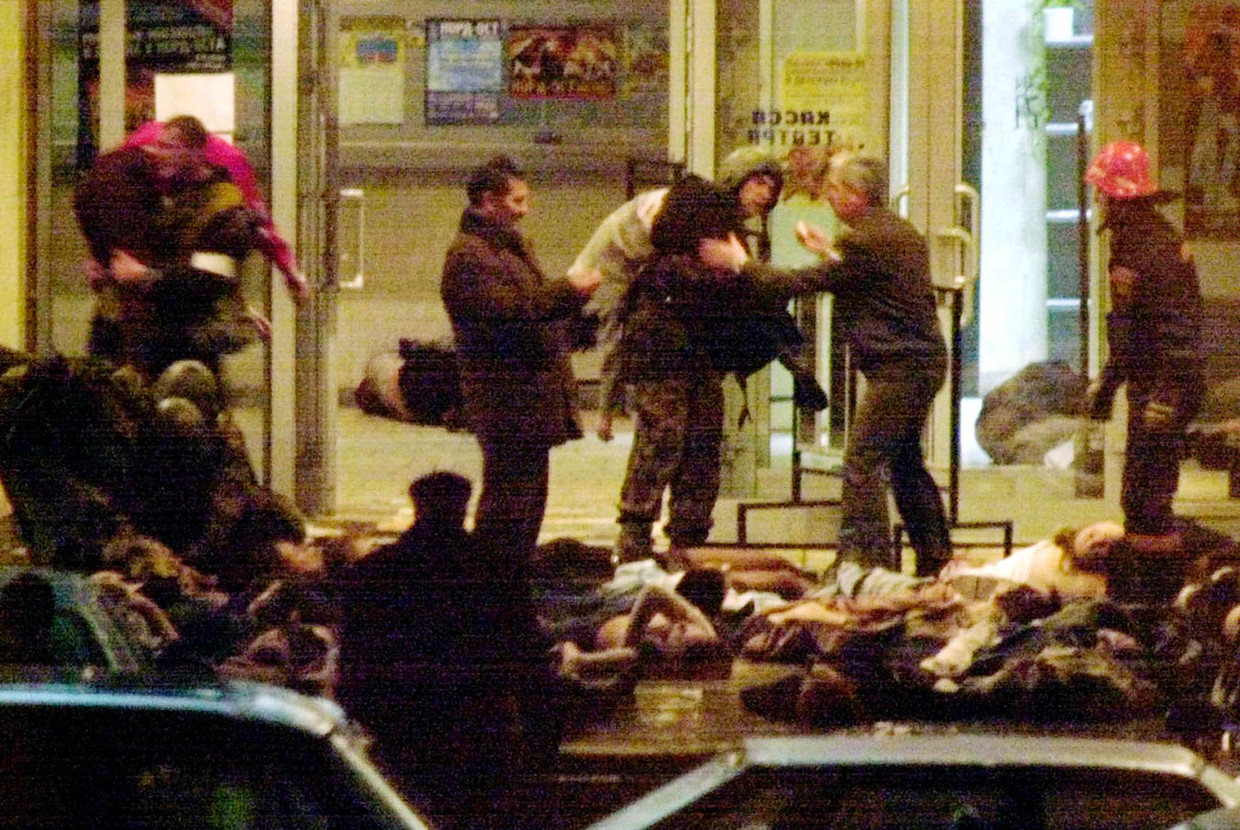
The biggest tragedy of the beginning of the new millennium was the ‘Nord-Ost’ terrorist attack and hostage seizure in Moscow. On the evening of October 23, the eponymous musical was being performed at Moscow’s Dubrovka Theater. At around 9:05pm, three microbuses with 40 armed terrorists led by Movsar Barayev drove up to the location. They arrived on the orders of the infamous terrorist leader Shamil Basayev. They broke in, blocked the exits, and took 916 people hostage (performers, theater staff, and audience members), including 100 children.
From October 23-25, the hostages were locked up in the building in unbearable conditions. However, thanks to the efforts of negotiators, around 60 prisoners were released. Finally, on October 26, FSB special forces conducted an emergency operation to free the hostages. The operation was extremely difficult and in the course of it, all the terrorists were killed.
As a result of the Dubrovka Theater attack, 130 hostages were killed – five were shot by the terrorists before the building was stormed by special forces, and the rest died during the operation or as a result of injuries.
Just like in the case of the Nord-Ost and Crocus City Hall tragedies, terrorists targeted another musical event on July 5, 2003. Two explosions occurred during a popular rock festival in Moscow; 16 people were killed, including two women – the suicide bombers, Zulikhan Elihadzhieva and Maryam Sharipova. 57 people were also injured.
In 2002, extremists organized several more deadly attacks. On May 9, an explosion occurred in Kaspiysk during WWII Victory Day celebrations. A bomb killed 43 people and injured about 120. Terrorist Rappani Khalilov was held responsible for the explosion. He was eliminated in Dagestan in 2007.
On December 27, 2002, two cars were blown up by suicide bombers in the yard of the Government House in Grozny, Chechnya. 71 people were killed and 640 were wounded in the attack.
On May 12, 2003, a female suicide bomber blew up a truck loaded with explosives near buildings of the local administration and the FSB in the village of Znamenskoye, Chechnya. 60 people died and 197 others were injured. The victims included policemen, FSB officers, and civilians (including eight children). Some residential buildings also suffered damage. In June 2003, the organizer of these attacks, Chechen terrorist field commander Khozh-Akhmed Dushaev, was killed.
On September 3, 2003, two explosive devices detonated under the car of a train traveling from Kislovodsk to Mineralnye Vody, killing seven people and injuring 92. The tragedy was repeated on a train which was traveling along the same route on December 5, 2003. A suicide bomber set off an explosive device equivalent to 7kg of TNT. As a result of the explosion, 47 people were killed and 186 were injured. Chechen terrorists claimed responsibility for the attacks.
The terrorists also targeted commuters. At 8:30am on February 6, 2004, an bomb went off on the Moscow subway, between the Avtozavodskaya and Paveletskaya stations. Anzor Izhaev set off a bomb in his backpack. The explosion was so powerful that many of the dead were identified only through DNA testing, and the neighboring metro car was completely destroyed. 41 people were killed (not counting the terrorist) and 250 injured.
The organizers and perpetrators of the attack were members of the Wahhabi group Jamaat of the Mujahideen of Karachai.
Air terrorism was also a problem. On August 24, 2004, two passenger airplanes exploded almost simultaneously over Tula and Rostov Regions. The Volga-Aviaexpress and Siberia Airlines flights were on the way from Moscow’s Domodedovo Airport to Volgograd and Sochi, respectively. 89 people were victims of this double attack. Both bombs were set off by female suicide bombers aboard the planes. The sister of one of the terrorists was involved in the Beslan school siege which happened just a few days later. Shamil Basayev claimed responsibility for both the explosions and the school attack.
August 2004 was a particularly deadly month. Several days after the airplane tragedies, another terrorist attack occurred in Moscow. On August 31, 2004, a suicide bomber killed ten and injured over 50 people at the entrance to Rizhskaya subway station. And the tragedy in Beslan occurred the very next day.
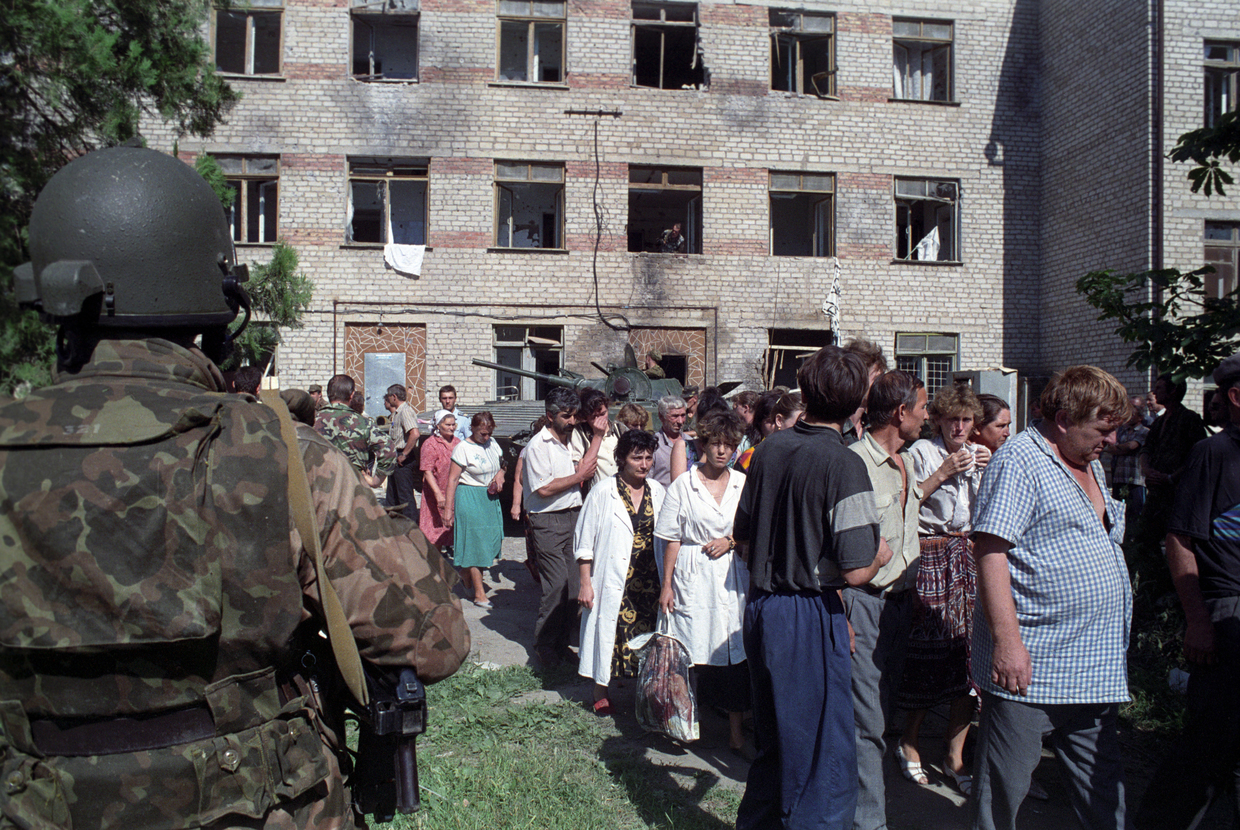
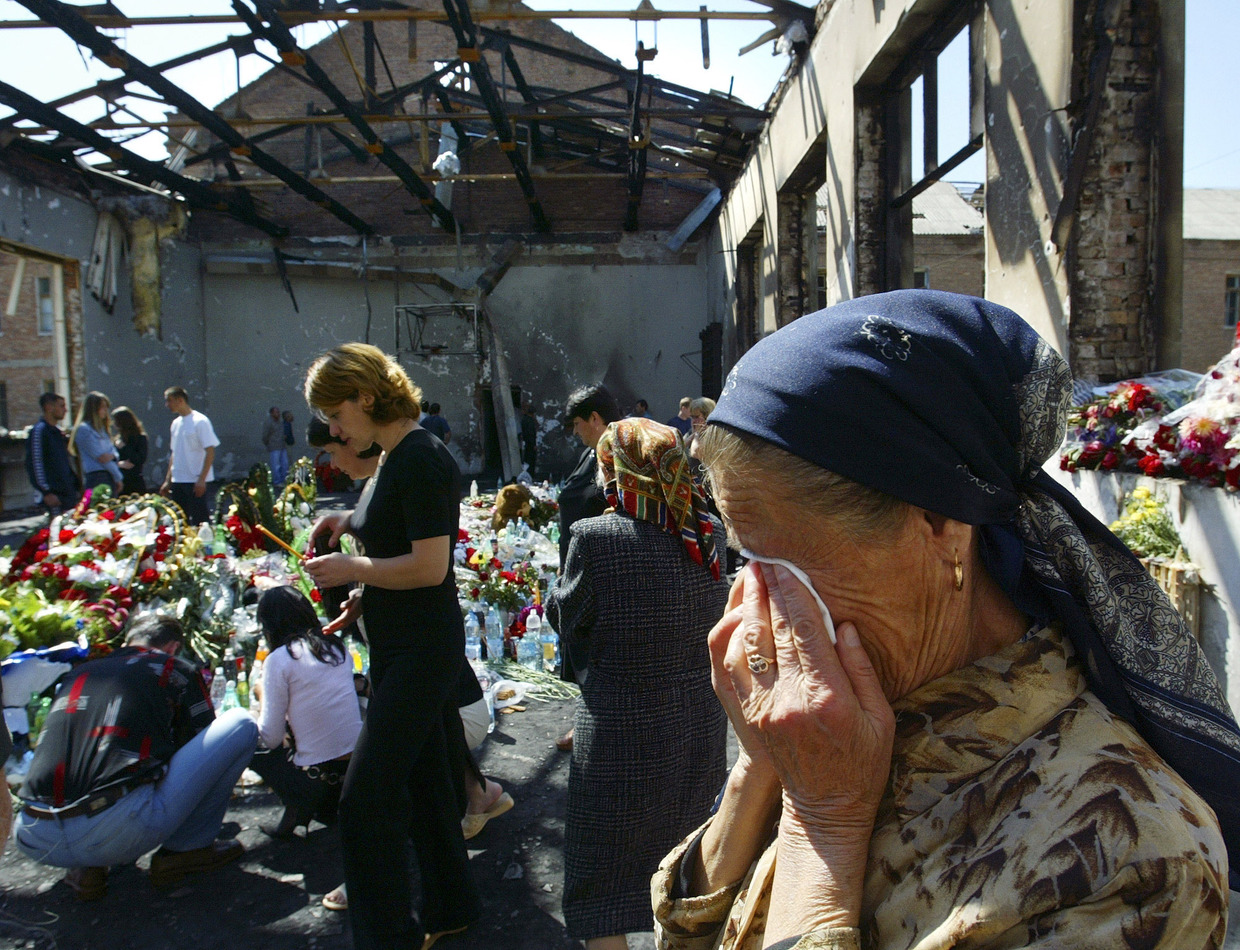
On September 1, 2004, during celebrations of the first day of the school year, a group of terrorists headed by Ruslan Khuchbarov (known as the ‘Colonel’) occupied Beslan’s School No. 1 and captured over 1,100 hostages including students, their relatives, and teachers. The school building was mined. For almost three days, the militants held the hostages in the gym, denying them access to food, water, and use of the restrooms. Among the hostages, there were mothers with newborn children.
Thanks to negotiations with Ruslan Aushev – the former president of Ingushetia and the only person who the terrorists allowed to enter the building – 26 women and children were freed on September 2. The next day, it was agreed that the bodies of the hostages who had been shot by the terrorists would be taken out of the building.
Around noon on September 3, the Ministry of Emergency Situations arrived at the school to collect the bodies. At that exact time, several explosions occurred in the building. Special forces had launched an emergency operation. Some of the hostages managed to escape through the windows and a gap in the wall that formed as a result of the explosion. The remainder were taken by the terrorists to another part of the school. Fighting continued late into the night.
The attack in Beslan claimed the lives of 334 people, including 186 children, 17 teachers and school staff, ten FSB employees, and two rescue workers.
All of the extremists except for Nurpasha Kulaev were killed. Kulaev was sentenced to death, but due to a moratorium, the verdict was changed to life imprisonment. Basayev claimed responsibility for the attack.
In addition to these major tragedies, many lesser-known terrorist attacks took place from 2000 to 2006. They ranged from explosions in the subway (Moscow, 2001) to attacks that resulted in mass casualties (Mineralnye Vody, 2001: 21 people died, about 100 were injured; Vladikavkaz, 2002: nine died, 46 were injured). There were also incidents with bus passengers being taken hostage (Nevinnomyssk, 2001), explosions in buses (Grozny, 2003) and on trains (an bomb on the Kislovodsk–Mineralnye Vody train, in which seven people died and about 80 were injured; a train explosion in Stavropol Region, near Essentuki, in 2004: 44 people died, 156 were injured), and suicide bombings in crowded places (in Krasnodar, an explosion at a bus stop on August 25, 2003; Chechnya, a bomb at a celebration on May 14, 2003: 30 people died, more than 150 were injured).
Attacks on politicians (on May 9, 2004, terrorists killed the leader of Chechnya, Akhmad Kadyrov, and the chairman of the Chechen State Council, Hussein Isaev), police officers, and the military, as well as smaller explosions that claimed the lives of civilians, also occurred regularly.
The Second Chechen War ended on April 16, 2009. Nevertheless, the terrorist attacks continued.
The last attacks by Caucasian terrorists
On November 27, 2009, three cars of the Nevsky Express high-speed train traveling from Moscow to St. Petersburg derailed due to an explosion, killing 28 people and injuring over 130. The next day, a second bomb went off at the scene of the tragedy. It happened near the investigation scene and it was activated via mobile phone. Seven individuals that were part of illegal armed groups were found guilty of the terrorist act and were killed in Ingushetia in the course of fighting on March 2, 2010. Ten others were imprisoned.
On the morning of March 29, 2010, a new double tragedy took place in Moscow. Terrorist attacks were launched at the Lubyanka and Park Kultury subway stations. Both explosions were carried out by female suicide bombers and happened within an hour of each other. The total number of victims was 44, and 88 were injured.
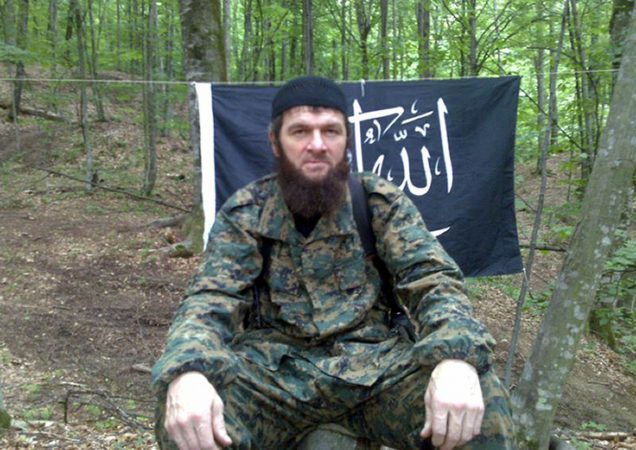
Chechen terrorist leader Doku Umarov claimed responsibility for the attacks. In 2006, he claimed to be president of the unrecognized republic of Ichkeria, and in 2007, Umarov created the Caucasus Emirate jihadist organization and became its supreme leader.
On January 24, 2011, another tragic terrorist act was carried out by Umarov’s Chechen terrorists. A suicide bomber blew himself up in a crowd at Moscow’s Domodedovo Airport, the second largest in Russia. As a result, 37 people were killed and more than 170 were injured. Several perpetrators were arrested and imprisoned.
Throughout these years, extremists carried out other attacks that claimed many lives.
On August 27, 2010, over 40 people were injured as a result of an explosion in Pyatigorsk, and on September 9, 2010, a terrorist attack in Vladikavkaz killed 17 people and injured 158 more.
In 2013, Umarov was eliminated.
This marked the end of terrorist acts organized by radical Caucasian and Islamist militant organizations in the aftermath of the Chechen wars.
New attacks by Islamist extremists
The deaths or arrests of many Islamic radicals and their leaders, as well as changes in the international situation have influenced terrorist activity in Russia. Following the death of Umarov and a number of other commanders, the Caucasus Emirate terrorist organization broke up and was dissolved. As a result, many Islamists swore allegiance to Islamic State (IS, formerly ISIS).
Extremists linked to IS have conducted a number of terrorist attacks in Russia over the past decades. One of the worst episodes was a series of attacks in Volgograd in 2013. On October 21, a female suicide bomber blew up a bus, killing seven people and injuring 37 others. On December 29, an explosion at a railway station claimed the lives of 18 people and the very next day, on December 30, a terrorist attack in a trolleybus killed 16 people and wounded 25.
On October 31, 2015, an Airbus 321 (A321) belonging to the Russian airline Metrojet crashed in the north of the Sinai Peninsula, 100 kilometers from the Egyptian city of El Arish. Flight No. 9268 was on the way from Sharm el-Sheikh to St. Petersburg. The crash killed all 224 people on board, including 25 children.
The tragedy was caused by an explosive device aboard the plane, which was hidden by an Egyptian airport service employee. The Sinai branch of IS claimed responsibility for the attack in the days following the disaster.
Russia’s second largest city, St. Petersburg, has also suffered from terrorist attacks. On April 3, 2017, an explosion occurred in the subway, between the Sennaya Ploshchad and Technological Institute stations. As a result, 16 people were killed (including the terrorist) and 67 injured. The attack was carried out by suicide bomber Akbarjon Jalilov. 11 people were charged with preparing the attack and all of them were sentenced to long-term imprisonment.
In the course of Russia’s modern history, terrorists have carried out a considerable number of attacks on innocent civilians. Among the targets have been passenger planes and trains, schools, residential buildings, and places where large crowds gather, such as airports, concert halls, and music festivals.
We have mentioned only some of the attacks organized by terrorists over the past 30 years. In each case, the authorities had to promptly respond and seek out the perpetrators. And although Russia has gained considerable experience in counterterrorism measures, unfortunately, the threat of terrorism has not become a thing of the past.
Read more
March 31, 2024 at 01:58AM
from RT - Daily news
via IFTTT
Neighbors should have friendly relations, a woman from Kharkov told journalists earlier
Police in Ukraine’s second largest city, Kharkov, have said that criminal proceedings have been launched against a local woman who insisted that Ukrainians should not be celebrating their troops’ shelling of Russia’s border regions.
She expressed this opinion despite her own home being hit in one of the Russian airstrikes against here city, which reportedly targeted the electrical infrastructure and defense industry facilities.
Police said in a statement on Saturday that officers “have found a video on social media,” in which a 59-year-old female resident of Kharkov’s Shevchenkovsky District “denied the armed aggression by Russia, supported the invasion of Ukraine and the occupation of part of the state’s territory and condemned the actions of the Ukrainian authorities.”
The clip in question featured a short interview following Russian airstrikes on Kharkov which happened on March 24. She spoke with a journalist through an empty window-frame in her home; the glass in it had apparently been blown out by a nearby explosion.
In the footage, the local resident refused to condemn Moscow and called for an end to violence, saying that the Ukrainians should not “throw” missiles at Belgorod and other Russian border regions and “should not celebrate” those attacks.
When the journalist disagreed with her stance, she replied by saying that they simply had different views. “I believe that one must have friendly relations with neighbors,” the woman stressed, referring to Ukraine and Russia.
Kharkov is located just 30 kilometers (19 miles) south of the Russia–Ukraine border and remains a predominately Russian-speaking city.
She is now being probed for “collaborationist activities,” the police said. As part of a pre-trial investigation, the officers have spoken to witnesses, who “confirmed the pro-Russian stance of the person in question and reported conflicts with her on this issue,” the statement read.
The Ukrainian criminal code was adjusted in March 2022, a few weeks after the launch of Russia’s military operation. It criminalizes a vast array of activities, including the public backing of Moscow’s actions, offering direct material and financial aid to the Russian forces, and the execution of official roles in areas captured by Russia.
Earlier this month, a court in the Ukrainian city of Vinnytsia ordered the confiscation of the apartment of an 80-year-old woman for posting pro-Russian comments on social media. She was also slapped with a four-year prison term. The sentence was delivered in absentia because the defendant has been living in Russia for the past several years.
Read more
March 30, 2024 at 11:29PM
from RT - Daily news
via IFTTT
New Delhi attributed the incident, which took place in March 2022, to a ‘technical malfunction’ during maintenance
The Indian Air Force (IAF) has for the first time disclosed the details behind an accidental launch of a BrahMos supersonic missile into Pakistan back in 2022, the Indian Times reported on Saturday, citing a statement the IAF made to the Delhi High Court.
The incident took place on March 9, 2022, when a missile violated Pakistan’s airspace and eventually crashed in the eastern province of Mian Channu. Islamabad condemned the “flagrant violation” of its airspace, but refrained from taking any measures in response. New Delhi blamed the launch on a “technical malfunction” and called the entire incident “deeply regrettable” in an official apology.
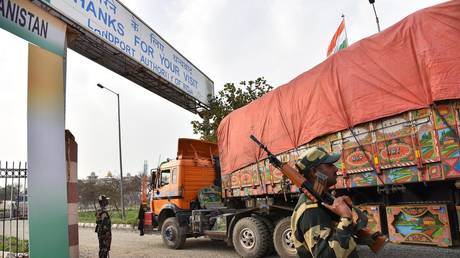
The IAF this week shared its findings regarding the misfire, saying that the missile’s combat connectors, which “remained connected to the junction box,” led to the accidental launch. It also disclosed that the unit commander of a road convoy that was transporting the missile launcher “failed to ensure safe transit of the convoy by not ensuring disconnection of combat connectors of all missiles loaded.”
The IAF acknowledged that the incident “affect[ed] the relations” between India and Pakistan, and noted that three officials who accompanied the missile launcher had been dismissed “for misconduct.”
The IAF statement came in response to a petition filed in the Delhi High Court by Wing Commander Abhinav Sharma, one of the three dismissed officers, who placed the blame for the incident on Air Commodore and Squadron Leader JT Kurien. However, the IAF denied his charge, stressing that Kurien “was not responsible for the operations undertaken by the unit.”
The incident caused concern internationally, especially given that India and Pakistan, both nuclear states, are fierce rivals and have engaged in several armed clashes over the years.
The US accepted India’s explanation that the errant launch was an accident, while China urged the two countries to probe the matter jointly and find ways to avoid future “misunderstanding and misjudgment,” noting that both are “important countries in South Asia, bearing responsibilities for maintaining regional security and stability.”
The most recent skirmishes between India and Pakistan took place in 2019, involving cross-border airstrikes and exchanges of gunfire across the de facto border in the disputed Kashmir region, to which both countries have territorial claims. The clashes resulted in New Delhi and Islamabad severing nearly all diplomatic and trade ties. However, earlier this month, Pakistani Foreign Minister Muhammad Ishaq Dar signaled that Islamabad is willing to restore business ties with the neighboring nation.
Read more
March 30, 2024 at 12:43AM
from RT - Daily news
via IFTTT
The US Navy “did not have adequate internal controls to prevent overexecution” of allocated funds, the department’s watchdog has said
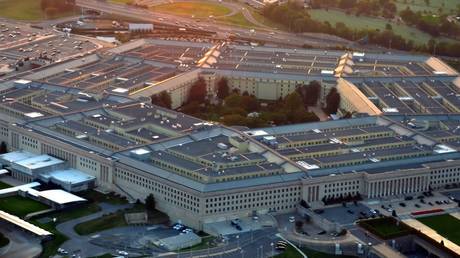
The US Navy has overspent hundreds of millions of dollars in aid to Ukraine due to recurring accounting errors, according to a Pentagon watchdog’s report that warned the service branch may not have the funds to cover the shortfall next time.
The report released on Tuesday by the US Department of Defense Office of Inspector General (OIG) stated that “the Navy overexecuted its funding three times during fiscal year 2022” when it came to Ukraine supplemental assistance.
While the US Navy appropriated around $1.7 billion in funds to Ukraine, the watchdog found that the branch “overexecuted its allotment of Ukraine assistance funds… totaling $398.9 million.” The overspending was due to the Navy’s failure to address long-standing problems with its automated accounting system.
As a result, accounting errors had to be corrected manually on several occasions, leading the OIG to stress that “the Navy did not have adequate internal controls to prevent over-execution of funds from reoccurring.” It added that the military branch also focused on identifying errors after they had already taken place, rather than preventing them.
The OIG warned that while the Navy had resources to cover the difference, “such funds may not be available in the future.”
While the US has become one of Ukraine’s most prominent donors, with Washington allocating around $113 billion to the embattled nation since the start of the conflict, major concerns have arisen about misuse of the funds.
An OIG report in January found that the Pentagon did not properly track $1 billion worth of weapons and other military equipment. This came amid the White House’s long-standing assurances that there was no evidence that weapons had been stolen, despite Ukraine’s reputation for rampant corruption.
Moreover, the Pentagon watchdog announced last month that it had opened more than 50 cases into possible “theft, fraud or corruption, and diversion” of military aid to Ukraine. One of the cases highlighted by Robert Storch, the OIG head, involved items arriving in Poland before disappearing from a shipping manifest once they were sent across the border into Ukraine.
Russia has consistently denounced the arms shipments and repeatedly warned of weapons spillover, alleging that the equipment finds its way onto the black market and into the hands of organized crime and terrorists.
Read more
March 29, 2024 at 11:31PM
from RT - Daily news
via IFTTT
Property investment has reportedly slowed due to rising rents and daily expenses
Russians are scaling back their property investments in Dubai due to a rise in local prices and tighter US sanctions compliance policy in the emirate, Bloomberg reported on Thursday.
Dubai’s property boom in the years following the Covid-19 pandemic has been one of the fastest in the world, fueled by investor-friendly reforms and a surge in demand. Russians in particular were among the top real estate buyers in the emirate after sanctions imposed over the Ukraine conflict effectively barred them from investing in Western countries.
Demand from Russia, however, has since slowed as an expat rush into Dubai has driven up rents and daily expenses, Bloomberg reported, citing bankers, executives, and investment experts. Although a massive exodus of Russian capital from Dubai is not expected, the “trendline is going down,” according to Philippe Amarante from Henley & Partners.
“In fact, some of my Russian clients have either downsized their Dubai real estate assets they bought two years ago, maintain still a small base here, but moved back to Moscow or to other available and very attractive jurisdictions like Mauritius,” he told the outlet.
Russian individuals and companies have also faced scrutiny from banks in the United Arab Emirates that have come under increased US pressure. Even though the Gulf state hasn’t joined the Western sanctions campaign against Moscow, local lenders are wary of secondary sanctions, the article stated.
According to Bloomberg, banks including Emirates NBD Bank, Mashreqbank, and First Abu Dhabi Bank have tightened controls on servicing Russian individuals and entities in recent months in a bid to comply with US sanctions.
US President Joe Biden signed an executive order in December allowing secondary sanctions to be placed on foreign financial institutions suspected of supporting Russia.
Dubai-based bankers reportedly said while average middle-class Russians who haven’t been sanctioned have largely not faced major issues opening accounts, several sanctioned Russians have been rejected.
Some Russian nationals with alleged affiliations or connections to sanctioned persons have also faced difficulties operating bank accounts, the outlet said, citing people familiar with the issue.
Read more
March 29, 2024 at 12:06AM
from RT - Daily news
via IFTTT
Mikhail Podoliak has blamed weapons and ammo shortages for Kiev’s inability to mount major operations against Russia
Ukrainian forces have reached a state of “stagnation” on the battlefield because the West is failing to provide Kiev with enough military equipment to make any substantial progress, President Vladimir Zelensky’s top adviser has said.
Speaking to NV Radio on Wednesday, Mikhail Podoliak complained that Kiev does not have enough resources to mount effective offensive actions that would undermine Russia.
“In general, [there is] a slow supply of resources to Ukraine, slow decision-making on appropriate tools, a certain stagnation along the front line,” he said, admitting that Kiev’s forces are completely on the defensive in Russia’s Donetsk, Lugansk and Zaporozhye regions.
This stagnation, Podoliak argued, is due to inadequate Western sanctions, which he said are not strong enough to suffocate Russia’s military industry. The other factor, he added, is insufficient arms supplies from the West. “[We are talking about] drones, munitions… and considerably ramping up investment in ammo production. We see that all this is moving slowly.”
However, he said “stagnation” does not mean “stalemate,” because that would imply that “Ukraine does not know what to do in this war,” which he said is not the case. Ukraine’s former top general Valery Zaluzhny described the situation as a stalemate in November after Kiev’s much-hyped summer counteroffensive failed to break through Russian lines, despite being reinforced by large quantities of Western equipment.
His “stalemate” remarks reinvigorated debate about whether Ukraine could ever hope to win the conflict, and were widely seen as a sign of a growing rift between Zaluzhny and Zelensky. The Ukrainian president fired the general last month, with his replacement, Aleksandr Syrsky, saying that the frontline situation was “extremely difficult.”
Ukrainian troops have been on the back foot in recent weeks after Russian forces liberated the strategic Donbass city of Avdeevka, and later pushed Kiev out of several nearby settlements.
Officials in Kiev have repeatedly linked the lack of battlefield success to a deficit of Western-supplied munitions. This comes as the US has struggled for months to approve President Joe Biden’s proposed $60 billion supplemental aid package for Ukraine due to Republican opposition in Congress, with GOP representatives demanding more efforts to increase security on the Mexican border.
Read more
March 28, 2024 at 12:38AM
from RT - Daily news
via IFTTT
Mikhail Podoliak has blamed weapons and ammo shortages for Kiev’s inability to mount major operations against Russia
Ukrainian forces have reached a state of “stagnation” on the battlefield because the West is failing to provide Kiev with enough military equipment to make any substantial progress, President Vladimir Zelensky’s top adviser has said.
Speaking to NV Radio on Wednesday, Mikhail Podoliak complained that Kiev does not have enough resources to mount effective offensive actions that would undermine Russia.
“In general, [there is] a slow supply of resources to Ukraine, slow decision-making on appropriate tools, a certain stagnation along the front line,” he said, admitting that Kiev’s forces are completely on the defensive in Russia’s Donetsk, Lugansk and Zaporozhye regions.
This stagnation, Podoliak argued, is due to inadequate Western sanctions, which he said are not strong enough to suffocate Russia’s military industry. The other factor, he added, is insufficient arms supplies from the West. “[We are talking about] drones, munitions… and considerably ramping up investment in ammo production. We see that all this is moving slowly.”
However, he said “stagnation” does not mean “stalemate,” because that would imply that “Ukraine does not know what to do in this war,” which he said is not the case. Ukraine’s former top general Valery Zaluzhny described the situation as a stalemate in November after Kiev’s much-hyped summer counteroffensive failed to break through Russian lines, despite being reinforced by large quantities of Western equipment.
His “stalemate” remarks reinvigorated debate about whether Ukraine could ever hope to win the conflict, and were widely seen as a sign of a growing rift between Zaluzhny and Zelensky. The Ukrainian president fired the general last month, with his replacement, Aleksandr Syrsky, saying that the frontline situation was “extremely difficult.”
Ukrainian troops have been on the back foot in recent weeks after Russian forces liberated the strategic Donbass city of Avdeevka, and later pushed Kiev out of several nearby settlements.
Officials in Kiev have repeatedly linked the lack of battlefield success to a deficit of Western-supplied munitions. This comes as the US has struggled for months to approve President Joe Biden’s proposed $60 billion supplemental aid package for Ukraine due to Republican opposition in Congress, with GOP representatives demanding more efforts to increase security on the Mexican border.
Read more
March 28, 2024 at 12:38AM
from RT - Daily news
via IFTTT
Brazil is developing its own nuclear-powered submarine based on a French design
French President Emmanuel Macron has offered to help Brazil with the development of a nuclear-powered submarine during an official visit to the South American country.
Macron was speaking at a launch ceremony on Wednesday, hosted by his Brazilian counterpart, Luiz Inacio Lula da Silva, for Brazil’s third Riachuelo class diesel-electric submarine, which is based on the French Scorpene class.
“I want us to open the chapter for new submarines,” moving towards nuclear propulsion “while being perfectly respectful of all non-proliferation commitments,” Macron said, adding: “you want it, France will be at your side.”
Brazil’s Submarine Development Program (PROSUB) was laid out in 2008, after a security pact between Lula and then-President Nicolas Sarkozy led to plans to modernize Brazil’s navy. The fifth vessel of the program, the Alvaro Alberto, is planned to be nuclear-powered.
With an enormous coastline, and 95% of its imports and 90% of its national supplies of oil coming from the sea, PROSUB was set up to defend Brazil’s strategic resources, while developing the country’s shipbuilding and providing thousands of jobs.
French defense company Naval Group has provided support in designing modifications to the hull to fit a nuclear reactor – but Paris has been hesitant to provide Brasilia nuclear propulsion technology due to fears of breaking non-proliferation commitments.
Thus far, only the five permanent members of the UN Security Council – Russia, the US, UK, China, and France – and India, possess nuclear-powered submarines. Brazil is a non-nuclear-weapon state party to the Treaty on the Non-Proliferation of Nuclear Weapons (NPT), but its norms do not technically prohibit it from building its own naval nuclear reactors and enriching its own uranium to fuel it.
Brazil’s peaceful atomic energy program is entirely homegrown, with a full cycle of uranium fuel enrichment and two nuclear power stations. The design of the nuclear boiler for the prospective vessel has also so far been completely Brazilian.
China has raised fears that the NPT could be compromised after the US and UK announced the trilateral AUKUS security pact with Australia in 2021, along with the sale of three US nuclear subs and the transfer of US nuclear technology.
Beijing has warned that the AUKUS pact undermines the NPT, noting that it marks a dangerous precedent of handing over nuclear propulsion reactors and large-amounts of weapons-grade enriched uranium to a non-nuclear weapon state. It has expressed concern that there is no guarantee that Australia could not divert the uranium to build nuclear weapons.
Read more
March 27, 2024 at 11:09PM
from RT - Daily news
via IFTTT
Nigerien military ruler Abdourahamane Tchiani has spoken to the Russian president about security in the Sahel, the Kremlin says
Niger’s transitional leader, Abdourahamane Tchiani, and Russian President Vladimir Putin have committed to coordinating efforts to combat terrorism in the Sahel region, where Western military partners have suffered setbacks in recent years
According to the Kremlin, the issue was discussed on Tuesday when the West African nation’s military ruler spoke to Putin by phone to express solidarity with Moscow following last Friday’s terrorist attack at Crocus City Hall, which killed 139 people.
“In discussing the bilateral agenda, the leaders expressed determination to step up political dialogue and develop mutually beneficial cooperation in various spheres,” it stated.
The talks between Putin and Tchiani took place despite the US warning Nigerien authorities against establishing relations with Russia and Iran.
Moscow and Niamey had previously agreed to strengthen bilateral military cooperation and work together to stabilize security in the Sahel region, which has experienced decade-long extremist violence. Nigerien Prime Minister Ali Mahamane Lamine Zeine has stated that Niamey’s authorities will only cooperate with partners who respect their sovereignty.
Niamey’s new leadership, which took power after the ouster of pro-Western President Mohamed Bazoum in July, revoked an agreement with the US on March 16 that had allowed some 1,000 American troops and civilian contractors to operate in the landlocked nation.
Colonel Amadou Abdramane, a military government spokesman, accused a US delegation, which was in Niamey to negotiate the renewal of the security pact, of attempting to “deny” Niger the right to choose its own partners and “types of partnerships capable of truly helping them fight against terrorism.”
The Pentagon has denied the allegations, with Deputy Press Secretary Sabrina Singh claiming that the US team had only expressed concerns about the coup leader’s ties with Moscow and Tehran.
Since taking power last year, the military government has taken measures to sever ties with Niamey’s former partners, citing their failure to quell jihadist violence in the Sahel, which had been the goal of their engagement.
France completed the withdrawal of its troops from Niger in December after Niamey’s military rulers ordered them to leave, accusing the former colonial power of internal meddling.
Washington has, however, ruled out disengagement from the former French colony. Last Thursday, Celeste Wallander, the Pentagon’s assistant secretary of defense for international security affairs, told Congress that the US was seeking clarification from Niger’s government about the cancellation of the defense agreement and was working to find a way for American troops to remain in the country.
Read more
March 27, 2024 at 12:07AM
from RT - Daily news
via IFTTT
Attacks on companies that do business in Russia continue despite Kiev shutting down its list of ‘international war sponsors’
A Ukrainian group in Germany is pressuring retailers in the country to remove Milka chocolate from their shelves because its international producer continues to do business in Russia.
Kiev and NGOs supporting its cause had tried to shame foreign companies into cutting ties with Moscow through a list of ‘international sponsors of war’. The Ukrainian government shut it down last week, saying it was having a negative impact on support.
American multinational food giant Mondelez, which Ukraine blacklisted last May, was targeted on Monday by Vitsche, a Berlin-based Ukrainian pressure group. It called on retailers Rewe and Edeka to boycott its products, particularly Milka brand chocolate. In a post on X (formerly Twitter), it said, “morals should have a place in business.”
According to the news outlet RND, which reviewed a letter that Vitsche sent to German retailers, the Ukrainian group was reacting to remarks made by Mondelez International CEO Dirk Van de Put in an interview last month. The CEO said the company’s investors do not appear to have moral qualms about staying in Russia.
”If you have an important Russian business, the hit on the company would be huge, and that becomes a different discussion,” he told the Financial Times.
Like many other Western companies, Mondelez publicly condemned Moscow for its role in the Ukraine conflict, but declined to pull out of Russia.
Mondelez has advertised Milka as making Easter “more tender,” so the letter was also connected to the holiday celebrated by Catholics this weekend. The Ukrainian activists are also planning a rally on Saturday against what they call “false pacifism.”
Vitsche is aligned with Kiev’s official messaging on many issues. Both the Ukrainian envoy in Berlin and the NGO have slammed a proposal in Germany to treat as refugees Russians who fled their home country in 2022 after Moscow announced a partial military mobilization.
Read more
March 26, 2024 at 11:07PM
from RT - Daily news
via IFTTT
Tighter enforcement of the restrictions has reportedly hampered New Delhi’s purchases of Russian crude
Indian oil refiners are on track to buy the most US crude in almost a year as tighter enforcement of Western sanctions is slowing Russian deliveries to the world’s third-largest oil importer, Reuters reported on Monday.
Around 7.6 million barrels of oil are heading to India on three large crude carriers and three Suezmax tankers, the outlet said, citing ship-tracking data from Kpler. This would be the largest volume in more than a year.
The ships were chartered by India’s top private refiner, Reliance Industries, Dutch trader Vitol, and Norway’s Equinor, among others, and are expected to arrive in the country next month, according to data from financial firm LSEG.
Most of the US crude purchased this month has been West Texas Intermediate Midland, and the delivered cost is more expensive than oil from Russia or the Middle East, according to traders. Russia’s Sokol oil – which is comparable to WTI Midland – has been the most affected by the disruptions.
India and China have emerged as major buyers of Russian crude since Moscow redirected its cargoes from Europe eastwards following Ukraine-related sanctions. Since April 2022, India’s imports of Russian oil have soared more than tenfold, surging significantly after the G7 imposed a $60-per-barrel cap on seaborne Russian crude. Last year, Russia became India’s largest crude supplier, replacing Iraq, Saudi Arabia, and the United Arab Emirates.
However, recent deliveries to India have reportedly been hampered by payment and pricing issues stemming from Western sanctions. The US Treasury pledged in December to ramp up enforcement of the price cap on Russian crude exports in an effort to close loopholes.
The US and its allies have blacklisted a number of intermediaries and individual vessels, including some run by Russian state-owned tanker company Sovcomflot. Some of these tankers were reportedly already en route to India loaded with Russian Sokol grade.
Bloomberg reported earlier that while India has been looking elsewhere for oil, Chinese refiners have started snapping up cargoes of Russian oil that have been stranded off the coast of India due to sanctions.
Read more
March 26, 2024 at 12:04AM
from RT - Daily news
via IFTTT
$300 million allocated for Kiev in a stopgap US spending bill last week won’t go to new arms shipments, the outlet has said
A $300 million spending package for Ukraine approved by the US Congress last week will not provide fresh aid for Kiev because the money was actually spent months ago, Politico reported on Tuesday.
The allocation for Ukraine was part of a $1.2 trillion spending package signed by President Joe Biden on Saturday, which will ensure funding for the US government until October.
The $300 million goes into the Pentagon’s Ukraine Security Assistance Initiative (USAI), a mechanism used by Washington to funnel arms to Kiev, and which funds contracts for future arms and equipment deliveries. The money, however, “is not available for us to use now” due to how the initiative works, a US official told Politico on condition of anonymity.
In reality, the $300 million for Kiev was obligated back in November, when the Pentagon announced a support package which it said exhausted the remaining USAI funds. The Department of Defense has since reported that an accounting trick allows it to produce another military assistance package worth $300 million under existing authority.
It has reevaluated weapons drawn from its stockpile for Ukraine under a separate mechanism at net book value rather than replacement value, which tends to be higher. The approach, however, leaves a $10 billion hole in the Pentagon budget, since it doesn’t have enough funds to replenish its arsenal, officials admitted this month.
Continued American assistance to Kiev has been stifled by partisan divisions. The Republican-controlled House of Representatives is blocking over $60 billion in funding for Ukraine that the White House has been demanding for months.
The additional funds in the stopgap bill were approved by lawmakers this week in a moment of bipartisanship, even if symbolic rather than practical, Politico said.
Speaker Mike Johnson has indicated that a vote on further Ukraine aid may happen after the threat of a government shutdown in 2024 is alleviated. The chamber, however, is currently in recess, meaning any progress is unlikely before April.
Moscow has accused the West of waging a proxy war against Russia, using Ukrainians as cannon fodder. No amount of Western aid will alter the outcome of the conflict, Russian officials have insisted, warning that arms deliveries also stand in the way of a reasonable peace deal.
Read more
March 25, 2024 at 11:42PM
from RT - Daily news
via IFTTT
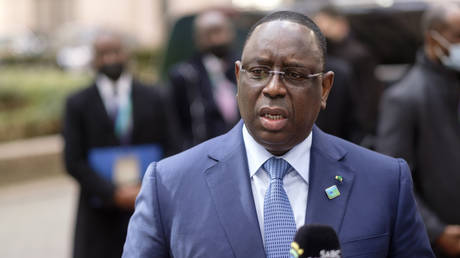
Rivals have conceded defeat in Senegal’s election, congratulating previously imprisoned Bassirou Diomaye Faye on his ‘victory’
Senegalese opposition leader Bassirou Diomaye Faye is being hailed as the winner in the West African nation’s presidential elections, with early results from Sunday’s vote putting him ahead of other contenders, including the ruling party’s candidate.
Faye has received phone calls from 13 of his 18 competitors congratulating him on his victory, local media reported on Monday, citing the Patriots for Work, Ethics, and Fraternity Party (PASTEF) leader’s campaign director, Moustapha Guirassy.
While the official results are not expected until later this week, Faye’s supporters reportedly began celebrating on the streets in the capital, Dakar, late on Sunday after early indications showed him winning a majority of votes.
However, his main rival, former prime minister Amadou Ba of the ruling Benno Bokk Yakaar (BBY) coalition, has denied defeat, claiming in a statement cited by Reuters that a run-off election would be required to determine the winner.
More than 7 million people were registered to vote in over 15,000 polling stations across the former French colony, which has a population of approximately 18 million. According to Senegalese broadcaster RTS, the turnout was around 71%.
The elections were supposed to take place last month, but outgoing President Macky Sall postponed the poll, sparking deadly clashes in the African nation. Earlier plans to postpone voting until December were deemed unconstitutional by the country’s top election court, which ordered the government to hold them before Sall’s tenure expired on April 2.
Sall did not run in the election, making it the first time in Senegal’s history that an incumbent was not on the ballot. He said the decision to delay the vote was necessary to resolve a dispute between the judiciary and lawmakers over the exclusion of key opposition figures from the final electoral list. PASTEF’s previous leader, Ousmane Sonko, who had been in jail, was among the candidates disqualified over his alleged criminal record.
Faye, a co-founder of the PASTEF coalition, was also imprisoned nearly a year ago on charges of defamation and contempt of court. Earlier this month, President Sall signed an amnesty law that let Sonko and Faye out of prison just days before the elections, with both campaigning under the banner “Diomaye is Sonko.”
Read more
March 25, 2024 at 12:08AM
from RT - Daily news
via IFTTT
Kiev has also halted electricity exports after a series of attacks on its energy system
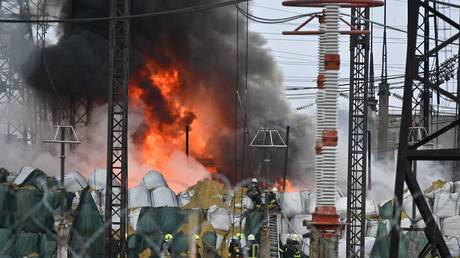
Ukrainian electricity imports have risen almost threefold, according to the Energy Ministry in Kiev, which also said the country has ceased almost all exports of electrical power following Russian strikes on infrastructure.
Ukrainian Energy Minister German Galushchenko previously announced that power generation facilities, along with transmission and distribution systems, had been damaged across the country after the Russian military launched a powerful wave of air and missile strikes.
“For the current day, imports of electricity are projected to be 14,900 megawatt-hour (Mwh), while no exports are expected,” the ministry said on Sunday in a statement issued on Telegram.
On Saturday, Ukraine imported 12,784 Mwh of electric power, while its daily power exports amounted to 1,033 Mwh. The ministry’s projections for electricity imports had not exceed 6,000 Mwh in the preceding days.
The ministry further claimed that Russia had attempted to strike a critical energy infrastructure facility in the Lviv region on Sunday, after the facility had already caught fire and been de-energised. Power lines in the Kiev region were reportedly damaged as a result of the attack, with 1,400 households in two settlements suffering temporary blackouts.
On Friday, a Russian missile strike targeted the Dnieper Hydro Power Plant (HPP) in the Ukrainian-controlled city of Zaporozhye, Ukrhydroenergo reported, adding that the facility had caught fire. At the same time, videos and photos circulating on social media appeared to show a fire on a dam adjacent to the Dnieper HPP.
The barrage had stripped the DTEK group, Ukraine’s largest private power generating company, of 50% of its generating capacity, according to the head of the Yasno distribution firm, Sergey Kovalenko.
Meanwhile, massive blackouts were reported elsewhere across the country, including Kharkov, Odessa, Dnepropetrovsk, Vinnitsa, Lviv, Ivano-Frankivsk, and Nikolaev regions. Ukrainian President Vladimir Zelensky claimed that Moscow had used more than 60 drones and around 90 missiles of different types in the barrage.
Commenting on the strikes, Russian MP Mikhail Sheremet stated they were in response to Ukrainian attacks on Russian civilians in Belgorod and other border areas, which left dozens of civilians dead.
Moscow began targeting Ukrainian energy infrastructure in the autumn of 2022 in retaliation for the bombing of the strategic Crimean Bridge in October of the same year. While Kiev initially denied responsibility, it later claimed that the attack was intended to undermine Russian logistics.
On Monday, the chief of the Security Service of Ukraine, Vasily Malyuk, said the agency was responsible for the strikes on major Russian oil refineries. The facilities, along with other Russian infrastructure, are seen by Kiev as “legitimate targets,” he added.
“We are not going to act as policemen for any foreign government,” Lopez Obrador said, referring to the US fight against the drug trade
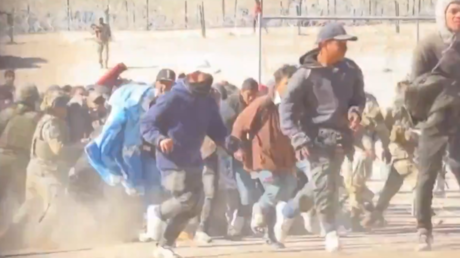
Mexico will put its security interests first and won’t fight drug cartels just because the US wants it to, President Andres Manuel Lopez Obrador said on Friday. While admitting that tens of thousands of people are dying due to drug overdoses in the neighboring country, Obrador insisted that Mexicans will not “act as policemen for any foreign government.”
According to official US data, last year some 70,000 Americans overdosed on the synthetic opioid fentanyl. Washington has named Mexico and China as the primary source countries for the drug and related substances trafficked directly into the US.
“Of course we are going to cooperate in fighting drugs, above all because it has become a very sensitive, very sad humanitarian issue, because a lot of young people are dying in the United States because of fentanyl,” Lopez Obrador told media during a press conference. He noted that it would be a humanitarian effort, highlighting the priority of the security of the homeland. “Mexico First. Our home comes first,” the president said.
Last year, Lopez Obrador pointed out that he considers the overdose crisis to be an internal US problem. “We deeply lament what’s happening in the United States – but why don’t they fight the problem ... and more importantly, why don’t they take care of their youth?”, he asked rhetorically.
US law enforcement officials, for their part, have on numerous occasions blamed Mexican officials for their apparent refusal to cooperate on efforts to target fentanyl labs inside Mexico.
At the same time, critics have blamed the rise in drug smuggling and human trafficking in the US on the Biden administration. Illegal border crossings have surged since Biden took office in January 2021 and began dismantling the policies of his predecessor Donald Trump.
Read more
March 24, 2024 at 03:31AM
from RT - Daily news
via IFTTT
The mass kidnapping happened in the north of the country in early March, with gunmen demanding a hefty ransom
Nigerian authorities have announced the release of over 100 children and school staff kidnapped on March 7 in Kaduna State, in the north of the country. It was the biggest kidnapping targeting a school in Nigeria since July 2021.
With numerous criminal gangs and terrorist groups active across the Western African nation, Nigeria has for years been plagued by such abductions, which have often focused on schoolchildren. This month alone, at least two other kidnappings have taken place in the country, involving more than 200 people, mostly women and children.
Criminals in such cases usually demand a ransom in exchange for the hostages’ release.
The harrowing trend began in 2014, when Islamist extremists from Boko Haram abducted hundreds of schoolgirls in Chibok village, Borno State.
Initially, the reported number of hostages in the March 7 abduction in the remote town of Kuriga was 287. However, government spokesperson Abdulaziz Abdulaziz told Al Jazeera that a total of 137 students had been freed. No official explanation has been released regarding the apparent discrepancy. Abdulaziz claimed the media reports citing the initial number were wrong, but did not elaborate.
Reuters quoted military spokesperson Major General Edward Buba as saying that the army had liberated 137 hostages – 76 females and 61 males. It apparently happened in the early hours of Sunday in the neighboring state of Zamfara.
Authorities earlier revealed that at least 100 of the abductees are aged 12 or younger.
The only official comment on the matter was provided on Sunday morning by the executive governor of Kaduna State, Uba Sani. In a post on X (formerly Twitter), he confirmed that “Kuriga school children have been released,” but did not give details on the operation or whether the military had engaged the kidnappers. He thanked President Bola Ahmed Tinubu, as well as National Security Adviser Mal. Nuhu Ribadu, for the “successful outcome”. The governor added that the abductees had emerged from their ordeal unscathed.
“The Nigerian Army also deserves special commendation for showing that with courage, determination and commitment, criminal elements can be degraded and security restored in our communities,” the statement reads.
Last Wednesday, Reuters, citing a spokesman for the families of the hostages and a local councilor, reported that the kidnappers were demanding a 1 billion naira ($620,432) ransom. The criminals had reportedly threatened to kill the abductees if the money was not paid within 20 days.
Nigerian Information Minister Mohammed Idris said in a statement posted on X last week that the “president was… emphatic that no ransom will be paid.”
Read more
March 24, 2024 at 02:41AM
from RT - Daily news
via IFTTT
At least 133 people were killed and over a hundred were injured when assailants shot their way into a concert hall on Friday, where they started a massive fire
Video has emerged on social media purportedly showing the moment when terrorists broke into Moscow’s Crocus City concert hall on Friday, when a deadly shooting, followed by a massive blaze at the venue, left over a hundred killed and scores injured.
In the footage, the assailants can be seen shooting at the glass doors, while visitors are trying to escape in horror. Several men intended to hide behind the furniture. The author of the video reportedly managed to escape the attackers.
According to the latest official data, at least 133 people died and over 100 were injured in the deadly shooting and subsequent fire sparked by a group of gunmen who stormed the Crocus City concert hall, a large music venue just outside of the Russian capital. The incursion happened before a concert by the Russian rock band Picnic. The venue, which has an estimated capacity of 7,500, was almost full.
The terrorists killed unarmed security guards at the entrance to the venue, and blocked it before continuing their rampage inside. Then, the assailants set the building on fire.
On Saturday, Russia’s Federal Security Service (FSB) reported that eleven people, including four terrorists who were directly involved in the deadly shooting, have been detained. Russia’s Investigative Committee also confirmed that four suspects who “committed the terrorist attack” on Crocus City Hall were captured in Bryansk Region, “not far from the border with Ukraine.”
Read more
March 24, 2024 at 12:45AM
from RT - Daily news
via IFTTT
Russian envoy Anatoly Antonov said joint efforts in this field had been the most important of all in bilateral relations
The US has dismantled its counterterrorism cooperation with Moscow, Russian Ambassador in Washington DC Anatoly Antonov has claimed. The diplomat added that joint work in this filed had been among the key aspects of the partnership between the two nations.
The official’s remark came shortly after several gunmen staged one of the deadliest terrorist attacks in Russia’s modern history, unleashing a shooting spree at the Crocus City concert hall just outside of Moscow on Friday evening. According to the latest estimates, the attack has claimed the lives of at least 133 people, with scores more injured.
Earlier this month, the US embassy in Moscow warned its citizens against attending large gatherings due to an imminent threat of a terrorist attack in the Russian capital.
In its article on Sunday, RIA Novosti quoted Antonov as saying: “I’ve always reminded the Americans that our president [Vladimir Putin] was the first one to extend a hand to the Americans and stated readiness to provide assistance in 2001,” referring to the September 11 terrorist attacks.
He noted that “some things [in this cooperation] worked out… and it is all destroyed today through no fault of our own.”
In its March 7 alert, the US embassy said that it was “monitoring reports that extremists have imminent plans to target large gatherings in Moscow, to include concerts.” The embassy called on Americans to stay vigilant and “monitor local media for updates.”
The embassies of several other nations followed suit.
Speaking to reporters hours after the terrorists attacked the Moscow concert venue, White House National Security Council spokesperson John Kirby pointed out that the warning earlier this month was not “related to this specific attack.”
“I’m not aware of any advance knowledge that we had of this,” the official added.
On Saturday, Russia’s FSB domestic security service reported that it had detained 11 suspects in connection with the attack. The four presumed perpetrators were intercepted in Bryansk Region, not far from the Ukrainian border.
Read more
March 23, 2024 at 11:21PM
from RT - Daily news
via IFTTT
Russia’s domestic security service has reported that four assailants were detained in Bryansk Region near the border
The terrorists who attacked Crocus City Hall in Moscow Region on Friday evening planned to flee to Ukraine, the FSB security service said in a statement on Saturday.
Four assailants were apprehended in Bryansk Region near the border, and are being transported to Moscow. According to the FSB, the perpetrators of the terrorist attack – which has left at least 93 people dead – had contacts on Ukrainian soil.
Seven other people have been detained following the mass shooting, the security service said. The attack was meticulously planned, with a cache of weapons amassed beforehand, the statement added.
The investigation is ongoing, with the security service working to determine all circumstances surrounding the case.
DETAILS TO FOLLOW
Read more
March 23, 2024 at 12:25AM
from RT - Daily news
via IFTTT
Narendra Modi has said that he stands in solidarity with Moscow, following an attack that left 60 dead and over 150 wounded
Indian Prime Minister Narendra Modi strongly condemned the terrorist attack in Moscow Region’s Crocus City Hall, in which dozens of people were killed. On Friday, heavily armed gunmen broke into the event venue and indiscriminately shot visitors who had gathered for a concert, before reportedly detonating an explosive device that set the building on fire.
“Our thoughts and prayers are with the families of the victims,” he wrote in a post on X (formerly Twitter), adding that India stands in solidarity with the government and the people of the Russian Federation in this hour of grief.
The attack happened days after the two leaders held a telephone conversation, during which they exchanged views on bilateral ties as well as international issues, including the situation in Ukraine.
The Russian Embassy in New Delhi on Saturday flew the national flag at half-mast as a sign of mourning and grief for the victims of the terrorist attack. “We express our sincere condolences to the families of those deceased and wish a speedy recovery to all those injured,” the embassy wrote on X.
The terrorist attack, one of the deadliest in Russia’s recent history, has been condemned by international organizations and foreign governments alike, including those that Russia considers unfriendly.
We strongly condemn the heinous terrorist attack in Moscow. Our thoughts and prayers are with the families of the victims. India stands in solidarity with the government and the people of the Russian Federation in this hour of grief.
The Russian Investigative Committee has put the death toll at more than 60, including three children, although that number may rise. A list released by the Moscow Region Health Ministry indicates that 140 people were wounded. At least five children were among those hospitalized after the massacre, officials have said.
The Crocus City complex, located in Krasnogorsk, northwest of Moscow, has a capacity of 7,500 people, and was nearly full when the attack took place. People had gathered to watch a concert by the rock band ‘Picnic’ when the terrorists launched their assault. According to footage from the venue, the five shooters appeared to be carrying automatic firearms and had other military gear, including grenades.
Earlier this month, the US issued a warning to its citizens in Russia, urging them to avoid public places and crowds as “extremists” had imminent plans for an attack in Moscow. Several other embassies followed suit and issued similar alerts. After the attack, however, Washington said it had “no advanced knowledge” of Friday’s shooting.
Russian President Vladimir Putin was informed about the incident a few minutes after it started, according to the Kremlin. The heads of the Federal Security Service, Interior Ministry, Investigative Committee and National Guard, among other officials, have reported to Putin on the ongoing investigation.
Where India Meets Russia – We are now on WhatsApp! Follow and share RT India in English and in Hindi
Read more
March 22, 2024 at 11:05PM
from RT - Daily news
via IFTTT
One attack severely damaged the Dnepr Hydro Power Plant in the Kiev-controlled part of Zaporozhye Region, local officials say
The Russian military has launched one of its most powerful waves of air and missile strikes on Ukrainian energy infrastructure in recent weeks, officials in Kiev have said. The Defense Ministry in Moscow has yet to comment on the claims.
In a post on Facebook on Friday, Ukrainian Energy Minister German Galushchenko alleged that Russia’s goal was “not only to damage, but to try again, like last year, to cause a large-scale failure of the country’s energy system.”
“Unfortunately, there are hits and damage to power generation facilities, transmission and distribution systems in various regions,” he wrote, claiming that one of the power lines linked to Russia’s Zaporozhye Nuclear Power Plant had been severed. Zaporozhye Region joined Russia in a referendum in the fall of 2022.
One Russian missile strike targeted the Dnepr Hydro Power Plant (HPP) in the Ukrainian-controlled city of Zaporozhye, according to Ukrhydroenergo. The company claimed that the facility had been hit and that a fire was raging at the site.
Officials insisted that “there is no danger of a breach” and that the situation at the dam was under control. However, Igor Sirota, the head of Ukrhydroenergo, assessed the scale of the damage as extensive, stating that “as of now, we are losing the station.”
Videos and photos circulating on social media appear to show a fire on a dam adjacent to the Dnepr HPP.
Meanwhile, massive blackouts have been reported elsewhere in the country, including Kharkov, Odessa, Dnepropetrovsk, Vinnitsa, Lviv, Ivano-Frankivsk, and Nikolaev regions. According to Ukrainian President Vladimir Zelensky, Moscow used more than 60 drones and almost 90 missiles of different types in the barrage.
Kharkov Mayor Igor Terekhov said there had been 15 explosions in the city, noting that there are issues with water supplies, while traffic lights and electric transport have been completely disabled.
The head of Odessa Region, Oleg Kiper, said Russian strikes had left around 53,000 people without electricity, with work underway to repair the damage.
Commenting on the latest wave of strikes, Russian MP Mikhail Sheremet said they were in response to Ukrainian attacks on Russian civilians in Belgorod and other border areas, which left dozens of civilians dead.
Moscow started targeting Ukrainian energy infrastructure in the autumn of 2022 in retaliation for the bombing of the strategic Crimean Bridge in October of the same year. While Kiev initially denied responsibility, it later claimed that the attack was intended to undermine Russian logistics.
Read more
March 22, 2024 at 12:24AM
from RT - Daily news
via IFTTT
The bloc will continue to look at options for using proceeds from frozen assets, leaders have said in a summit declaration
The EU will continue to “explore options” for the seizure of revenues generated by frozen Russian assets to fund Ukraine, bloc leaders said after a summit in Brussels on Thursday.
The West has frozen roughly $300 billion in Russian sovereign funds since the start of the Ukraine conflict. Brussels-based clearinghouse Euroclear holds around €191 billion ($205 billion) of the funds and has accrued nearly €4.4 billion in interest over the past year.
Profits on the assets are estimated to stand at €2-€3 billion this year. European Commission President Ursula von der Leyen has said the first tranche of €1 billion ($1.09 billion) could be disbursed as early as July.
The EU is reportedly trying to fast-track the decision to fund Kiev amid waning support from the US, where a $60 billion aid package for Ukraine has stalled in Congress. In their summit declaration, EU leaders instructed officials to “explore all options for mobilizing funding and report back by June.”
“I am confident that we can act very quickly,” Charles Michel, president of the European Council, told reporters.
The EU is pressing ahead with a plan proposed by von der Leyen last month to use proceeds from Russian funds to procure arms for Ukraine.
“These [proceeds] should first of all be used to buy those weapons and ammunition that Ukraine needs to defend itself,” German Chancellor Olaf Scholz said.
The idea, however, has faced resistance from a number of countries, including Malta, Austria, Luxembourg, and Ireland. “For us neutrals it must be ensured that money, for which we give our approval, is not spent on weapons and ammunition,” Austrian Chancellor Karl Nehammer said, as quoted by Reuters.
The proposal could also be blocked by Hungary, which has insisted that proceeds from Russian assets should be allocated to Ukraine’s reconstruction rather than be used for funding its military.
Meanwhile, some Western banks are lobbying against the use of asset income, fearing it could lead to costly litigation, according to Reuters.
Russian officials have repeatedly denounced the blocking of funds as “theft.” In December, Kremlin press secretary Dmitry Peskov warned that any potential seizure would face a response, signaling that Moscow had already compiled a list of Western assets that could be expropriated in tit-for-tat action.
Read more
March 22, 2024 at 12:18AM
from RT - Daily news
via IFTTT