Republican lawmaker Claudia Tenney cited the ex-US president’s role in facilitating the “historic” Abraham Accords
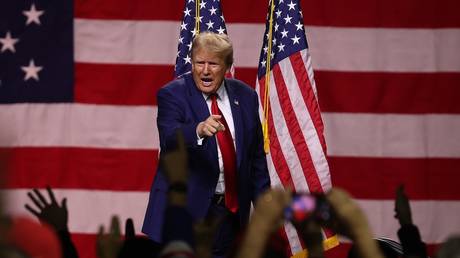
Former US President Donald Trump has been put forward for the Nobel Peace Prize for his role in the signing of a treaty that helped normalize relations between Israel and several Arab states.
The proposal was made by Republican congresswoman Claudia Tenney, who told Fox News on Tuesday that Trump was “instrumental” in facilitating the “historic” Abraham Accords, which she said were “the first peace agreements in the Middle East in almost 30 years.”
The lawmaker praised the former president and GOP frontrunner, saying Trump had proven many foreign policy pundits wrong who argued for decades that additional Middle East peace agreements were impossible without a resolution to the Israeli-Palestinian conflict.
”The valiant efforts by President Trump in creating the Abraham Accords were unprecedented and continue to go unrecognized by the Nobel Peace Prize Committee, underscoring the need for his nomination today,” Tenney stated, adding that the move comes at a time when President Joe Biden’s “weak leadership” on the global stage has put national security at risk.
Over the weekend, three US service members were killed and dozens were injured in a drone attack on a military outpost in Jordan. Biden has pledged to respond, blaming the incident on Iranian-backed militias. Tehran has denied any involvement in the attack.
The Abraham Accords were a series of US-mediated bilateral agreements signed in late 2020 between Israel, the United Arab Emirates, Bahrain, and Morocco. They helped bring the Jewish state and the Arab nations closer, with the UAE and Bahrain also recognizing Israel’s sovereignty.
However, the treaty has been criticized for emboldening Israel to ignore the rights of Palestinians, as it resulted in Arab states dropping the demand to recognize the state of Palestine. Some experts have argued that the move paved the way for the recent surge in violence.
Trump had already been nominated for the Nobel Peace Prize several times. In 2020, he was put up for the award by Norwegian MP Christian Tybring-Gjedde, who praised the former president for what he described as his peace-making efforts in the Middle East. That same year, Trump was nominated by Swedish MP Magnus Jacobsson, who cited his role in brokering a deal between Serbia and its breakaway region of Kosovo.
Trump’s nomination is considered valid as it was submitted by a member of a national assembly or national government. The 2024 Nobel Peace Prize will be announced in Oslo, Norway in October and awarded in December.
Read more
January 31, 2024 at 01:06AM
from RT - Daily news
via IFTTT
New Delhi should have “more confidence” as it competes with Beijing in South Asia, Subrahmanyam Jaishankar has said
India should “welcome competition” and have “more confidence” in the face of growing Chinese influence in South Asia, External Affairs Minister Subhramanyam Jaishankar stated on Tuesday. While acknowledging Beijing’s weight in the region as a global superpower, the diplomat emphasized that New Delhi should not be afraid of competitive politics and should outdo its powerful neighbor when engaging with countries in its neighborhood to address political, economic, and other matters.
India and China are the region's two major powerhouses; they have been locked in a long-standing confrontation that mainly stems from a number of unresolved border disputes. However, since the 2020 skirmishes in eastern Ladakh, which led to casualties on both sides, the two sides have engaged in extensive diplomatic and military talks; however, some friction remains.
”China is a neighboring country, and in many ways as part of competitive politics, influences these countries,” Jaishankar said of its neighbors, while interacting with students at the Indian Institute of Management in Mumbai. “I don’t think we should be scared of China. We should say, global politics is a competitive game – you do your best, I will do my best.”
“We are the first country who helped Sri Lanka in its [economic] crisis,” Jaishankar said. He also cited some examples of success in the region, including Nepal, “which has discovered that the export of electricity to India is an enormously rewarding transaction,” and Bangladesh, which is now allowing India to use its ports.
The Indian diplomat added that China, as a major economy, would deploy its resources and try to shape things to its advantage. “Why should we expect otherwise?”, Jaishankar asked. “At the end of the day, neighbors have relationships with each other. They find understanding. It is in the nature of politics that sharp positions are taken. Diplomacy does not always go by that sharp position,” noted Jaishankar.
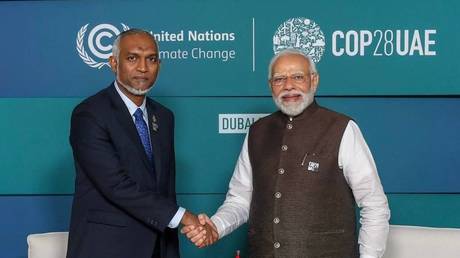
The diplomat's comments came against the backdrop of New Delhi's diplomatic row with The Maldives amid the island nation's demands for the withdrawal of around 80 Indian troops stationed there. The demand was made by the government of recently-elected Maldivian President Mohamed Muizzu, who is seen as close to Beijing.
New Delhi sees Beijing's growing influence in the Indian Ocean Region as another cause for worry. Earlier this month, New Delhi expressed concerns over a Chinese vessel heading for The Maldives to reportedly run a survey operation, media reports have suggested. Male later clarified that the ship would not conduct research in its waters. The presence of another Chinese vessel in Sri Lanka in 2022 was also viewed as problematic by New Delhi.
Where India Meets Russia – We are now on WhatsApp! Follow and share RT India in English and in Hindi
Read more
January 31, 2024 at 01:00AM
from RT - Daily news
via IFTTT
The African Union says it would have liked to be consulted prior to the launch of the Italian partnership project
Italian Prime Minister Giorgia Meloni unveiled a partnership initiative on Monday, aiming to strengthen cooperation with Africa, curb immigration through economic empowerment, and establish an energy hub for the European Union. But the African Union (AU) says its member states were not consulted before the official announcement.
Meloni’s Mattei Plan, named after Enrico Mattei, the founder of Italy’s state-owned energy firm Eni, was announced during a summit in Rome attended by several African leaders.
Italy has pledged an initial endowment of €5.5 billion ($5.95 billion) under the plan, in addition to existing projects focusing on climate adaptation and clean-energy development in Africa. This will see Rome buy and supply natural gas to the rest of the EU.
Over half of the budget will come from a climate fund set up in 2022 to finance international projects in line with the Paris Agreement, which means these are target funds. The rest will be provided as loans, guarantees, and grants.
The Italian premier listed projects ranging from Morocco to Mozambique, which she said would enable Africa to become a major energy exporter to the EU and help relieve its reliance on Russian energy amid sanctions imposed on Moscow in response to the Ukraine conflict.
However, in a speech at the Italy-Africa summit, AU Chairman Moussa Faki Mahamat stated that African countries would prefer to have been consulted before the launch of the plan.
“Africa is prepared to discuss the aspects and modalities of [the Mattei Plan] implementation. I must stress, here, the need to match actions with words. You will understand that we cannot be satisfied with promises that are often not kept,” Mahamat said.
The head of the 55-nation union called on Italy to engage with the continent on a “new model of partnership that charts the path towards a fairer world,” declaring that “Africa does not extend its hands to partners as a beggar.”
The EU has turned to Africa in search of alternative energy sources as it struggles to transition away from Russian gas. Last year, German Chancellor Olaf Scholz visited Nigeria and proposed a joint initiative to create a market for gas supplies from Africa’s largest economy.
Vsevolod Sviridov, an expert at the Center for African Studies at Russia’s HSE University, believes that the EU will not be able to extract much gas from Africa. This is because gas exporters on the continent, including Nigeria, face their own challenges, such as meeting domestic consumption demands, Sviridov wrote in a feature published by RT.
According to the HSE Center for African Studies, gas exports from Africa to the EU totalled 72 billion cubic meters in 2022, a decrease of about 2 billion cubic meters from the previous year.
Read more
January 31, 2024 at 12:28AM
from RT - Daily news
via IFTTT
The economy is projected to expand much more rapidly this year than previously expected
The IMF significantly raised its growth forecast for the Russian economy in 2024 in its latest World Economic Outlook update released on Tuesday.
The Washington-based institution now expects Russian GDP to grow by 2.6% this year, a sharp increase from its October forecast of 1.1% growth. The forecast for 2025 was also increased by 0.1 percentage point from the October estimate, to 1.1%. The upward revision of Russia’s economic growth forecast “[reflects] carryover from stronger-than-expected growth in 2023 on account of high military spending and private consumption, supported by wage growth in a tight labor market,” according to the IMF.
“It is definitely the case that the Russian economy has been doing better than we were expecting and many others were expecting,” the IMF’s chief economist, Pierre-Olivier Gourinchas, told the Financial Times, commenting on the report.
The IMF also projected growth in emerging and developing Europe to pick up from an estimated 2.7% in 2023 to 2.8% in 2024, before declining to 2.5% in 2025. “The forecast upgrade for 2024 of 0.6 percentage point over October 2023 projections is attributable to Russia’s economy,” said the report.
The Russian Economy Ministry expects the country’s GDP to expand 2.3% this year, following 3.5% growth in 2023, according to the preliminary reading.
The head of the Russian central bank, Elvira Nabiullina, said last month that GDP is expected to have grown by around 2.7% in 2023, driven by strong domestic demand. For 2024, the central bank’s current projection is of 0.5-1.5% growth. This estimate, however, will be reviewed in February, Nabiullina said, adding that it is important to make “timely decisions” to cool excess demand and reduce inflation.
ECOWAS will be worse off after the withdrawal of Mali, Burkina Faso, and Niger, Daniel Bwala has told RT
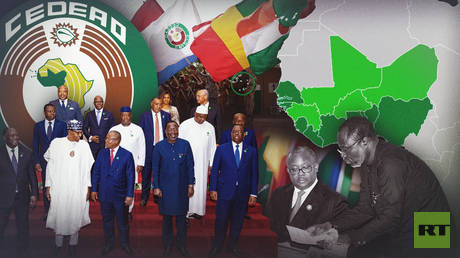
The withdrawal of Mali, Burkina Faso, and Niger from the Economic Community of West African States (ECOWAS) will have a significant impact on the bloc’s remaining members, Nigerian lawyer Daniel Bwala has told RT in an exclusive interview.
Bwala, who was spokesperson for the presidential candidate from the Peoples’ Democratic Party (PDP) in the 2023 Nigerian election, said West Africa is deeply interconnected, meaning the departure from ECOWAS announced by the three states on Sunday will be keenly felt across the region.
“ECOWAS member states also rely on some of these [former] member states, either in terms of transit for transatlantic trade, or the joint security alliances that we are used to fighting the [jihadist] insurgency,” the lawyer stated.
However, Mali, Burkina Faso, and Niger will also suffer if they believe they can exist “in isolation,” Bwala argued.
“You [Mali, Burkina Faso, and Niger] cannot isolate yourself as three member states, even if you have a degree of support from outside, since you are bound by common land, common heritage, common trade and all of that, and think you can succeed in isolation,” he stated. “The impact will be more on both sides.”
Working together as a community allows for greater achievement than doing so individually, Bwala concluded.
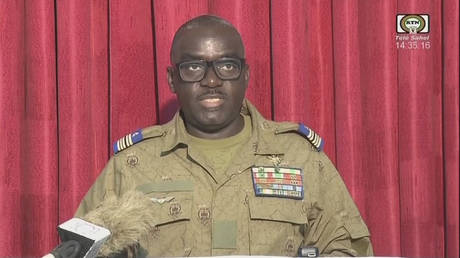
The leaders of the military governments of Burkina Faso, Mali, and Niger announced their decision to exit ECOWAS in a joint statement on Sunday. All three leaderships have been under increasing pressure from sanctions imposed by the 15-member bloc, aimed at accelerating their transition to democratic rule.
The economic group had earlier voiced its disapproval of the military authorities in the three states, vowing to prevent any further coups in the region.
Ouagadougou, Bamako, and Niamey have been united in their opposition to ECOWAS, alleging that it acts under Western influence. The three states have also accused the bloc of not backing them in the fight against decade-long jihadist violence in the region.
Despite the announcement from Burkina Faso, Mali, and Niger that they are quitting the bloc, ECOWAS said in a statement on Sunday that it had not received any formal notification about their withdrawal.
Read more
January 30, 2024 at 12:26AM
from RT - Daily news
via IFTTT
Catholic bishops in Africa have rejected a recent Vatican declaration allowing extra-liturgical blessings for same-sex couples
Pope Francis has described opposition from Catholic bishops in Africa to his directive permitting priests to bless same-sex unions as a special case that is motivated by their cultural beliefs.
The Pope made the comment in an interview with Italian newspaper La Stampa on Monday, in response to widespread criticism over his authorization of a Vatican document allowing blessings for same-sex couples in certain circumstances.
The declaration called ‘Fiducia Supplicans’, published last month, opens the possibility of blessing couples whose relationship is not “valid” in the Catholic Church, including unmarried couples, divorced-and-remarried couples, and homosexual couples.
Earlier this month, the Symposium of Episcopal Conferences of Africa and Madagascar (SECAM) – an association of Catholic bishops on the continent – denounced the Pope’s decision as “inappropriate.” Permitting such rituals would cause “confusion” and be in “direct contradiction” with the cultural values of African communities, SECAM president Cardinal Fridolin Ambongo said in a statement.
A group of British priests from the Confraternity of Catholic Clergy had also protested against the extra-liturgical blessings, insisting that the Church’s traditional values were “unchangeable.” Catholic bishops in Central Asia have also called for the reversal of the Pope’s directive approving same-sex blessing, with Kazakhstani Bishops Tomash Peta and Athanasius Schneider describing the move as a contradiction of the Church’s long-standing practice and doctrine.
However, on Monday, Pope Francis said that, with the exception of Africans, those who oppose his decision would eventually understand it.
“Those who protest vehemently belong to small ideological groups. A special case are Africans: for them, homosexuality is something ‘bad’ from a cultural point of view, they don’t tolerate it,” he told La Stampa.
“But in general, I trust that gradually everyone will be reassured by the spirit of the ‘Fiducia Supplicans’ declaration by the Dicastery for the Doctrine of the Faith: it aims to include, not divide,” the pontiff added.
He had previously sought to clarify the December 18 declaration, stating last week that the decision to grant blessings to gay couples was not an endorsement of a potentially sinful lifestyle, but of individuals seeking to draw closer to God.
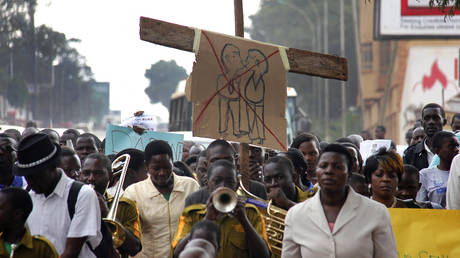
Homosexuality remains heavily criminalized in many African countries, including Uganda, where same-sex activities can result in punishments ranging from life imprisonment to the death penalty.
Read more
January 29, 2024 at 11:13PM
from RT - Daily news
via IFTTT
Burkina Faso, Mali, and Niger accuse ECOWAS of acting under foreign influence, in violation of its founding ideals
The military governments of Burkina Faso, Mali, and Niger have announced their exit from the Economic Community of West African States (ECOWAS), claiming the regional bloc has become a tool for foreign powers, posing a threat to member states.
The decision was made public on Sunday in a joint statement by the coup leaders, who have faced increasing pressure from ECOWAS to transition to democratic rule.
Following the overthrow of Nigerien President Mohamed Bazoum last July, the latest coup in the West African region, the bloc threatened to use force to restore democratic rule after multiple attempts to persuade military rulers to reverse the coup failed. Both Mali and Burkina Faso have warned against the France-backed military action in Niger, claiming that any such move would be interpreted as an act of war against their countries.
The 15-nation economic group has sanctioned Burkina Faso, Mali, and Niger, including suspending them in response to the takeovers. The alliance has said it does not recognize the military-led regimes, and has vowed to no longer tolerate power grabs in the region, which has also witnessed a successful coup in Guinea and a recently attempted one in Guinea-Bissau.
However, Ouagadougou, Bamako, and Niamey have unified against ECOWAS, repeatedly accusing it of acting under Western influence. Late last year, the military rulers of the three former French colonies signed a charter that formed the Alliance of Sahel States (AES), committing to help each other, individually or collectively, in the event of an external attack or internal threats to their sovereignty. All three have also severed military ties with France, citing meddling and the failure of French troops to defeat Islamic insurgencies in the Sahel region, despite more than a decade of involvement.
On Sunday, Burkina Faso, Mali, and Niger denounced ECOWAS for failing to support them in fighting the region's decade-long jihadist violence.
“When these states decided to take their destiny into their own hands, it [ECOWAS] adopted an irrational and unacceptable posture by imposing illegal, illegitimate, inhumane, and irresponsible sanctions in violation of its own principles,” the military leaders stated.
“After 49 years of existence, the valiant people of Burkina, Mali, and Niger note with great regret, bitterness, and great disappointment” in ECOWAS and have “decided in complete sovereignty on the immediate withdrawal” from the bloc, according to the statement.
In a response on Sunday, ECOWAS said it had yet to receive formal notification from the military authorities regarding their withdrawal.
Andrei Maslov, head of the Center for African Studies at Russia's Higher School of Economics, told RT: “ECOWAS' desire to make money from donor programs and cooperation with the EU and other Western institutions prevented the organization from pursuing policies in the interests of member states.” ECOWAS has failed to capture its full potential and become a genuinely independent regional organization, Maslov claimed.
Maslov believes that the exit of the three countries from the bloc would provide them with more decision-making freedom.
Read more
January 29, 2024 at 01:21AM
from RT - Daily news
via IFTTT
A donation ceremony took place in Ouagadougou following the delivery of the humanitarian aid
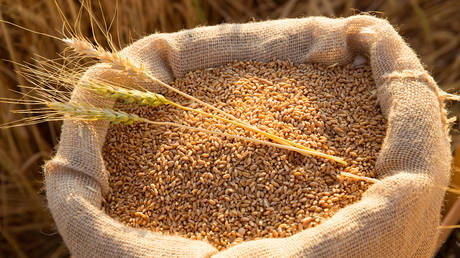
Russia has donated 25,000 tons of grain to Burkina Faso as part of a humanitarian aid initiative, Russian Ambassador Alexey Saltykov confirmed on Friday.
A ceremony marking the arrival of the wheat took place in Ouagadougou, the capital of the African country.
“All 25,000 tons of grain were delivered to Burkina Faso from the port of Abidjan [in the Ivory Coast (Cote d’Ivoire)],” Saltykov told TASS.
“It will be distributed to the needy population, especially the widows of the defenders of Burkina Faso, as well as the disabled.”
The ambassador said national representatives in Burkina Faso had thanked Russian President Vladimir Putin for the aid, which “will improve the humanitarian situation in the country.”
The ceremony was attended by Minister of Communications, Culture, Art and Tourism Rimtalba Jean Emmanuel Ouedraogo, and Minister of Foreign Affairs, Regional Cooperation and Burkina Faso Abroad Karamoko Jean-Marie Traore.
Burkina Faso is the latest African country to receive humanitarian shipments of wheat from Russia.
Last December, Moscow sent an initial consignment of 25,000 tons of grain to Burkina Faso. At the second Russia-Africa summit last year, Moscow promised to provide free wheat to Burkina Faso, Zimbabwe, Mali, Somalia, Chad, and Eritrea.
Meanwhile, Uralchem CEO Dmitry Konyaev has announced that the manufacturer will begin unloading humanitarian fertilizer shipments in Nigeria in the coming days.
“Unloading of this humanitarian [shipment] in Nigeria is expected to start soon,” he said during a meeting of the business council ‘Russia-Nigeria’.
A wide range of issues related to the development of foreign trade cooperation between Russia and Nigeria were discussed at the meeting, the press service of the Uralchem Group reported.
On December 28, the company also announced that more than 34,000 metric tons of potash had been loaded at Ventspils port in Latvia, and it is currently on its way to Nigeria.
Uralchem is responding to the UN’s second sustainable development goal of ending hunger, achieving food security, improving nutrition, and promoting sustainable agriculture.
Read more
January 29, 2024 at 12:20AM
from RT - Daily news
via IFTTT
USS Lewis B. Puller was targeted in the Gulf of Aden, the Yemeni armed group has said
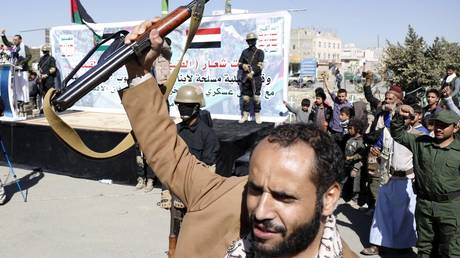
Houthi militants claim they have fired a missile at a US warship in the Gulf of Aden. The Yemen-based group described the incident as its latest response to American “aggression” in the region.
The attack, targeting the USS Lewis B. Puller expeditionary mobile base vessel, took place on Sunday evening, Yahya Saree claimed in a Telegram post later the same day. He did not specify if the missile had hit the vessel.
The warship in question was providing logistical support to the US forces participating in “the aggression” against Yemen, and was targeted as part of Houthi measures to protect the country, the spokesman stated.
The militant group will continue to strike commercial ships in the region until Israeli ends its attacks on Gaza and the blockade of the Palestinian enclave is lifted, Saree added.
Since mid-October, the Houthis have launched multiple drones and missiles targeting Israeli-bound vessels off the coast of Yemen, disrupting shipping along key routes in the Red Sea and the Gulf of Aden.
The US and the UK subsequently launched airstrikes against the group to reduce its ability to strike ships. However, they thus far appear to have been unable to prevent Houthis attacks.
On Wednesday, Saree claimed that “a number of our ballistic missiles have reached their targets” amid clashes between Houthi forces and US warships protecting commercial vessels.
The US Central Command said on Saturday that it had intercepted an anti-ship missile fired by the group that posed an “imminent threat” to ships navigating the area.
On Sunday, the UN said that freight through the Suez Canal has plummeted by 45% in the past two months amid Houthi attacks and retaliatory airstrikes by the US and UK.
“We are very concerned,” Jan Hoffmann, chief of trade logistics at the UN Conference on Trade and Development (UNCTAD), told reporters. “We are seeing delays, higher costs, higher greenhouse gas emissions,” he said.
Read more
January 28, 2024 at 11:51PM
from RT - Daily news
via IFTTT
Police received a report last month that a man had killed his partner in the home of a US Republican presidential candidate
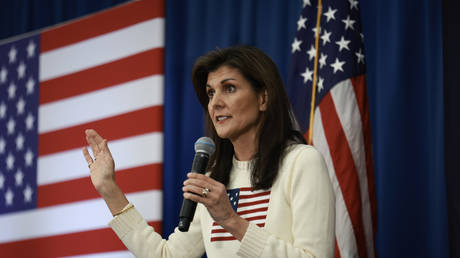
Republican presidential candidate Nikki Haley was the victim of a so-called ‘swatting’ incident last month, Reuters has reported, citing public records.
Authorities received a report on December 30 in which a man claimed to have shot his girlfriend to death and was threatening to harm himself, giving Haley’s home address to the emergency operator. It was subsequently confirmed to have been a fake report, the Reuters news agency said on Saturday, having reviewed records of the incident.
‘Swatting’ is the colloquial term used to describe incidents in which emergency services are called to report a fake crime, often intending to provide a nuisance to the recipient. It is increasingly being used to target opponents of Republican presidential frontrunner Donald Trump, Reuters said, including officials involved in the myriad criminal cases being faced by the former US president.
“The incident is being investigated by all involved,” Craig Harris, the director of public safety at Kiawah Island, close to Haley’s residence, told town officials last month, according to Reuters. “It was determined to be a hoax,” Harris said, adding that neither Haley nor her family were at home at the time of the call.
Neither Haley nor her representatives have yet commented publicly on the report, though Harris said that the FBI and Haley’s security team have been made aware of the incident.
A spokesperson for the FBI declined a Reuters request for comment on the specific situation involving Haley but said, “When the threats are made as a hoax, it puts innocent people at risk, is a waste of law enforcement’s limited resources, and costs taxpayers.”
Earlier in January, Jack Smith, the special counsel overseeing the federal case into Trump’s alleged attempts to overturn the result of the 2020 US presidential election, was a swatting target – as was Washington, DC District Court Judge Tanya Chutkan, also involved in the case.
Similarly, Shenna Bellows, the Maine secretary of state who barred Trump from the state’s primary ballot, was also a swatting victim. Trump supporters, such as US Representative Marjorie Taylor Greene, have also been the victim of swatting attempts.
According to the polling aggregator FiveThirtyEight, Trump currently holds a commanding lead over Haley in the race to secure the Republican nomination ahead of November’s presidential election.
Read more
January 28, 2024 at 02:05AM
from RT - Daily news
via IFTTT
A US-brokered agreement could halt the fighting in Gaza for two months, officials told the paper
Israel and Hamas are on course to reach a prolonged ceasefire deal within the next two weeks, the New York Times has reported, citing unnamed US officials close to the negotiations.
The US-brokered agreement could see Hamas release the remaining Israeli hostages in exchange for the IDF stopping its attacks on Gaza for about two months, the paper said in an article on Saturday.
According to the sources, a written draft combining the proposals from both sides has been put together over the past ten days, and will be discussed at talks in Paris on Sunday.
Around 1,200 people were killed and some 240 taken hostage during the incursion into Israel by Hamas on October 7. The IDF operation, launched in response to the raid, has so far seen 26,422 Palestinians killed and 65,087 others wounded, according to Gaza’s health ministry. Earlier this week, the International Court of Justice (ICJ) ordered Israel to take all necessary measures to prevent genocide in Gaza.
Hamas released around a half of the hostages during a week-long truce in November. According to the Israeli authorities, the group still holds 136 people, while some two dozen captives are believed to have been killed in the fighting.
The new ceasefire deal would be “more expansive in scope” than the previous one, the officials claimed. In its first phase, which would see the hostilities come to a halt for 30 days, women, the elderly, and wounded hostages are to be freed by Hamas. During this time, the sides will agree to a second phase, which would prolong the truce for another month in exchange for the release of Israeli soldiers and male civilians.
The agreement would also see more humanitarian aid reach Gaza, they said. The number of Palestinians to be released from Israeli prisons has not yet been negotiated, but the sources described it as “a solvable issue.”
The deal would not deliver the permanent ceasefire that Hamas has been demanding, but the officials expressed their belief that after a two-month break the Israeli attacks on Gaza would be less intensive. The truce would also provide a window for diplomacy that could facilitate a broader resolution of the Israeli-Palestinian conflict, they said.
Egyptian officials told the Wall Street Journal on Saturday of a much similar plan offered to Israel and Hamas by international mediators. However, they claimed that the ceasefire would be a longer one, lasting up to four months.
Read more
January 28, 2024 at 12:58AM
from RT - Daily news
via IFTTT
A new e-visa scheme has already sharply boosted arrivals from abroad
The number of tourists coming to Russia may rise significantly in 2024 thanks to the introduction last year of electronic visas and growing demand from Asia, according to Aleksandr Musikhin, the CEO of Intourist and committee head of the Association of Tour Operators of Russia (ATOR).
Musikhin told a press conference this week that nearly 430,000 foreign tourists visited Russia from January to September 2023. Organized tourist groups arrived mainly from China, Vietnam, India, Indonesia, Iran, and the UAE. Individual tourists came from Latin America, the Middle East, and Europe.
Among the factors driving the growth in foreign tourism in Russia, Musikhin named the electronic visa scheme and the weak ruble, which made pricing for hotels and services more appealing.
Electronic visas, which were launched in August, simplify travel to Russia for the citizens of 55 countries. The application process takes four days and is based on the use of an online portal or mobile app. It provides foreigners a single entry into Russia and allows them to stay up to two weeks. The cost is about $52. Such visas have proven to be particularly popular among tourists from India, Türkiye, China, Iran, Vietnam, Saudi Arabia, Singapore, the Netherlands, France, Italy, and Spain. Russia also launched reciprocal visa-free group tours with China and Iran, and offered the same to India.
“We predict a 3-4-fold increase [in foreign tourism] in 2024. Tourists are expected to be mainly from Asian countries,” Musikhin said.
The Russian Ministry of Economic Development is seeking to boost the incoming tourist flow to 16 million tourists by 2030. They are expected to come from 17 priority countries in the Middle East and Asia.
Participants in a survey believe that adopting the single currency would risk price increases
A majority of Czechs are skeptical about transitioning to the euro, believing that adopting the single currency would carry inflationary risks and would not benefit the country, the media outlet iRozhlas reported this week, citing the latest poll.
Some 68% of respondents consider shifting from the Czech crown to the single currency a disadvantage. A further 21% viewed adopting the euro positively, while 11% were ambivalent on the matter, the survey of over 1,000 respondents conducted last week by the Median agency for Czech Radio revealed. The commitment to eventually switching to the euro was a key condition for the Czech Republic to join the EU back in 2004. But after almost two decades, Prague is nowhere close.
One of the authors of the survey, Ivan Cuker, attributed the public skepticism to concerns over possible price increases once the country adopts the euro.
“Mainly students say that the euro is beneficial for them. Some 45% of them said so,” he noted.
While some economists compared the Czech Republic’s membership in the EU without accepting the euro to being in the position of a “scantily clad princess,” others acknowledged inflationary risks and supported the idea of holding a referendum on the issue. Metropolitan University economist Dominik Stroukal described the Eurozone as a “non-optimal” currency union at the moment.
“It makes no sense to get rid of monetary policy when the Czech one is working right now,” he said.
The discussions come after Czech President Petr Pavel, in his New Year’s address to the nation, urged “concrete” steps to be taken for the country to adopt the single currency. Thus far, of the 27 members of the EU, seven have not adopted the euro.
The vessel shipping for trading giant Trafigura is reportedly transporting Russian-origin naphtha for making plastics, gasoline
A petroleum-products tanker operated on behalf of Trafigura was struck by a Houthi missile in the Gulf of Aden after transiting the Red Sea, several outlets were reporting on Friday, citing the commodities-trading giant. According to Marine Traffic, the Marshall Islands-flagged Marlin Luanda was traveling from Greece to Singapore. The vessel caught fire after the attack.
“Firefighting equipment on board is being deployed to suppress and control the fire caused in one cargo tank on the starboard side. We remain in contact with the vessel and are monitoring the situation carefully. Military ships in the region are [on their] way to provide assistance,” Trafigura stated on its website.
A company spokesperson told Bloomberg that the vessel is carrying Russian-origin naphtha – a light-end oil product primarily used to make plastics and petrochemicals. The tanker collected the cargo via a so-called ship-to-ship transfer near Lakonikos Bay in southern Greece, according to data from analytics firm Kpler.
Houthi rebels have claimed the strike on the ship. The Islamist group, which controls a large part of Yemen, has been attacking vessels crossing the vital waterway between the Red Sea and the Suez Canal since the escalation of the Israel-Palestine conflict, in what it claims is a show of solidarity with the Palestinians. Amid the attacks, many shipping companies have suspended travel in the region.
Last month, a US-led coalition deployed a naval taskforce to the area to safeguard shipping, and began striking Houthi targets in Yemen. In addition, the US and UK imposed sanctions against the group. The Houthis, in turn, started attacking ships linked with these countries.
In an interview with Russian news outlet Izvestia earlier this month, Houthi spokesman Mohammed al-Bukhaiti pledged that the group would not attack vessels linked with Russia.
“As for all other countries, including Russia and China, their shipping in the region is not threatened. Moreover, we are ready to ensure the safety of the passage of their ships in the Red Sea, because free navigation in the area is important for our country,” he emphasized.
Moscow has not yet commented on the latest strike. It has repeatedly called on the Houthis to stop attacks on ships traversing the waterway but has also condemned the US and UK attacks on targets in Yemen, saying these would only escalate hostilities in the region.
Local officials believe only the sick, dependent, and disabled can count on long-term aid, Rzeczpospolita reports
Poland is planning to develop new rules for helping Ukrainian refugees, Rzeczpospolita reported on Tuesday. It said, citing local officials, that many are taking advantage of benefits to which they are not entitled.
According to the article, a special protection regime for Ukrainian refugees which expires in early March will be extended for another six months. After that, the rules of assistance are likely to significantly change.
Aneta Zochowska, who heads the Lena Grochowska Foundation for refugees, stressed the need for changes, suggesting that long-term state aid should be extended only to the sick, dependent and disabled, mainly from the frontline regions.
The article also noted that although the Polish government introduced a regulation last spring that Ukrainians living in shelters for a longer period of time should partially pay for food and accommodation, it hasn’t been enforced.
It’s effectively ignored because children, disabled people and their guardians, as well as single parents with at least three children, are exempt from bearing those costs, with Polish officials also told to handle the issue of payments “in a humane manner,” Rzeczpospolita said. As a result, it is almost impossible to verify the refugees’ financial status, with very few Ukrainians ending up paying the fees.
Against this backdrop, the Lena Grochowska Foundation introduced payments for Ukrainians in its refugee centers, varying from $25 to $75 per month per person, adding that “we mobilize the residents to work… we don’t want to teach them retroactive helplessness.”
Ukrainians legally residing in Poland are entitled to food and shelter. Families get a monthly stipend of $123 for their second child and for each additional child. They can also receive a one-time payment of $75 as well as a lump sum of $3,000 for a newborn, among other benefits.
However, in March 2023 the Polish government tightened the rules, allowing refugees to live in temporary accommodation for free for only 120 days from the moment they arrived in the country. After that, they have to cover 50% of their living costs, but no more than $10 per day, and after 180 days – 75% (no more than 15$).
As of late 2023, there were almost one million Ukrainian refugees recorded as residing in Poland, according to UN data. According to local officials, however, just over 40,000 Ukrainians are currently living in state-funded centers.
Read more
January 26, 2024 at 12:44AM
from RT - Daily news
via IFTTT
Following the US and Canada, Islamabad has accused New Delhi of orchestrating assassinations on its soil
India has accused Pakistan of “peddling false and malicious propaganda” after Islamabad alleged that New Delhi was involved in two assassinations on its soil, claiming the cases were linked to similar incidents in the US and Canada.
On Thursday, Islamabad’s foreign secretary, Muhammad Syrus Sajjad Qazi, accused India of orchestrating the killing of two Pakistani nationals, Shahid Latif and Mohammad Riaz, in Pakistan last year. Latif was believed to have been involved in a 2016 attack on an Indian Air Force base in Punjab, while Qasim was alleged to have been one of the main conspirators behind an attack in Jammu and Kashmir on January 1, 2023. Both were considered terrorists by New Delhi.
During a televised briefing, Qazi claimed Islamabad has “documentary, financial, and forensic evidence” linking Indian agents to the deaths. “These are killings for hire cases, involving a sophisticated international setup spread over multiple jurisdictions,” he alleged, claiming that Indian agents used social media and “safe havens on foreign soil” to orchestrate the murders. Qazi said similar cases allegedly involving India are under investigation.
Responding to the claims, Indian Foreign Ministry spokesperson Randhir Jaiswal said Pakistan “has long been the epicenter of terrorism, organized crime, and illegal transnational activities.” He added that “India and many other countries have publicly warned Pakistan cautioning that it would be consumed by its own culture of terror and violence.”
India and Pakistan have been locked in a border dispute since 1947, primarily over Kashmir, a former princely state nestled between the two neighbors. The countries have engaged in four wars since their independence and have experienced numerous skirmishes in border areas.
Earlier this month, Indian External Affairs Minister Subrahmanyam Jaishankar claimed that Pakistan’s fundamental policy involves utilizing “cross-border terrorism” to compel India to negotiate. He insisted that New Delhi does not resort to such tactics.
Similar allegations of extrajudicial killings were previously leveled against India by Canada and the US. Last September, Canadian Prime Minister Justin Trudeau claimed his government had “credible intelligence” linking Indian agents to the killing of Sikh separatist Hardeep Singh Nijjar outside Vancouver. New Delhi has denied the accusations.
In November, a US court indictment maintained that an Indian government agent orchestrated a plot to kill another prominent Sikh leader, Gurpatwant Singh Pannun, in New York, prompting New Delhi to form a high-level committee to investigate the case.
Where India Meets Russia – We are now on WhatsApp! Follow and share RT India in English and in Hindi
Read more
January 25, 2024 at 11:11PM
from RT - Daily news
via IFTTT
Moscow promised to send 200,000 tons of the grain to six African countries last year
A second shipment of Russian wheat has arrived in the port of Mogadishu, Somalia as part of a humanitarian effort that will see 200,000 tons of free grain delivered to African nations from Moscow.
An official ceremony was held to mark the arrival of the free grain and was attended by members of the Somali government, the Russian Foreign Ministry reported on Wednesday.
“Sincere appreciation was expressed to the Russian Federation for its assistance in ensuring food security in Somalia, which is particularly important in the light of the precarious humanitarian situation in this friendly East African country,” it said in a statement.
An initial consignment of 25,000 tons of free Russian wheat arrived in Mogadishu on November 30, according to the country’s news agency, SONNA.
Another 25,000 tons of wheat was also delivered to Mali on January 17 as part of the same initiative, Russian Foreign Ministry spokeswoman Maria Zakharova confirmed last week.
“This is the fourth free-of-charge shipment of Russian goods to the Malian population,” she said. “On June 7, June 18 and December 6, 2023, under the Russian Emergencies Ministry, a total of 50,000 tons of wheat [and] more than 22,000 tons of fertilizer were shipped.”
The deliveries followed a decision made by Russian President Vladimir Putin last year. During the second Russia-Africa summit in St. Petersburg in July 2023, Moscow promised to send some 200,000 tons of free wheat to Burkina Faso, Zimbabwe, Mali, Somalia, Chad, and Eritrea.
Meanwhile, a shipment bound for the Central African Republic (CAR) has already arrived in neighboring Cameroon and will be milled into wheat flour before completing its journey. Another 25,000-ton shipment destined for Zimbabwe has also been delivered at the port of Beira, Mozambique.
Burkina Faso is also expected to receive shipments.
Read more
January 24, 2024 at 11:37PM
from RT - Daily news
via IFTTT
The House of Lords has voted in favor of delaying approval of the pact until ministers demonstrate that the African nation is safe
British Prime Minister Rishi Sunak has received a setback to his flagship policy of deporting thousands of asylum seekers to Rwanda under an agreement with the East African country. On Monday, the House of Lords voted 214 to 171 in favor of a motion urging parliament not to ratify a bill promoting Rwanda as a safe haven for refugees.
The upper house of the UK Parliament wants the treaty delayed until ministers can demonstrate that Kigali is safe.
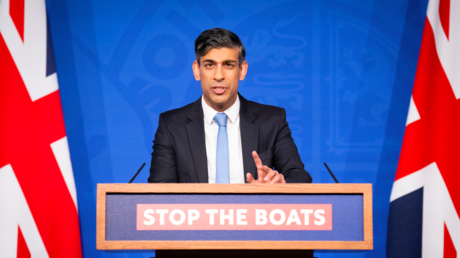
The Rwanda plan, which has been stalled by a court ruling, is part of the government’s flagship 'stop the boats’ policy, which aims to reduce illegal immigration into the UK. Under the plan, immigrants arriving via the English Channel in small boats would be resettled in Rwanda.
Britain signed a new treaty with the Rwandan government to overcome the UK Supreme Court’s decision that the plan is unlawful and to address concerns that the African country is unsafe for asylum seekers. The bill seeks to direct judges to disregard sections of the Human Rights Act, as well as domestic and international law provisions, that might classify Rwanda as an unsafe country for deportation. It allows ministers to ignore orders from the European Court of Human Rights (ECHR) to temporarily halt a flight to Rwanda during appeals hearings.
The bill passed the legislative stage in the House of Commons last week, despite opposition from Tory MPs including former home secretary Suella Braverman and ex-immigration minister Robert Jenrick, who proposed tougher amendments.
The upper chamber’s vote on Monday, while largely symbolic, is the latest blow to Sunak’s desire to see the first deportation flights depart for Rwanda in the coming months, ahead of a general election scheduled for the second half of this year.
”The considerations of international law and national reputation… convince me that it would not be right to ratify this treaty at any time; and arguments from history suggest that it would be very reckless to do so any time soon,” said John Kerr, a former diplomat who sits in the House of Lords.
The Lords, who are appointed rather than elected, have the authority to delay and amend legislation but cannot overturn the decisions of elected House of Commons members. The House of Lords is expected to debate the bill next week.
Britain has paid Rwanda at least £240 million ($305 million) under the controversial deal reached two years ago, but no asylum seekers have been sent there.
Prime Minister Sunak stated on Thursday that he is prepared to disregard ECHR Rule 39, which imposes a temporary injunction on deportations.
Read more
January 24, 2024 at 12:12AM
from RT - Daily news
via IFTTT
The IL-76 military aircraft was transporting 65 captured service members for further exchange, the Defense Ministry has said
A Russian heavy transport plane carrying several dozen Ukrainian prisoners of war (POWs) has crashed in Belgorod region, which borders Ukraine, Moscow has confirmed. Earlier, media reports suggested that all passengers and crew members on board were killed.
In a statement on Wednesday, the Russian Defense Ministry said that an IL-76 cargo aircraft carrying 65 captured Ukrainian service members as well as six crew members and three people accompanying the POWs went down during a pre-planned flight at around 11am local time. It added that the prisoners were being transported to Belgorod region for an exchange.
Defense officials also noted that Moscow has dispatched a commission to establish the cause of the incident.
Telegram channel 112, citing a source, had earlier reported that the crash took place near the village of Yablonovo, about 90 km from the border. The channel at the time said that there were no survivors.
DETAILS TO FOLLOW
Read more
January 23, 2024 at 11:17PM
from RT - Daily news
via IFTTT
Any peace settlement will have to accommodate Russia’s core security interests, the foreign minister has said
Moscow has never closed the door to dialogue to end the Ukraine conflict, Foreign Minister Sergey Lavrov said on Tuesday, reiterating that Russia’s key goal remains stopping NATO’s unchecked expansion towards its borders.
In a rare interview with CBS News in New York, where he arrived to take part in UN meetings on Ukraine and the Middle East, Lavrov rejected a recent claim by US Secretary of State Antony Blinken, who alleged that Moscow has shown no “willingness… to engage, to negotiate in good faith” to end the conflict with Kiev.
“It’s not true,” Lavrov stressed, adding that Russia has always been ready to discuss “any serious proposal” that addresses the situation on the ground and the root causes of hostilities. Moscow is also willing to reach a solution “which would guarantee legitimate national interests of Russia and the Ukrainian people,” the diplomat stated.
Lavrov reiterated that Russia is prepared to listen to anyone interested in establishing “justice” in relations between Moscow and Kiev. He insisted, however, that this would require the West to stop its policy of “using Ukraine as an instrument of war against Russia.”
Lavrov recalled that Russia has long voiced concerns about NATO expansion. “The goal is very simple… we’ve been warning publicly since 2008… that NATO’s expansion against all promises [to Russia and the Soviet Union]… was going too far,” he said.
At a 2008 summit in Bucharest, NATO leaders declared that Ukraine would eventually become part of the alliance, sparking a backlash from Russia, which has traditionally viewed the US-led military bloc’s expansion towards its borders as an existential threat.
In December 2021, weeks before the start of the Ukraine conflict, Moscow submitted a draft of security guarantees to the US and NATO, demanding that the West ban Kiev’s accession to the bloc and retreat to its borders as of 1997. The overture, however, was rebuffed.
Officials from Moscow and Kiev said the two sides were close to reaching a peace deal early in the Ukraine conflict, with a key Russian demand being that the neighboring country recommit to neutral status and abandon its NATO ambitions. According to numerous reports, the process was derailed by then-UK Prime Minister Boris Johnson, who convinced Ukraine to continue fighting.
Read more
January 23, 2024 at 12:16AM
from RT - Daily news
via IFTTT
Antonio Guterres has described the continent’s lack of representation as a “flagrant injustice”
The fact that Africa lacks a permanent seat at the United Nations Security Council (UNSC) is an injustice, Secretary-General Antonio Guterres said on Sunday.
The UN chief insisted that the present structure of the UNSC is paralyzed by geopolitical divisions and does not reflect the reality of today’s world. The Security Council has 15 members, five of which are permanent – Russia, China, the US, UK, and France – and which have the right to veto any resolution.
Guterres made the remarks during an engagement with reporters after addressing the Third South Summit of a group of developing countries known as the G77 plus China in Uganda’s capital, Kampala.
He said that while most African countries were not independent when UN institutions were established, the fact that the continent does not have a single permanent member of the Security Council constitutes a “flagrant injustice.”
According to Guterres, all five permanent members of the council have been “favorable” to the demand for Africa to have proper representation in the body.
”So for the first time, I’m hopeful that at least a partial reform of the UN Security Council could be possible for this for this flagrant injustice to be corrected, and for Africa to have at least one permanent member in the Security Council,” he said.
”It is not guaranteed… it depends exclusively on member states, on the General Assembly, but for the first time I think there are reasons to be hopeful.”
The 55-nation African Union (AU) has long sought permanent representation in the UNSC. In 2005, the bloc established the C-10 group, whose primary mandate is to present, advocate for, and canvass support for the common African position on Security Council reforms. It seeks two permanent seats on the council but is currently represented by Algeria, Mozambique, and Sierra Leone as non-permanent members.
Last year, Russian President Vladimir Putin declared his support for calls for the AU to have a seat at the UNSC and the G20, saying it would reflect the desire of African nations to have their voices strongly heard.
In September, the AU was formally admitted into the G20 group of leading economies at the bloc’s summit in New Delhi, India. South Africa had been the only African country with membership in the G20.
Read more
January 22, 2024 at 11:16PM
from RT - Daily news
via IFTTT
The sanction-hit country has now surpassed Saudi Arabia as Beijing's largest crude supplier
Russia moved past Saudi Arabia in 2023 to become the largest exporter of oil to China, Chinese customs data released on Saturday showed.
Just over 107 million metric tons of Russian oil were shipped to China in 2023, a figure that comes out to 2.14 million barrels per day, thus marking a year-on-year increase of 24%. The record high crude shipments came despite Ukraine-related sanctions imposed on Russian oil exports by the West.
Saudi Arabia shipped some 86 million metric tons in 2023, while Iraq, the third biggest oil supplier to China, delivered 59 million tons. In December alone, Russia’s oil exports to China amounted to 9.5 million tons, which is 6.2% higher than the volume of supplies in November.
Moscow began diversifying its energy supplies in 2022 after the EU, G7, and allies imposed an embargo on seaborne Russian oil along with a $60-per-barrel price cap on other types of crude in an effort to curb Russian energy revenues. Similar restrictions were subsequently introduced for exports of petroleum products. The agreed ceiling for diesel is $100 per barrel, and $45 for discounted products such as fuel oil.
As a result, Russian oil producers have rerouted supplies of East Siberian crude to Asia, and resumed transportation of crude by rail.
Last month, Russian Deputy Prime Minister Alexander Novak said that oil sales to the EU, once Russia’s biggest market, had dropped by 90%. Meanwhile, a number of Western officials have noted that oil from Russia is still entering the EU market via intermediaries at an elevated price.
The grand ceremony was attended by around 8,000 people, including politicians, business tycoons, and Bollywood stars
Indian Prime Minister Narendra Modi on Monday participated in a grand inauguration ceremony for a temple in Ayodhya in the northern part of the country, in a major political boost for his government ahead of national elections scheduled for May. Construction of the temple was one of the main pledges of Modi’s 2019 election campaign.
Stretching across 7.2 acres, the three-story shrine, constructed for $216 million, is made of pink sandstone and black granite. Modi arrived in Ayodhya by helicopter to take part in the ‘pran pratistha’ ceremony (which translates as ‘the establishment of life force’).
During the event, an idol was installed depicting the Hindu god Ram as a child, sculpted by designer Arun Yogiraj. Hindus believe the consecration ritual breathes life into an idol or picture.
Over 8,000 people traveled to Ayodhya to attend the ceremony, including the country’s richest man, Reliance Industries chairperson Mukesh Ambani, his wife and chairperson of Reliance Foundation Nita Ambani, and dozens of movie stars and sporting icons. “Ayodhya’s message is the end of every kind of violence – be it internal violence, external violence, or the conflict between the countries,” Indian Nobel Peace Laureate and activist Kailash Satyarthi told the ANI news agency.
Helicopter Drops Petals on Pilgrims as Ayodhya Temple Consecrated
Indian PM Modi made offerings as the ceremony was heralded by conch shells, drums and a chorus of joyous voices to bless the temple built to honour the Lord Ram.#RamMandirPranPrathisthapic.twitter.com/p3yT0JIukQ
Actor Anupam Kher, who was among many Bollywood celebrities present, described the event as “bigger than Diwali,” referring to one of India’s main religious festivals, which marks the return of Lord Ram to Ayodhya after vanquishing evil and is celebrated by lighting earthen lamps. Earlier, Modi had urged Indians to celebrate the temple consecration “like Diwali”. All the states ruled by the Bharatiya Janata Party (BJP) shut schools and colleges and declared a full or half-day government holiday to encourage people to watch the ceremony.
Against the backdrop of the temple’s construction, the government allotted $3.85 billion for the transformation of the town of Ayodhya, which is receiving a major facelift in the form of swankier hotels, improved roads, and railway facilities, and its own international airport capable of handling a million passengers annually.
Meanwhile, the opposition has shunned the event, accusing Modi of using it for political gains. The leadership of the Congress, India’s largest opposition party, said it “respectfully declined” an invitation to attend. In southern India’s Tamil Nadu state, controversy erupted over the Dravida Munnetra Kazhagam (DMK) party-led government allegedly “banning” live telecasts of the Ayodhya ceremony in the temples across the state – a claim the local administration has denied.
On Monday, the Supreme Court issued a notice to the Tamil Nadu government on a plea filed against the state’s oral order, noting that “permission” to telecast the event or conduct religious ceremonies cannot be denied on the grounds that it could upset other religious communities. “This is a homogenous society,” the bench noted, according to a Livelaw report.
The Ram temple is built on a site where in 1992 a 16th-century mosque was razed by Hindu nationalists, who believed that the Muslim invaders had erected the building on the ruins of a Hindu temple. After a trial spanning 18 years, centering on whether Hindus or Muslims were the rightful owners of the land, the Supreme Court of India sided with the Hindus in 2019, paving the way for a temple dedicated to the deity.
Where India Meets Russia – We are now on WhatsApp! Follow and share RT India inEnglishand inHindi
Read more
January 21, 2024 at 11:21PM
from RT - Daily news
via IFTTT
The Novatek facility on the Baltic coast was set ablaze on Sunday
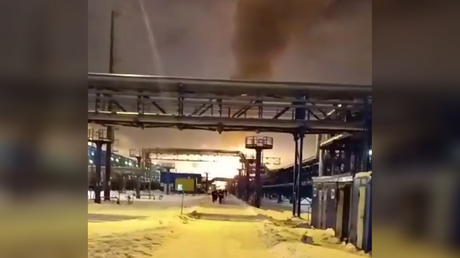
A large fire at a terminal on the Baltic Sea operated by Russian natural gas producer Novatek was caused by an “external impact,” the company has revealed.
The blaze erupted at the port of Ust-Luga early on Sunday, and was the result of “external influences,” Novatek’s press office said, citing preliminary information.
“There were no injuries, no threat to human life or health. Currently, the fire has been extinguished, and specialists from the enterprise, emergency response services and the Ministry of Emergency Situations are monitoring the residual burnout of hydrocarbons,” added the company, which is Russia’s second-largest national gas producer.
Earlier in the day, Leningrad Region Governor Aleksandr Drozdenko said the facility had been set ablaze, adding that employees had been evacuated and that no casualties had been reported.
Based in the Gulf of Finland some 170km west of St. Petersburg and 35km from the Estonian border, the Ust-Luga complex focuses on processing stable gas condensate into light and heavy naphtha, jet fuel, fuel oil, and gasoil. The products processed at its 12 terminals are shipped to international markets through the nearby port, the largest on the Baltic Sea.
In 2022, the facility processed some 7 million tons of gas condensate. The terminal’s likely halt due to the incident places Novatek’s liquid output and oil-product exports at risk.
Local newspaper Fontanka reported that at least two drones were spotted flying towards St. Petersburg before the terminal caught fire. The city’s Pulkovo Airport reportedly introduced its ‘Kovyor’ mode, which involves aircraft departures and landings being suspended due to an external threat.
Ukraine has regularly targeted infrastructure in Russian border regions with drone and missile strikes amid the conflict with Moscow, although attacks on targets as far away as Leningrad Region – around 1,000km from the Ukrainian border – are rarer. Earlier this week, however, the Russian military said a Ukrainian drone had attacked the region, the first known occasion that one had been spotted in the area since the launch of Moscow’s military operation against Ukraine.
The attack targeted a busy market in the capital of Russia’s Donetsk People’s Republic, the regional leader said
At least 13 people have been killed and ten others wounded in a shelling of Donetsk by the Ukrainian forces, Denis Pushilin, leader of the Donetsk People’s Republic, has said.
Describing the attack as “horrendous,” Pushilin wrote on his Telegram channel that it hit a market in the Kirovsky District, in the south-western part of the city, during its busiest hour.
First responders and operatives are working at the site, clarifying the data on the dead and wounded in the attack, and searching for fragments of munitions used in the bombardment, he added.
In Kuibyshevsky District in the north-west of the city, a Ukrainian drone also dropped a grenade on repair workers fixing a heating system. One person was injured and an excavator destroyed in that attack, according to the mayor of Donetsk Aleksey Kulemzin.
DETAILS TO FOLLOW
Read more
January 20, 2024 at 11:26PM
from RT - Daily news
via IFTTT
Lithuania’s Ausrine Armonaite says lending to the government is better than “hiding cash in a sock”
Lithuanian Economy Minister Ausrine Armonaite has issued a call for citizens to finance the country’s defense industry, telling them to “invest in tanks” rather than keep hold of their savings.
Discussing her proposal with Lithuanian National Radio and Television (LRT), the minister claimed that the government needs to be more active in outlining what it expects from citizens – especially regarding support for Ukraine in its conflict with Russia.
“There are ways, for example, to borrow money from residents [for military spending],” Armonaite stated, while stressing that citizens should not expect substantial returns on any investments.
“I have heard criticism of the idea of such bonds, but there is a lot of money that people still have. Maybe it’s better stop keeping it in a sock, but to invest in a tank,” she added.
The defense ministers of Lithuania, Latvia, and Estonia last week signed an agreement aimed at developing a joint air defense system in the Baltic.
At the same time, Estonia announced plans to build around 600 ‘concrete bunkers’ on the border with Russia. Fellow NATO members Latvia and Lithuania have reportedly signed up for the project as well.
Earlier this month, the commander of the Lithuanian army, General Valdemaras Rupsis, argued that the Western defense industry needs to be restored to Cold War levels in order to deal with geopolitical shifts.
Berlin has declared itself an expert in mass extermination of people by making the move, Russia’s Foreign Ministry spokeswoman says
Russia is not surprised that Germany has decided to defend Israel in a genocide case in the International Court of Justice (ICJ), as unconditional support for the Jewish state is obligatory in Washington’s ‘rules-based international order,’ Russian Foreign Ministry spokeswoman Maria Zakharova has said.
In late December, South Africa brought proceedings against Israel at the ICJ, alleging it had breached the Convention on the Prevention and Punishment of the Crime of Genocide in its aerial and ground bombardment of Gaza in response to the Hamas cross-border attack on October 7.
It also asked the court in The Hague to order Israel to “immediately suspend its military operations in and against Gaza.”
Berlin has disputed the genocide charge. On January 5, a spokesperson for Germany’s Federal Foreign Office said that Israel’s “targeted action against armed attackers; that is, fighters in an armed conflict, is not action with the intention of destroying an ethnic group.”
“We have made it very clear that, in our opinion, the claim that Israel is committing genocide in the Gaza Strip is false and not covered by the Convention,” the official added.
More than 25,000 people have so far been killed in Israel’s offensive, Palestinian health officials say, while about 1,200 people died in the Hamas attack last October. Another 240 were seized as hostages.
Last Friday, Germany announced that it would intervene on behalf of Israel as a third party in the case – effectively telling the ICJ that it objects to the interpretation of the genocide convention, and how it is being applied to Israel.
This development is not surprising, Zakharova said on Sunday, telling the media that it “comes against the backdrop of the unconditional support that Berlin always provides Israel, regardless of consequences.”
“This line of the German authorities has long and firmly occupied an important place among the unspoken dogmas of the ‘rules-based order’ defined by Washington,” she added.
DETAILS TO FOLLOW
Read more
January 20, 2024 at 11:04PM
from RT - Daily news
via IFTTT
Power consumption has been driven up by the metals, machinery, rail and shipping sectors
Russia’s electric power usage rose 1.4% in 2023 compared to the previous year, exceeding 1.121 trillion kilowatt hours, according to the latest data released by the Russian Power System Operator.
Demand rose on all regional networks, but most notably in the Far East, Siberia and the south. The overall increase was reportedly triggered by a surge in consumption from machine builders and metals factories, Russian Railways, and the southern ports.
Electricity consumption in Siberia and the Far East grew due to major investment projects by metals firms, rail infrastructure development, and intensified trade links with China, according to Sergey Sasim, Director of Institute of Economics and Utility Regulation at HSE, as cited by Kommersant.
He added that increased activity in the military-industrial complex and higher household consumption also contributed to the power demand surge in the regions.
Demand was also fuelled by a surge in manufacturing, particularly mechanical engineering and metalworking, Aleksey Fadeev, head of special projects at the Institute for Natural Monopolies Research, told the business daily.
According to data tracked by Rosstat, production in manufacturing industries over the first 11 months of 2023 saw a year-on-year surge of 7.5%.
Southern regions have seen increased rates of consumption for the past few years, up by a quarter in 2016–2023, according to Fadeev, who cited population growth, and the development of the agricultural sector, industry and transport.
Electricity production accelerated along with the demand surge in 2023, the report reads. The figures were boosted after the destruction of the Kakhovka hydroelectric dam in the Kherson region, which led to increased supplies to four former Ukrainian territories that joined Russia in 2022.
The discovery could help fulfill the Southeast Asian country’s goal of becoming a regional hub for electric-vehicle production
Thailand has found nearly 15 million tons of lithium resources in its southern province of Phang Nga, a government official announced on Friday. The mineral is essential to the renewable energy industry.
The discovery means that the country now boasts the globe’s third-largest lithium reserves, after Bolivia and Argentina. However, it’s unclear how much of these can be exploited for commercial purposes.
According to government deputy spokesperson Rudklao Intawong Suwankiri, the deposits are split between two different locations. “We are trying to find out how much can we use from the resources we found. It takes time,” Rudklao told The Nation television station, according to AFP.
“It’s good news. It’s an opportunity for Thailand to become self-reliant in the production of EV batteries,” Rudklao stated.
Demand for lithium has been soaring across the world as the mineral is vital for manufacturing smartphones, car batteries, and other rechargeable electronics. Moreover, the UN deems lithium a “pillar for the fossil-fuel free economy” because of its potential for energy storage in the clean power grids of the future.
Meanwhile, the administration of Thai Prime Minister Srettha Thavisin, who assumed office in August, has set a goal of turning the country into a regional production base for electric vehicles. Thailand has a history of producing conventional automobiles.
In December, two Chinese EV giants reportedly pledged to invest 2.3 billion baht ($64 million) in order to promote Thailand as a production hub.
Paul Mackenzie is accused of ordering hundreds of his followers to starve themselves to death
A doomsday cult leader has been charged with terrorism offenses and the murder of 191 children following the discovery of 429 bodies in a forest area near his church in Kenya.
Paul Mackenzie allegedly instructed his followers to starve themselves to death so they would meet Jesus Christ before the end of the world. However, autopsies show that some died from strangulation or suffocation.
He was arrested last April after police rescued 15 emaciated church members and the first bodies were discovered in shallow graves located in the Shakahola forest area in the coastal county of Kilifi.
Exhumations over the course of several months uncovered 429 bodies, including those of 191 children, only 11 of whom have been identified to date, according to the charge sheet.
Mackenzie is alleged to have forced his followers to destroy their identification documents and forbade them from interacting with anyone outside the cult community.
According to Reuters, the mass starvation of members was designed to occur in three phases: first children, then women, followed by young men, and finally older men.
He is currently serving a one-year prison sentence for operating a film studio and producing movies for his preaching without a valid license. He is one of 95 people who will be charged with murder, child torture, and other offenses in relation to the atrocity.
Mackenzie was previously accused of extreme sermons and responsibility for the deaths of two children in 2017 and 2019. In the first case, he was cleared of all charges. He was released on bail pending trial in relation to the second case.
The cult leader has also been charged with “facilitating the commission of a terrorist act.”
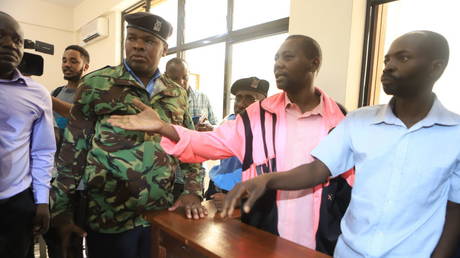
He appeared before Kenya’s High Court in Mombasa on Wednesday along with 30 of his followers who are also charged with the murder of 191 children. None entered a plea because the judge granted a request for mental health assessments.
Mackenzie and his co-defendants denied the charges and will appear in court again for a bond hearing on February 8.
Read more
January 19, 2024 at 12:17AM
from RT - Daily news
via IFTTT
Somalia has insisted on Ethiopia terminating its “illegal” agreement with Somaliland
Somalia has rejected mediation in a dispute with Ethiopia, insisting that resolution is only possible if its landlocked East African neighbor cancels a Red Sea access agreement it concluded with breakaway Somaliland.
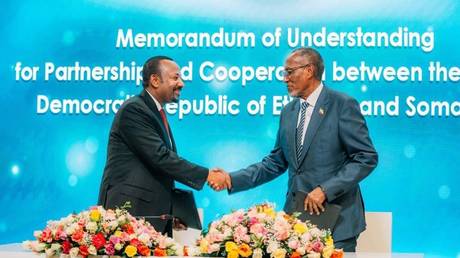
Relations between Mogadishu and Addis Ababa have deteriorated since Ethiopian Prime Minister Abiy Ahmed and Somaliland’s president, Muse Bihi Abdi, signed a memorandum of understanding at the beginning of January granting Ethiopia access to the Red Sea port of Berbera for 50 years.
Although Somaliland declared independence from Somalia in 1991, it has yet to be internationally recognized as an independent state. Mogadishu, which considers Somaliland part of its territory, has denounced the maritime pact as an act of aggression and a violation of its territorial integrity and sovereignty.
Mogadishu has threatened to go to war to prevent the deal from being implemented, accusing Addis Ababa of plotting to attack Somali waters and target Arab countries in the Red Sea. In response to the rising tensions, the African Union (AU) called for restraint and “meaningful dialogue” between the two member states during a meeting on Wednesday.
In a statement on Thursday, the Somali government said it had taken note of the AU’s recommendation but insisted that Ethiopia had violated its sovereignty by signing an “illegal” deal with the “Somaliland administration.”
“There is no space for mediation unless Ethiopia retracts its illegal MOU and reaffirms the sovereignty and territorial integrity of Somalia,” Somalia’s Foreign Ministry said in the statement posted on X (formerly Twitter).
The deal with Somaliland would see 20km (12 miles) of coastland around the port of Berbera on the Gulf of Aden leased to Ethiopia for five decades for commercial purposes and the construction of a military base.
Prime Minister Abiy Ahmed, whose country joined the BRICS+ group on January 1, has emphasized the importance of access to the Red Sea – one of the world’s major trade crossroads – for Ethiopia’s economic growth. The Horn of Africa nation currently relies mainly on the port of neighboring Djibouti for the majority of its maritime trade since it became landlocked following Eritrea’s secession in 1993.
While Addis Ababa recognizes the Somaliland deal as a victory, Mogadishu has called for international support against it. On Thursday, Ethiopian State Minister of Foreign Affairs Mesganu Arega Moach accused the Arab League of attempting to meddle in the country’s internal affairs after the 22-nation bloc declared the MOU “a clear violation of international law.”
Somalia and Ethiopia have withdrawn their ambassadors from each other’s capitals over the port row.
Read more
January 18, 2024 at 11:35PM
from RT - Daily news
via IFTTT