Qatari mediators said the two sides had approved a one-day extension minutes before the previous truce was set to expire
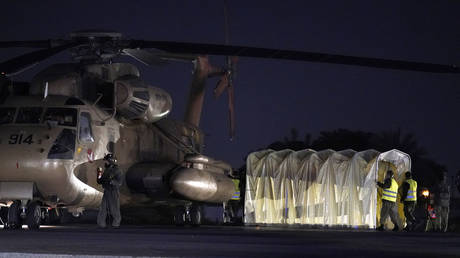
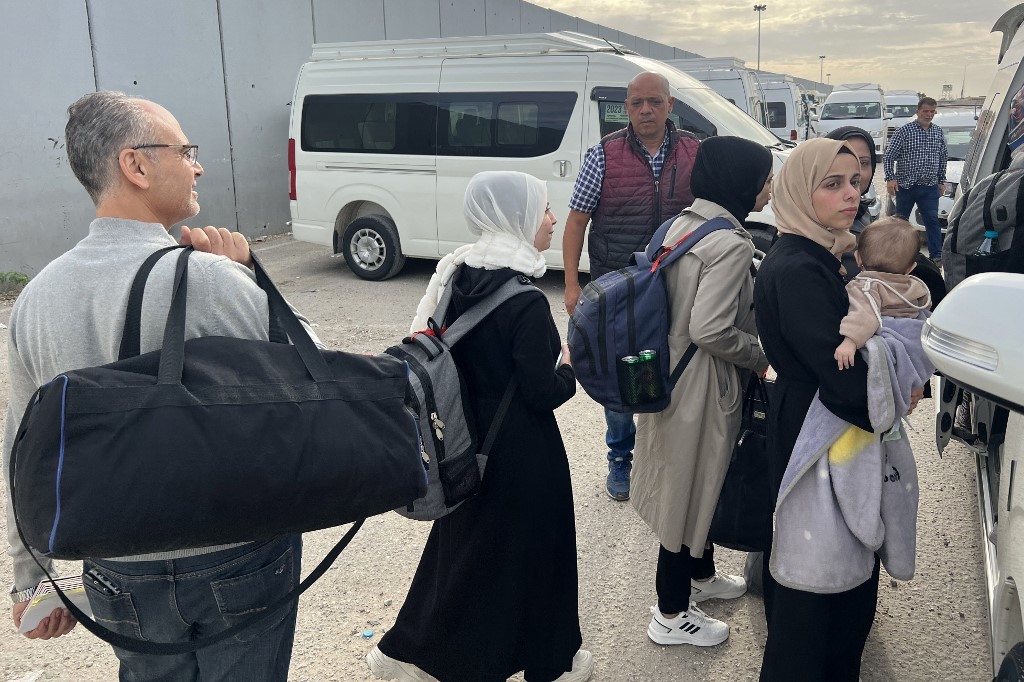
Israel and Hamas have agreed to extend the current ceasefire in Gaza by another day, following the exchange of dozens more captives on Wednesday, the Qatari Foreign Ministry has announced. The extension was reportedly finalized just minutes before the previous truce was due to end at 7am local time on Thursday.
According to diplomats in Doha, who have acted as mediators, the conditions for prolonging the ceasefire are the same as for the previous six days. These include an exchange of ten Israeli hostages and 30 Palestinian prisoners, as well as the entry of humanitarian aid into Gaza.
“In light of the mediators’ efforts to continue the process of releasing the hostages and subject to the terms of the framework, the operational pause will continue,” the Israeli military said in a statement. Prime Minister Benjamin Netanyahu’s office confirmed that Israeli authorities had a “list of women and children [to be freed] in accordance with the terms of the agreement.”
Prior to the agreement being reached, Hamas claimed that Israel had rejected its proposed list of hostages to be freed, which included seven living captives and the bodies of three others, who according to the Palestinian militant group had been killed in Israeli airstrikes.
Both sides had insisted that they were ready to resume fighting, although Israel later said Hamas had submitted a revised list, which overcame the impasse.
On Wednesday, Hamas released 16 hostages – ten Israeli citizens, two Russian and four Thai nationals – while Israel set 30 Palestinian prisoners free, all of whom were women and children. The hostages released by Hamas were handed over to the International Committee of the Red Cross (ICRC) and taken to Israel.
The Russian and Thai nationals were freed outside of the framework of the agreement between Israel and Hamas. Out of the ten Israeli former abductees, five hold dual citizenship, including that of the US, the Netherlands, and Germany.
Hamas has released nearly 100 hostages since the Israeli government initially approved the swap deal last Tuesday. According to Israeli estimates, 145 people remain in the hands of the Palestinian militant group.
Meanwhile, on Thursday morning two gunmen opened fire at people at a bus stop in Jerusalem in a suspected terrorist attack. According to local media, the shooting claimed three lives, with several more people injured.
The assailants were shot and killed by Israeli security forces. They were later identified as two brothers who were Hamas members, and who had previously been jailed for terrorism-related offenses.
Read more
November 29, 2023 at 11:13PM
from RT - Daily news
via IFTTT
The country’s competitiveness as an industrial location has been undermined, Michelin said
French tire giant Michelin will slash over 1,500 jobs in Germany by 2025, as competition from lower-wage nations and soaring energy prices make production in Western Europe unprofitable.
Michelin will fully shut down plants in Karlsruhe and Trier and discontinue some products at its site in Homburg, the company announced in Frankfurt on Tuesday. The decision will affect 1,410 employees in total. The Karlsruhe factory, Michelin’s oldest in Germany, was founded in 1931.
A further 122 jobs will be lost at the customer contact service in Karlsruhe, which will be moved to Poland, the company said. The operation supports clients in Germany, Austria, and Switzerland, an area where Michelin employs some 8,000 people, according to its website.
“The commitment of our employees, the progress made within the company and the investments made in recent years in the affected activities can no longer compensate for the strong competitive pressure,” Maria Rottger, president of Michelin’s Northern Europe region, explained.
German trade union IG BCE said it will not “simply accept” the plans and will look for alternative solutions.
The firm noted that “recent health and geopolitical crises” had pushed up operating costs, putting “additional strain on Germany’s competitiveness as an industrial location.”
Germany has grappled with increasing economic problems since the EU chose to no longer buy cheap natural gas from Russia in response to the Ukraine crisis. The decoupling was reinforced in September 2022, when explosions sabotaged the undersea Nord Stream pipelines which delivered Russian fuel directly to Germany. Berlin has yet to identify the perpetrators of the attack, which Moscow claimed was likely masterminded by the US.
Some German politicians are urging the government to reconsider its antagonistic stance towards Russia, citing the economic damage their nation has suffered.
“The economic sanctions are hurting us more than Russia,” Klaus Ernst, an MP from The Left party, said on X (formerly Twitter) on Monday.
“The result is skyrocketing energy prices, a sharp decline in production in the energy-intensive industry and a shrinking economy in Germany,” he added, calling for energy supplies to be ramped up, including from Russia, in order to rein in prices.
Earlier this year, US tire maker Goodyear revealed plans to shut down two factories in Germany, which will cut around 1,750 jobs. As part of its rationalization plan in Europe, the Middle East, and Africa, it will permanently close its facilities in Fulda and Furstenwalde.
Read more
November 28, 2023 at 11:38PM
from RT - Daily news
via IFTTT
It “seems a bit dangerous” to visit Gaza right now, the US billionaire has said
Tesla and SpaceX CEO Elon Musk has declined an invitation by a senior Hamas official to tour Gaza to see the fallout of the relentless Israeli attacks on the Palestinian enclave. The US billionaire recently paid a visit to Israel during which he agreed that the country had no other choice but to destroy Hamas.
On Tuesday, Osama Hamdan, a member of the Hamas politburo, told a press conference in Beirut, Lebanon, that the Palestinian armed group would be happy to show Musk “the extent of the massacres and destruction committed against the people of Gaza, in compliance with the standards of objectivity and credibility.”
Asked by a user on X (formerly Twitter) to comment on the invitation, Musk replied that “[it] seems a bit dangerous there right now.”“But I do believe that a long-term prosperous Gaza is good for all sides,” he added.
The US tycoon’s remarks came after Musk traveled to Israel on Monday, where he met with Prime Minister Benjamin Netanyahu and President Isaac Herzog, and walked through a kibbutz destroyed by Hamas.
He also had a conversation with Netanyahu during which he agreed with the latter’s stance on Hamas, arguing that “those who are intent on murder must be neutralized.”
Musk’s trip to Israel came after the billionaire found himself in hot water over accusations that he harbored “anti-Semitic” sentiments. In particular, he emphatically concurred with one post accusing Jewish people of “pushing the exact kind of dialectical hatred against whites that they claim to want people to stop using against them.”
He has also previously been at odds with the Anti-Defamation League (ADL), a Jewish advocacy group, which accused the mogul of allowing hate speech on X. Musk has denied the anti-Semitism allegations and has threatened to sue the organization.
The conflict, which erupted after Hamas’ attack on Israel on October 7, has caused thousands of casualties on both sides, as well as a humanitarian crisis and widespread devastation in Gaza. As the hostilities intensified, tensions between pro-Palestinian and pro-Israeli communities around the world have also surged.
Read more
November 28, 2023 at 11:37PM
from RT - Daily news
via IFTTT
Authorities claim armed men, including serving and retired soldiers, tried to illegally overthrow the government on Sunday
A group of soldiers and police officers launched a series of attacks on military facilities and prisons in Sierra Leone over the weekend in an attempt to overthrow the civilian government, authorities in the West African country claim.
Sierra Leonean Information Minister Chernor Bah told reporters on Tuesday that 13 military officials and one civilian had been detained in connection with the incident.
“The incident was a failed attempted coup. The intention was to illegally subvert and overthrow a democratically elected government,” Bah said.
On Sunday, the West African country imposed a nationwide curfew following clashes between security forces and armed men who attacked the Wilberforce Barracks in the capital, Freetown. According to the government, the armed group also broke into Freetown Central Prison and released several inmates.
At least 21 people were killed in the gunfire, including 14 soldiers and three “assailants,” Bah said on Tuesday. According to the police, among the dead is Idrissa Hamid Kamara, popularly known as Leatherboot, a “strongman” of the opposition All People’s Congress party. He was a security-team member of Sierra Leone’s previous president, Ernest Bai Koroma.
Authorities have also reported that nearly 2,000 prisoners escaped during the incident, with only a few voluntarily returning.
Sierra Leonean police have released photographs of 34 people wanted for alleged involvement in the unrest. The list includes 32 men and two women who are serving or retired soldiers, police officers, and civilians. According to the Sierra Leone Telegraph, almost all of the declared fugitives are linked to the main opposition APC party in some way.
Tensions in Sierra Leone have been rising since President Bio’s re-election in June, which drew criticism from the opposition and international observers over concerns about transparency.
Police arrested senior army officers in August on suspicion of plotting an attack on state institutions.
The coup attempt in Freetown comes at a time when the West African region has seen successful overthrows of democratically elected governments, the most recent of which occurred in Niger.
The Economic Community of West African States (ECOWAS) has condemned the event, calling it a scheme by certain individuals to obtain arms and disrupt the member state’s peace and constitutional order.
The 15-state regional bloc said on Monday that it was ready to assist Sierra Leone, including by strengthening national security and deploying regional elements if necessary.
Read more
November 28, 2023 at 11:36PM
from RT - Daily news
via IFTTT
Skyrocketing energy prices in light of a Russian gas supply shortfall boosted Norway’s revenues in 2022
Norway raked in record oil and gas revenues last year after the conflict in Ukraine sent energy prices soaring, broadcaster NRK reported on Tuesday.
According to the channel, citing research institution NHH, Norway earned 334 billion kroner ($31.3 billion) in 2022 in revenues from natural gas exports, amid a major disruption in supplies of Russian pipeline gas.
“We find the price of coal and Russian supply shortfall to explain the majority of the fluctuations in the natural gas price over 2022,” NHH researchers wrote.
The figure accounted for 27% of Norwegian gas export revenues in 2022, excluding supplies to the UK, according to the report. It indicated that 2022 was a record year in terms of Norwegian gas revenues.
“It is an insanely high number,” said the leader of Norway’s Green Party, Arild Hermstad, as quoted by NRK. “It is reprehensible that Norway should profit from other people’s misfortune. The government makes it embarrassing to be Norwegian.”
The exceptional revenues have led to some politicians accusing Norway of being a ‘war profiteer,’ a label that Oslo rejects.
Finland has shut all border crossings apart from the northernmost link
Completely closing the Finland-Russia land border would cost Helsinki up to $3.3 billion, according to Russian State Duma Chairman Vyacheslav Volodin.
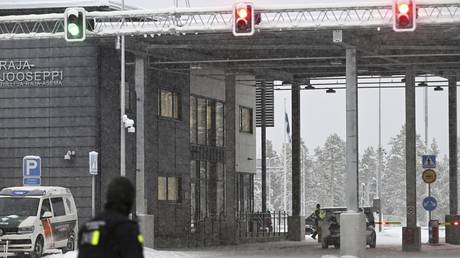
Helsinki has closed all but one of its several border corssings with Russia in the last week, citing increased flows of asylum seekers.
The Finnish authorities were “punishing” their own citizens and hindering the development of the country by “lowering the Iron Curtain in the east,” Volodin warned.
“Finnish authorities have closed all checkpoints on the border with Russia, except for the northernmost one,” Volodin said on his Telegram channel on Tuesday. “This decision will cost the Finns, according to some estimates, about €3 billion ($3.3 billion).”
He also warned that Finland “faces a number of problems,” including increased military spending due to joining NATO and sanctions on Russia, the consequences of which the EU still cannot manage.
Last week, the Finnish government shut seven of the eight operating border crossings with Russia, citing an alleged surge in undocumented asylum seekers from third countries.
Prime Minister Petteri Orpo has said the last remaining Raja-Jooseppi checkpoint will be closed as well in case of further influxes of refugees.
The border closures have been justified by accusing Russia of letting through asylum seekers from Africa and the Middle East, who lack passports or proper visas. Finnish Defense Minister Antti Hakkanen claimed that the Kremlin was using refugees to “accelerate the migrant crisis in Europe and destabilize its unity.”
Moscow has refused to comment on the allegations. Kremlin spokesman Dmitry Peskov previously said it was soon to speak about the ‘Iron Curtain’ despite the steps taken by Helsinki.
The Sudanese army chief has agreed to a regional mediation process aimed at achieving a total ceasefire
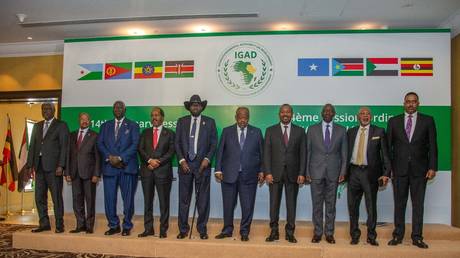
The Intergovernmental Authority on Development (IGAD), an East African trade bloc, has called for an emergency meeting about the conflict in Sudan, where fighting between paramilitary forces and the national army has been ongoing since mid-April.
The summit, the date of which has yet to be announced, will be devoted to discussing the escalating crisis, with South Sudan confirming attendance, local media reported on Monday.
“The IGAD secretariat is currently finalizing the summit agenda and is seeking input from member states,” South Sudan’s Foreign Affairs Minister James Pitia Morgan said, according to the Sudan Tribune news agency.
“These inputs reflect the visions of the IGAD leaders on how they envision restoring peace and stability in Sudan,” Morgan added.
The decision to hold the meeting was made on Sunday after talks between Sudan’s military leader, General Abdel Fattah al-Burhan, Djiboutian President Ismail Omar Guelleh, and IGAD’s Executive Secretary Workneh Gebeyehu. Guelleh is the chairman of the eight-state Horn of Africa IGAD bloc.
The parties agreed on the need for a long-term ceasefire to end the violence in Sudan, which has killed an estimated 9,000 people and displaced nearly 6.2 million others, according to the UN.
The Sudanese government had previously declined to attend a meeting organized by the bloc in the Ethiopian capital of Addis Ababa that was intended kick-start a peace process. General al-Burhan rejected Kenyan President William Ruto as chairman of the committee mediating the talks, claiming that Nairobi has sided with the paramilitary Rapid Support Forces.
However, earlier this month, the Sudan Armed Forces chief met with Ruto, and both sides announced that they had agreed to work on an urgent regional summit to find ways to speed up a peace process that was initiated by the US and Saudi Arabia in the first weeks of the hostilities.
IGAD has insisted on “African solutions to African problems” and has urged the global community to support its joint efforts with the African Union to end the conflict in Sudan, which has now entered its seventh month.
The regional authority had previously considered sending troops into the conflict-torn country to protect civilians after several calls for the warring factions to stop fighting have proven ineffective.
Read more
November 27, 2023 at 11:59PM
from RT - Daily news
via IFTTT
Kiev never received adequate supplies of artillery ammunition and long-range missiles, Czech leader Petr Pavel has claimed
The West is hampering Ukraine’s ability to conduct large-scale military operations by failing to provide enough weapons, Czech President Petr Pavel has said.
In an interview with Italy’s Corriere della Sera newspaper on Monday, the Czech leader accused the West of not doing enough to back Ukraine’s faltering counteroffensive to reclaim former territories from Russia.
“Unfortunately… we have not kept our promises to supply the Ukrainians with artillery ammunition, training for the F-16 [fighter jets] is not proceeding as fast as it should,” said Pavel, who is a former NATO general.
He added that while France and the UK have provided Kiev with long-range Storm Shadow missiles – which Russian officials say have been used to target civilian infrastructure – Germany has so far been slow to follow suit and send its own long-range Taurus rockets.
“This creates an imbalance in deliveries and the uncertainty on the Ukrainian side is not a good basis for military planning,” the Czech president stated.
Petr also recalled his July warning that Ukraine had essentially only one shot at mounting a major counteroffensive, both because it was “expensive, demanding, time-consuming,” and due to political considerations.
“My reasoning was based on the observation that next year there will be elections in Russia, in the United States, and potentially also in Ukraine,” he stated. Pavel suggested that the upcoming winter will be “extremely difficult” for Ukraine due to extensive damage to infrastructure caused by Russian strikes.
Countries will also become more reluctant to support Ukraine as “the sense of frustration will grow,” the Czech leader claimed, adding that “naturally, this creates a situation that is not very favorable for the continuation of counteroffensive operations.”
According to Pavel, winter will give Russia time to recover and rebuild its army, having already significantly increased its military production.
The Ukrainian counteroffensive has been underway since early June but has failed to make any substantial progress, despite being bolstered by a large amount of NATO equipment.
In late October, Moscow claimed Kiev had lost more than 90,000 troops since the start of the offensive, with Russian Defense Minister Sergey Shoigu saying that Ukraine’s casualties had reached more than 13,000 soldiers in November alone.
Valery Zaluzhny, Ukraine’s top general, recently said hostilities had reached a World War I-style stalemate, with numerous Ukrainian officials blaming their difficulties on delays in Western arms deliveries, which have allowed Moscow to set up formidable defenses.
Read more
November 27, 2023 at 11:52PM
from RT - Daily news
via IFTTT
Despite Cairo’s resistance, the old plan to relocate Palestinian people to Egypt has prompted new discussions
Egypt’s reaction to the events in the Gaza Strip has drawn renewed attention to the US-Israeli plan of relocating the Palestinian population living in Gaza to the Sinai Peninsula, which is now a part of Egypt. In former times, this question was repeatedly raised during negotiations with Cairo. Now, it looks like Egyptian President Abdel Fattah el-Sisi will have to deal with the issue once again and find an optimal solution.
The first plans for resettlement
The idea of pushing the Palestinians out of Gaza first appeared back in the 1960s. After the establishment of the State of Israel in 1948 and the mass exodus of Palestinian Arabs as a result of the Arab-Israeli War in 1948-1949 and the Six-Day War in 1967, various Israeli institutions proposed solutions to this issue.
In 1968, the Israeli Foreign Ministry presented a project that would encourage Palestinians living in Gaza to move to the West Bank and then to Jordan and other Arab countries. In the same year, a US Congressional committee discussed a plan for the voluntary relocation of 200,000 Palestinians from Gaza to other countries, such as West Germany, Argentina, Paraguay, New Zealand, Brazil, Australia, Canada, and the USA. This plan failed, however, since many nations refused to accept the Palestinians.
In 2000, Reserve Major General Giora Eiland, who headed the Israeli National Security Council, presented a project known as ‘Regional Alternatives to the Two-State Solution.’ Published by the Begin-Sadat Center for Strategic Studies, this document assumed that Egypt would cede a 720 square km rectangle on the territory of the Sinai Peninsula, including coastal areas and the city of el-Arish, in favor of a potential Palestinian state. In return, the Palestinians would give Gaza and a part of the West Bank over to Israel, while Egypt would receive equivalent territory in the southwestern part of the Negev Desert (the Wadi Feiran region), certain economic privileges, international support, and security concessions.
However, the plan was proposed at an inopportune moment – shortly after the failed negotiations at Camp David between Palestinian National Authority President Yasser Arafat and Israeli Prime Minister Ehud Barak and at the time of the Al-Aqsa Intifada in September 2000. As a result, the settlement of the Palestinian-Israeli conflict was frozen for several years, and the Giora Eiland project fell through.
The Trump Project
Similar initiatives were put forward in later years. Most of them were based on Eiland’s document. The so-called ‘Deal of the Century’proposed by former US President Donald Trump in 2020 and officially titled Peace to Prosperity, was the most recent initiative to resolve the Gaza issue. Trump’s peace plan was not that different from the previous ones and included the same key points – Egypt would cede land in the Sinai Peninsula to build airports, factories, and business centers, and encourage agricultural and industrial projects that would help employ hundreds of thousands of people. According to the document, the new Palestinian State was supposed to grow and develop on this territory.
The ‘Deal of the Century’ (which never came into effect since Trump lost the 2020 elections) implied that Egypt would receive $9.17 billion for the development of Sinai, including half a billion dollars to support tourism projects in South Sinai on the Red Sea coast and $1.5 billion to support joint Egyptian-Israeli efforts for the establishment of a major regional natural gas hub. The Egyptian city of el-Arish, located 45 km from the Gaza border, was supposed to become a “new Jerusalem” for the Palestinians.
Taking advantage of the recent Hamas threat, Israel has gone to great lengths to make this plan a reality. The uncompromising and brutal bombing of Gaza by the Israeli Air Force is meant to force the Palestinians to relocate to Egypt. Some people are already talking about the need to flee to Sinai. Now, the course of events will largely depend on Cairo’s decisions.
Coincidentally, the plan to move the Palestinians to Sinai is closely linked to the project of a new canal on Israeli territory – an alternative to the Suez Canal that would connect the Gulf of Aqaba to the Mediterranean Sea.
Known as the Ben Gurion Canal Project, it could become a “natural” security border between Israel and Egypt. In terms of trade and strategic interest, it would become a major competitor to the Suez Canal, through which about 20% of all world trade passes. In the 1960s, the United States and Israel were highly interested in this project. Researchers from both countries even studied the technical means of building the canal, considering the mountainous landscape of the Negev Desert.
Both the US and Israel had raised the subject of relocating the Palestinians to Sinai during negotiations with former Egyptian Presidents Hosni Mubarak and Mohamed Morsi. Shortly before he died, ex-Egyptian President Hosni Mubarak described such offers. But he categorically rejected the proposal. In 2019, Palestinian Information Minister Nabil Abu Rudeineh also said President Mohamed Morsi, who was deposed in 2013, was ready to make concessions on this issue. According to many analysts, this was one of the main reasons why he was removed from office.
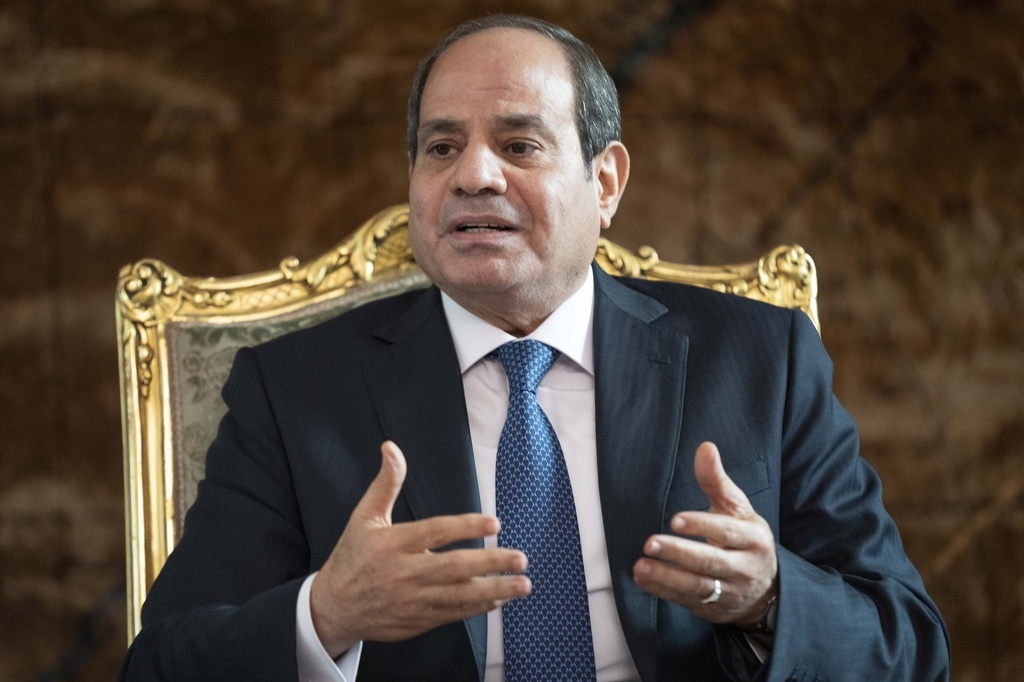
Now, it is up to Abdel Fattah el-Sisi to deal with the issue, and he has already voiced his position. In particular, el-Sisi urged the protection of the Sinai Peninsula from plans to turn it into a theater of military operations. Egypt believes (and not without reason) that if a “new Palestine” is created in Sinai, the confrontation between Hamas and the Israeli Defense Forces (IDF) will move to that region, particularly since the current escalation has significantly reduced the chance of a peaceful settlement of the Palestinian issue.
Currently, Israel is trying to exert pressure on Cairo, and this includes restricting the volume of humanitarian aid allowed into Gaza through the Rafah checkpoint. For its part, Egypt has refused to accept Palestinian refugees through the same border crossing. However, all this only exacerbates the acute humanitarian crisis in Gaza.
Assistance to Palestine
Even without being aware of all the intrigues going on behind the scenes, we can make certain conclusions. Egypt said that it is willing to accept wounded and seriously ill Palestinians. Cairo has officially stated that it will treat 100,000 people in its national medical institutions. For this purpose, a field hospital was quickly constructed in the town of Sheikh Zuweid near Rafah, which will become a transit point for the wounded before they can be transported to city medical centers. Whether Israel will allow all these people to return home eventually is a big question. And considering the constant attacks, the number of wounded who are allowed into Egypt may increase in the future.
Presently, Cairo is focused on providing humanitarian aid to the Palestinians. According to the local branch of the Red Crescent, Egypt provided the largest amount of humanitarian aid – about 9,000 tons – to the residents of Gaza.
Cairo is also taking steps that would allow Palestinian refugees to settle in the north of the Sinai Peninsula. In el-Arish, two multi-story buildings have been allocated for this purpose, which can house 300 people. Moreover, Cairo decided to allow Egyptians who were previously displaced during the fight with local ISIS groupings to return to the region.
In recent years, Cairo claimed that these territories have been completely cleared of militants and terrorists, whom Egypt has fought since 2015. Following the protests organized by the evacuated residents on October 31, Egyptian Prime Minister Mostafa Madbouly arrived in el-Arish with an inspection, accompanied by the head of the local militia and prominent businessman Ibrahim al-Arjani. Both visited Sinai to announce upcoming construction projects and, most likely, to calm the people before the events to come.
Another notable event took place within the past month. On October 20, President el-Sisi organized mass street demonstrations to obtain a “mandate” from the people that would allow him to make any decisions related to the Palestinian events.
Within a few days, all the official Egyptian media and newspapers affiliated with the security services published a so-called “mandate,” which residents of all cities were supposed to “grant” to their president by holding mass demonstrations to support him. The document contained the following points, which reflect the official position of the authorities:
“I, a citizen of Egypt, authorize President Abdel Fattah el-Sisi:
- to protect the land of Egypt from danger and war with Israel and to complete the peace process that has stalled for decades;
- to protect Sinai from plans to turn it into a theater of military operations and combat operations
- to protect the Palestinians, who must remain on their land. ‘There is no state without a people!’
- to protect the Palestinian cause, which may cease to exist if the Palestinians are relocated to Egypt and Jordan.”
During an emergency meeting on October 19, the Egyptian parliament also granted President el-Sisi a mandate to take the necessary measures to protect national security and oppose Israel’s plan to move the Palestinians from Gaza to the Sinai Peninsula.
Members of the House of Representatives gave el-Sisi, as the supreme commander of the Armed Forces, the authority to take any measures that he would deem necessary to ensure the security of the country’s eastern borders and to protect Egyptian lands.
Meanwhile, despite official statements, many Egyptian political activists, journalists, and bloggers saw these events as a trick to deceive the people and circumvent Article 151 of the Egyptian Constitution, which obliges the country to hold a referendum on any issue related to its territorial sovereignty.
In recent days, certain reports have appeared in the Israeli media stating that Israel would supposedly write off a large part of Egypt’s external debt if it agreed to create Palestinian settlements in the Sinai Peninsula. However, President Abdel-Fattah el-Sisi firmly rejected the idea. On October 17, he stated that the displacement of the residents of Gaza to Sinai would be tantamount to declaring war on Egypt. He proposed an alternative – to relocate the civilian population to the Negev Desert until the end of the conflict.
What threat does implementing the ‘Deal of the Century’ pose to Egypt? Firstly, the mass resettlement of the Palestinian people could cause the confrontation between Hamas and Israel to move to Egyptian territory, involving Egypt in the war.
Secondly, this scenario poses a threat to the sovereignty and territorial integrity of Egypt – particularly since, in 1977, the Sinai Peninsula was returned to Egypt as a condition for peace with Israel. Moreover, the proposed status of the potential Palestinian settlements in Egypt remains unclear.
Egypt is afraid of being drawn into the war. Israeli media have hinted that the IDF may open a new front with Egypt under the pretext of Cairo’s alleged assistance to Hamas. A few days ago, the Israel Defense magazine, published by the Israeli Armed Forces, reported that Israel needs to threaten Egypt and, if necessary, wage war against it since the latter violated the 1979 peace agreement by deploying considerable military infrastructure on the territory of the Sinai Peninsula, close to the Israeli border.
Currently, Cairo maintains relative neutrality and continues to be a mediator in the Palestinian-Israeli conflict, as it has been for the past decades. Abdel-Fattah el-Sisi’s policy is focused on protecting national interests, avoiding direct involvement in hostilities, and securing his country’s borders to the maximum extent.
Read more
November 27, 2023 at 11:09PM
from RT - Daily news
via IFTTT
“Stupidity and corruption” in Kiev paved the way for it, Aleksey Arestovich has said
The West has essentially thrown Ukraine under the bus in its conflict with Russia by failing to provide Kiev with the necessary amount of military aid, Aleksey Arestovich, a former aide to President Vladimir Zelensky, has claimed.
Writing on Telegram on Sunday, Arestovich weighed in on the differing views of Ukrainian officials as to why Kiev’s conflict with Moscow is still in full swing despite several major attempts at peace.
According to the former presidential aide, the West bears most of the blame for the situation.
The real responsibility lies with those who promised Ukraine real support for waging a real, big war and did not provide it. In other words, they screwed us over.
Arestovich claimed that Ukraine “had won its war” by managing to survive in the first few months of the conflict. “This war of ours could have well ended with the Istanbul Agreements,” he suggested, referring to the talks in the Turkish capital in the spring of 2022, which initially made some progress but stalled after then-British Prime Minister Boris Johnson’s visit to Kiev. The negotiations collapsed but Russia maintains it is open to diplomatic engagement with Kiev.
After the Istanbul talks, the conflict entered another phase in which Ukraine had no chance of winning without securing massive Western arms supplies, including warplanes and long-range missiles, the former official continued. “But nothing came. We paid a huge price for that.”
Arestovich suggested that the West would now try to force Ukraine to accept the loss of several regions, which overwhelmingly voted to join Russia in a series of public referenda last autumn.
He also suggested that, while Kiev found itself in a tough spot mostly due to the West’s inaction, the Ukrainian leadership’s “stupidity and corruption has given them many formal and informal reasons to screw us over.”
Arestovich’s remarks came amid Ukraine’s faltering counteroffensive, which has been underway since early summer but has failed to gain any significant ground. Last month, Moscow said Kiev had lost more than 90,000 troops since the start of the push, with Defense Minister Sergey Shoigu claiming that Ukrainian casualties had reached more than 13,000 soldiers in November alone.
Earlier this month, Valery Zaluzhny, Ukraine’s top general, admitted that hostilities had reached a stalemate, an assessment rejected by Zelensky. Meanwhile, on Sunday, Mariana Bezuglaya, a senior Ukrainian MP, blasted Zaluzhny over the lack of a strategic plan for 2024 and called on the military leadership to step down.
Read more
November 27, 2023 at 12:04AM
from RT - Daily news
via IFTTT
Asset managers have been selling their positions at the fastest pace in a year this month, the outlet says
Investors are selling US dollar positions at the fastest rate in a year as they expect lower rates next year after the US Federal Reserve ends its aggressive campaign of interest-rate hikes, the Financial Times reported on Friday.
Asset managers are poised to sell 1.6% of their open dollar positions this month, in the largest monthly outflow since last November, the outlet said, citing State Street, one of the world’s largest asset management companies.
The bank said investors have made “significant” sales daily since weaker-than-expected US jobs data was released on November 3.
“Flows in the past two weeks point to a rapid rethink with dollar demand,” said Michael Metcalfe, head of macro strategy at State Street. He added that recent greenback sales marked the unraveling of “an unusually large US [dollar] overweight” position.
“Investors think ‘if [rate cuts are] actually going to be delivered, then I don't need to hold as many dollars.’”
November marked the worst monthly performance of the American currency in a year, with experts predicting that “sales by asset managers could just be the start of a longer-term trend among investors to reduce exposure to US assets.”
According to the outlet, the weakness of the greenback plays into the hands of emerging markets as it helps them repay dollar-denominated loans and could prompt investors to flow back to developing economies after heavy sales of hard-currency debt this year.
Switzerland is reportedly using loopholes to bypass its own sanctions
Switzerland imported more than 14 tons of gold from Russia last month for processing, taking advantage of the fact that it was shipped through third countries, and thus did not violate Western sanctions, the latest data from the Swiss Federal Council has revealed.
In October, the Alpine country’s gold imports totaled CHF776 million ($879 million), of which $875.7 million worth of the precious metal originated from the sanctions-hit country and was delivered through the UK and Moldova, data showed.
In August 2022, Switzerland joined the EU’s seventh package of Ukraine-related restrictions, which included a ban on the “direct or indirect purchase, import or transfer of gold and gold jewelry” originating from Russia, and also prohibited exports from Russia to the bloc. Sanctions also target exports of gold items processed in a third country.
However, the Swiss regulation states that gold that was produced in Russia before the embargo is not subject to sanctions, meaning that the commodity can be legally imported from third countries.
Since the ban took effect, the questions of where and how Switzerland, a major global hub for processing the precious metal, sources its gold have been the subject of growing media and public attention. Some media outlets have been suggesting that the EU ban apparently had little impact on Swiss imports of gold from Russia as its refineries continue to buy and re-melt the metal, making it virtually impossible to trace its origin.
Kiev has to work out issues with the US Congress and the EU to keep getting aid, the Ukrainian president says
Ukraine needs to achieve three key breakthroughs in negotiations with Western allies to maintain crucial support, Ukrainian President Vladimir Zelensky said during a press conference on Friday. Among the challenges he listed were the approval of large aid packages from the US and the EU.
The Ukrainian president accused Russia of “exploiting various challenges in the world” to “divert attention from any assistance” to his country, adding that “responsible states” are doing everything they can to return that focus.
“We need three victories. The first is with Congress. It's a challenge. It's not easy,” Zelensky said.
According to him, the second issue is €50 billion ($55 billion) in aid from the EU, which has not yet been approved. “Not everyone in the EU is ready to support this package today. Our task is to make sure everyone supports this package,” the president stated.
The last important task is the decision to start negotiations on Ukraine’s EU membership, Zelensky said, calling it “a significant motivational step.”
Earlier this month, US President Joe Biden’s administration failed to push a $105 billion spending package through Congress, with much of that money intended for Kiev. Instead, the president had to sign a stopgap funding plan excluding Ukraine assistance to avert a government shutdown.
At about the same time, the EU’s €50 billion package of loans and grants was blocked, due to objections from member states including Hungary.
As for negotiations on Ukraine’s accession to the EU, according to Reuters, Brussels could postpone formal membership talks, which were scheduled for December, until March 2024, as some leaders have proposed returning to the issue after the European Commission has had a chance to assess whether Kiev has met all the conditions.
Kiev’s troops continue to suffer significant losses on the front line. According to Russian Defense Minister Sergey Shoigu, the Ukrainian army has lost more than 13,700 soldiers and 1,800 tanks and other heavy weaponry since the beginning of November. As of late October, Moscow estimated that Kiev had suffered over 90,000 casualties since the beginning of the June counteroffensive.
Read more
November 26, 2023 at 12:00AM
from RT - Daily news
via IFTTT
The Indian prime minister has set domestic arms production as a core goal
Indian Prime Minister Narendra Modi took a sortie on Saturday in an indigenous Tejas light combat aircraft, set to replace the Soviet-designed MiG-21 in the Indian Air Force.
Modi boarded a twin-seat trainer variant of the Tejas in the southern city of Bengaluru, while reviewing the work of defense company Hindustan Aeronautics Limited (HAL) at its manufacturing base.
Writing on X (formerly Twitter), Modi described the flight as “incredibly enriching, significantly bolstering my confidence in our country's indigenous capabilities, and leaving me with a renewed sense of pride and optimism about our national potential.”
The multirole Tejas fighters are set to replace India’s ageing fleet of MiG-21s, which have been the backbone of the Air Force for decades.
Along with developing the Tejas Mark 1 and Mark 2 fighters, work is also underway to build a fifth-generation fighter to rival the US F-35, named the HAL Advanced Medium Combat Aircraft (AMCA).
Successfully completed a sortie on the Tejas. The experience was incredibly enriching, significantly bolstering my confidence in our country's indigenous capabilities, and leaving me with a renewed sense of pride and optimism about our national potential. pic.twitter.com/4aO6Wf9XYO
Prime Minister Modi has set indigenous arms production one of his administration’s core goals. India's Defense Acquisition Council in September approved nine proposals to buy equipment worth a combined 450 billion rupees ($5.41 billion) from domestic manufacturers. The package included the purchase of 12 Russian-designed Sukhoi Su-30 MKI fighter jets to be built by HAL. At present, India is the world’s largest arms importer and sources 54% of its weapons and military equipment from Russia.
According to a report in The Hindustan Times, HAL is also set to begin work on jointly designing and developing helicopter engines with the French company Safran, and is negotiating a deal for the joint production of fighter jet engines with the US firm GE Aerospace.
In the coming days, the company is likely to secure further contracts, as New Delhi seeks to buy more fighter jets and light combat helicopters, and to upgrade its existing fleet of Sukhoi-30 multirole aircraft.
Read more
November 25, 2023 at 01:04AM
from RT - Daily news
via IFTTT
Hungary intends to clinch an agreement with Turkish state-run oil and gas firm by year's end, foreign minister says
Budapest is planning to clinch a gas-supply deal with Turkish state-run energy company Botas, the Hungarian Minister of Foreign Affairs of Peter Szijjarto has said.
“Türkiye will continue to play an important part in Hungary’s energy supply, with negotiations underway to sign a gas purchase agreement with Turkey’s largest energy company by the end of the year,” the minister said in a Facebook post, according to news agency TASS.
Szijjarto had previously said that Budapest was planning to purchase 275 million cubic meters of gas produced in Türkiye in spring-to-summer 2024, adding that work on the agreement with Botas was nearing completion.
According to the minister, the deal will further increase Türkiye’s role in ensuring Hungary’s energy security.
He also highlighted the importance of Türkiye as a transit country for existing gas flows from Russia and other producers like Azerbaijan, which has increased supplies to the EU in recent years, and Turkmenistan, which is seen as a potential energy exporter for the bloc.
For these reasons, energy cooperation between Hungary and Türkiye is “acquiring a new dimension,” Szijjarto said.
Hungary is still receiving most of its gas from Russia via the TurkStream pipeline and its branches running through Bulgaria and Serbia. However, Budapest continues its policy of diversifying energy sources and supplies. At the same time, the country’s government promises it won’t abandon long-term contracts with proven and reliable partners, including Russia’s Gazprom.
Aleksey Danilov warned his compatriots that the West would not be “feeding us” indefinitely, adding that harder times lie ahead
Ukrainians should not delude themselves by thinking that the West will happily pick up the tab for them in the long run, Aleksey Danilov, the secretary of Ukraine’s National Security and Defense Council, has warned. He has also predicted that the longer the conflict with Moscow lasts, the heavier the toll on Kiev will be.
The top security official’s latest comments came off the back of similar remarks made recently by his colleagues, including President Vladimir Zelensky, who recently acknowledged that the less-than-impressive Ukrainian summer counteroffensive might be dampening Western enthusiasm to further back Kiev.
In an interview with a local TV station called Great Lviv Speaks on Friday, Danilov explained that at the outset of hostilities last February, very few in the West believed that Ukraine could withstand the Russian onslaught for long. He added that Western governments mostly did not expect the conflict to drag on for more than a year and a half, meaning that it is becoming ever more difficult for Kiev to get financial support and aid from them at this point.
“The further [we go], the more difficult it will be. We have to acknowledge this,” Danilov said.
The security chief advised his compatriots not to think that Ukraine’s backers “will be feeding us all our lives and that we’ll be receiving aid all our lives.”
“We need to grow up and decide how to develop our country,” Danilov concluded.
Speaking to CNBC on Monday, US Treasury Secretary Janet Yellen described Ukraine as “utterly dependent” on Western financial aid.
Meanwhile, earlier this month, President Joe Biden’s administration failed to push a massive $105 billion spending package through Congress, a significant part of which was supposed to go to Kiev. The president was forced to sign a stopgap spending bill instead, which only included funding for domestic government agencies.
In June, the European Commission proposed a plan to create a special €50 billion ($54.4 billion) financial aid facility for Ukraine. However, it remains to be seen whether the scheme will materialize, with some member states, such as Hungary, voicing skepticism.
Last month, Ukrainian Finance Minister Sergey Marchenko told Reuters that Kiev had to make “twice the effort right now to convince our partners to provide us with support compared to the last annual meetings” in spring.
Marchenko linked this waning readiness to help Ukraine to looming elections in the US and Europe next year, as well as the escalation between Israel and Hamas in the Middle East.
Read more
November 24, 2023 at 11:15PM
from RT - Daily news
via IFTTT
General’s visit to Mali and Burkina Faso saw all three military rulers reiterating a mutual commitment to defense against threats
Niger’s military ruler, General Abdourahamane Tchiani, has made his first visit abroad since taking control over the West African country in a coup. On Thursday, the leader traveled to neighboring Mali and Burkina Faso, which are also governed by the military.
General Tchiani received a warm welcome in Bamako and Ouagadougou, where he thanked his counterparts for supporting Niger amid the sanctions and threats to it from regional and international sources following the overthrow of President Mohammed Bazoum.
The West African regional bloc ECOWAS imposed sanctions on Niger, including border closures and a trade embargo, in response to the July 26 military takeover. The 15-state bloc has also frozen Niamey’s accounts in regional central banks.
During his trip on Thursday, Abdourahamane said the support from the Malian and Burkinabe authorities allowed Niger to “resist the threats of ECOWAS, and to face the embargo” imposed by the organization.
“It would appear that the objective of the embargo was to exert pressure on the authorities, but this does not take into account the fact that it is the people who suffer, and we are aware of that. That’s why we are willing to exchange, to negotiate, but with people who are motivated by good intentions, with sincere people, with people who care about the African people,” he said, according to AFP news agency.
Both Mali and Burkina Faso have expressed solidarity with Niger’s coup leadership, warning against military interventions, which ECOWAS has threatened to use to restore Bazoum’s rule, which began in 2021.
In September, the three countries, all former French colonies, signed a charter agreeing to assist each other, either individually or collectively, in cases of external aggression or internal threats to their sovereignty. The pact established the Alliance of Sahel States (AES) of the three countries, which had previously been members of the Paris-backed G5 Sahel agreement, along with Chad and Mauritania. The G5 accord has since collapsed, following a series of military coups in the region.
Mali’s interim president, Assimi Goita, said in a statement posted on social platform X that talks with General Tchiani on Thursday focused on “mutual aid between sister countries of the Sahel and the complete operationalization of AES.”
Later that day, in Ouagadougou, the Nigerien leader and military ruler Ibrahim Traore discussed “issues common to the two countries, particularly the fight against terrorism and socio-economic development issues,” Burkina Faso’s presidency said in a statement.
General Tchiani hailed the creation of the AES, which he believes will transform the Sahel region from a “zone of insecurity” to a “zone of prosperity.”
The Sahel nations have been embroiled in a decade-long jihadist insurgency, which France was, for a time, involved in combating. However, recent coups in the region have strained relations between Paris and the military regimes in Bamako, Ouagadougou and Niamey, forcing the former colonial power to withdraw its troops from all three states.
Read more
November 24, 2023 at 12:17AM
from RT - Daily news
via IFTTT
Drones, infrared cameras, and medical supplies are stuck at the border due to the protest, according to media outlet UNIAN
A border blockade by Polish truckers is affecting the delivery of military and humanitarian goods to neighboring Ukraine, the UNIAN media outlet has claimed, citing volunteers. Among the supplies that allegedly cannot reach Ukraine are fuel, drones, and thermal cameras.
The truckers began their protest on November 6, denouncing the EU’s decision to exempt their Ukrainian counterparts from having to seek permits to cross the frontier. The law was initially relaxed after the conflict between Moscow and Kiev broke out in February 2022, but the protesters argue that the measures have led to unfair competition and have driven down prices.
In a Telegram post on Friday, Ukrainian media outlet UNIAN cited a volunteer who collects donations for Kiev’s forces and delivers electronic equipment. He complained to his followers on Facebook that components for anti-drone detectors “are all stuck at the Polish border.”
A fellow Ukrainian volunteer, Boris Miroshnykov, wrote in a Telegram post on Tuesday that “right now, thousands of vans with critical imports – fuel, drones, thermal imagers, medical goods, etc. – are being blocked at the Polish border.” He added that “humanitarian cargoes do not pass either.”
Miroshnykov claimed that the consequences for Ukraine could soon be “comparable to a naval blockade by” Russia. The volunteer also lamented that “Warsaw will not voluntarily help with the solution of the issue.”
Ukraine’s ambassador to Poland, Vasily Zvarych, sent an official note to the Foreign Ministry in Warsaw on Friday, demanding the immediate unblocking of the frontier. He cited reports that a second Ukrainian trucker had died while waiting in the queue at a border crossing.
One day previously, the Ukrainska Pravda newspaper cited the Federation of Employers of Ukraine as reporting that the country had suffered losses of over $437 million due to the protests. According to the report, every single day of strike action by Polish haulers is costing Ukrainian companies an average of €25,400 ($27,700) each.
Vladimir Balin, vice president of the Association of International Road Haulers of Ukraine, described the situation as “really critical” at a briefing in Kiev.
According to Andrey Demchenko, spokesperson for Ukraine’s State Border Guard Service (SBGS), as of Monday morning there were approximately 2,900 trucks waiting at Polish-Ukrainian border crossings.
Also on Monday, Ukraine’s deputy minister for infrastructure, Sergey Derkach, claimed in a Facebook post that Polish protestors were blocking multiple fuel tankers and humanitarian trucks.
Officials in Kiev have warned that the continuation of the strike could see prices in Ukraine rise by as much as 10%.
Read more
November 23, 2023 at 11:38PM
from RT - Daily news
via IFTTT
The UN food agency has warned it may halt operations in the Sahel nation due to inadequate funds
Chad is facing a refugee crisis due to an influx of people fleeing violence in neighboring Sudan, the UN reported on Tuesday, adding that the landlocked country is now home to one of Africa’s largest and fastest-growing refugee populations.
According to the agency, the total number of Sudanese refugees in Chad has now surpassed one million, including those who sought refuge during the Darfur civil war in 2003, which left an estimated 300,000 people dead.
The UN Food Program (WFP) warned on Tuesday that aid to more than one million food-insecure people in Chad, including new arrivals from Sudan, could be halted due to funding shortages.
“In December, WFP will be forced to suspend assistance to internally displaced people and refugees from Nigeria, the Central African Republic, and Cameroon due to insufficient funds. From January this suspension will be extended to 1.4 million people across Chad – including new arrivals from Sudan who will not receive food as they flee across the border,” it announced.
Chad already suffers from acute food insecurity and malnutrition, which have been worsened by a deadly mix of intercommunal conflicts and climate-related challenges that have hampered agricultural production. Presently ranked among the world’s top ten hungriest countries, Chad ranked worst in the Global Hunger Index for 2020. Last year, the Chadian military government declared a food emergency and called for external aid.
The escalating refugee crisis adds more strain to food-insecure communities in the Sahel nation, the WFP said, adding that it was only prepared to offer aid to fewer than half of the recipients it had targeted in August.
“WFP was only able to assist 1 million of the 2.3 million it had targeted, leaving 1.3 million without assistance at the peak of the lean season, when hunger bites the hardest,” the UN food agency said.
The fighting between the Sudanese Armed Forces and paramilitary Rapid Support Forces (RSF) has been ongoing for seven months, displacing nearly 6.2 million people, according to the International Organization for Migration (IOM).
Earlier this month, Doctors Without Borders (MSF) reported a surge in the number of refugees crossing from Sudan’s West Darfur region into Chad as the conflict between the warring Sudanese factions has allegedly taken on an ethnic dimension. The medical charity claimed that about 7,000 people, including women and children, had entered the Chadian city of Adre in the first three days of this month.
Read more
November 23, 2023 at 12:18AM
from RT - Daily news
via IFTTT
Sergey Guriev has been accused of hurting opponents of Putin more than his government
Sergey Guriev, a Russian-born economist who advised the West on the type of sanctions that could have the greatest impact on his home nation, said on X (formerly Twitter) on Wednesday that he has suffered from some of them, as three of his bank accounts have been closed.
Last week, the man was accused of causing “friendly fire” through the restrictions, which, according to critics, do little to undermine the power of Russian President Vladimir Putin and hurt his opponents instead. Guriev is member of the International Working Group on Russian Sanctions, also known as the Yermak-McFaul Expert Group after its co-chairs.
Andrey Yermak heads the office of Ukrainian President Vladimir Zelensky, while Michael McFaul, Washington’s former ambassador to Moscow, is a prominent Western anti-Russian figure. The advisory body has published 15 papers on how the US and its allies could best target Russia and has assessed the impact of the sanctions.
Guriev’s role in the group was highlighted last week by some Russian anti-government activists and media outlets, including SVTV News, which described the man and fellow economist Sergey Aleksashenko “architects of the sanctions.” Neither of them lives in Russia.
“Now we know why liberals get triggered when asked about blocked bank accounts and other sanctions that hit ordinary people and not Putin. Because the liberals not only invent those sanctions, but also demand ramping them up,” libertarian politician Mikhail Svetov, the publisher of SVTV News, said.
Public outrage directed at the experts online, as described by the opposition media outlet Meduza, is partially based on an argument that Western measures such as travel bans and banking service denials mostly affect Russian nationals who oppose the government, particularly those who fled their homeland amid the Ukraine crisis.
Guriev has distanced himself from some of the Yermak-McFaul Group recommendations attributed to him, stating that “due to lack of time, I could not take part in the work on most reports, which is why I did not sign them.” He endorsed five of the documents signed by him, describing their purpose as undermining “the capability of Putin’s military industry,” the Russian budget income, and sanctions avoidance.
SVTV News cited a recent interview that Guriev gave in which he discussed bans on Russian-registered cars imposed by some of its EU neighbors in September.
“They carry microchips in the trunks of those cars. By definition microchips are so small that you can bring enough in a trunk to produce a month-worth supply of missiles,” he told the New Times.
Aleksashenko, who, unlike Guriev, signed a Yermak-McFaul report that proposed banning Russian nationals from traveling to Western nations, said he personally opposed it. Speaking to Meduza, he described his support for the document as “sacrificing ego” to include a better alternative option in the final product.
Read more
November 22, 2023 at 11:35PM
from RT - Daily news
via IFTTT
The country’s top diplomat has claimed Hezbollah’s presence near the border is a major risk, according to local media
Israeli Foreign Minister Eli Cohen has warned the UN that the Middle East could descend into a full-scale war if Hezbollah militants remain in southern Lebanon near the border with Israel, local media have reported.
Israel’s Channel 12 claimed that the diplomat issued the warning following weeks of sporadic shelling and skirmishes on the Israeli-Lebanese frontier. The clashes have intensified since the deadly incursion by Palestinian militant group Hamas into Israel on October 7.
Hezbollah says it has joined the militants in Gaza in their fight against Israel, but has thus far stopped short of launching a major offensive from Lebanon. The Shiite organization has long-standing ties to Iran, and is believed to be far better equipped and more formidable than the Palestinian groups operating in Gaza and the West Bank.
Reporting on Tuesday, Channel 12 claimed that Cohen had directed his warning to the UN Security Council, urging it to enforce Resolution 1701, which brought an end to the 2006 conflict between Israel and Hezbollah. The resolution also called for the disarmament and withdrawal of all irregular Lebanese armed groups, including Hezbollah, from south of the Litani River near the Israeli border.
Failure by a UN peacekeeping force to fully implement the measures could result in a regional war, Cohen predicted, as quoted by the channel.
“For the benefit of regional stability and to prevent further escalation – the next discussion of the UN Security Council must adopt a completely different approach to end the dangerous violations by Hezbollah and other terrorist organizations on the border,” his message reportedly said.
Earlier this month, the Times of Israel quoted Defense Minister Yoav Gallant as warning Hezbollah that it was “close to making a grave mistake.” The official also reportedly stressed that “what we are doing in Gaza, we know how to do in Beirut.”
His alleged threats echoed those made previously by Israeli Prime Minister Benjamin Netanyahu.
Earlier this month, Hezbollah leader Hassan Nasrallah declared in a televised address that the movement was striving to help Hamas achieve victory against the “aggressor.” He further claimed that Hezbollah militants had already entered the fray, and were tying up considerable Israeli forces in the north of the country.
Nasrallah also warned the Israeli leadership that they would be committing the “most foolish mistake in your existence” should they attack Lebanon.
Tensions along the Israeli-Lebanese border have thus far mostly taken the form of rocket, mortar, and small arms fire by Hezbollah, with the Israel Defense Forces (IDF) responding with artillery and drone strikes.
According to the Israeli military, it has killed more than 70 Lebanese militants since October 7.
No Western weapons system can be a game changer in the conflict with Russia, the US defense secretary has admitted
No new Western military capability would be a game changer for Ukraine in the conflict with Russia, US Defense Secretary Lloyd Austin said in Kiev on Monday, as he announced the latest batch of weapons aid from Washington.
The Pentagon chief was asked during a press conference whether F-16 fighter jets, which the Ukrainian government eagerly expects to join its fleet, would significantly affect the conflict. Kiev and some of its supports have previously talked up supplies of new Western weapons as potentially turning the tide in Ukraine’s favor.
“You’ve heard us say a number of times that there is no silver bullet in a conflict like this,” Austin warned. “Whether it’s F-16s, whether it’s HIMARS (High Mobility Artillery Rocket System), whether it’s something else, it’s the way that you go about utilizing those capabilities and integrating it, synchronizing the capabilities to produce the right effects on the battlefield.”
Austin announced a new package of military assistance worth around $100 million during his visit. It includes one HIMARS system and an unspecified number of additional missiles and artillery shells.
Mark Milley, then-chairman of the US Joint Chiefs of Staff, used the same expression in April when discussing the supply of M1A1 Abrams main battle tanks to Ukraine, suggesting that they would “make a difference” but would not be a “silver bullet.”
The same month, then-British Defense Secretary Ben Wallace similarly cautioned that there would be no “single magic-wand moment” that would lead to a Russian collapse.
At the time, Ukraine was preparing to launch its summer counteroffensive, during which it hoped to use Western weapons to breach Russian defenses and retake land claimed by Kiev. The campaign failed to achieve any significant territorial gains and had cost Kiev over 90,000 troops by the end of October, according to Russian Defense Minister Sergey Shoigu.
Ukrainian President Vladimir Zelensky complained in an interview last week that the 31 Abrams tanks delivered to Kiev between September and October were “too few” to play any meaningful role on the battlefield.
Russia has described Austin’s recent arrival in Kiev as a “mission of moral support.” Anatoly Antonov, Moscow’s ambassador to Washington, said the Pentagon chief’s aid announcement was “nothing more but a sedative pill prepared by overseas ‘benefactors’ for Zelensky.” The envoy further claimed that the Ukrainian government was on the brink of complete collapse.
Read more
November 20, 2023 at 11:49PM
from RT - Daily news
via IFTTT
A Ukrainian official told the outlet that the country risks major setbacks on the battlefield “at a very high price”
The flow of US-made artillery ammunition to Ukraine has dwindled by “more than 30%” amid Washington’s scramble to assist Israel in its fight against Hamas, ABC News reported on Tuesday, citing an unnamed Ukrainian official.
The network’s source pointed out that the main problem was with deliveries of NATO-standard 155mm artillery shells, which he said accounted for “about 60-70% of Ukraine’s overall supply.”
He also expressed serious concern that the gridlock in the US Congress could mean that the flow of arms to Ukraine will start to dry up. “We’re in big trouble… basic munitions are not coming,” the official said, warning that if the situation is allowed to deteriorate further, Ukraine risks losing its position on the battlefield “at a very high price.”
The Ukrainian official went on to complain that while US officials “were telling us [the Hamas-Israel conflict] wouldn’t influence the commitments,” their assurances turned out to be false.
Speaking to ABC, however, a senior unnamed US official rejected the notion that it was the Middle East crisis that had forced Washington to scale back its aid to Kiev. The development, he insisted, has “absolutely nothing to do with what’s happening in Gaza,” explaining that the presidential drawdown authority packages meant for Ukraine “start to get put together weeks in advance, so there is no link” between the two conflicts.
According to the report, the Ukrainian official’s remarks came ahead of a surprise visit by US Defense Secretary Lloyd Austin to Kiev on Monday to reaffirm his “steadfast support” for Ukraine. During his trip, the Pentagon announced a new $100 million assistance package, which includes artillery shells of various calibers.
At the same time, Austin appealed to US Congress to approve additional aid to Ukraine. His comments came after the administration of US President Joe Biden last month asked lawmakers to approve a $100 billion supplemental assistance request, the bulk of which was earmarked for Ukraine. The initiative, however, was met with resistance from Republicans, with some questioning the White House’s strategy in the conflict and opposing “carte blanche” funding.
Earlier this month, the White House said that without congressional approval, Washington was running out of money to fund arms deliveries to Ukraine, with one of the main assistance programs already exhausted.
Read more
November 20, 2023 at 11:49PM
from RT - Daily news
via IFTTT
The currency has been rallying due to increased sales of foreign earnings by exporters
The Russian ruble continued to rally against major currencies on Tuesday, jumping to its highest against both the dollar and the euro since late June, trading data from the Moscow Exchange (MOEX) shows.
The ruble had risen to 87.9 to the US dollar as of 9:00am GMT, its highest exchange rate since June 30. The ruble also gained against the European single currency, trading at around 96.5 rubles to the euro, also a five-month high.
Experts note that the ruble is strengthening amid higher sales of foreign currency earnings by Russian exporters against the backdrop of increased export revenues. A mandatory measure ordering exporters to sell their foreign revenues and repatriate the proceeds was introduced by the Russian government last month. The ruble has since strengthened by 15% against the dollar and by 10% versus the euro.
The currency has also been bolstered by the recent key rate hike from the central bank and the general weakening of the dollar in the international foreign exchange market, analysts say. Another factor is lower demand for foreign currency on the domestic market amid a drop in imports. As of the end of October, Russian imports decreased by $1.8 billion, or more than 7%, compared to the previous month, and amounted to $22.9 billion, according to a preliminary assessment by the central bank.
Analysts expect the ruble’s rally to continue in the near term. The head of the financial markets department at PSB bank, Evgeniy Loktyukhov, expects the Russian currency to strengthen further by the end of the week.
“[It] will depend primarily on the activity of exporters and their preparation for tax payments… We are inclined to expect a stable supply of currency on their part, sufficient to reduce the dollar in the direction of 83-85 rubles closer to tax payments [on November 28] amid limited demand for currency from importers, restrained by high key rate,” he stated in a note on Tuesday.
The move is in response to Pretoria’s recent comments on the Gaza conflict
Israel has recalled its ambassador to South Africa, Eli Belotserkovsky, for consultations amid a diplomatic rift between the two countries over the conflict in Gaza. Last week, South Africa’s ruling party said it would back a motion to sever diplomatic ties with Israel and shut down its embassy in Pretoria.
The Israeli Ministry of Foreign Affairs issued a statement on Monday, citing “recent comments from South Africa” as the reason for Ambassador Belotserkovsky’s departure from Pretoria.
The move came just hours after South African Minister in the Presidency Khumbudzo Ntshavheni told reporters that Pretoria had called on the International Criminal Court (ICC) to issue an arrest warrant for Prime Minister Benjamin Netanyahu by mid-December.
South Africa, a long-time supporter of Palestinian sovereignty, has been outspoken in its opposition to Israel’s bombing campaign in Gaza, which local officials say has killed more than 11,000 Palestinians. Israel declared war on Hamas earlier in October, following an attack by the Palestinian militant group on the Jewish state that killed an estimated 1,200 people.
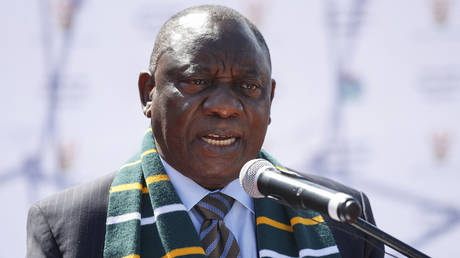
Last week, South African President Cyril Ramaphosa reiterated that Israel’s assault on Gaza amounts to genocide and warrants a war crimes investigation. He announced that Pretoria, along with several other unspecified countries, had referred the Israeli government to the ICC for a formal probe.
The African nation has already recalled its ambassador and diplomatic staff from Tel Aviv, as have Bolivia, Belize, Bahrain, Chad, Chile, Colombia, Honduras, Jordan, and Türkiye.
Meanwhile, President Ramaphosa will convene an extraordinary emergency video conference with other BRICS leaders on Tuesday to discuss the deteriorating situation in Gaza.
The joint meeting of the group – originally made up of Brazil, Russia, India, China, and South Africa – is scheduled for midday GMT. It will be attended by Russian President Vladimir Putin, the Kremlin announced on Monday.
The leaders of the countries invited to join the bloc in January – Saudi Arabia, Argentina, Egypt, Ethiopia, Iran, and the United Arab Emirates, as well as UN Secretary-General Antonio Guterres – are also expected to attend.
Read more
November 20, 2023 at 11:10PM
from RT - Daily news
via IFTTT
A bill bundling the spending with assistance to Israel and border security must pass this year, or not at all, sources on Capitol Hill have indicated
If the US Congress fails to pass a bill which includes funding for Ukraine this year, the chances of it doing so at a later point will fall significantly, NBC News reported on Sunday, citing sources on Capitol Hill. A clash on supplemental spending is expected after the Thanksgiving recess.
Last week, US lawmakers in both chambers approved a bipartisan stopgap spending bill to allow the government to operate through early 2024. The legislation deliberately avoided any political hot-button issues in order to secure votes from both Democrats and the GOP. Nevertheless, the more conservative wing of the House Republicans opposed it for not including budget cuts.
The upcoming debate will be over a proposal to bundle together aid for Ukraine, Israel, America’s Asia-Pacific allies, humanitarian aid for Palestinian civilians, as well as funding for securing the US southern border. Originating as a $105 billion package floated by the White House last month, the idea is to get Republicans behind sending more money to Kiev by offering them a concession on immigration control.
The Republican-controlled House has already passed a bill for Israel aid as a standalone initiative, but the legislation is widely considered dead on arrival in the Democrat-held Senate, because it includes provisions which cut Internal Revenue Service (IRS) funding, a no-go for the party.
The short window between Thanksgiving and Christmas will be crucial for negotiating a supplementary spending bill, four Senate sources directly involved in the process told NBC News. If the House goes against it and stalls until after the New Year, the chance that it will make it over the finish line “reduces dramatically,” the outlet said.
Mike Johnson, the new House speaker, indicated earlier this month that he supported tying Ukraine to border security, but not to Israel. His ally, Republican Sen. Rick Scott, has suggested that the politician preempt the Senate with his own bill, in which benchmarks would be attached to Ukraine spending. That would make it “awfully difficult for senators to vote against it,” he said.
House Minority Leader Hakeem Jeffries told reporters last week that “nothing that will happen in the House of Representatives in a partisan fashion … has any shot of becoming law.”
Johnson’s predecessor, Kevin McCarthy, was ousted by his own party in September, after opponents of continued Ukraine assistance accused him of striking a secret deal with the White House to ensure that the flow of funds would ultimately not be interrupted.
Critics say aid to Kiev lacks transparency and should not be a priority for the American people. Ukraine, a nation which Transparency International ranks alongside Zambia and Angola in terms of corruption, has been rocked by several scandals recently. They include the Defense Ministry’s purchase of overpriced supplies for the troops.
Read more
November 19, 2023 at 11:03PM
from RT - Daily news
via IFTTT
Elon Musk’s corporation said the test will help to improve Starship’s reliability, as ‘success comes from what we learn’
The second integrated flight test of SpaceX's unmanned Starship rocket ended in failure on Saturday, with an explosion about eight minutes after launch.
The two-stage booster blasted off from the Starbase launch site near Boca Chica in the US state of Texas and carried the spacecraft to an altitude of 90 miles (148 km), on a planned 90-minute test mission to space and back.
Despite the apparent loss of the craft, SpaceX owner Musk wrote on X (formerly Twitter) on Sunday that “for the first time, there is a rocket that can make all life multiplanetary. A fork in the road of human destiny.”
The Starship was aiming for an altitude of 150 miles (241 km) to circle the globe before splashing down in the Pacific Ocean near Hawaii.
The super-heavy first stage booster reportedly separated successfully, but exploded over the Gulf of Mexico shortly after detachment. SpaceX described the accident as a “rapid unplanned separation” in its post on X, which is also owned by Musk.
For the first time, there is a rocket that can make all life multiplanetary.
Meanwhile, Starship’s main body continued to ascend into space, but a few minutes later, a SpaceX broadcaster announced that mission control had lost contact with the vehicle.
According to SpaceX engineer and livestream host John Insprucker’s post-launch statement, the spacecraft itself may have been lost, as data from the second stage was missing. He noted that engineers believe an automatic termination command was triggered to destroy the rocket, though the reason was unclear.
The SpaceX investigation into why the test flight came to an end just eight minutes after liftoff will be overseen by the US Federal Aviation Administration (FAA), which called the result a “mishap.”
The Starship’s previous launch was in April and lasted half as long as this one, with just four minutes before it exploded.
Saturday’s flight “will provide invaluable data to continue rapidly developing Starship,” according to a SpaceX statement. It also mentioned that “with a test like this, success comes from what we learn, and today’s test will help us improve Starship's reliability.”
In 2021, SpaceX was selected by the National Aeronautics and Space Administration (NASA) to provide a human landing system to carry astronauts to the Moon and back for the Artemis III mission (launch in 2025), evolve its design to meet the agency’s requirements for sustainable exploration, and demonstrate a lander on the Artemis IV program (with a launch due in 2028).
According to SpaceX, Starship is “designed to carry both crew and cargo to Earth orbit, the Moon, Mars and beyond.” No human has been to the Moon since 1972.
Read more
November 19, 2023 at 01:59AM
from RT - Daily news
via IFTTT