An earlier report claimed Johnson & Johnson was planning to suspend sales in the sanctioned country
American pharmaceuticals giant Johnson & Johnson has promised an uninterrupted supply of contact lenses to consumers in Russia, RIA Novosti reported on Tuesday, citing the company’s press service.
The statement follows reports last week that the company was planning to suspend deliveries of contact lenses to Russia following a tightening of US economic sanctions against the country.
“Johnson & Johnson continues to provide Russian consumers with Acuvue contact lenses,” RIA Novosti cites the company’s statement.
“We are a global health company and believe consumer access to health products is fundamental. Our top priority around the world is to provide products to our patients and customers who count on us,” Johnson & Johnson stated.
Johnson & Johnson’s Acuvue is one of the world's most popular and recognized contact lens brands. It offers a wide range of products, including for specific conditions like astigmatism, an eye problem that can make vision blurry or distorted.
Last week’s reports about a suspension of sales and warnings of a contact lens shortage reportedly led to widespread panic-buying in Russia and caused the prices to jump four-fold on some marketplaces.
Citibank will transfer its Russian credit card portfolio to Uralsib
Major US lender Citigroup has made a deal to transfer the credit card portfolio of its Russian unit (Citibank) to commercial bank Uralsib, several media outlets reported on Tuesday, citing Citibank’s press service. Privately-owned Uralsib is among Russia’s top 30 banks by assets.
According to a statement from Citibank, the transfer of the credit card portfolio will occur on condition that card holders agree to the action.
“Citigroup has entered into an agreement with PJSC Bank Uralsib, under which, subject to their consent, existing credit card holders of JSC Citibank will be offered the opportunity to switch to Uralsib in accordance with Russian law,” Citibank told RIA Novosti.
Uralsib later confirmed this information to Vedomosti news outlet, noting that credit limits and interest rates on the cards will remain the same for clients who agree to the transfer.
“We ask customers not to apply for the cards on their own, but to wait for communication [from us],” Uralsib said.
Citigroup announced its intention to wind down its business in Russia in August last year. The assets of its Russian unit at the time amounted to around $10 billion, while the cost of leaving Russia was estimated at $170 million. In December, Citibank sold its portfolio of ruble-denominated consumer loans to Uralsib.
In March 2023, reports emerged that Citibank was considering selling its entire Russian retail business, but could not do so “for technical reasons.” The lender later refuted claims that any such problems existed, but neither confirmed nor denied its intention to divest from the country completely.
Uralsib was placed under Western sanctions in February this year. The restrictions make it difficult for the bank to conduct cross-border transactions, but do not affect its operations within Russia.
The Ukrainian president’s remarks come after reports that further Western support for Ukraine depends on battlefield success
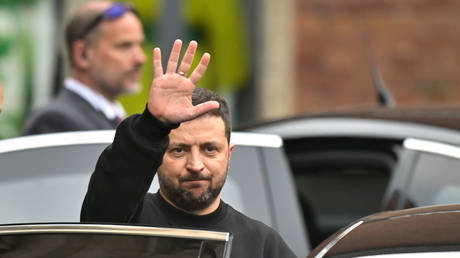
Kiev has set the dates for a counteroffensive against Russia, President Vladimir Zelensky said on Monday. Ukrainian officials have been talking about the move for several months now, with Western media warning that failure could result in Kiev losing support from its international backers.
Speaking in a video address released on Telegram, Zelensky shared details of a military conference in which a number of senior military commanders provided reports. The meeting revolved around “not only… the supply of ammunition, not only the training of new brigades, not only tactics, but also… the timing,” according to the president.
“This is what is most important. The timing of how we will move forward. We will. The decisions have been made,” he said, without providing any details on when and where the counteroffensive will kick off.
In recent weeks, Ukrainian officials issued conflicting statements on the much-hyped counteroffensive. Last week, Mikhail Podoliak, an aide to Zelensky, stated that the push “has been going on for several days now.”
However, Kirill Budanov, who heads Ukraine’s Main Intelligence Directorate, said the counteroffensive will begin soon, adding that Kiev has gathered “the necessary minimum of weapons” required for the attack.
Russian Deputy Foreign Minister Mikhail Galuzin warned that the long-planned push “will only lead to bloodshed and further escalation of the conflict,” while condemning the West’s “irresponsible” campaign to prop up Kiev with weapons.
In late March, General Mark Milley, the chairman of the US Joint Chiefs of Staff, voiced skepticism about Ukraine’s planned offensive, warning that Kiev would have a hard time “kicking every Russian out” of the territories it claims as its own.
His remarks were followed by a New York Times report last month saying that Ukraine has no guarantees of acquiring “big gains” – and should the results turn out to be underwhelming, Ukraine’s Western backers might press Kiev into peace negotiations with Moscow.
Read more
May 30, 2023 at 01:18AM
from RT - Daily news
via IFTTT
Officials have reportedly met with supermarket bosses to negotiate price cuts, the outlet has reported
UK officials are discussing with representatives of the retail sector ways to tame spiraling grocery inflation without imposing price caps, CNBC reported on Monday.
Forcing supermarkets to cut prices is not being considered, a government spokesperson told CNBC by email, adding that any scheme to help bring down food prices for consumers would be voluntary.
“We know the pressure households are under with rising costs and while inflation is coming down, food prices remain stubbornly high. That’s why the prime minister and the chancellor have been meeting with the food sector to see what more can be done,” the comment read.
UK Prime Minister Rishi Sunak’s administration is working out a mechanism that would entail supermarkets voluntarily maintaining low prices on basic foods, the Sunday Telegraph reported, citing sources.
British Health Secretary Steve Barclay ruled out price caps on food in an interview with the BBC, saying that the government was looking for “constructive discussions with supermarkets about how we work together, not about any element of compulsion.”
The UK government initiative echoes measures recently introduced in France where major supermarkets agreed to cut prices after President Emmanuel Macron asked retailers to trim their margins to fight soaring food prices. In March, French supermarkets slashed prices on about 50 basic items comprising the so-called “anti-inflation food basket.”
Although headline inflation in the UK declined to 8.7% in April from the 10.1% reading in March amid cooling energy prices, food inflation has been stubbornly high. Grocery price growth reached 19.1% in April, which is the highest rate in more than 45 years, according to the Office for National Statistics.
Have emerging powers got the resources to reshape the world order?
Asynchronous multipolarity: governing parameters and directions of development
Since the late 1990s, multipolarity has been a key focus in Russia’s foreign policy doctrine. A more balance world has been seen as a counterweight to the global hegemony of the US and its allies. Thus, modern international relations were considered to be effectively in transition from unipolarity, with Washington losing its grip on dominance, to a more just and pluralistic system. This new dawn was supposed to rely, on the one hand, on the fundamental role of the UN and, on the other, on the authority and sovereignty of leading great powers, including Russia itself.
The idea of multipolarity has gained traction among many large countries, such as India and China. Even western experts haven't dismissed the possibility. In a way, it has been slowly morphing into an idealized picture of a future word order.
Meanwhile, a multipolar world is been becoming a reality. We are living in a new system, the rules of which which we do not fully comprehend. If we want to make sense of this reality, we must first have a clear idea of what exactly we mean by the description. The current state of affairs could be described as “asynchronous multipolarity.” As a matter of fact, this transition towards a new world order is happening in different areas of international relations at different speeds. It can't just begin on a given Monday or Thursday. Some of its elements will be in place before others.
What we are witnessing today is precisely this asynchronous progress. Differences in the pace of change occurring in various parts of the globe result in friction and resistance. To be able to comprehend the transformation, at least to a certain degree, we need to appreciate its governing parameters and dynamics.
The concept of polarity in international relations has been used in academia since the late 1970s. It owes its popularity to the theoretical works of American political scientist Kenneth Waltz, a prominent proponent of neorealism in this sphere. This concept was also developed as a structural and systemic theory in the Soviet Union and, later, in modern Russia.
Neorealists argue that states’ actions in the global arena are defined not so much by their interests as they are by the current structure of the world order. It is this form that outlines national interests and strategies. In its turn, it's defined by the distribution of influence between great powers. Based on this, we can come up with a classification of possible structures of the international system.
It can be unipolar (where a lot of power is concentrated in the hands of one country, with everyone else having limited scope), which happened in the 1990s with American ascendency; bipolar (where there are two powerful peer competitors, with everyone else being relatively weak and other countries grouping around these two centers of power), which we saw during the Cold War; and multipolar (where power is distributed among several major countries or alliances), which is where we are headed today. Larger, medium-sized, and smaller countries will pursue different strategies depending on the structure in place. The multipolar structure results in the greatest strategic variability.
If the world order is defined by the distribution of power, one question that needs to be answered is: what exactly is power? Neorealists originally believed that power boiled down to military capability and a country’s ability to defend itself with military means. If a state had no such capability, an armed conflict or a crisis in its relations with other states could wipe out any other advantages it may have . Therefore, neorealists deliberately removed from the equation factors such as the economy or human capital development.
The case of the USSR later demonstrated that such a narrow understanding of the parameters governing the world order was likely a mistake. The Soviet Union built an impressive military capacity, but collapsed due to an accumulation of economic imbalances and domestic problems. While it is true that any theoretical model has only a limited set of parameters and none can account for all possible factors, the complexity of the modern world means that indicators other than military power need to be taken into account.
At the end of the day, defense capabilities depend on economic and human resources. Of course, there are cases when military capability outstrips resource capacity. In some emergencies, states must punch above their weight and expand their military prowess in spite of limited tools at their disposal. In other cases, the resource base may exceed defensive capability, which means a state has untapped potential for further military expansion. Modern multipolarity should be considered through the lens of this complexity and the asynchronous nature of power in the hands of individual states and across the international system as a whole.
In terms of the distribution of military capability, the world has been multipolar for quite a while. Critics can argue that the US is still ahead of all other states collectively in terms of its military spending, can project its power across the globe, and has the best-trained military armed with the most advanced equipment. At the same time, the US is not at liberty to start a military conflict against a number of countries without running a risk of huge and unacceptable losses. China is rapidly building its armed forces and would be difficult to defeat, even if nuclear weapons were not involved. While it is possible to imagine China suffering a local defeat, its complete destruction is unthinkable. A conflict with Russia would be no walk in the park either, even if all of NATO’s offensive capabilities are deployed. Indeed, this could actually quickly turn into a nuclear exchange.
If faced with NATO aggression, Moscow would no doubt resort to tactical nukes and would be prepared for further escalation towards the strategic level. Even attacking weaker adversaries such as the North Korea or Iran would be likely to result in significant losses for the US. Pyongyang could well use its nuclear capability even if it risks being completely destroyed by a counterstrike. Iran could be bombed, but an attempt at occupying it like the US did with Iraq would claim too many lives.
This is not to say that there is no incentive for the US to maintain and beef up its war machine. There are a wide range of political objectives it can attain, from ensuring deterrence to conducting local “surgical” operations. However, the US is no longer the global hegemon in the military sense.
Other centers of power are also limited in their ability to achieve goals by military means, especially if their smaller or medium-sized opponents are backed by great powers. The success of a possible military operation by China to solve the Taiwan issue is far from assured due to the balancing role of the US. Massive military and financial aid extended to Kiev by Washington and its allies has complicated Russia’s military operation in Ukraine. Moscow in its turn, provided considerable military assistance to Damascus, in the previous decade, thus effectively blocking attempts by other external players to achieve their goals in the Syrian Civil War.
If we take into account how military power relates to a state's resource base, the present-day multipolar world will look even more complicated. The US is using a staggering amount of resources to guarantee its defense. The country has access to virtually all key military and dual-use technologies and has a diversified economy. While the conflict in Ukraine has demonstrated industrial limitations in sustaining a large-scale military campaign in the short term, the Americans have enough resources to close this gap. On top of that, the US has considerable human potential, an army of highly skilled workers and engineers, including those “imported” from abroad.
China's defensive capacity can also rely on a substantial resource base, which allows it to be scaled up significantly, if needed. Even though Beijing lags behind the US in a number of key technology areas, it is catching up rapidly. The Asian giant can boast a developed industrial base, recent strides in engineering, and a large quantity of skilled and disciplined workers.
India’s capabilities are more limited in terms of technology and finances. However, the pace of industrial and technological development, demographic potential and growing human capital will make the country a a crucial player in the future.
There are also some “sleeping” powers, which have taken cover under the American military umbrella, cannot exercise strategic autonomy and have little appetite for accelerated military development. Yet some of these have successfully accumulated considerable industrial, technological, financial, and human resources. Here we are talking about Germany and France, as well as Japan, who could achieve a much greater military capacity if they wanted. The Ukrainian conflict has given them an incentive to start such a buildup, which could be reinforced by industrial and technological cooperation within the EU and NATO and through bilateral alliances with the US.
The Russian case is more complicated. The country has access to abundant natural resources, and it remains one of the world’s top ten economies despite sanctions (being as high as sixth, when measured by purchasing power parity). While Moscow cannot boast a level of technological development on a par with the US, it still has critical military technologies at its disposal, including nuclear, missile, and space capabilities. However, one of the country’s biggest vulnerabilities is its industrial and human potential. Closing the industrial gap would take time and require tremendous willpower and a concentration of resources. In spite of its leadership in natural sciences, the country has an acute shortage of engineers and skilled industrial workers, which is compounded by the brain drain of the early 1990s and the recent wave of emigration in 2022. Low management efficiency and stubbornly high corruption remain a problem.
While it is theoretically possible to “whip the country into shape” by crackdowns and repressions, a Stalin-style modernization would be difficult to imagine under the current conditions, even though some of the Soviet leader's ideas have ceased to be taboo in recent times. The country simply lacks the necessary demographic resources, ideology, or workforce. Modernization through reckless participation in Western-centric globalization has also been exposed as a dead-end, leading to capital flight and divided loyalties among elites.
If Russia is to preserve its international standing in the long term, it needs a large-scale industrial modernization based on different principles. The existing potential will allow Russia to remain a major military power for the foreseeable future, but the crisis in its relations with the West and the conflict in Ukraine will make things very difficult in the long term sense.
If we consider the ratio between defense capability and resource base, Poland and Ukraine are remarkable examples. Warsaw is currently conducting a rapid military buildup, clearly ahead of the other European NATO members. The question is, for how long can the country sustain this rate by relying on its own capacity? Ukraine today is a military camp united by a radical nationalist mobilization and largely supported from abroad. The level of militarization in the country by far exceeds its own capacity, while its human and industrial potential is undermined by both emigration and the fighting.
What makes the current world order so complicated is the fact that military capability is not the only weapon at the disposal of nation states. This is where the asynchronous nature of the global system manifests itself with the greatest clarity. While the world has been multipolar in the military sense for quite a while, the distribution of capacities in some other areas tells a different story.
In global finance, the dominant role of American banks and the US dollar as a means of payment and a reserve currency remains strong. Admittedly, the policy of sweeping financial and economic sanctions against Russia has triggered a push towards diversifying means of settlements, and Moscow has had no choice but to lead this effort. Decoupling from western currencies is a matter of survival for our country right now.
At present, the US and the EU have left a narrow window for transactions in dollars and euro with Russia. However, this opening – in the form of a handful of banks not yet sanctioned – may be shut at any moment.
Of course, the embargoes against Russia are making everyone else think: What if they find themselves in the same situation tomorrow?
China has long been quietly preparing its financial system for a geopolitical shock scenario. In this area, it can learn quite a lot from Russia, where the central bank and the Ministry of Finance had done a lot of work to establish an autonomous financial system even before the military operation began.
Still, there is no revolution in global finance in sight. The “global majority,” including China and India, are still relying on the dollar and time-tested methods for financial transactions. While the world has been militarily multipolar for a long time, the US still dominates global finances. The West’s global technological footprint also remains formidable. In spite of China’s major leap in this area, western licenses, knowhow, critical components, and finished products are still integral to global supply chains. Given crushing export controls, Russia is being forced to lead the effort of abandoning these as well, yet the “global majority” remains in no hurry to give up on them.
The digital space is another area of competition. Western big tech has carved out key hubs in global digital service networks. As the conflict in Ukraine has shown, digital services can be used to achieve political aims. Russia’s focus on using its own platforms is reasonable and inevitable. Meanwhile, China moved away from these much earlier and developed its own digital ecosystem. Both Russia and China could become exporters of “digital sovereignty” by offering their technology to third countries that would like to diversify. Western digital titans will keep their crucial nodes, but the global digital network itself now has huge holes, in the form of these two powerful players.
Last but not least, we should consider the impact of information and “soft power.” While the western media long ago lost its monopoly in the global market, its sway remains important. It is difficult to evaluate the effect “soft power” but what is obvious is that the infrastructure for influencing people’s minds, from education systems to exchange programs, university rankings, publication databases, and so on, is still going strong. English continues to be the language of international communication, while western mass culture maintains its global reach despite some local pushback. In Russia, the conflict with the West has not resulted in the denunciation of what is essentially a “western” lifestyle, which, incidentally, is not limited to a unified set of characteristics and, even within one country (like the US), may vary from unabashed liberalism to hardline conservatism.
To summarize, what we are seeing today is an extremely complex world. From the military perspective, the the globe has been multipolar for a long time. Key centers of power have different resource capacities for maintaining and expanding their military capabilities. Russia will need to overcome significant modernization challenges in this sphere. At the same time, multipolarity in the security sector is not always aligned with other capabilities of states. Global finance and supply chains are still largely dominated by the West. In the area of digital infrastructure, new poles are emerging, or, at least, major players such as Russia and China are decoupling from the Western-centric global digital ecosystem and may soon begin to export their “digital sovereignty” services. The West is still powerful in the information and “soft power” space, although it would hardly be possible to describe the situation here as unipolarity given the complexity of factors and their tenuous relation to real politics.
The asynchronous nature of the distribution of power factors is an important characteristic of the current world order. Any analysis of multipolarity needs to take this fact into account.
Read more
May 30, 2023 at 12:00AM
from RT - Daily news
via IFTTT