Re-branded McDonald’s restaurants will start serving their own version of ‘Kids Combos’ in several Russian cities in December
Re-branded McDonald’s restaurants in Russia, now called Vkusno i Tochka, (Just Tasty), will start selling their own version of a Happy Meal in December, which will offer books instead of toys, according to a company statement cited by business daily RBK.
The Kids Combo meal will be available in Novokuznetsk, Novosibirsk, Berdsk, Barnaul, Tomsk, Kemerovo, and Krasnoyarsk starting December 12, the company announced on Tuesday. Sales throughout the rest of the country are planned to begin in January.
The meal will include a choice of nuggets, cheese snacks, a classic burger, salad, carrot sticks, and apple slices, as well as a drink. But there will be one important change.
“As a gift, every Kids Combo set will have one of 14 exclusive books with various puzzles and mazes by the CLEVER publishing house,” the restaurant chain said, adding that books of this kind contribute to the development of memory, logic, and attention span of children.
The McDonald’s Happy Meal usually comes with a toy.
In March, McDonald’s shut down its Russian outlets after operating in the country for more than three decades due to Western sanctions. Later, the fast-food giant announced it was selling its restaurants in the country to one of its licensees. The restaurant chain was later rebranded Vkusno i Tochka.
Putting books in McDonald’s kids’ meals is not new. The company did this in the past in Russia and in other countries where it operates.
How anti-Russian sanctions, a planned transition to greener fuels, and the West’s short-sighted financial policies reaped a whirlwind
The West is currently in the midst of its fourth crisis in 15 years. The 2007-2008 financial crisis was closely followed by the European debt crisis, and hardly had the world managed to cope with the pandemic when an energy crisis loomed on the horizon.
And according to EU officials, the disruptions may continue. As noted by European Commission President Ursula von der Leyen, the bloc's current energy crisis risks turning into an economic and social one.
Every crisis is unique. No black swan event repeats itself. Yet, as befits a 'rare bird', they all have something in common. Namely, the costs multiply each time around. So, what will the cost of the current crisis be?
Back in 1999, in response to a property bust, the Bank of Japan took what was then seen as the radical step of reducing interest rates to zero. Two years later, after a mistimed attempt to nudge rates higher, another unusual policy tool was unfurled: quantitative easing (QE) – the large-scale purchase of bonds by the central bank.
What were once seen as exotic measures employed only by Japan went mainstream during the 2008 crisis and have become deeply lodged in central bankers' toolkits ever since. By lowering interest rates, policymakers seek to influence the short-term rates banks charge each other for overnight loans, thus helping keep credit flowing. The asset purchases, meanwhile, increase the amount of money circulating in the economy and also help suppress long-term interest rates.
Such measures have predictably boosted financial markets, as much of the flood of liquidity has been deployed to bid up the prices of securities. However, in what is commonly called the real sector, things have been getting worse.
Plugging budget holes through a build-up of debt and the corresponding unrestrained growth of the money supply predictably laid the foundations for future price increases. Sixty years ago, Nobel laureate economist Milton Friedman, the founder of monetarism, famously said that “inflation is always and everywhere a monetary phenomenon.”
He argued convincingly that prices rise when the money supply grows faster than output.
However, monetary factors haven’t been the sole cause of the inflationary spiral unwinding in Europe and the US. Other factors have included the disruption of supply chains due to Covid-19 restrictions and rising prices in the energy market.
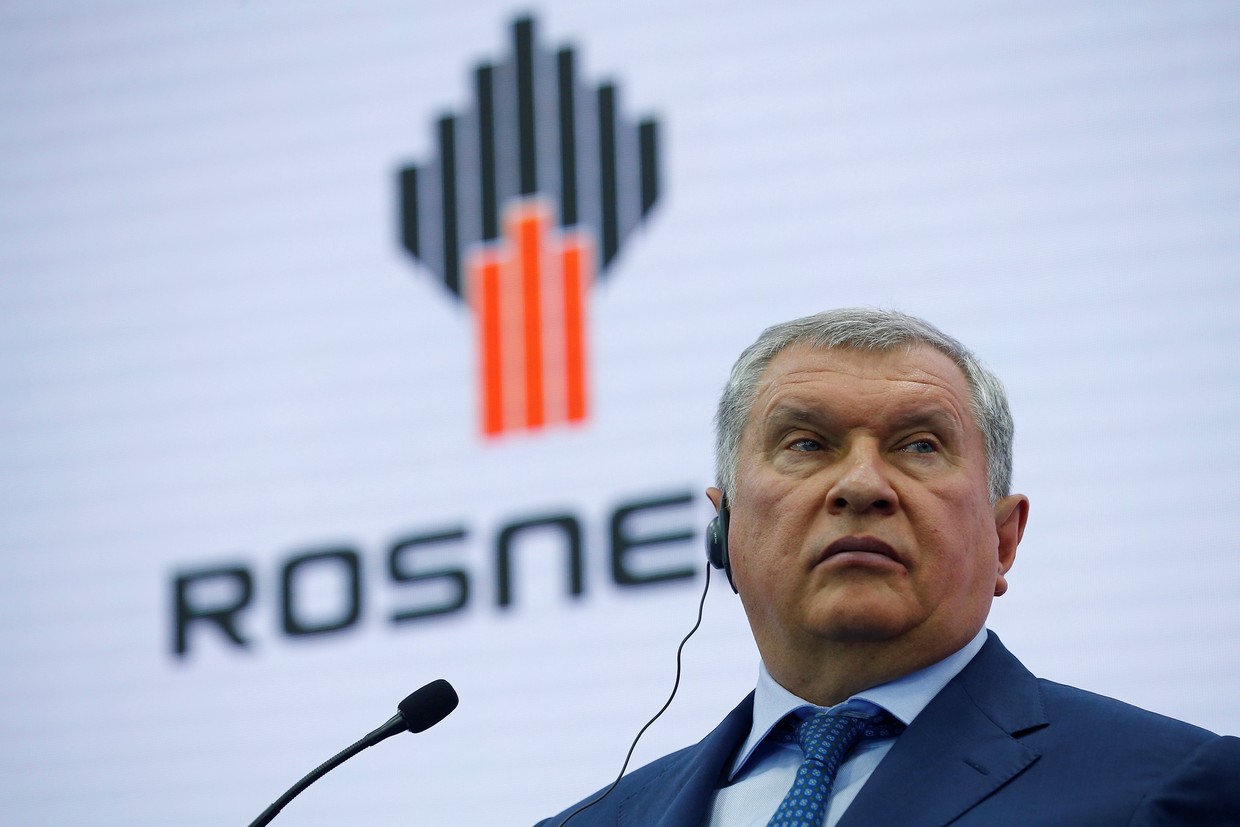
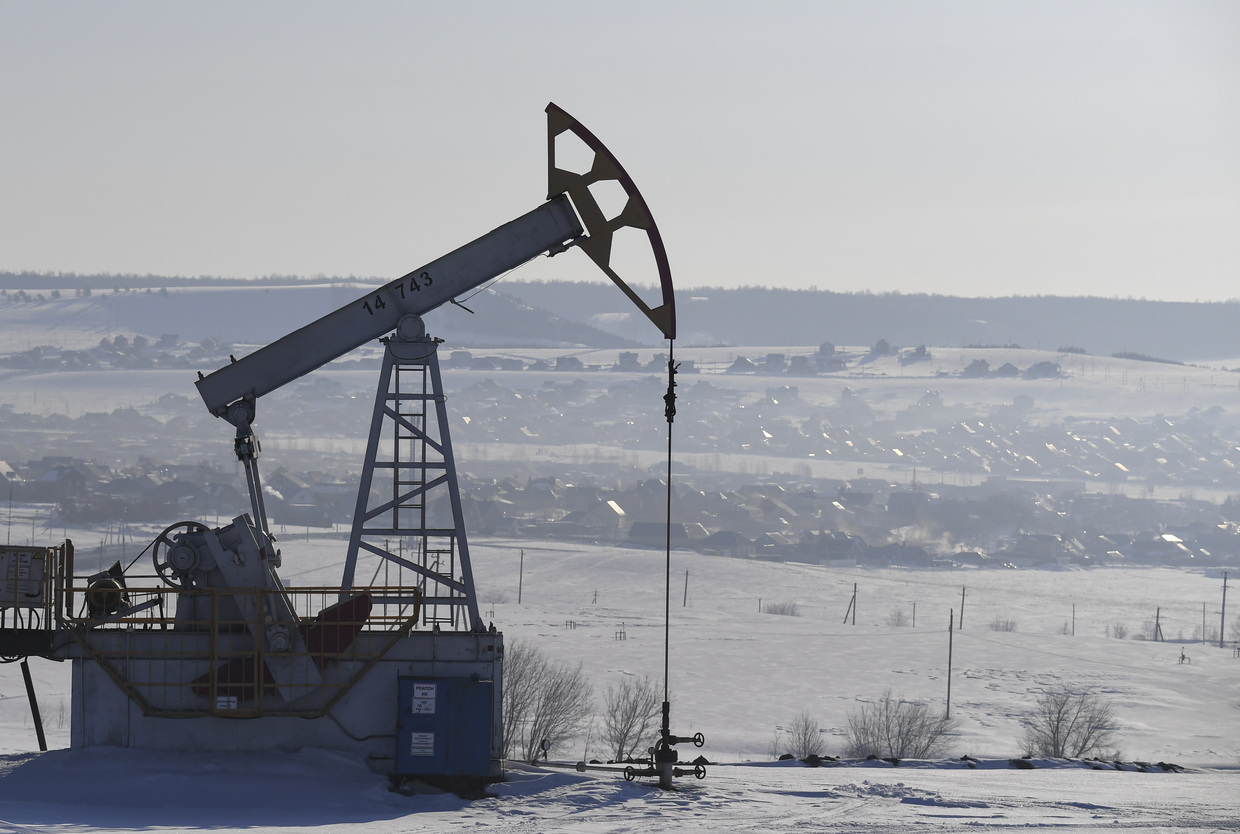
The latter is largely attributable to significant underinvestment in the energy sector, where the capital investment is currently at a 15-year low. According to Igor Sechin, head of Russian energy major Rosneft, this is due to the West's zealous interest in transitioning away from fossil fuels.
Environmental fragility became a particularly relevant issue during the coronavirus pandemic and the resulting restrictions. Imagining the ‘new normal’ of a post-pandemic world, many rashly predicted the imminent decline of oil and gas companies and spoke out against the funding of geological exploration.
Independent financial analyst Andrey Barkhot noted: “A prolonged lack of investment in geological exploration and the current production capacities of mining companies may cause a reduction in the growth of oil and gas reserves, and even the depletion of the resource base. In this case, the world economy risks facing an acute shortage of oil and gas.”
Sanctions – essentially, trade restrictions – against Russia, the largest player in the natural resource market, have greatly exacerbated this problem. In 2021, the country's share in the oil trade accounted for about 10% of the global market, with coal and natural gas both coming in at about 18%. For some regions, the figures were a lot higher. For example, Russia provided 45% of the EU’s gas supply. However, gas exports from Russia to the bloc have fallen by more than 40% since the beginning of the year, and the country's share in the market has decreased to 9%.
As a result, the supply of goods and energy is decreasing while prices keep growing. In major Western countries, inflation has reached levels that are unprecedented in recent decades. In the Eurozone, price growth has either reached or is approaching double-digit levels. According to the European Central Bank (ECB), annual inflation rates in September reached almost 11%. Meanwhile, inflation in the US is also at a 40-year high, nearing 8%.
Public discussions on inflation usually resemble Winston Churchill’s classic joke about two economists having three opinions. Yet, official statistics provide an unambiguous assessment: the rise in the cost of energy is the key factor in the acceleration of prices. In the Eurozone, annual energy price growth has exceeded 40%, while in the US, the increase has been almost 18%.
Every year, the global economy consumes about 600 exajoules (EJ) of primary energy. Since 2007, this volume has grown by 25%. Population growth is one of the key factors in increasing energy consumption. By 2050, there will be another 2 billion people on earth. At the same time, the amount of energy needed to ensure the livelihoods of 10 billion people will be 47% higher than currently.
Fossil fuels remain the primary resources for generating energy. The global energy balance consists of 31% oil, 27% coal, and 25% gas. Other types of fuel (nuclear and hydropower, as well as renewable sources) account for less than 20%. However, the production of energy based on fossil fuels is the main source of carbon dioxide emissions into the atmosphere.
In forecasting how energy resources and the energy balance will shape up, international organizations, energy companies, and analytical agencies all proceed from the assumption that the world is striving for carbon neutrality by 2050. Over 110 countries have set the goal of reducing carbon dioxide emissions by increasing the share of renewable energy sources. However, even the most optimistic forecasts predict that the share of renewable sources will account for only 35% of global energy consumption by 2050. Fossil fuels will still cover the remaining 65%.
It’s important to note that the future of energy resources will be determined not just by environmental protection concerns, but also by the struggle to control a market worth over $4 trillion. Judging by current geopolitical events, this market will be fragmented.
According to Barkhot: “This year’s dramatic events have confirmed the widely accepted thesis that in geopolitical conflicts, the determining factors for the subsequent world order are not initially predicted scenarios, but unforeseen consequences.”
Such consequences include the emerging fragmentation of the global hydrocarbon market and the increasing risk of imbalance caused by hasty sanctions against Russia, among other things. In addition to the restrictive measures imposed on the Russian oil and gas sectors (bans on financing and equipment supplies), a ban on the import of oil from Russia by sea is expected to be implemented starting December 5. And starting February 5, 2023, the same measures will supposedly apply to all petroleum products. According to von der Leyen, by the end of the year the current measures will lead to a decrease in oil imports from Russia to the EU by 90% – from 3.5 million to 0.3 million barrels per day. Meanwhile, as of September 2022, Russia accounted for 21% of oil supplies to the EU.
Back in March 2022, the United States banned the import of oil, petroleum products, coal, and LNG from Russia. The decision was virtually painless for the US, as the largest oil producer in the world.
Following its own ban on Russian energy resources, the West went to work creating similar restrictions for the rest of the world. Since it couldn’t stop other countries from buying Russian resources entirely, it turned to a price cap. Among other things, the G7 countries and the EU intend to prohibit the insurance of tankers carrying Russian oil sold above a certain price, yet to be determined.
Despite the political agreement to introduce the price cap, discussions on its feasibility continue. Russia has repeatedly stressed that it will refuse to supply energy at artificial prices. In September, a similar attempt by the EU to impose a price cap on Russian pipeline gas failed. The bloc's energy ministers could not agree on the price limit. Undoubtedly, President Vladimir Putin’s announcement that Russia will stop supplies altogether if contract prices are not adhered to played a significant role in this.
According to Anna Avakimyan, chief analyst at the RegBlock consulting company: “If Russia refuses to supply oil and gas to countries supporting the price cap, energy prices will soar and the Russian Federation will continue to sell resources to other countries. This will lead to the fragmentation of the hydrocarbon market. In fact, this is already happening: the world’s most populated countries – China and India – now receive oil, petroleum products, coal, and gas from Russia at a significant discount.” Indeed, discounts on coal and oil export are at 60% and 30%, respectively.
“In conditions when Russia sells goods at a price already below the market, it will make sense to introduce a ‘cap’ only if its level is even lower. Obviously, for Russia this measure will become an insurmountable barrier to entering the market,” Avakimyan added.
Meanwhile, Western Europe is experiencing an energy shortage and is being forced either to re-start coal mines, leading to a “coal renaissance” that should be completely unthinkable under the green agenda, or to purchase from the Persian Gulf countries at high market rates. It is not surprising that OPEC+ has refused to act against its interests and is reducing oil production, keeping prices high. Meanwhile, Qatar, guided by contractual obligations with other countries, is in no hurry to replace Russia in the EU gas market. Against this background, criticism of Qatar as the host of the 2022 FIFA World Cup, which intensified just a few days before the event, looks interesting.
Europe’s full gas storage facilities, along with a mild late fall, have had a calming effect on the markets, dampening the price hype. Yet risks remain high. Gas storage levels do not match the levels of potential consumption in the winter period. According to Peter Szijjarto, Hungary’s minister of foreign affairs and foreign economic relations, the EU’s current gas storage levels cover only 26% of consumption. As a result of the restrictive measures, many Europeans may have a very hard time this winter – though according to the sanctions plan, it’s Russia that is supposed to suffer. The situation is quite ironic.
High energy prices make the sale of LNG and oil very profitable for American companies – their output increased by 80% in the second quarter of the year. This is both great news for the 10 million Americans working in the industry and a supportive factor for the economy. Oil and gas production accounts for about 8% of US GDP.
Along with Norwegian companies that traditionally hold strong positions in the European gas market, the US has currently become the main gas supplier to the EU. These two countries account for a total of almost 80% of supplies. In the first 10 months of 2022 alone, the US exported 48 billion cubic meters of LNG to the EU, which is almost twice as much as in the whole of 2021. In 2023, the volume of deliveries is planned to increase by another 50 billion cubic meters. The growing market allows US LNG producers to share profits with their shareholders through generous dividends and repurchase programs.
Favorable oil market conditions also have a positive impact on the income of US oil producers. Since the end of February, they have earned more than $200 billion in net profit.
Under these conditions, Asian countries gain a significant competitive advantage for their economies. They seem to have come to adopt the simple secret that used to ensure EU’s prosperity, one recently revealed by its High Representative for Foreign Affairs and Security Policy, Josep Borrell, who noted that the prosperity of the bloc “was based on cheap energy coming from Russia.” Now, the cheap energy flows via other routes.
The oil and gas markets are cyclical. In addition to geopolitical factors, their dynamics are largely determined by large macroeconomic cycles. Today, many international financial and banking institutions are warning the world about the risks of recession in certain regions.
In a number of developed countries, GDP growth slowed sharply or even moved into negative territory in 2Q22. In Germany, growth almost stopped. In the UK, GDP decreased by 0.1%, and in the US, a technical recession began: -0.6% after a 1.6% decline in 1Q22. At the same time, the World Bank and International Monetary Fund (IMF) predict a slowdown in global economic growth to 3% in the next few years.
Indeed, past solutions are not applicable today. With the current inflation risks, it’s hardly possible to just “flood the markets with money.” The printing press is worn out. In this regard, von der Leyen’s warning on the risks of economic and social crises breaking out alongside the current energy crisis holds special significance.
The first steps towards solving these challenges are both simple and complex: settling the geopolitical conflict, terminating sanctions, and normalizing business contacts. The old economic gravitational pull between Russia and the EU, which former European Commission President Romano Prodi once compared to the complementary duo of caviar and vodka, is still there. Perhaps it’s high time for current EU leaders to heed the advice of their predecessors.
Read more
November 30, 2022 at 12:16AM
from RT - Daily news
via IFTTT
Eight aircraft have approached the country’s airspace, Seoul says
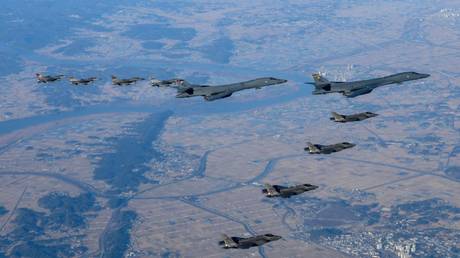
South Korea says it has scrambled fighter jets after Chinese and Russian warplanes made their way into the country’s air defense identification zone (KADIZ) early on Wednesday.
Two Chinese H-6 strategic bombers repeatedly entered and left the KADIZ off South Korea’s southern and northeast coasts from around 5:50am local time, Seoul’s Joint Chiefs of Staff (JCS) said.
Several hours later, the Chinese planes returned from the Sea of Japan (known in the Koreas as the East Sea) in the area of Ulleung Island together with six Russian warplanes, including TU-95 strategic bombers and SU-35 fighter jets, it added.
Seoul said it deployed its F-15K fighter jets in the air as a tactical move against a potential accidental situation.
The Russian and Chinese warplanes did not violate South Korean airspace, the JCS stressed.
An air defense identification zone goes beyond the country’s airspace. Declared by each state unilaterally, it’s aimed at giving approaching planes more time to identify themselves to avoid potential incidents.
South Korean news agency Yonhap pointed out that Chinese and Russian aircraft were spotted within the KADIZ when “South Korea is pushing to strengthen its alliance with the United States amid an intensifying Sino-US rivalry, while maintaining its opposition to Russia's invasion of Ukraine.”
Russia’s defense ministry has confirmed that its planes carried out a joint patrol mission with Chinese aircraft over the Sea of Japan and the East China Sea on Wednesday.
Russian strategic bombers spent eight hours in the air and were “accompanied by fighter jets from foreign states during parts of their route,” it said.
“The aircraft of both countries [Russia and China] acted in strict accordance with international law. There were no violations of the airspace of foreign states,” Moscow pointed out.
During the mission, the Russian planes performed landings at Chinese airfields, while China’s bomber touched down in Russia, it added.
Moscow and Beijing have been carrying out joint aerial missions in the region as part of their military cooperation plan. South Korea also reported Chinese and Russian planes entering its air defense identification zone back in May.
Read more
November 29, 2022 at 11:15PM
from RT - Daily news
via IFTTT
Russia has a principled pro-market stance, while Western restrictions will cause underinvestment in the sector, a deputy PM said
A price cap on Russian oil could cause shortages and disrupt investment in the energy sector, Deputy Prime Minister Aleksandr Novak has warned. Moscow will strictly observe its commitment to market principles in international trade, he added.
“Our position is pretty rigid here, and I have voiced it on many occasions. Regardless of what level is picked for the price cap, even if it is high, it will be unacceptable in principle in terms of signing contracts. We will work under market conditions,” Novak told a business forum on Tuesday, according to Russian media.
The deputy prime minister blasted the US and its allies for trying to impose various restrictions on Russia’s energy industry, blocking its access to technologies and stifling Russian international trade. Such actions “come with great risks” and may cause deficits and underinvestment, he said.
“This would be true for any commodity that Western nations may want to impose their rules on in the future,” Novak predicted.
G7 nations agreed to impose a price cap on Russian crude in September, with enforcement set to begin on December 5. The EU is negotiating its own version of similar restrictions, with Poland reportedly standing in the way of an agreement by pushing for a lower cap level. Shipments of Russian crude that don’t comply would be denied insurance and other services by companies in Western jurisdictions, according to the plan.
Western officials believe Russia will still sell under the new terms, but would be denied windfall profits amid the global energy-price hike. However, Novak and other top Russian officials have said the country will not accept any cap.
Novak’s remarks came during the Russian-Chinese Energy Business Forum, an event organized by the governments of the two nations every year since 2018. Chinese Vice Premier of the State Council Han Zheng read a statement from President Xi Jinping during the event, in which the Chinese leader described energy as a “cornerstone of practical cooperation” between the two nations.
“China intends to build closer partnership with Russia in the energy sphere, foster development of clean and ‘green’ sources of energy, jointly defend international energy security and stability of supply chains, and contribute to the long-term reliability of the international energy market,” the message read.
Russia became the biggest supplier of oil to China after EU nations chose to cut trade with Moscow as a form of punishment for its role in the Ukraine conflict. Beijing disapproved of Moscow’s decision to send troops into its neighboring country in February, but blamed the US and the expansion of NATO in Europe for triggering the hostilities in the first place.
Read more
November 29, 2022 at 12:31AM
from RT - Daily news
via IFTTT
Families with missing relatives have reached out to alleged serial killer's daughter to see if there's a connection to Donald 'Dean' Studey, her father.
Read more
November 29, 2022 at 12:02AM
from USATODAY - News Top Stories
via IFTTT
Rishi Sunak says the days of close economic cooperation with Beijing are over, as the country poses a challenge to London’s interests
The British prime minister has said the period of burgeoning trade with China, based on mutual economic interests, is now over. Rishi Sunak described Beijing as a rival, while pledging to avoid a “simplistic” confrontational approach.
Delivering an address at the Lord Mayor’s Banquet in London on Monday, Sunak said: “Let’s be clear, the so-called ‘golden era’ is over, along with the naive idea that trade would lead to social and political reform.”
The term he used was an apparent reference to remarks in 2015 by then-chancellor George Osborne, who echoed the Chinese ambassador’s characterization of British-Sino relations as having entered a “golden era.”
The prime minister stressed that re-evaluating ties does not mean Britain will embrace “simplistic Cold War rhetoric” in dealing with what he described as a “systemic challenge to our values and interests.”
He went on to accuse the Chinese leadership of becoming increasingly authoritarian.
To illustrate his point, Sunak cited the Chinese authorities’ response to ongoing anti-lockdown protests across the country, saying Beijing “has chosen to crack down further” instead of addressing people’s grievances.
However, the premier said that despite the difficulties, the UK cannot “simply ignore China's significance in world affairs – to global stability or issues like climate change.”
Sunak pledged to bolster Britain’s relations with like-minded nations, particularly “friends in the Commonwealth, the US, the Gulf states, Israel and others,” saying details of this deeper cooperation will be revealed next year.
The British prime minister stressed that ensuring the country’s “economic security” and resilience is one of his cabinet’s main priorities. As an example, he cited the government’s recent decision to block the £63 million ($76 million) sale of semiconductor manufacturer Newport Wafer Fab to the Chinese-owned firm Nexperia, as well as the banishing of Huawei’s 5G network from the UK.
The premier concluded by calling on the UK to “do things differently” and not to “choose the status quo.” This, Sunak argued, will help ensure that British values will prevail despite growing competition from powers such as China.
Read more
November 28, 2022 at 11:16PM
from RT - Daily news
via IFTTT
EU price caps on Russian oil, China's zero-Covid policy and OPEC production plans are weighing on the market
Global oil prices dropped to their lowest level since the start of the year on Monday, November 28, amid falling demand concerns.
Brent crude was down $2.35, or 2.8%, to $81.36 per barrel as of 07:30 GMT. Earlier in the day, the global benchmark had reached $81.16, its lowest level since January 11. The US crude benchmark, West Texas Intermediate (WTI), had slumped by $2.23, or 2.9%, to $74.05 per barrel, its weakest mark since January 6. It briefly dropped to $73.82 intraday, its lowest since December last year.
Both benchmarks have posted three weekly declines in a row, with Brent slumping 4.6% last week, while WTI dropped 4.7%.
“Bearish sentiment is growing in the oil market with mounting concerns over demand in China and a lack of clear signs from oil producers to further cut output,” Tetsu Emori, CEO of Emori Fund Management, told Reuters.
Beijing’s strict Covid-19 policy is limiting the country’s factory activity, which is lowering demand from the world’s biggest oil importer.
OPEC and allies, known as OPEC+, have agreed to reduce their production target by two million barrels per day in 2023. It is still unclear whether the group will opt for more cuts when they meet next on December 4.
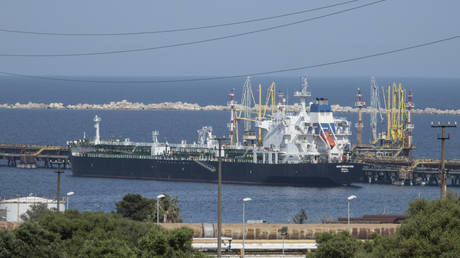
The market is also uneasy over the proposed EU price cap on Russian seaborne oil, expected to come into force next week. Starting December 5, tankers that fly the flag of any EU member state will no longer be permitted to carry crude originating in Russia, unless it was sold to the buyer at or under an agreed price cap.
The measure has been discussed by the EU and the Group of Seven (G7) representatives over the past several weeks. So far, however, they have failed to agree on the final cap level, which some propose setting between $65 and $70 a barrel, while others want it much lower.
Moscow has repeatedly warned that it will not sell oil to countries that support the price cap mechanism.