The country holds the world’s fifth-largest forex reserves
Russian foreign exchange holdings grew by 0.7% over the week ending December 24, reaching $630.5 billion, according to the latest data from the central bank. Russia holds the world’s fifth-largest forex reserves.
In monetary terms, the weekly growth of the country’s international reserves totaled $4.2 billion, the regulator said. The surge reportedly occurred as a result of planned purchases of foreign currencies and a positive market re-assessment.
Russia’s international reserves are highly liquid foreign assets consisting of monetary gold, foreign currencies, and special drawing rights, which are at the disposal of the Central Bank of Russia and the government.
In 2015, the reserves declined to a post-2008 low of $356 billion, after the government had to spend around $250 billion to bail out the economy during the 2014 oil price crisis.
Since then, Russia’s gold and foreign currency holdings have nearly doubled. They exceeded the target level of $500 billion set by the regulator in June 2019 and have remained above that threshold ever since.
In 2020, the holdings soared by 7.5% to $595.8 billion despite the impact of the coronavirus pandemic on the economy, which forced the government to increase spending to support businesses and households.
Last month alone, the reserves reached a record high of $626.3 billion, marking a weekly growth of $4.1 billion.
The country’s new constitution has been pitched as the start of a change of power
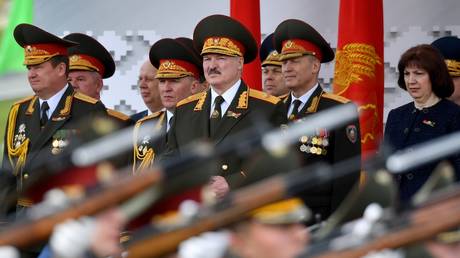
Belarus is on track to undergo a series of symbolic political reforms by way of amending its constitution. The first draft of the new document has recently been unveiled to much fanfare outside the country. But what might it mean?
Opinion pieces in both the Russian and Western media have nearly unanimously agreed that Belarusian leader Alexander Lukashenko is getting ready for a transition of power. The man who has ruled the Eastern European nation since 1994 has himself said the process is a precursor to standing down, arguing that the tas of formulating the new document cannot be given to an unknown president, as it would be a “disaster.” Yet many opposition figures have dismissed this as nothing more than a stalling tactic delaying his departure.
They point out that, under the terms of the new constitution, the All-Belarusian People’s Assembly is probably being introduced merely to protect Lukashenko’s interests in the long term, so warn against exaggerating the significance of these developments.
In reality, over the past few decades, politics in Belarus has been mostly what one might call a game of unreality. Anything declared on the political arena has always translated to a simulation rather than the actual implementation of what is declared. The republic’s political parties simulate a parliamentary process, while its trade unions simulate a semblance of workforce independence when, in fact, they are the agents of the executive branch, and so on and so forth.
The All-Belarusian People’s Assembly is not a new player on Minsk's media and political scene. It has already convened several times in its previous unofficial capacity, doing nothing much other than serving as a tool to add legitimacy to Lukashenko’s decisions and policies. Writing it into the constitution and formally making it the final arbiter is not likely to create a new powerful political actor in Belarus, because its membership is de facto determined by the executive branch, and the draft constitution does not contain any provisions to change that.
It would be fair to say that linking these constitutional amendments to a planned transition of power is premature. They make much more sense viewed as just another round of mock political reform. It is still too early to speak of a transition of power in Belarus, but when it does happen, the assembly’s role will likely be the same as before: to legitimize the new leadership.
If viewed as a hypothetical platform for exerting influence on the successor, it’s also weak: it’s too vulnerable, due to the fact that the executive branch – and we’re talking about the central body, not the regional executive bodies – has total control over its membership. This arrangement has been in place for decades, and there’s no reason to think that will change anytime soon.
So, Lukashenko’s ‘comfortable retirement’ – which will happen eventually, in the very distant future – will likely be guaranteed only via his successor, of whose loyalty the veteran leader needs to be absolutely sure. And there are very few candidates that fit the bill: only his own children, and namely his son Viktor.
All of that having been said, Belarus frequently disproves predictions, and it would be nice to be wrong.
The statements, views and opinions expressed in this column are solely those of the author and do not necessarily represent those of RT.
Read more
December 30, 2021 at 11:58PM
from RT - Daily news
via IFTTT
The new Disney Plus show can go either way, its uneven first episode a mixed bag of flashbacks and mediocre fight sequences
This article contains minor spoilers for The Book of Boba Fett.
In the wake of the critically and commercially successful Star Wars series The Mandalorian, streaming service Disney Plus has gone back to the well with the new spin-off series, The Book of Boba Fett.
Boba Fett, the bounty hunter who famously bagged Han Solo in The Empire Strikes Back, is a character that has long been adored by Star Wars fans, and when he made his surprising return in The Mandalorian (surprising because he had seemingly died in Return of the Jedi), it was met with raucous applause from the Star Wars faithful.
Now Boba is no longer a background or supporting player, his name is on the marquee, but after watching the somewhat uneven first episode of The Book of Boba Fett, it’s too soon to tell if the infamous bounty hunter has the star power to hold audiences’ attention over the course of a seven-episode series.
The Book of Boba Fett, which stars Temuera Morrison as Fett and Ming-Na Wen as Fennec Shand, a mercenary and assassin, premiered on December 28 and will release a new episode for the next six Wednesdays, for a total of seven in all.
The opening episode, written by Jon Favreau (director of Iron Man and creator of The Mandalorian) and directed by Robert Rodriguez, is titled ‘Stranger in a Strange Land,’ and uses flashbacks to show some of Boba Fett’s strange journey after he went into the Sarlacc’s mouth on Tattooine in Return of the Jedi, up to the present day, where he is a crime boss sitting on Jabba the Hutt’s old throne.
Fett’s history deeply informs his present, and so the flashbacks make complete narrative sense but, that said, they also slow down the pace of the program, leaving it at times on the precipice of tedium.
Also hampering the show, at least thus far, are some pretty sub-par action sequences. One fight with Boba Fett and Fennec Shand against a group of anonymous ninja assassins on the streets of Mos Espa, is very poorly choreographed and shot, so much so that it looks amateurish.
Although, in contrast, there is a solid sand battle between Boba Fett and a very cool-looking sand beast in one of the many flashbacks. Hopefully this sequence, and not the predictable and dull fight in Mos Espa, is a preview of the type of action we can expect in the coming episodes.
The visuals of the show also leave something to be desired, as the cinematography of the first episode is painfully rudimentary, and lacks imagination or cinematic flair.
As for the cast, again, thus far it could go either way. Morrison is not a particularly compelling screen presence, and neither is Ming-Na Wen, but there’s always the possibility that they find their sea legs and grow into their characters as the series continues.
As the show moves forward, there are some potentially intriguing storylines. For example, the mayor of Mos Espa refuses to pay tribute to Boba, and his representative even delivers an ominous threat to the crime boss, something which should lead to some fireworks down the road.
Another somewhat intriguing angle in the story is that, while Boba Fett is obviously no shrinking violet as a crime lord, he also doesn’t want to be an arrogant and brutal tyrant like Jabba the Hutt.
For instance, Boba demands he walk around “on his own two feet” as he patrols the city of Mos Espa, because, unlike Jabba, he won’t be “carried around like a useless noble.” He follows that up with, “Jabba ruled with fear. I intend to rule with respect.”
Fett is no Jabba, he’s a working man’s crime boss. And he isn’t the cold-blooded bounty hunter of the past, either; he is more forgiving. For example, he pardons two of Jabba’s bodyguards because they were loyal and, by sparing their lives, they become loyal to him.
That said, Boba Fett still has the killer instinct when he needs to, like when he gloriously obliterates one of the ninja assassins who ambush him on the streets of Mos Espa in the best shot of the show so far.
This conflict within Boba Fett, and between Boba Fett and the world, has a great deal of dramatic and narrative promise, but the first episode leaves me uncertain as to whether this promise can ever be fulfilled.
I felt the same way about The Mandalorian at first, too. And the reason I am so cautious in my criticism of The Book of Boba Fett is because The Mandalorian got better and better with each episode and I ended up absolutely loving the series, even though I’m not much of a Star Wars aficionado.
Ultimately, after just one episode The Book of Boba Fett is too much of a mixed-bag and too uneven to make any judgements on whether the overall series will be worthwhile or not. Hopefully, this flawed series opener is the bottom and everything goes up from here.
Read more
December 29, 2021 at 11:46PM
from RT - Daily news
via IFTTT
A royal guard was filmed bulldozing a boy who stepped in his way while marching
A video posted online shows the moment a guard at the Tower of London – a landmark in the UK capital – crashes into a black child while marching, knocking him to the ground
In the footage, uploaded to TikTok earlier this week, two royal guards stationed at the Tower of London can be seen marching across the Tower Green. While the small crowd makes way for the guards, one boy remains in the soldiers’ path.
Shortly before crashing into the boy, one of the guards shouts “make way!” The boy fails to remove himself. The guard knocks him to the ground and makes an ungainly attempt to step over him.
The child quickly gets to his feet and appears to be fine.
The caption reading “My sister went to england: first day in (crying face emoji)” suggests that the boy and his family were on holiday in the UK.
The video provoked uproar among some who were unimpressed by the guard’s lack of compassion for the boy. Others said he was just doing his job. Some people on social media even blamed the parents.
The Historic Royal Places website says that visitors to the Tower of London “are advised to be respectful and stand clear when the guards are marching and performing their official duties.”
While many see them as a tourist attraction, the guards are serving infantry troops and are stationed at the castle to protect the crown jewels and the royal palace, although it has not been used as a royal residence for centuries. It has more recently served as a jail and zoo.
The Ministry of Defense (MOD) said that they were aware of the incident and that the guard in question had returned to check on the boy.
“The Guardsmen on duty warned members of the public that a patrol was approaching but the child unfortunately ran out in front of the soldier unexpectedly. The soldier tried to step over the child and continued on his duty,” the MOD added.
Read more
December 29, 2021 at 11:26PM
from RT - Daily news
via IFTTT
Mexico will suspend crude oil exports in two years in a bid to focus on domestic self-sufficiency, various media have reported.
The move is part of President Andres Manuel Lopez Obrador’s plan to increase local fuel production to reduce dependence on imported fuels.
The export phase-out announcement was made by the chief executive of Pemex, Octavio Romero, who also said that Mexico would reduce oil exports from next year by more than 50%, to 435,000 barrels per day (bpd).
Currently, Mexico is the third-largest oil exporter in the Americas, after the United States and Canada, according to data from the US Energy Information Administration.
The main destinations for its crude are its northern neighbors in North America and China, India, and South Korea, as well as European countries. A cut in exports could make some of these importers look for alternative suppliers.
Fuel demand in Mexico has risen during the pandemic but local oil production has failed to follow. Refining capacity is also a problem, although President Lopez Obrador’s plans include the construction of a new refinery with a capacity of 340,000 bpd. The refinery has a price tag of $12.4 billion, according to calculations from earlier this year, as reported by Argus.
If Mexico indeed stops exporting crude oil, this will hit US Gulf Coast refiners hard as it will cut off yet another source of heavy oil, for which their refineries have been configured. Another major source of heavy crude used to be Venezuela, but US sanctions against Caracas ended the flow of heavy Venezuelan crude to the Gulf Coast.
According to the Bloomberg report, there are also doubts about Pemex’s own capacity of refining all of its crude oil output. A long period of underinvestment in refinery maintenance has reduced operating capacity significantly, and it is questionable whether the state energy giant would be able to turn things around in just two years.
Pemex is currently the most indebted oil company in the world despite major efforts by the Lopez Obrador government to support it through tax breaks and other debt-relief measures.