Southeast Asia’s startup ecosystem is set to get a massive injection of funds after Jungle Ventures reached a first close of $175 million for its newest fund, TechCrunch has come to learn.
Executives at the Singapore-based firm anticipate that the new fund, which is Jungle’s third to date, will reach a final close of $220 million over the coming few months, a source with knowledge of the fund and its plans told TechCrunch. If it were to reach that figure, the fund would become the largest for startup investments in Southeast Asia.
Jungle Ventures declined to comment.
An SEC filing posted in December suggested the firm was aiming to raise up to $200 million with the fund. Its last fund was $100 million and it closed in November 2016. Founding partners Anurag Srivastava and Amit Anand started the fund way back in 2012 when it raised a (much smaller) $10 million debut fund.
Digging a little deeper, our source revealed that the new Jungle fund includes returning LPs World Bank affiliate IFC and Cisco Investments — both of which invested in Jungle’s $18 million early-stage ‘SeedPlus’ fund — and Singapore sovereign fund Temasek. One new backer that we are aware of is German financier DEG although we understand that Jungle has spent considerable time fundraising in the U.S. market, hence the SEC filing. Beyond Europe and the U.S, the firm is also said to have pitched LPs in Asia — as you’d expect — and the Middle East.
Jungle is focused on Series A and Series B deals in Southeast Asia with the occasional investment in India or the rest of the world where it sees global potential. One such example of that is Engineer.ai, which raised $29.5 million last November in a round led by Jungle and Lakestar with participation from SoftBank’s AI unit DeepCore.
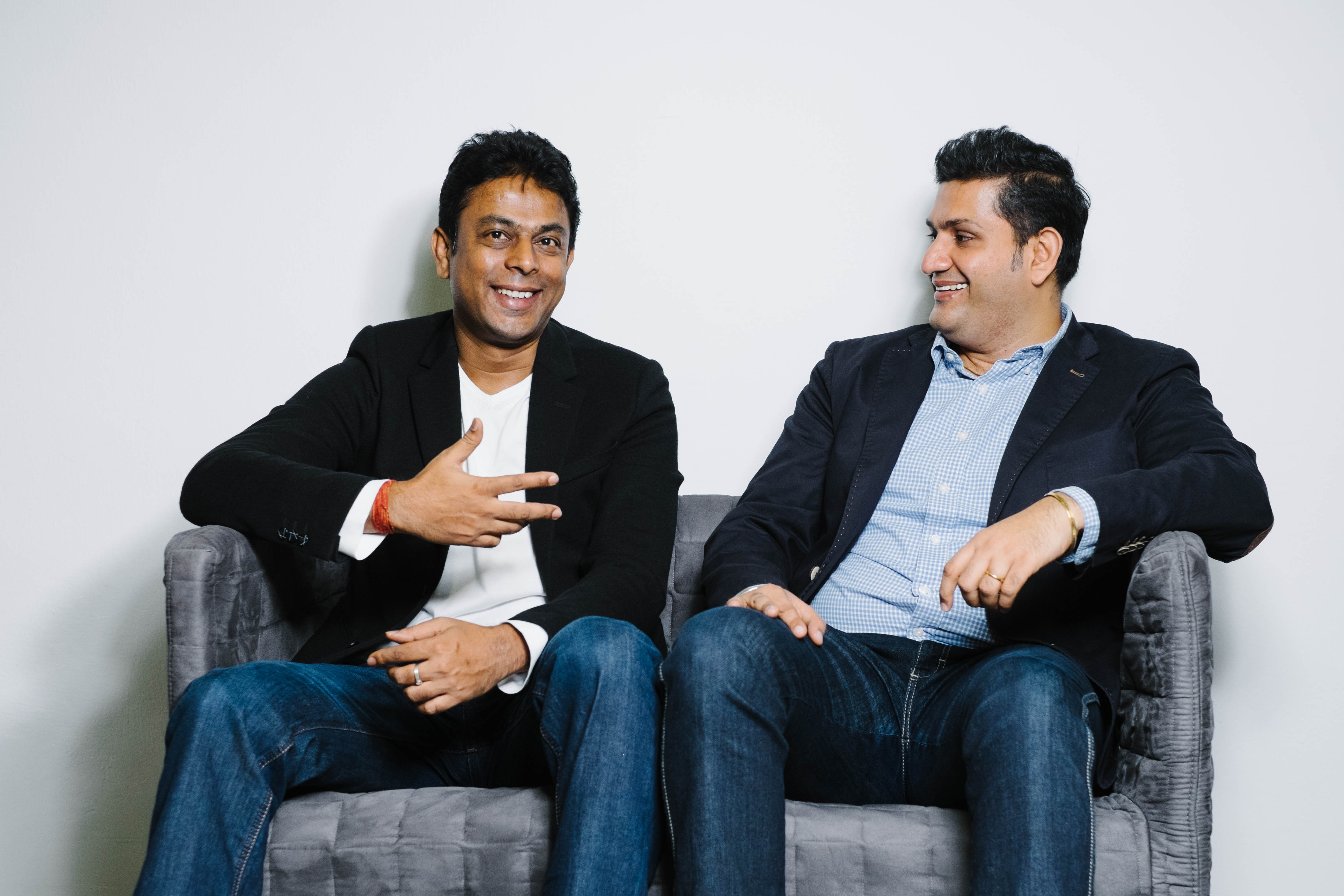
Jungle Ventures founding partners (left to right): Anurag Srivastava and Amit Anand
The meat and drink of the fund is Southeast Asia, and past investments there include cloud platform Deskera (most recent round $60 million), budget hotel network Reddoorz (raised $11 million last year), fintech startup Kredivo (raised $30 million last year) and digital fashion brand Pomelo, which has raised over $30 million from investors that also include JD.com.
In India, it has backed b2b sales platform Moglix and interior design startup Livspace among others. Past exits include Travelmob to HomeAway, Zipdial to Twitter, eBus to IMD and Voyagin to Rakuten.
We understand that the new fund has already completed five deals. Jungle’s pace of dealmaking is typically half a dozen investments per year, and we understand that will continue with fund three.
Executives at the fund are bullish on Southeast Asia, which is forecast to see strong growth economic growth thanks to increased internet access and digital spending. A much-cited report from Google and Temasek issued last year predicts that the region’s ‘digital economy’ will triple to reach $240 billion from 2025.
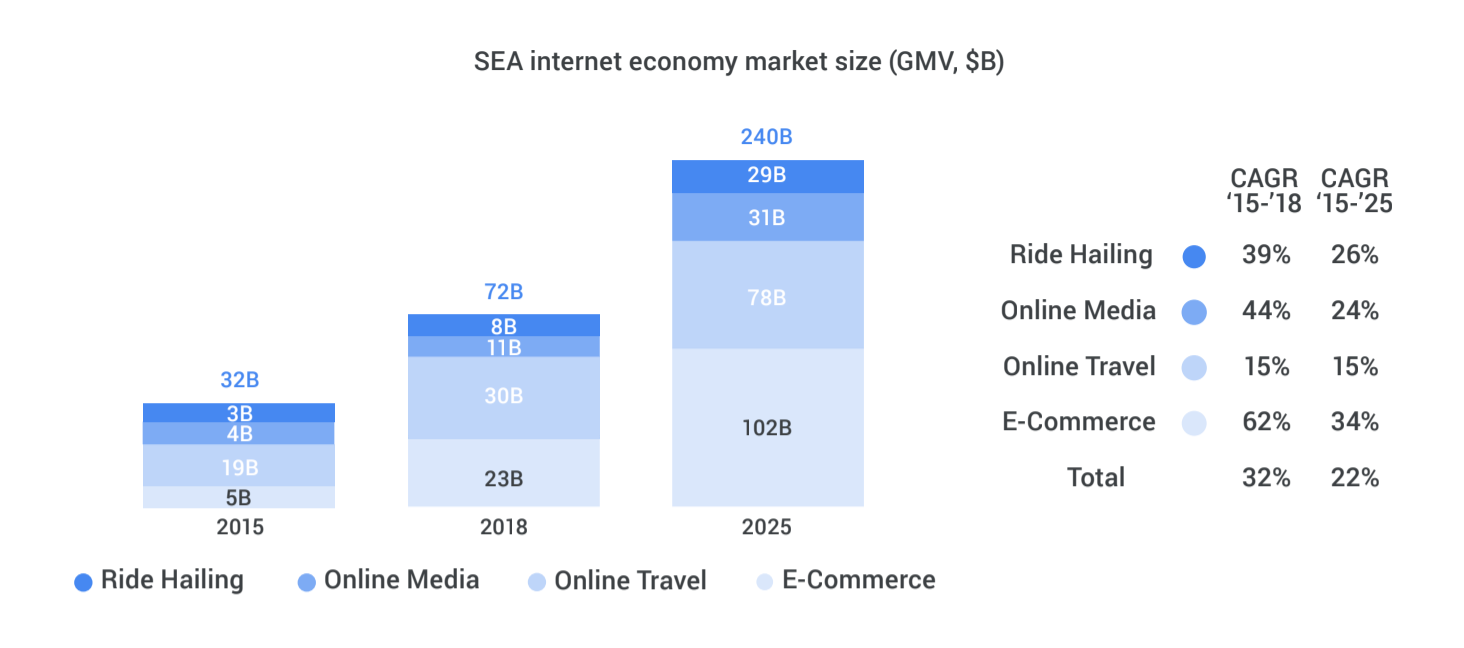
A 2018 report from Temasek and Google predicts significant growth in Southeast Asia’s digital economy
Other major VC funds in Southeast Asia include Vertex Ventures ($210 million fund), Golden Gate Ventures — $100 million and a $200 million growth fund — Openspace Ventures ($135 million), and EV’s $150 million growth fund.
There’s also B Capital from Facebook co-founder Eduardo Saverin which recently passed $400 million for the first close of its second fund, although that doesn’t invest exclusively in Southeast Asia, and Sequoia which has a $695 million fund for India and Southeast Asia. Other global names that you might see cutting deals in the region include Burda, which has a local presence and starts at Series B, TPG Global and KKR.
Update 04/29 19:50 PST: The original version of this article has been updated to correct that Jungle invests in around a dozen companies per year, not per month.
 Read more
April 29, 2019 at 03:00PM
from TechCrunch
via
IFTTT
 Jacob Wohl, who became notorious after his attempt to set up special counsel Robert Mueller on fake rape charges imploded, has been accused of targeting Democratic presidential candidate Pete Buttigieg with a similar stunt.
 There’s no point in knocking Trump out of the White House if a Democratic president has only more endless war to offer, Democratic candidate Tulsi Gabbard has declared in a deleted, then reposted campaign tweet.
 Monuments to Confederate generals like the ones that sparked protests in Charlottesville, Virginia are memorials to war veterans and as such are protected by state law and cannot be removed, a court has ruled.
 Global military expenditures reached their peak in 2018, and the driving force behind this increase is the growing appetite of the US military-industrial complex rather than real threats, analysts say.
 The ‘Russian meddling’ conspiracy theory was hatched by Democrats in 2016 as a way to defeat Donald Trump. Now the Trump administration is invoking it to justify massive military spending, spying, coups and censorship.
 Wikileaks founder Julian Assange has filed a criminal complaint in Ecuador, accusing the diplomatic staff at the London embassy of spying on the whistleblower before leaking illegally obtained data to a third party for extortion.
 President Donald Trump fired back at the New York Times over an ‘anti-Semitic’ cartoon targeting him, but the US newspaper of record is also catching flak left and right over its strange takes on Christians, Jews and ‘Russiagate.’
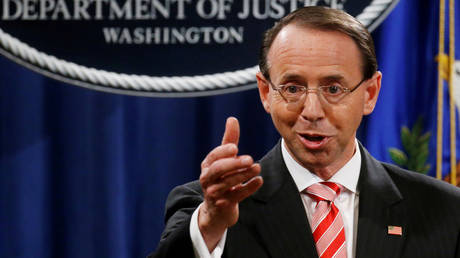 Deputy Attorney General Rod Rosenstein has submitted his resignation in a letter to President Donald Trump. The resignation will take effect on May 11.
 From attacking whistleblower Julian Assange, to doggedly supporting Washington’s foreign policy lines, to beating the dead horse on Russiagate, journalist Ben Norton tells RT the corporate media isn't designed to tell the truth.
 A US Army vet who converted to Islam mulled a mass killing of Christians, Jews and police officers in “retribution” for the Christchurch mosque attack in New Zealand, says an indictment describing his failed “martyrdom.”
 For the first time in years, the leader of Islamic State (IS, formerly ISIS) has appeared in video footage, disproving long-running rumors of his death.
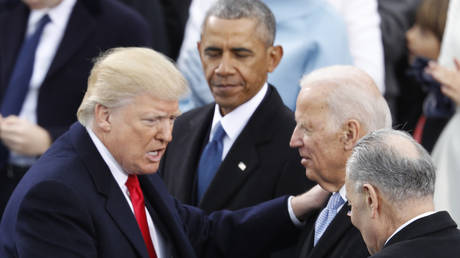 US President Donald Trump is again trolling the world from his perch on Twitter, claiming former president Barack Obama and his running mate Joe Biden are the reason he got the job as president.
 Somali-American model Halima Aden will make history when she becomes the first ever person to wear a hijab and a 'burkini' in the pages of the Sports Illustrated Swimsuit issue – with the step meeting mixed reaction online.
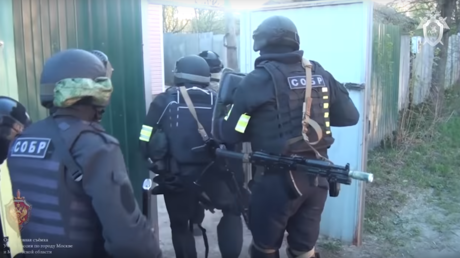 Seven suspected members of Islamic State (IS, formerly ISIS) have been detained outside Moscow. The men were tasked by “foreign emissaries” to recruit more terrorists locally, investigators said.
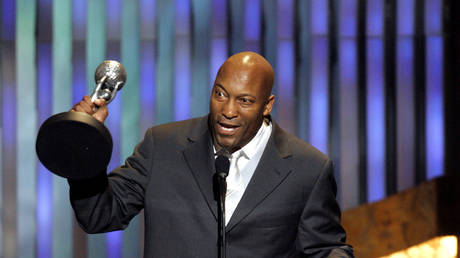 Producer and acclaimed director John Singleton passed away in Los Angeles after his family made the “agonizing decision” to take him off life support, according to a statement released to the media on Monday.
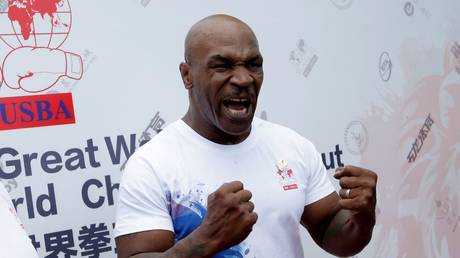 Former world heavyweight champion Mike Tyson claims his rough upbringing led him to have murderous thoughts as a youth, admitting in a candid UK TV interview to shooting at people while growing up in the New York gang culture.
 Jose Mourinho says Ajax and Tottenham know they have a “unique” opportunity to reach the UEFA Champions League final, as the pair prepare to meet in London on Tuesday night.
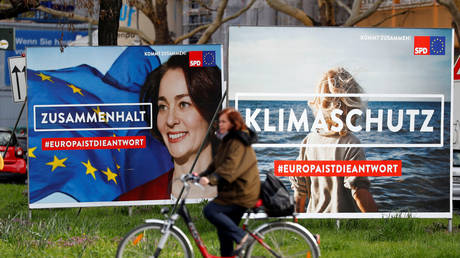 Just three weeks before the European Parliament elections, almost half of Germans do not really know who the candidates are, a recent poll has shown.
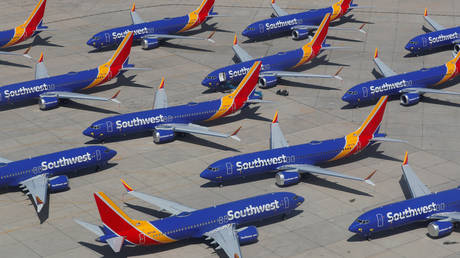 Southwest Airlines, the largest Boeing 737 MAX customer, says Boeing told them a standard flight angle alert system had to be bought separately to be activated, contradicting the manual – and only after the deadly Lion Air crash.
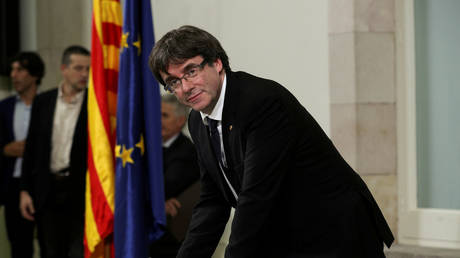 The former Catalan president Carles Puigdemont has been denied a visa by the Canadian government after he was invited to speak in the country by Quebec separatists.
 Brazilian MMA fighter Joyce Vieira has revealed she has suffered sleepless nights after hitting a man who reportedly exposed himself while she was posing for a beach photoshoot in Rio de Janeiro.
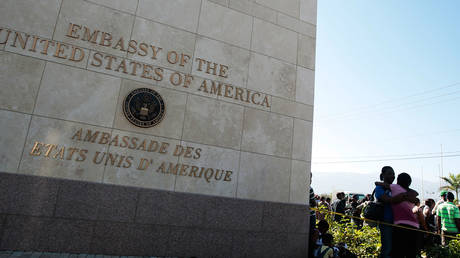 The sound of gunfire coming from the rear entrance of the US embassy in Haiti was on Monday reported by the official Twitter account for the US Department of State Bureau of Consular Affairs.
 The US Navy has claimed that close-up footage released by Iran of an American aircraft carrier operating in the Persian gulf is “several years old,” tacitly acknowledging that the audaciously captured images are genuine.
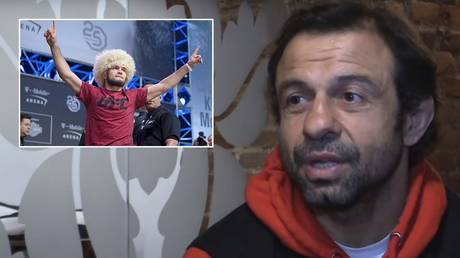 Khabib Nurmagomedov's pride in his background, commitment to his training and motivation by glory, not money, has helped propel him to the top of MMA, according to one coach who was part of setting him on the path to glory.
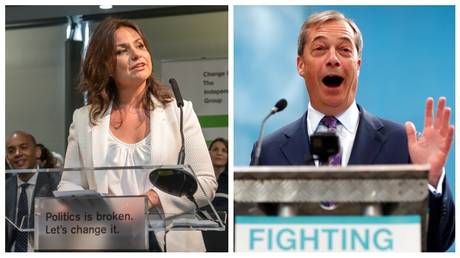 Change UK, the new pro-second-referendum group, has ambitions to be the political party for all ‘remain’ voters in May’s EU Parliament elections, but why are they polling so badly?


